
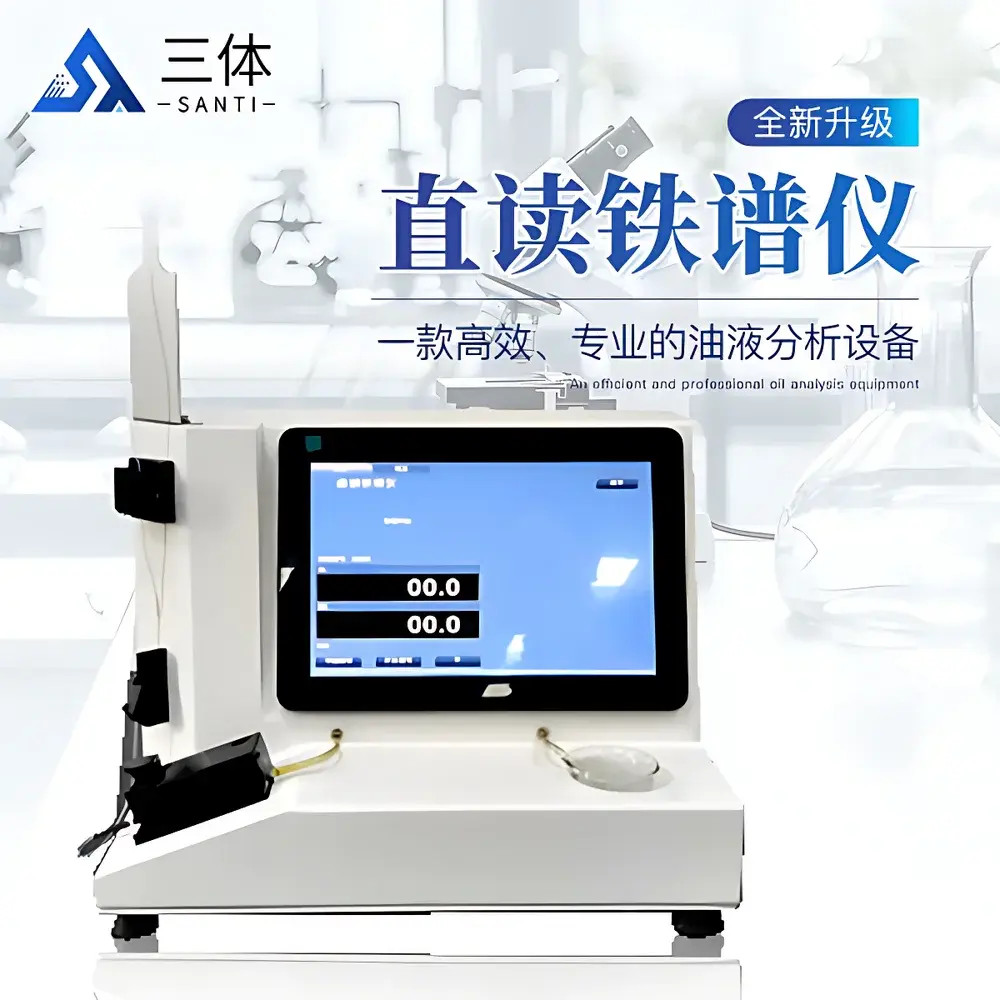
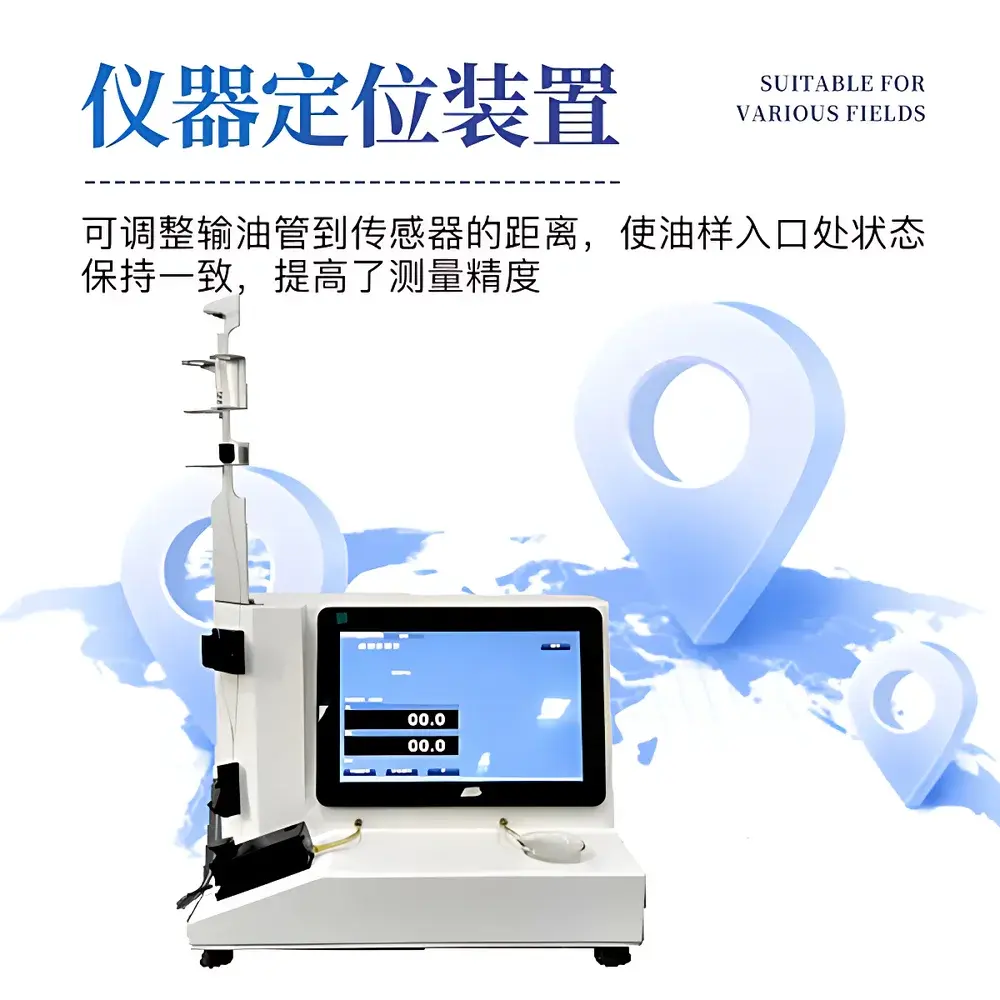
Santiyiqi ST-DT01 Direct-Reading Ferrograph
| Brand | Santiyiqi |
|---|---|
| Model | ST-DT01 |
| Origin | Shandong, China |
| Manufacturer Type | OEM Manufacturer |
| Origin Category | Domestic (China) |
| Price | USD 17,200 (FOB) |
| Sample Volume | 1 mL |
| Analysis Time | < 10 min |
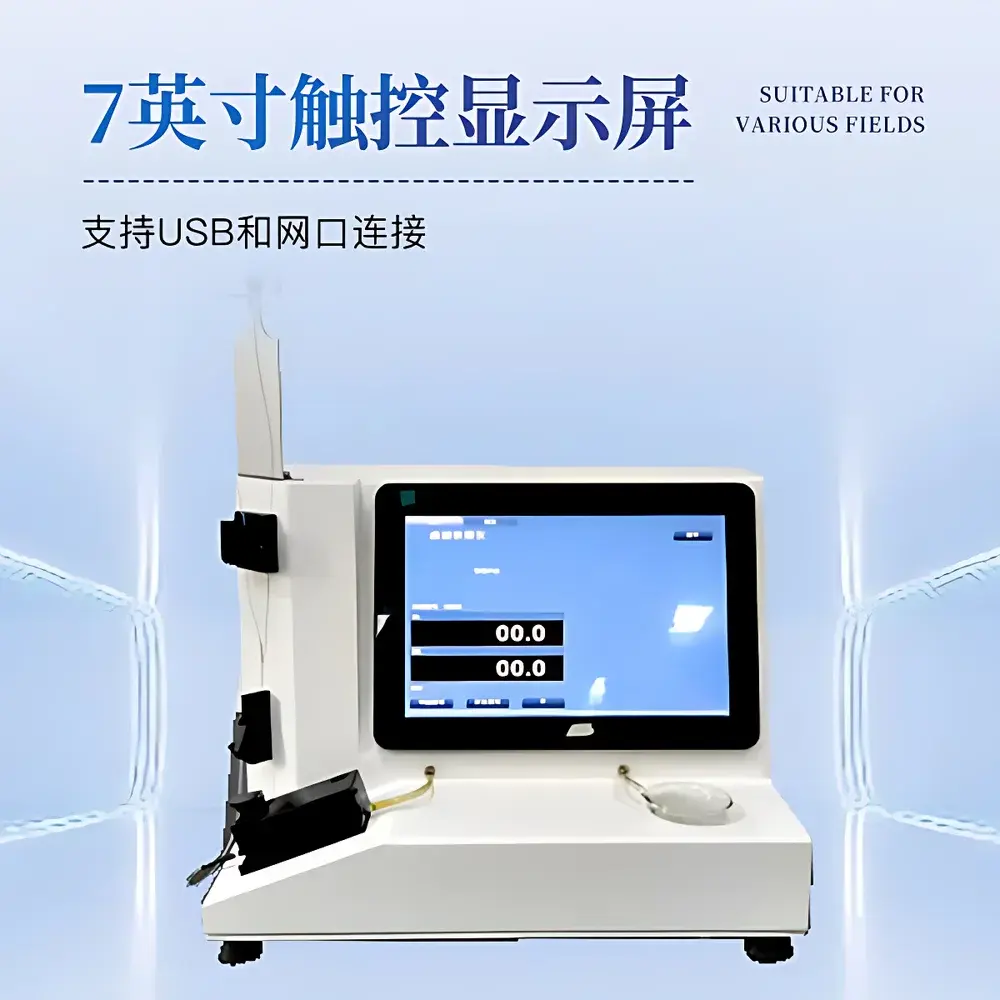
| Display | 7-inch capacitive touchscreen |
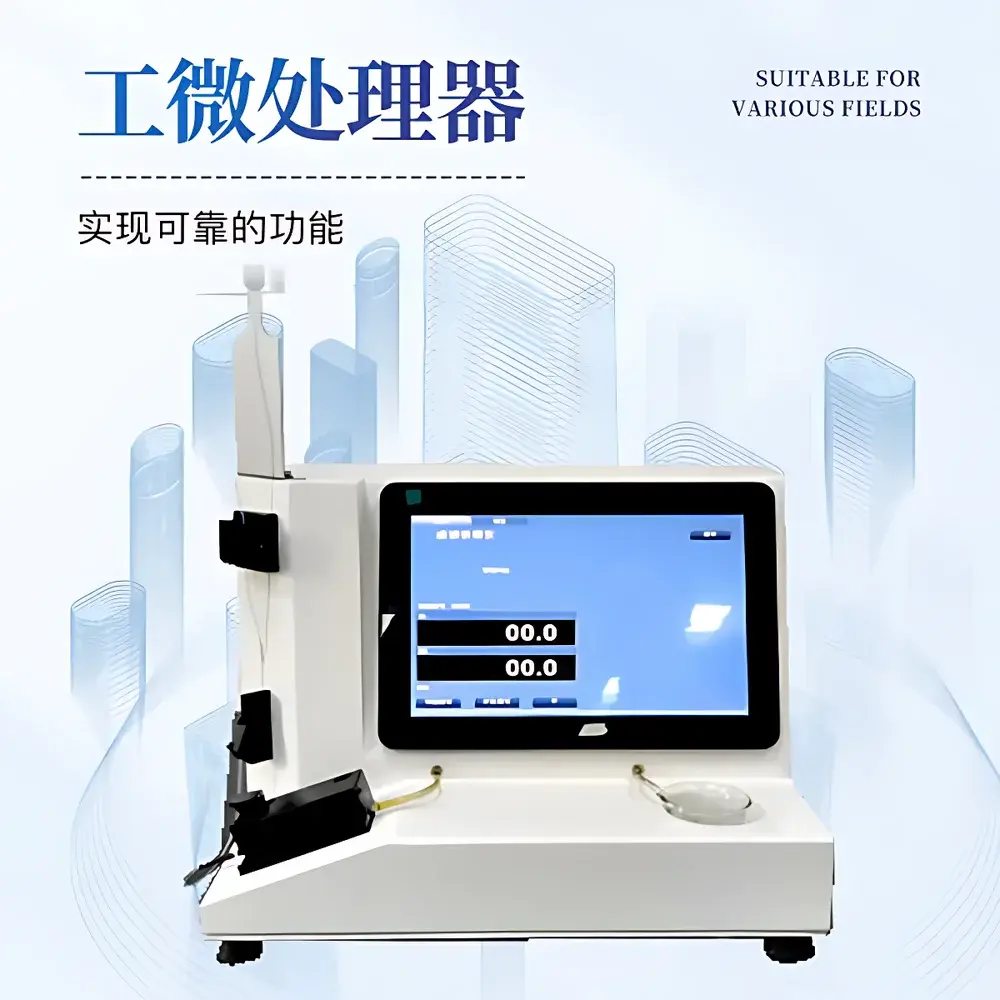
| Microprocessor | Embedded self-diagnostic ARM-based controller |
| Connectivity | 4× USB 2.0 ports, 1× RJ45 Ethernet port |
| Operating System | Windows 7 Embedded |
| Power Input | 220 VAC ±10%, 50 Hz (converted to 12 VDC/5 A internally) |
| Magnetic Field Gradient | >5.0 T/cm |
| Maximum Magnetic Flux Density | >1.5 T |
| Measurement Resolution | 0.1 (unitless index scale) |
| Solvent Compatibility | Perchloroethylene (C₂Cl₄) |
| Sampling Method | Automated syringe-driven aspiration |
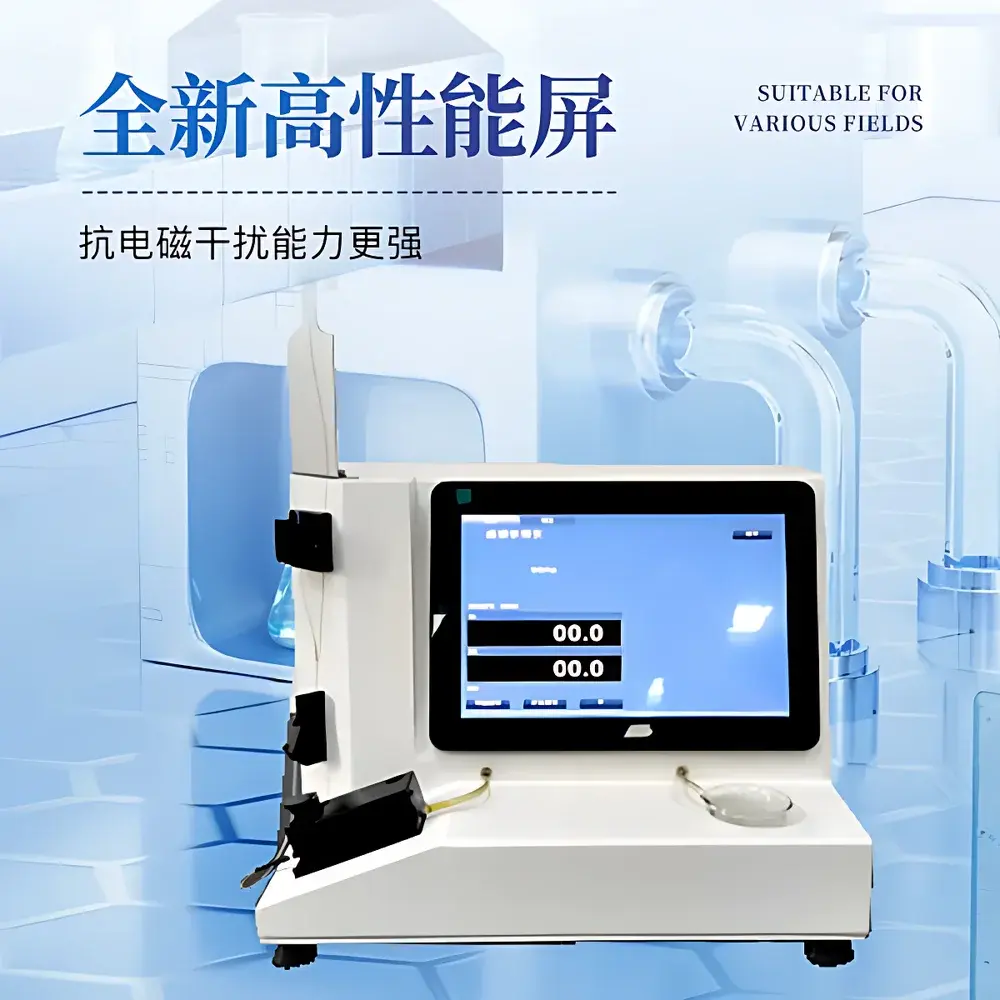
| Electromagnetic Immunity | Enhanced EMI shielding per IEC 61326-1 Class B |
| Portability | Benchtop with integrated carry handle and shock-absorbing chassis |
Overview
The Santiyiqi ST-DT01 Direct-Reading Ferrograph is an engineered analytical instrument designed for quantitative ferrographic analysis of lubricating oils, hydraulic fluids, coolants, and fuels in industrial condition monitoring programs. It operates on the principle of magnetic sedimentation separation: when a diluted oil sample flows across a high-gradient magnetic field generated by a permanent magnet array, ferromagnetic wear particles (primarily elemental iron, Fe, and its oxides) are captured and spatially segregated along a glass substrate based on their magnetic susceptibility and size. The ST-DT01 optically scans the deposited particle band and computes two standardized indices—DL (Direct Reading Large) and DS (Direct Reading Small)—corresponding to the concentration of coarse (>5 µm) and fine (1–5 µm) ferromagnetic debris, respectively. This dual-index output enables rapid assessment of wear severity and mode (e.g., sliding vs. fatigue wear), supporting predictive maintenance decisions without requiring microscopic interpretation.
Key Features
- High-gradient magnetic separation system with peak field gradient exceeding 5.0 T/cm and flux density >1.5 T—optimized for efficient capture of sub-micron to 50 µm ferromagnetic particles.
- Automated, programmable sample aspiration using precision syringe pump; fixed 1 mL sample volume ensures inter-laboratory reproducibility.
- Integrated 7-inch industrial-grade capacitive touchscreen running Windows 7 Embedded—enabling standalone operation without external PC dependency.
- Embedded ARM-based microprocessor with real-time self-diagnostic routines, including sensor calibration validation, fluid path integrity checks, and magnetic field stability monitoring.
- Ruggedized benchtop architecture with shock-absorbing base, integrated carry handle, and conformal-coated PCBs—certified for operation in ambient temperatures from 5 °C to 40 °C and relative humidity ≤80% non-condensing.
- Enhanced electromagnetic compatibility (EMC) per IEC 61326-1 Class B, ensuring stable performance near variable-frequency drives, welding equipment, and other industrial EMI sources.
- Adjustable sample inlet positioning mechanism—precisely aligns capillary tip height relative to the magnetic zone to maintain consistent laminar flow profile and sedimentation geometry across analyses.
Sample Compatibility & Compliance
The ST-DT01 accepts mineral-based, synthetic, and semi-synthetic lubricants, hydraulic oils (ISO VG 32–680), turbine oils, gear oils, diesel and jet fuels, and water-glycol coolants—provided samples are pre-diluted with perchloroethylene (C₂Cl₄) at a defined 1:10 v/v ratio. It complies with ASTM D5183–21 “Standard Test Method for Determination of Ferrous Debris Content in Lubricating Oils Using a Direct-Reading Ferrograph” and supports alignment with ISO 4406:2017 (fluid cleanliness coding) and ISO 17359:2014 (condition monitoring and diagnostics of machines). Data acquisition meets GLP documentation requirements, with audit-trail-capable timestamped records stored locally and exportable via USB or network transfer.
Software & Data Management
The embedded firmware includes a dedicated ferrographic data manager supporting trend analysis over time series. Each measurement generates a timestamped report containing DL, DS, DL/DS ratio, sample ID, operator tag, and environmental metadata (temperature, humidity if logged externally). Reports export in CSV and PDF formats compliant with internal QA workflows. USB mass storage mode allows direct file transfer to LIMS systems; Ethernet connectivity supports remote configuration and firmware updates via secure HTTP(S) protocol. All data logs retain full traceability per FDA 21 CFR Part 11 principles—including electronic signatures, change history, and immutable record archiving—when deployed within regulated environments.
Applications
- Early-stage detection of abnormal wear in rotating machinery—including gearboxes, wind turbine main bearings, compressor trains, and marine propulsion systems.
- Trending of ferrous debris accumulation rates to optimize oil drain intervals and validate filtration efficiency.
- Root-cause analysis of catastrophic failures through correlation of DL/DS ratios with known wear mechanisms (e.g., DL-dominant = severe cutting wear; DS-dominant = incipient fatigue or corrosion).
- Verification of component break-in periods during commissioning or post-repair validation.
- Supporting ISO 55001 asset management frameworks by quantifying degradation kinetics and informing risk-based inspection scheduling.
FAQ
What types of wear particles does the ST-DT01 detect?
It quantifies only ferromagnetic particles—primarily elemental iron, magnetite (Fe₃O₄), and maghemite (γ-Fe₂O₃)—originating from steel and cast iron components. Non-ferrous particles (e.g., copper, aluminum, chrome) are not measured.
Is operator training required to interpret results?
Basic operation requires minimal training; however, interpreting DL/DS trends in context of machine design, load profile, and historical baseline demands familiarity with tribological failure modes—training modules are included with instrument delivery.
Can the ST-DT01 be integrated into an existing CMMS or SCADA system?
Yes—via Ethernet TCP/IP or USB-hosted CSV exports, enabling direct ingestion into platforms such as SAP PM, IBM Maximo, or OSIsoft PI System using standard middleware adapters.
What maintenance is required for long-term accuracy?
Annual verification of magnetic field strength using a calibrated gaussmeter and quarterly cleaning of optical path and capillary lines with C₂Cl₄ is recommended; no consumable parts require replacement under normal usage.
Does the instrument meet international regulatory standards for lab use?
It conforms to CE marking requirements (EMC Directive 2014/30/EU, Low Voltage Directive 2014/35/EU), and its software architecture supports 21 CFR Part 11 compliance when deployed with appropriate procedural controls.




