
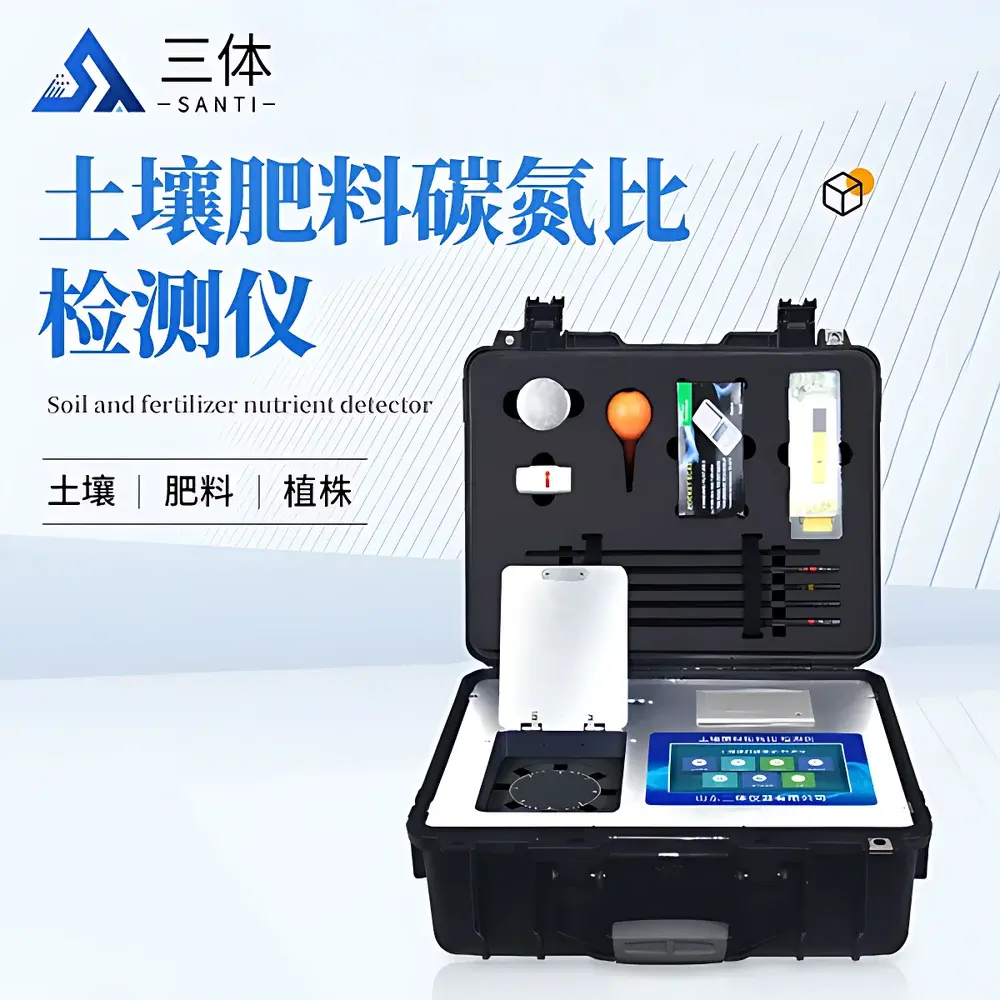
Santiyiqi ST-TN2 Soil Carbon-to-Nitrogen Ratio Analyzer
| Brand | Santiyiqi |
|---|---|
| Origin | Shandong, China |
| Manufacturer Type | Direct Manufacturer |
| Country of Origin | China |
| Model | ST-TN2 |
| Price | USD 4,200 (FOB) |
Overview
The Santiyiqi ST-TN2 Soil Carbon-to-Nitrogen Ratio Analyzer is a field-deployable, spectrophotometric soil nutrient analyzer engineered for rapid, on-site quantification of total organic carbon (TOC) and total nitrogen (TN) in agricultural and environmental soil samples. It operates on the principle of colorimetric analysis following standardized wet-chemical digestion—specifically adapted for C/N ratio determination per ISO 14238:1998 (Soil quality — Determination of total nitrogen — Modified Kjeldahl method) and GB/T 32725–2016 (Chinese national standard for soil organic carbon determination). Unlike benchtop elemental analyzers requiring combustion or high-temperature oxidation, the ST-TN2 implements optimized chromogenic reactions with high-selectivity reagents, enabling reliable C/N estimation within 25 minutes per batch without laboratory infrastructure. Its design targets routine use by extension officers, agro-service centers, and environmental monitoring teams operating under GLP-aligned workflows.
Key Features
- Android-based embedded OS powered by ARM Cortex-A7 quad-core RK3288 processor (1.88 GHz), ensuring deterministic real-time operation and multi-tasking stability.
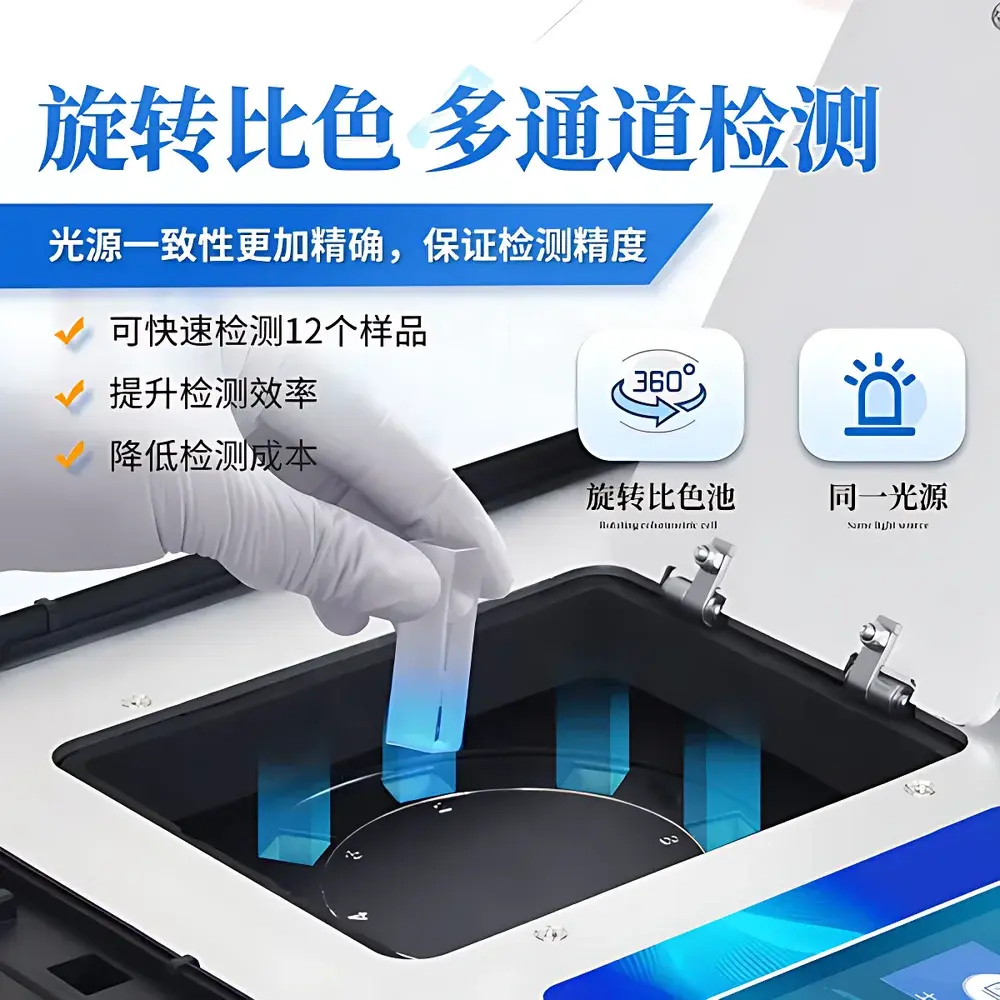
- Patented rotating cuvette carousel (Patent No. ZL201821777724.7) with 12 independent optical channels—enabling parallel analysis of up to 12 soil extracts without cross-contamination or manual repositioning.
- Four-wavelength cold-light source (630 nm red, 470 nm blue, 520 nm green, 610 nm orange) with thermally stabilized LED emitters; spectral drift < ±0.5 nm over 10,000 hours, eliminating warm-up delays and thermal recalibration cycles.
- Integrated auto-calibration system: real-time photometric feedback loop maintains constant optical intensity via intelligent constant-current regulation and dynamic dark-reference compensation before each measurement cycle.
- Standardized 10-mm pathlength quartz-compatible cuvette geometry (1 cm optical path), mechanically fixed to eliminate positional variance; light-tight housing suppresses ambient stray light to < 0.05% transmittance interference.
- Dual power architecture: rechargeable Li-ion battery (≥10 h continuous operation) + DC input (12–24 V) + optional vehicle adapter—certified for IP54-rated field deployment.
- GPS geotagging module compliant with NMEA 0183 v4.10 protocol; records WGS84 coordinates, timestamp, and altitude with ±2.5 m CEP accuracy for spatially referenced sampling logs.
Sample Compatibility & Compliance
The ST-TN2 accepts air-dried, sieved (<2 mm) soil samples processed per ISO 11464:2014 pre-treatment guidelines. It supports alkaline persulfate oxidation for TOC and modified Kjeldahl digestion for TN—both protocols validated against CRM SRM 2710a (Montana Soil) and NIST 8417 (Nitrate-N Standard). All optical measurements conform to ISO 7027-1:2016 (turbidity) and ISO 6721-1:2019 (absorbance linearity) traceability requirements. The instrument’s calibration certificate is issued by the National Institute of Metrology (China), covering wavelength accuracy (±1.0 nm), photometric repeatability (CV ≤ 0.8%), and linearity (R² ≥ 0.9998 over 0–2.5 AU). Data integrity complies with ALCOA+ principles (Attributable, Legible, Contemporaneous, Original, Accurate, Complete, Consistent, Enduring, Available) for regulatory reporting.
Software & Data Management
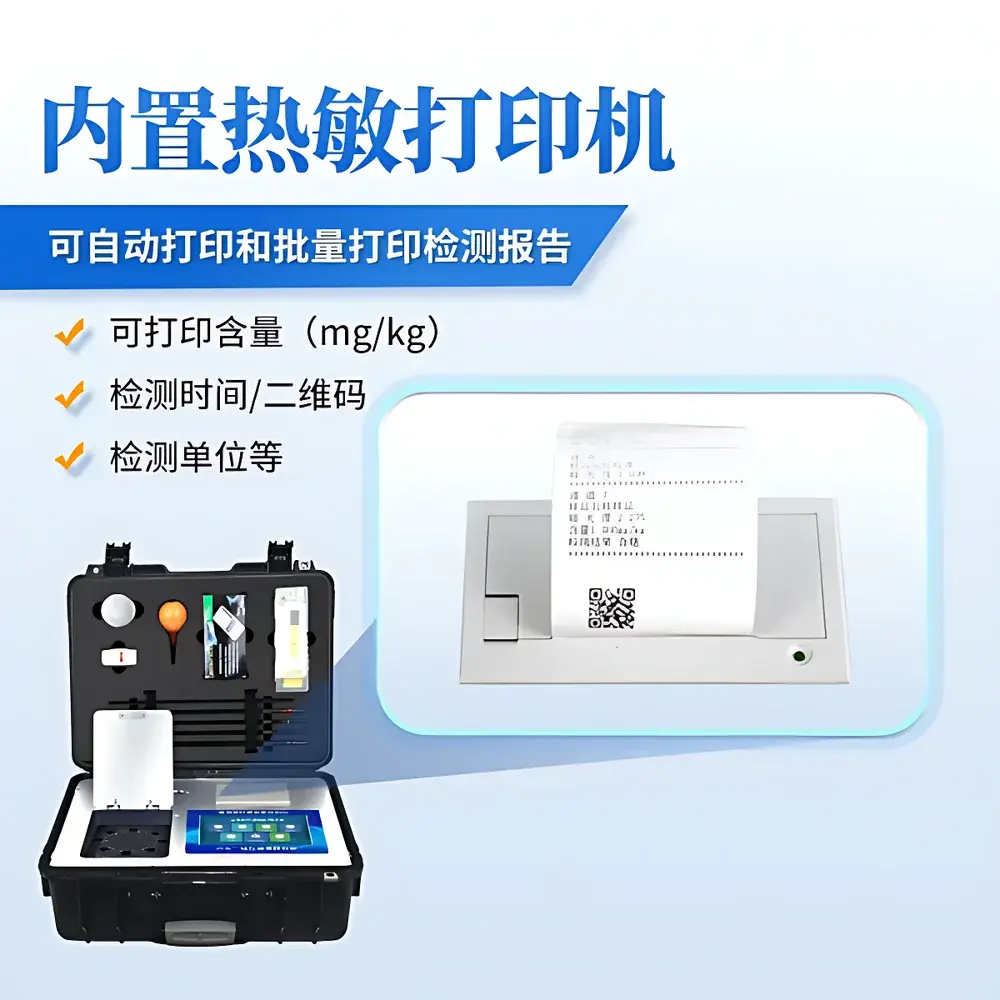
Pre-installed firmware includes dual-mode connectivity: Wi-Fi 802.11 b/g/n, 4G LTE Cat-4 (with SIM slot), and GPRS fallback. All transmissions are encrypted via TLS 1.2. The companion SmartAgri Cloud Platform (v3.2+) provides role-based access control (RBAC), audit-trail logging per FDA 21 CFR Part 11 Annex 11, and automated backup to AWS S3 storage. Users may export datasets in CSV, PDF (with QR-coded metadata), or directly integrate into LIMS via RESTful API. On-device storage retains ≥50,000 test records with full timestamp, GPS coordinates, operator ID, and raw absorbance values. USB 2.0 host port supports mass-storage mode for offline data migration; Ethernet interface enables LAN-based fleet management.
Applications
- On-farm precision fertilization planning: calculates NPK application rates based on target yield, soil C/N status, and crop-specific nutrient uptake coefficients (integrated database covers 127 staple crops, orchard species, and forage grasses per FAO CropWat parameters).
- Soil health monitoring programs: tracks temporal changes in C/N ratios across conservation tillage trials, cover cropping studies, or compost amendment projects—aligned with USDA NRCS Soil Health Assessment Framework indicators.
- Environmental impact assessment: supports baseline surveys for landfill closure monitoring, mine reclamation, and wetland restoration where C/N balance correlates with microbial activity and denitrification potential.
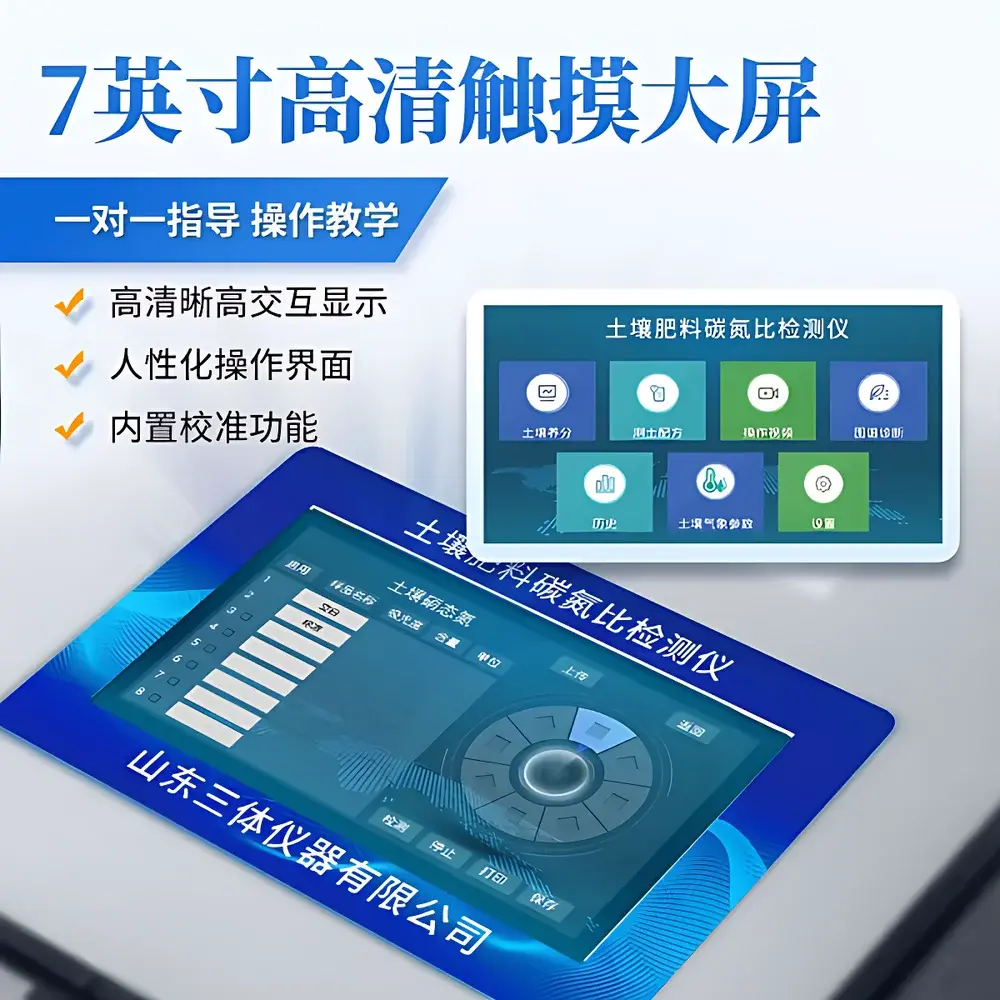
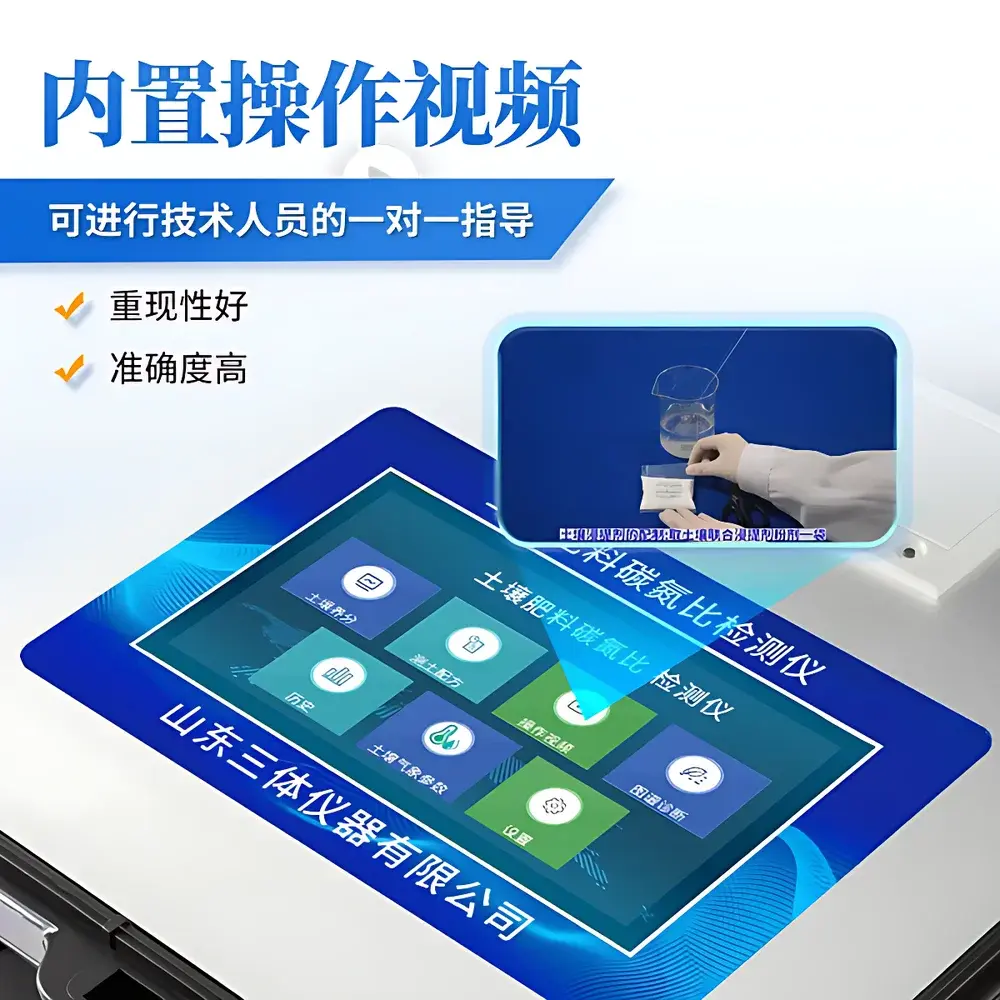
- Educational field labs: built-in instructional video library (21 SOPs in English/Chinese) demonstrates sample homogenization, digestion, filtration, and blank correction—validated for undergraduate soil science curricula.
FAQ
What digestion methods are supported for C and N extraction?
The ST-TN2 requires external digestion using either alkaline persulfate oxidation (for TOC) or modified Kjeldahl digestion (for TN), following ISO 14238 and GB/T 32725 protocols. The instrument performs only the final colorimetric quantification step.
Is the device suitable for saline or high-organic-matter soils?
Yes—calibration curves are validated for EC ≤ 4 dS/m and organic matter content up to 15% (w/w). Dilution protocols and matrix-matched standards are provided in the user manual.
Does the cloud platform support multi-language interfaces?
Yes—English, Spanish, French, Arabic, and Vietnamese language packs are available via firmware update; UI localization includes unit conventions (e.g., mg/kg vs. ppm) and regional crop nomenclature.
How is data integrity ensured during wireless transmission?
All uploads include SHA-256 checksums, sequential packet numbering, and automatic retry logic with exponential backoff. Failed transfers are queued locally until network recovery.
Can the instrument be used in GLP-regulated laboratories?
Yes—full electronic audit trail, 21 CFR Part 11-compliant digital signatures, and configurable user permission levels meet OECD GLP Principles for non-clinical studies.
Related Products







