
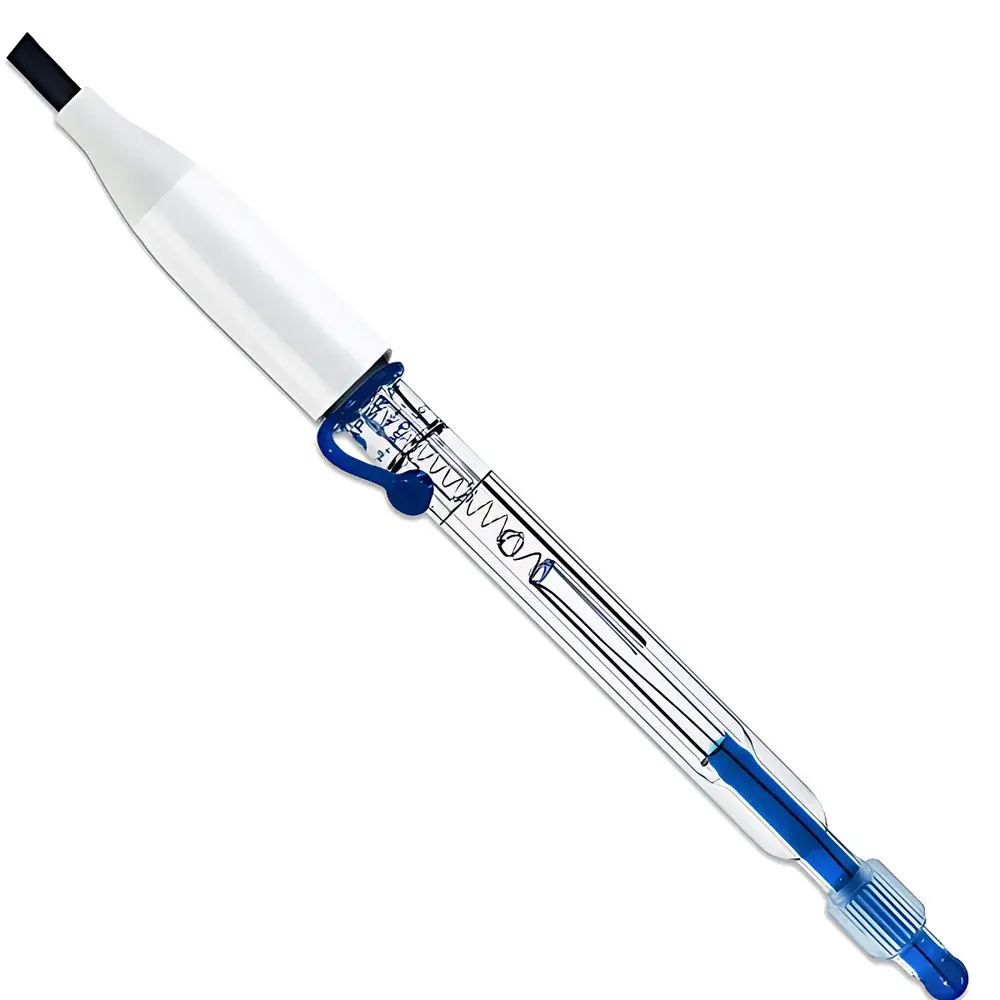
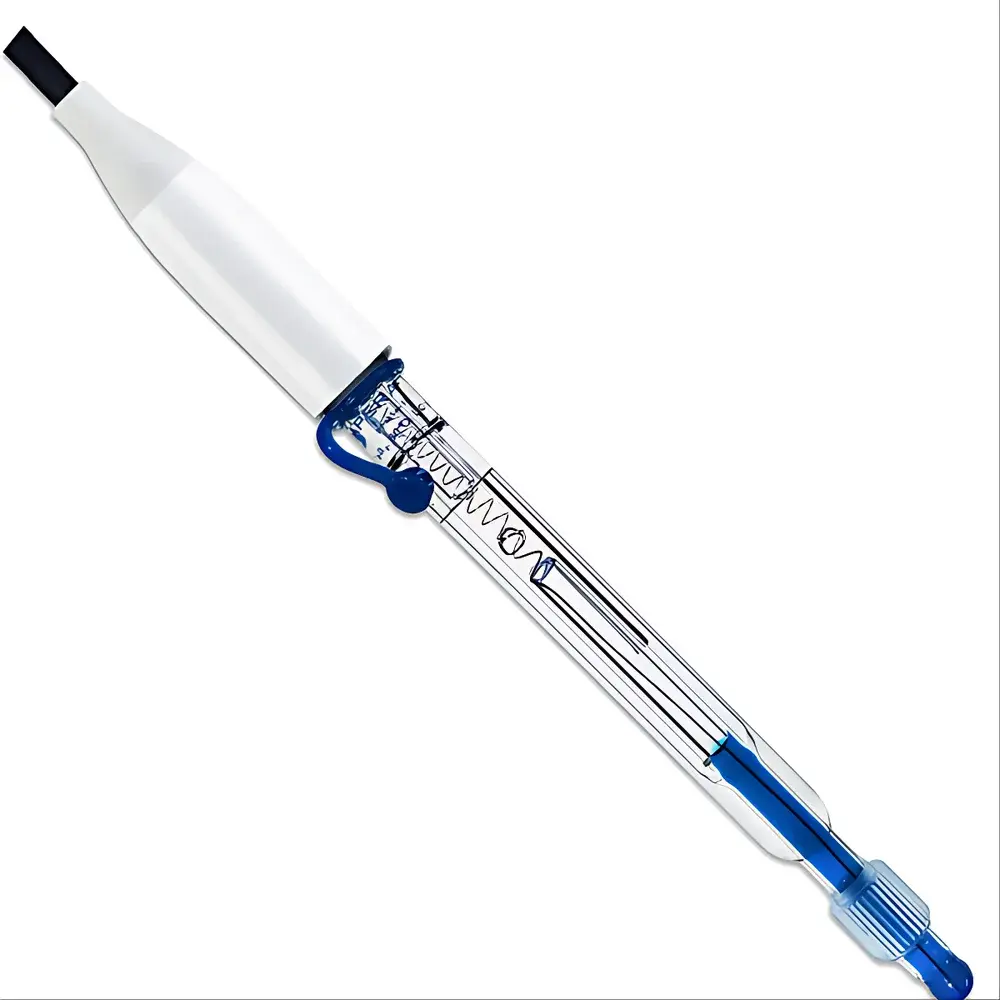
SANXIN LabSen873 Tri-Reference pH Electrode for Non-Aqueous and Organic Solvent Applications
| Brand | SANXIN |
|---|---|
| Origin | Shanghai, China |
| Model | LabSen873 |
| Instrument Type | Pen-Style Electrode |
| Parameter Type | Single-Parameter (pH) |
| Measurement Range | 1–13 pH |
| Resolution | 0.1 pH |
| Accuracy | ±0.1 pH |
| Calibration Buffers | pH 4.00, 7.00, 10.00 |
| Temperature Range | 0–80 °C |
| Body Material | Lead-Free Glass |
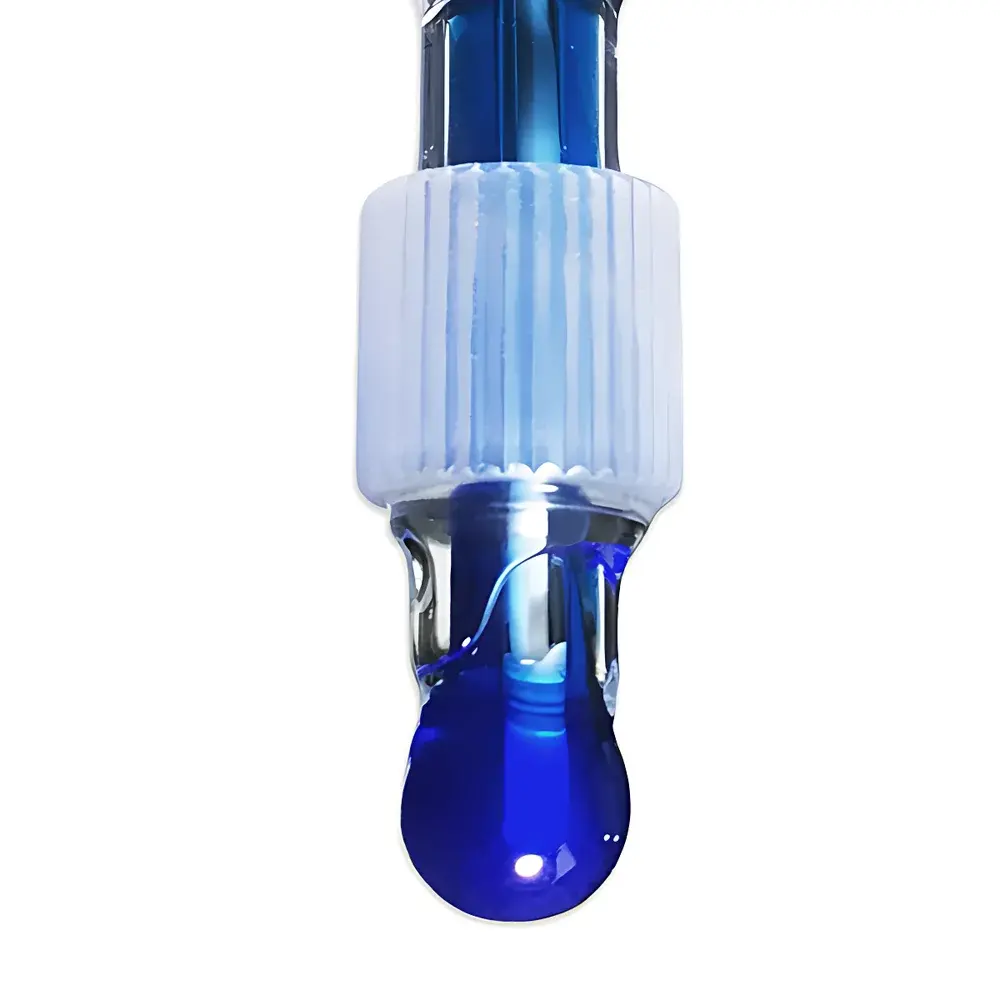
| Bulb Shape | Cylindrical |
| Reference System | Ag/AgCl |
| Junction Type | Dual-Liquid Junction with Movable Sleeve |
| Internal Reference Electrolyte | 3 M KCl (Gelled) |
| Salt Bridge Solution | 1 M LiCl |
| Soaking Solution | 3 M KCl |
| Dimensions | Φ12 × 130 mm |
| Connector | BNC |
| Cable | Φ3 mm × 1 m |
| Integrated Temperature Sensor | Yes (for Automatic Temperature Compensation) |
Overview
The SANXIN LabSen873 is a tri-reference pH electrode engineered specifically for reliable potentiometric pH measurement in non-aqueous media and organic solvents—environments where conventional aqueous-referenced electrodes exhibit instability, slow response, or irreversible drift. Unlike standard glass electrodes relying on hydrated gel layers vulnerable to dehydration or solvent-induced leaching, the LabSen873 integrates three critical design innovations: a proprietary PHY-sensitive glass membrane optimized for low-dielectric-constant solvents; a dual-liquid junction architecture with a movable sleeve junction; and a fully gelled internal reference system. Its measurement principle follows the Nernst equation, where the potential difference across the pH-sensitive glass membrane correlates logarithmically with hydrogen ion activity—adjusted for solvent-specific activity coefficients and liquid junction potentials. This electrode is not intended for routine aqueous calibration but rather for demanding applications in pharmaceutical synthesis, polymer chemistry, electrochemical reaction monitoring, and QC of solvent-based formulations.
Key Features
- PHY-sensitive glass membrane: Chemically reinforced cylindrical bulb with enhanced mechanical strength (≥10× higher fracture resistance than conventional thin-film electrodes) and retained hydration layer integrity in low-water-content solvents such as DMSO, acetonitrile, methanol, ethanol, isopropanol, toluene, and hexane.
- Dual-liquid junction design: Primary junction employs a movable polymeric sleeve enabling controlled, high-flow-rate electrolyte exchange; secondary junction uses 1 M LiCl salt bridge solution—selected for improved miscibility with organic phases and reduced liquid junction potential drift.
- Gelled internal reference system: Blue-colored 3 M KCl electrolyte processed via proprietary gelation technology eliminates internal convection, bubble formation, and thermal gradient artifacts—ensuring stable reference potential and reproducible slope performance.
- Integrated Pt1000 temperature sensor: Enables real-time, automatic temperature compensation (ATC) without external probes; supports linear and non-linear compensation algorithms per IUPAC and ASTM E70-22 guidelines.
- Lead-free borosilicate glass construction: Compliant with RoHS Directive 2011/65/EU and aligned with green manufacturing standards for laboratory instrumentation.
Sample Compatibility & Compliance
The LabSen873 is validated for use in polar protic solvents (e.g., alcohols), polar aprotic solvents (e.g., DMF, DMSO, acetone, acetonitrile), and non-polar hydrocarbons (e.g., hexane, toluene, chloroform). It maintains stable potential output in solutions with water content as low as 1–5% v/v. The electrode meets functional requirements outlined in ISO 3696 (Grade 3 water for buffer preparation), USP (pH measurement in non-aqueous systems), and ASTM D664 (acid number titration in petroleum products). While not certified to GLP or GMP out-of-the-box, its gelled reference system and traceable calibration protocol support audit-ready documentation when used with compliant data acquisition software.
Software & Data Management
The LabSen873 interfaces seamlessly with standard benchtop pH meters equipped with BNC input and ATC capability (e.g., Mettler Toledo SevenCompact, Thermo Scientific Orion Star A211, Hanna Instruments HI2211). When paired with compliant instruments supporting FDA 21 CFR Part 11 functionality—including electronic signatures, audit trails, and user-access controls—the electrode contributes to regulated workflows in pharmaceutical development and quality control laboratories. Raw mV and temperature data are exportable in CSV format for post-acquisition analysis in MATLAB, Python (SciPy), or JMP.
Applications
- pH monitoring during Grignard, organolithium, or lithium aluminum hydride reactions in anhydrous THF or diethyl ether.
- Endpoint detection in non-aqueous acid–base titrations (e.g., perchloric acid in glacial acetic acid per USP ).
- Stability testing of APIs dissolved in ethanol/water or propylene glycol mixtures.
- Quality assurance of battery electrolytes (e.g., LiPF₆ in EC/DMC).
- In-process control of polymerization initiators in toluene or xylene suspensions.
FAQ
Can the LabSen873 be used in pure organic solvents with zero water content?
Yes—it is explicitly designed for measurements in anhydrous and near-anhydrous organic media. However, calibration must be performed in matched-solvent buffers or using the “relative pH” method with certified reference materials.
What is the recommended storage solution?
Store immersed in 3 M KCl solution at room temperature. Avoid prolonged exposure to dry air or low-dielectric solvents without prior rehydration.
Is the movable sleeve junction serviceable or replaceable?
The sleeve is mechanically robust and designed for long-term use; no field-replacement parts are supplied. Routine cleaning with ethanol followed by rinsing in deionized water restores optimal junction flow.
Does it comply with ISO/IEC 17025 requirements for accredited testing labs?
As a transducer, the electrode itself is not accredited—but its performance characteristics (slope, asymmetry potential, response time) are verifiable per ISO 17025 Clause 6.4.2 when validated using traceable reference standards and documented procedures.
Can it be connected to a computerized LIMS or ELN?
Yes—via compatible pH meters with RS232/USB/Bluetooth output and vendor-provided drivers that support ASTM E1382-compliant data streaming protocols.






