
SANXIN MP511 Benchtop pH Meter
| Brand | SANXIN Peirui |
|---|---|
| Origin | Shanghai, China |
| Instrument Type | Benchtop |
| Parameter Type | Single-Parameter (pH) |
| Measurement Range | −2.00 to 19.99 pH |
| Resolution | 0.01 pH |
| Accuracy | ±0.01 pH |
| Temperature Compensation Range | 0–110 °C (ATC) |
| Input Impedance | ≥1 × 10¹² Ω |
| Stability | ±0.01 pH / 3 h |
| Data Storage Capacity | 600 sets |
| Storage Content | Sample ID, pH value, temperature, ATC/MTC mode, date & time |
| Interface | RS232 |
| Power Supply | DC 9 V / 300 mA |
| Dimensions & Weight | 160 × 190 × 70 mm / 880 g |
| Protection Rating | IP54 |
| Certifications | ISO 9001:2000, CE, CMC |
Overview
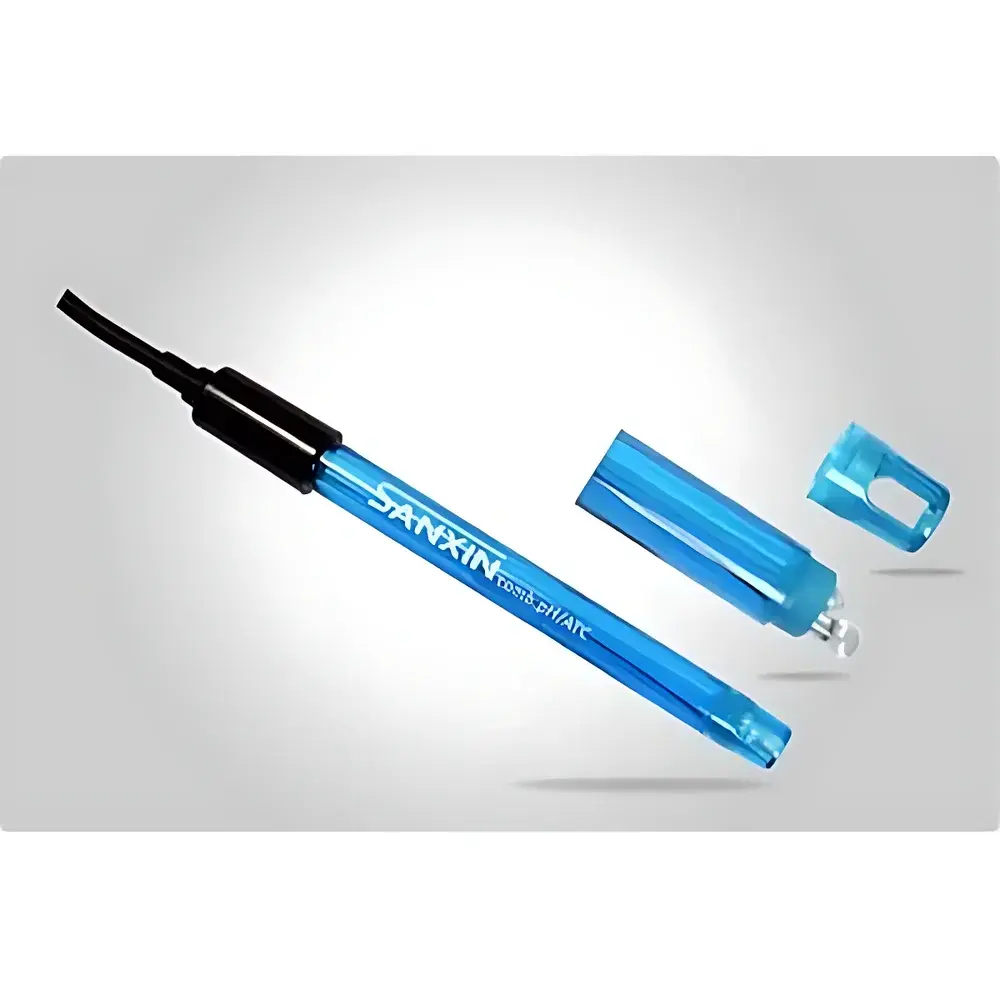
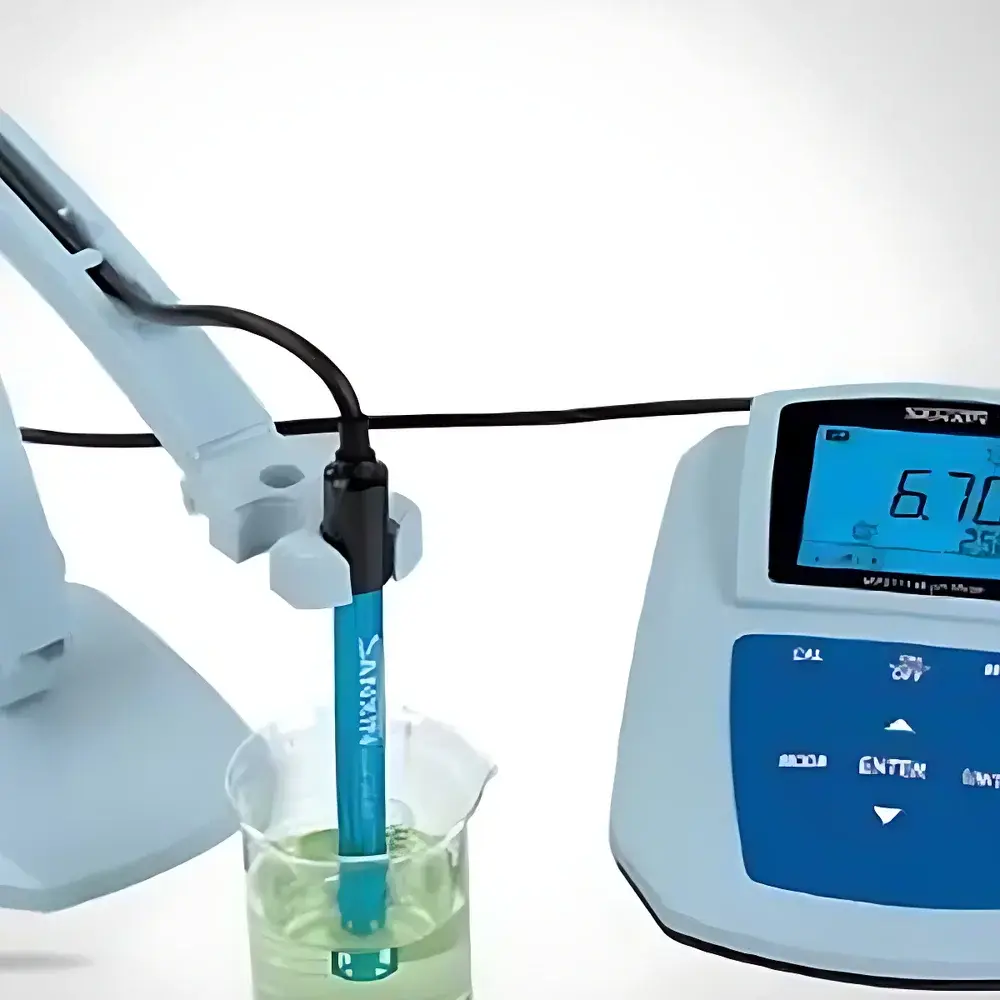
The SANXIN MP511 Benchtop pH Meter is a precision electrochemical instrument engineered for routine and research-grade pH measurement in academic laboratories, quality control environments, and industrial process support settings. Based on potentiometric measurement principles—detecting the potential difference between a pH-sensitive glass electrode and a stable reference electrode—the MP511 delivers high reproducibility across an extended pH range of −2.00 to 19.99. Its design integrates automatic temperature compensation (ATC) via a built-in thermistor within the 201T-M three-in-one composite electrode, eliminating manual correction and minimizing thermal drift errors. The meter complies with Good Laboratory Practice (GLP) guidelines through timestamped data logging, audit-ready storage structure, and traceable calibration records—critical for regulated workflows in pharmaceutical, environmental, and food testing labs.
Key Features
- Three-in-one composite pH/ATC electrode (model 201T-M) enables simultaneous pH sensing and real-time temperature compensation without external probes or manual input.
- Intelligent auto-calibration with automatic recognition of standard buffer series: US/EU, NIST, and Chinese national standards—ensuring regional regulatory alignment.
- GLP-compliant data management: stores up to 600 measurement records, each containing sample ID, pH value, temperature reading, ATC status, date, and precise timestamp.
- RS232 serial interface supports bidirectional communication with PCs; bundled MP511 software enables data export, report generation, and remote configuration.
- IP54-rated enclosure provides dust resistance and protection against water splashes—suitable for shared lab benches and humid environments such as fermentation monitoring or wastewater analysis stations.
- On-screen self-diagnostic system identifies common operational anomalies—including electrode aging, low battery, open-circuit conditions, and calibration deviation—reducing troubleshooting time.
- Programmable timed measurement mode allows unattended batch sampling at user-defined intervals, improving throughput in repetitive QC protocols.
Sample Compatibility & Compliance
The MP511 is optimized for aqueous and low-ionic-strength solutions typical in chemistry teaching labs, drinking water testing, and basic pharmaceutical formulation checks. It accommodates standard 12-mm diameter glass electrodes and is compatible with all major pH calibration buffers certified to ISO 3696 (Grade 3 water) and GB/T 11076–2013 (Chinese national buffer specifications). While not designed for highly viscous, non-aqueous, or strongly oxidizing media, its high-input-impedance circuitry (>1 × 10¹² Ω) ensures minimal loading error even with aged or high-resistance electrodes. Regulatory documentation—including ISO 9001:2000 manufacturing certification, CE marking per Directive 2014/30/EU (EMC), and CMC (China Metrology Certification)—supports procurement compliance in both domestic and international institutional tenders.
Software & Data Management
The included MP511 PC software facilitates secure data handling under controlled laboratory conditions. Exported datasets retain full metadata (e.g., “ID_0427”, “pH=7.24”, “T=25.3°C”, “ATC=ON”, “2024-04-27 14:32:18”) in CSV and Excel-compatible formats. Audit trail functionality logs operator-initiated actions—including calibration events, parameter changes, and memory clear commands—with timestamps. Though not natively compliant with FDA 21 CFR Part 11 due to absence of electronic signature controls, the system supports GLP-aligned documentation practices when paired with institutional SOPs governing data review, retention (minimum 2 years recommended), and backup procedures.
Applications
- Academic instruction: Demonstrating acid-base equilibria, titration endpoint detection, and buffer capacity analysis.
- Environmental monitoring: Measuring surface water, effluent, and soil extract pH per EPA Method 9040C and HJ 1147–2020 (China).
- Food & beverage QA: Verifying pH stability during fermentation, pasteurization validation, and shelf-life studies.
- Pharmaceutical water systems: Conducting non-sterile purified water checks aligned with USP and ChP 2020 Appendix IX M.
- Chemical synthesis: Monitoring reaction progress in hydrolysis, neutralization, and catalyst activation steps.
FAQ
Does the MP511 support dual-point or three-point calibration?
Yes—it supports 1-, 2-, or 3-point calibration using any combination of pH 4.00, 6.86, and 9.18 (Chinese series) buffers, with automatic slope and offset calculation.
Can the instrument store calibration history separately from measurement data?
No—calibration parameters are embedded within each measurement record; however, the date/time stamp allows retrospective correlation of calibration events with subsequent readings.
Is the 201T-M electrode suitable for measuring pH in organic solvents?
Not recommended—the electrode is optimized for aqueous electrolytes; use specialized non-aqueous electrodes for ethanol, acetone, or DMF-based systems.
What is the expected service life of the 201T-M electrode under normal lab use?
Typical functional lifespan is 12–18 months with daily use and proper storage in 3 mol/L KCl solution; performance degradation is indicated by slow response (>15 s), unstable readings, or slope deviation >95% of theoretical (59.16 mV/pH at 25°C).
Does the MP511 meet requirements for ISO/IEC 17025 accredited testing?
As a measurement device, it satisfies metrological traceability prerequisites when used with certified reference materials and validated procedures—but accreditation depends on the laboratory’s overall quality system, not the instrument alone.
Related Products




