
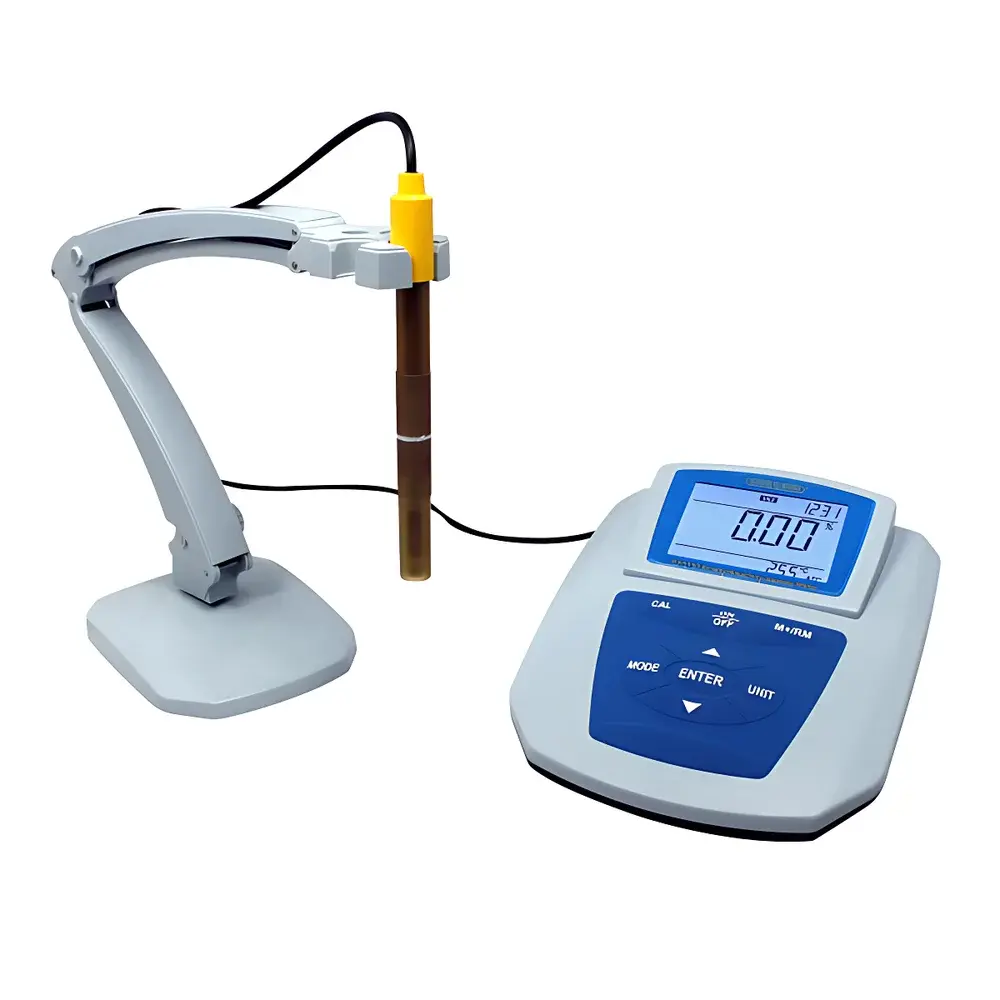
Sanxin SX5150 Laboratory Acid-Base Concentration Meter
| Brand | Sanxin |
|---|---|
| Model | SX5150 |
| Origin | Shanghai, China |
| Manufacturer Type | Direct Manufacturer |
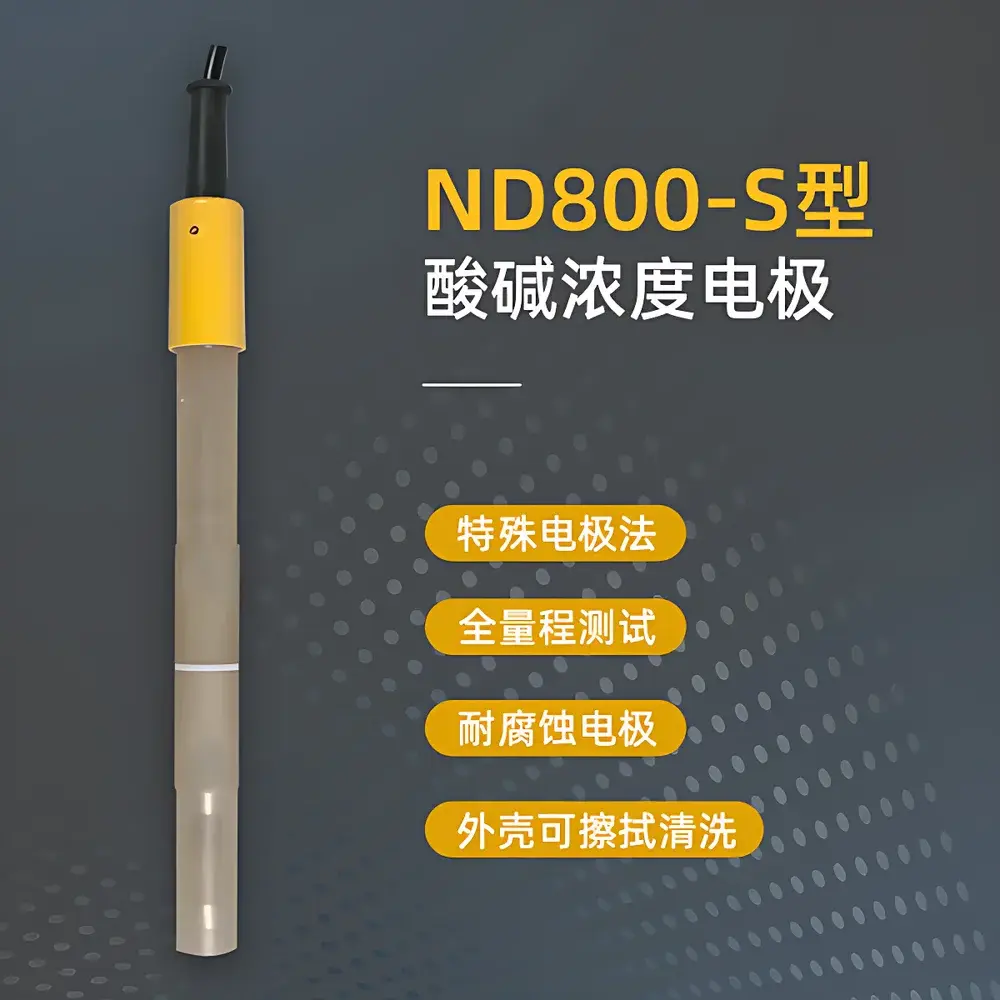
| Measurement Principle | Potentiometric Electrode Method (ND800-S Dual-Function Electrode) |
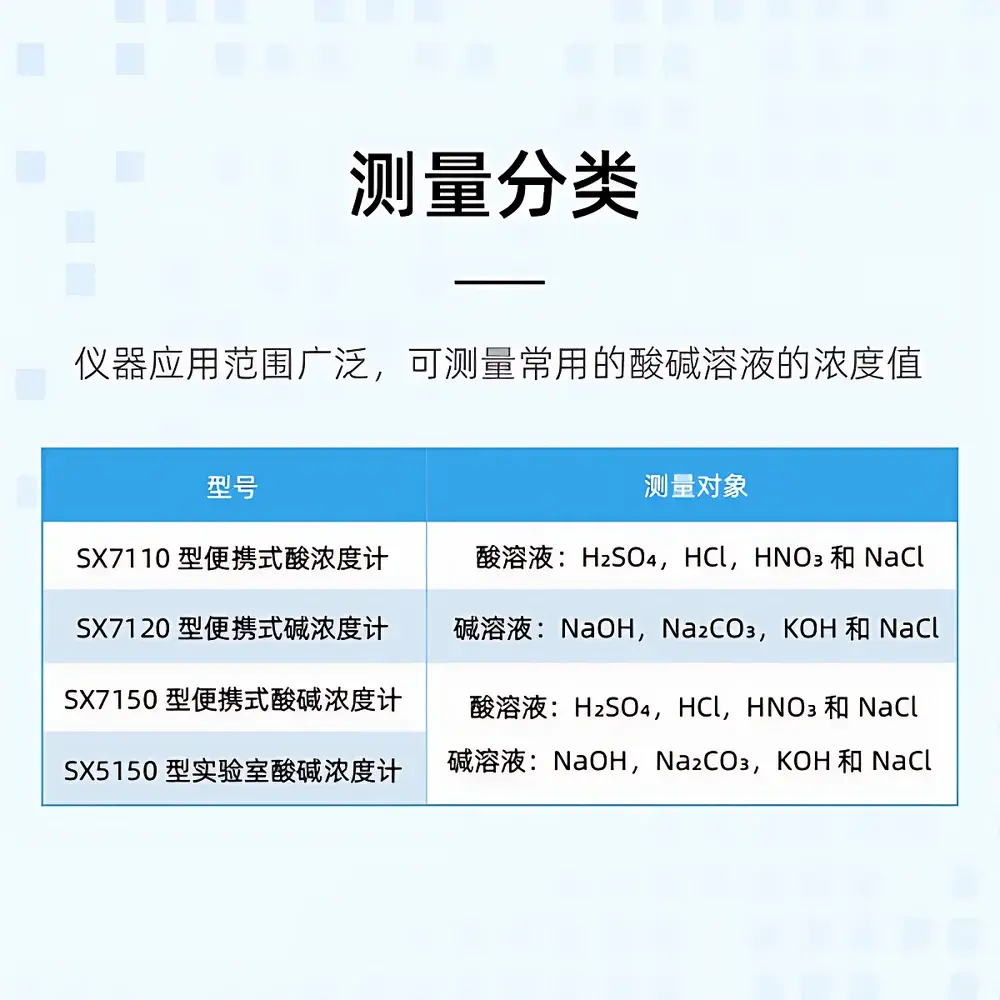
| Measurands | HCl, H₂SO₄, HNO₃, NaOH, Na₂CO₃, NaCl, KOH |
| Concentration Range | 0–15.00% w/w |
| Resolution | 0.01% |
| Accuracy | ±5% of reading or ±0.5%, whichever is greater |
| Temperature Compensation | Automatic (integrated Pt1000 sensor) |
| Data Storage | 1000 records (ID, solution type, value, unit, date/time) |
| Output Interface | RS232 serial port |
| Display | Backlit blue LCD |
| Enclosure Rating | IP54 |
| Power Supply | DC 9 V / 300 mA |
| Dimensions | 160 × 190 × 70 mm |
| Weight | 880 g |
| Compliance | GLP-compliant operation log, audit-ready timestamping, auto-calibration traceability |
Overview
The Sanxin SX5150 Laboratory Acid-Base Concentration Meter is a dedicated potentiometric analyzer engineered for precise, repeatable concentration determination of strong electrolyte solutions in industrial process control and quality assurance laboratories. Unlike generic pH or conductivity meters, the SX5150 implements a calibrated electrode-based methodology optimized specifically for seven common industrial reagents: hydrochloric acid (HCl), sulfuric acid (H₂SO₄), nitric acid (HNO₃), sodium hydroxide (NaOH), sodium carbonate (Na₂CO₃), sodium chloride (NaCl), and potassium hydroxide (KOH). Its core measurement principle relies on the linear relationship between solution conductivity (corrected for temperature and ion mobility) and mass concentration within defined operational ranges—validated against primary standard reference solutions traceable to NIST-certified materials. Designed for integration into continuous regeneration monitoring loops—particularly in ion exchange systems for high-purity water production—the instrument meets the functional demands of power generation, chemical manufacturing, metallurgical refining, food processing, and pharmaceutical purification workflows where real-time acid/base titrant strength verification is critical to system efficiency and regulatory compliance.
Key Features
- ND800-S dual-function electrode assembly integrating a corrosion-resistant measurement element and embedded Pt1000 temperature sensor for simultaneous concentration and thermal compensation
- Full-range single-electrode operation across 0–15.00% w/w for all supported analytes—eliminating need for multiple electrodes or range-switching
- Four selectable concentration units: % (w/w), mol/L, g/cm³, and g/L—enabling direct alignment with process documentation and material safety data sheets (MSDS)
- Digital filtering and sliding-average algorithms to suppress noise from turbulent flow or electrical interference, yielding stable readings indicated by on-screen “smiley face” icon
- GLP-compliant data management: automatic timestamping (date + time), solution identification tagging, and non-volatile storage of 1000 complete measurement records
- IP54-rated enclosure with silicone-sealed ports for reliable operation in humid, dusty, or splash-prone laboratory and plant-floor environments
- RS232 interface supporting bidirectional communication with LIMS or SCADA systems for automated data logging and audit trail generation
Sample Compatibility & Compliance
The SX5150 is validated for aqueous solutions of specified strong acids and bases at ambient temperatures (5–45 °C) and typical industrial ionic strengths. It does not support organic solvents, non-aqueous media, or weak electrolytes (e.g., acetic acid, ammonia). Calibration follows a two-point procedure using certified reference standards traceable to national metrology institutes. The instrument complies with Good Laboratory Practice (GLP) requirements per OECD Principles of GLP (1998), including electronic record integrity, user-access controls via password-protected function settings, and immutable timestamped measurement logs. While not FDA 21 CFR Part 11–certified out-of-the-box, its data export capability and audit-ready metadata structure facilitate validation under GMP and ISO/IEC 17025 frameworks when deployed in regulated QA/QC labs.
Software & Data Management
No proprietary PC software is bundled; however, the RS232 interface supports ASCII protocol for seamless integration with third-party data acquisition platforms (e.g., LabVIEW, MATLAB, or custom Python scripts). Each stored record includes eight fields: sequence ID, selected analyte name, numeric concentration value, active unit, measured temperature, date (YYYY-MM-DD), time (HH:MM:SS), and operator ID (if manually entered). Internal memory retains data during power loss. Firmware supports firmware-upgradable calibration coefficients and language localization (English default).
Applications
- Monitoring HCl or NaOH concentration in ion exchange resin regeneration cycles for ultrapure water systems in power plants and semiconductor fabs
- Verifying acid strength prior to pickling baths in stainless steel and aluminum surface treatment lines
- Controlling NaOH concentration in caustic scrubbers for flue gas desulfurization (FGD) processes
- Batch verification of cleaning-in-place (CIP) solutions in food and beverage production facilities
- QC release testing of bulk reagent shipments (e.g., 37% HCl, 50% NaOH) against supplier specifications
- Supporting ASTM D1125 (Standard Test Methods for Electrical Conductivity and Resistivity of Water) and ISO 7888 (Water Quality – Determination of Electrical Conductivity) workflows where concentration inference is required
FAQ
Does the SX5150 require separate electrodes for acid and base measurements?
No—the ND800-S electrode is a single, multi-analyte sensor designed for both acidic and alkaline solutions without hardware switching.
Can it measure mixed-acid solutions (e.g., HCl + HNO₃)?
No. The instrument assumes single-solute composition and is not validated for multicomponent electrolyte mixtures.
Is temperature compensation fully automatic?
Yes—integrated Pt1000 sensing enables real-time correction across 5–45 °C without manual input.
How is calibration traceability documented?
Calibration events are logged with date, time, standard used (user-entered identifier), and resulting slope/offset values—accessible via data export.
What maintenance does the ND800-S electrode require?
Rinse with deionized water after each use; wipe gently with lint-free cloth; store dry or in 3 M KCl solution—no polishing or membrane replacement needed.





