
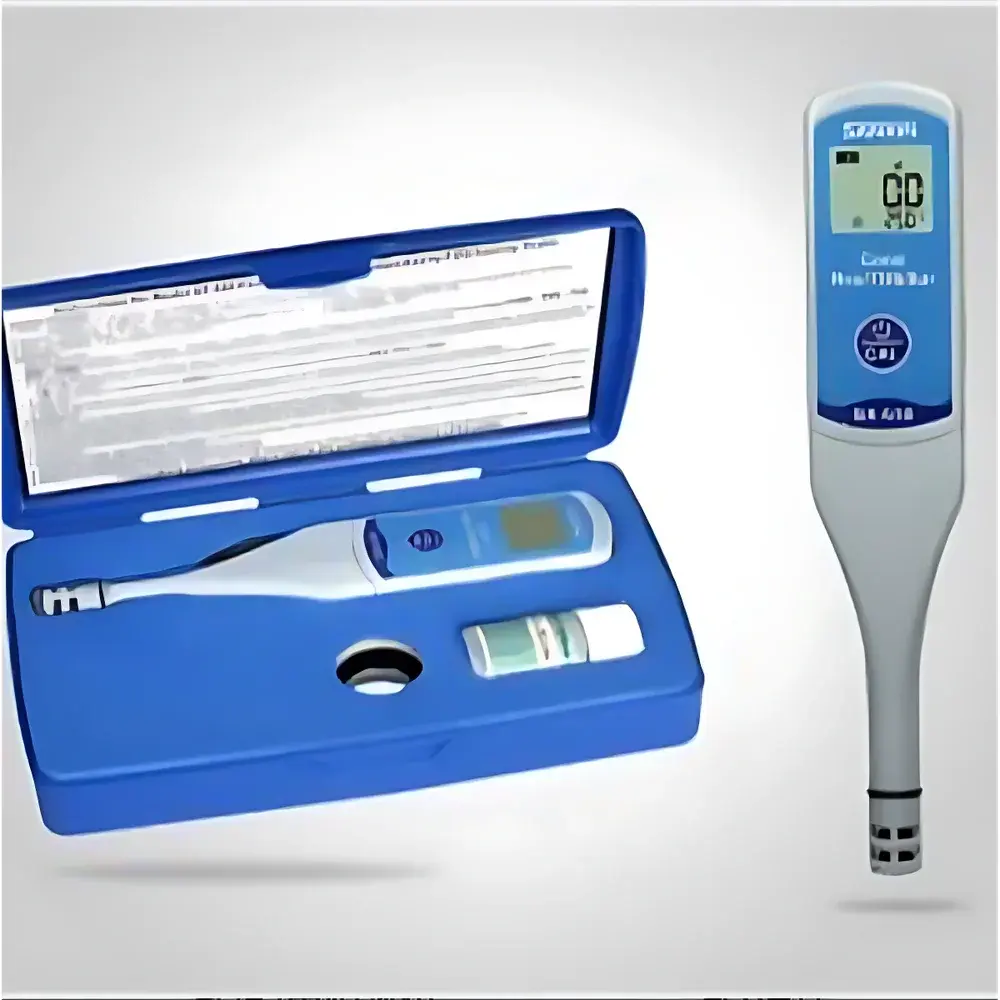
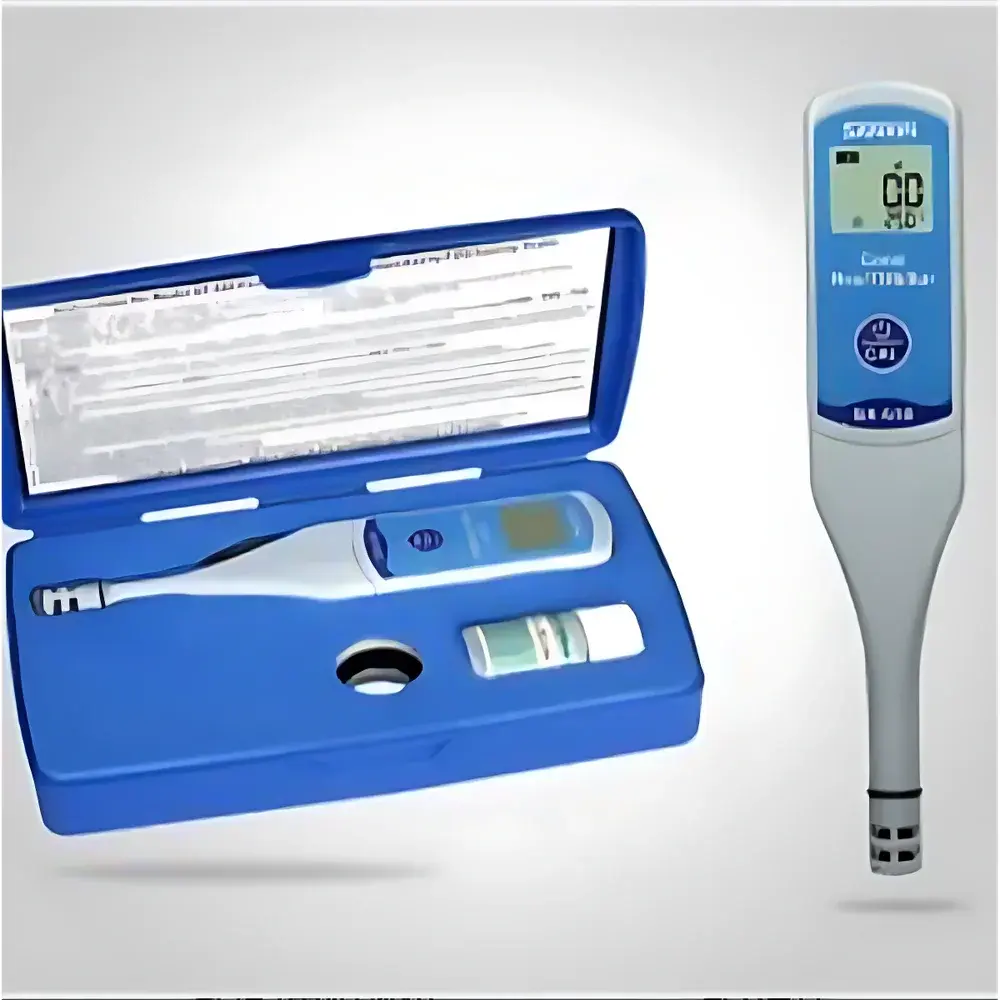
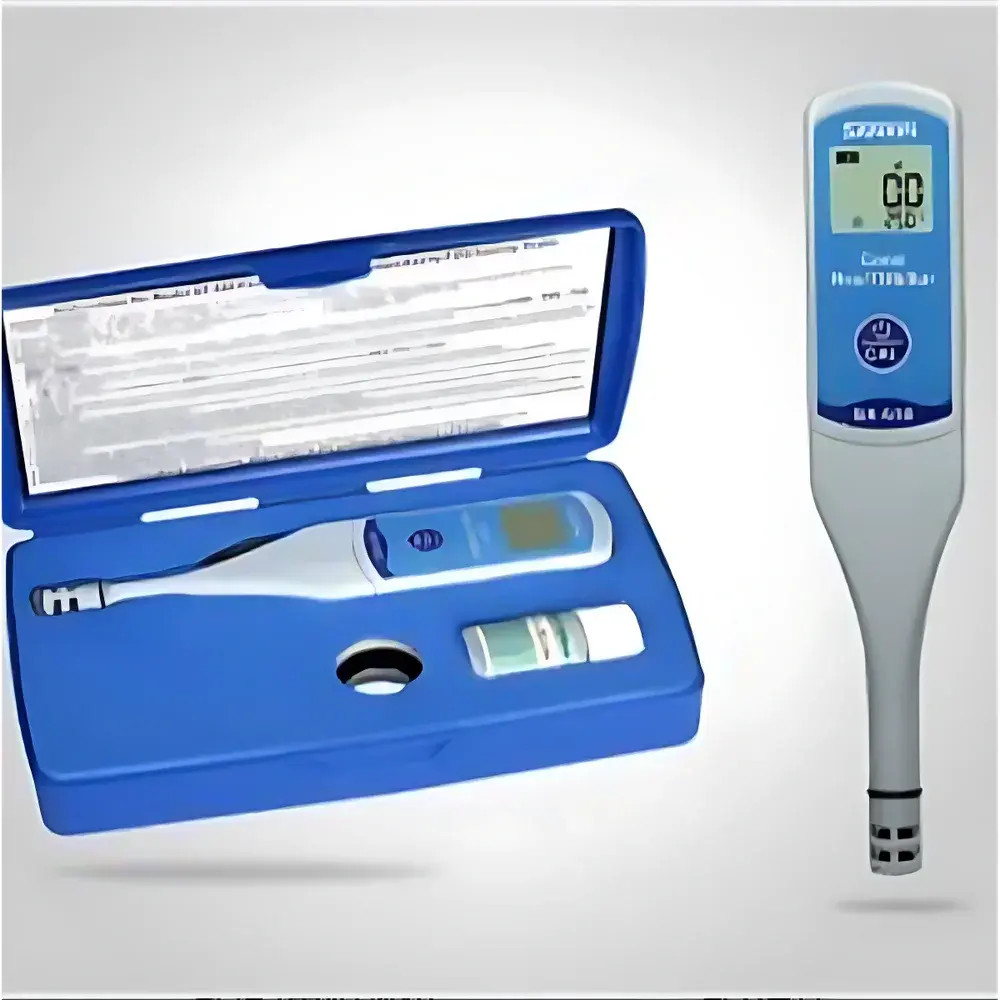
SANXIN SX650 Pocket-Sized Conductivity/TDS/Salinity/Resistivity Meter
| Brand | SANXIN |
|---|---|
| Origin | Shanghai, China |
| Model | SX650 |
| Portability | Pen-type |
| Application | Laboratory & Field Use |
| Conductivity Range | 0–50.0 mS/cm |
| TDS Range | 0–35.0 g/L |
| Resistivity Range | 0–20.0 MΩ·cm |
| Salinity Range | 0–25.0 ppt |
| Temperature Range | 0–50.0 °C |
| Accuracy | ±1.0% FS (Conductivity), ±0.5 °C (Temperature) |
| Resolution | 0.1 µS/cm |
| Auto-Temperature Compensation | 0–50 °C (2.0%/°C) |
| Calibration | Single-point (1413 µS/cm) |
| Power | Two CR2032 batteries (≥100 h operation) |
| Dimensions | 148 × 29 × 14 mm |
| Weight | 38 g |
| IP Rating | IP57 |
| Certifications | ISO 9001:2000, CE |
Overview
The SANXIN SX650 is a compact, single-handed electrochemical meter engineered for rapid, reliable field and benchtop measurement of conductivity, total dissolved solids (TDS), salinity, resistivity, and temperature in aqueous solutions. Based on the fundamental principle of two-electrode AC conductivity measurement—applying a low-frequency alternating current across a fixed electrode geometry and calculating solution conductance from the resulting voltage drop—the SX650 delivers consistent readings across a broad dynamic range. Its pen-form factor (148 × 29 × 14 mm, 38 g) and sealed IP57 housing enable operation in humid laboratories, outdoor monitoring sites, aquaculture tanks, and industrial process lines where portability and environmental resilience are critical. The instrument implements automatic temperature compensation (ATC) using a built-in NTC thermistor, applying a user-selectable or default 2.0%/°C linear coefficient to normalize conductivity values to 25 °C—ensuring comparability across variable thermal conditions per ASTM D1125 and ISO 7888 standards.
Key Features
- True pocket-sized design with ergonomic grip and single-button interface for intuitive operation under gloves or in confined spaces
- Dual-line LCD display showing primary parameter (e.g., conductivity) and simultaneous temperature reading
- Intelligent power management: auto-off after 10 minutes of inactivity; low-battery indicator; battery life ≥100 hours on two CR2032 cells
- Integrated ATC with full-range compensation (0–50 °C); no manual temperature entry required during measurement
- Single-point calibration using standard 1413 µS/cm KCl solution—calibration status and electrode health indicated via on-screen icon
- IP57-rated enclosure: dust-protected and submersible up to 1 m for 30 minutes—validated per IEC 60529
- Built-in storage compartment for calibration solution vial and electrode soaking solution (included)
- Compliant with ISO 9001:2000 quality management systems and CE marking for EMC and safety (2014/30/EU, 2014/35/EU)
Sample Compatibility & Compliance
The SX650 is optimized for routine analysis of low-to-moderate ionic strength aqueous samples, including drinking water, wastewater effluent, hydroponic nutrient solutions, aquarium water, boiler feedwater, and buffer preparations. It is not intended for high-viscosity, non-aqueous, or strongly oxidizing media. Electrode geometry and cell constant (fixed at ~1.0 cm⁻¹) ensure stable performance in clean to moderately fouling matrices. All measurements adhere to internationally recognized traceability frameworks: conductivity values are referenced to certified KCl standards (e.g., NIST SRM 3199), and temperature accuracy aligns with ITS-90 requirements. The device supports GLP-compliant workflows through unambiguous calibration logging (date/time stamp not stored internally but documented via external lab notebook), making it suitable for QC checks in food processing (FDA 21 CFR Part 11–aligned environments when paired with controlled documentation), environmental compliance reporting (EPA Method 120.1), and educational laboratory instruction.
Software & Data Management
The SX650 operates as a standalone instrument without Bluetooth, USB, or PC connectivity. Data recording is manual—users transcribe readings directly into electronic lab notebooks (ELN) or LIMS platforms. However, its consistent output format (parameter + unit + temperature) and stable zero and span behavior facilitate downstream digital integration via optical character recognition (OCR) or automated data entry scripts. For regulated environments, the absence of internal memory eliminates concerns related to audit trail integrity or electronic signature validation—aligning with simplified GMP Annex 11 and USP guidance for Class A/B instruments where manual transcription is acceptable for non-critical parameters.
Applications
- Water quality screening in municipal treatment plants and decentralized rural systems
- Real-time salinity monitoring in marine aquaculture and hatchery operations
- TDS verification during reverse osmosis system maintenance and membrane integrity checks
- Resistivity validation of purified water used in pharmaceutical equipment rinsing (USP )
- Field-based assessment of soil extract conductivity in agricultural extension services
- Teaching conductivity principles and temperature compensation effects in undergraduate chemistry labs
- Quick-check verification of buffer ionic strength prior to electrophoresis or chromatography runs
FAQ
What calibration standard is required for the SX650?
A single 1413 µS/cm KCl solution is used for conductivity calibration. No multi-point calibration is supported.
Can the SX650 measure ultra-pure water resistivity accurately?
It provides qualitative to semi-quantitative resistivity estimates up to 20.0 MΩ·cm; for precise ultrapure water analysis (e.g., ≥18.2 MΩ·cm), a dedicated microsiemens-grade benchtop meter with guarded cell design is recommended.
Is the electrode replaceable?
Yes—the integrated graphite electrode assembly is a consumable part; replacement kits (SX650-EL) are available separately.
Does the instrument store calibration history or measurement logs?
No. The SX650 has no internal memory or timestamping capability—consistent with its role as a basic verification tool.
How often should the electrode be cleaned?
Clean with deionized water after each use; soak in mild detergent or 0.1 M HNO₃ for 5 minutes if scaling or organic fouling is observed—rinse thoroughly before reuse.





