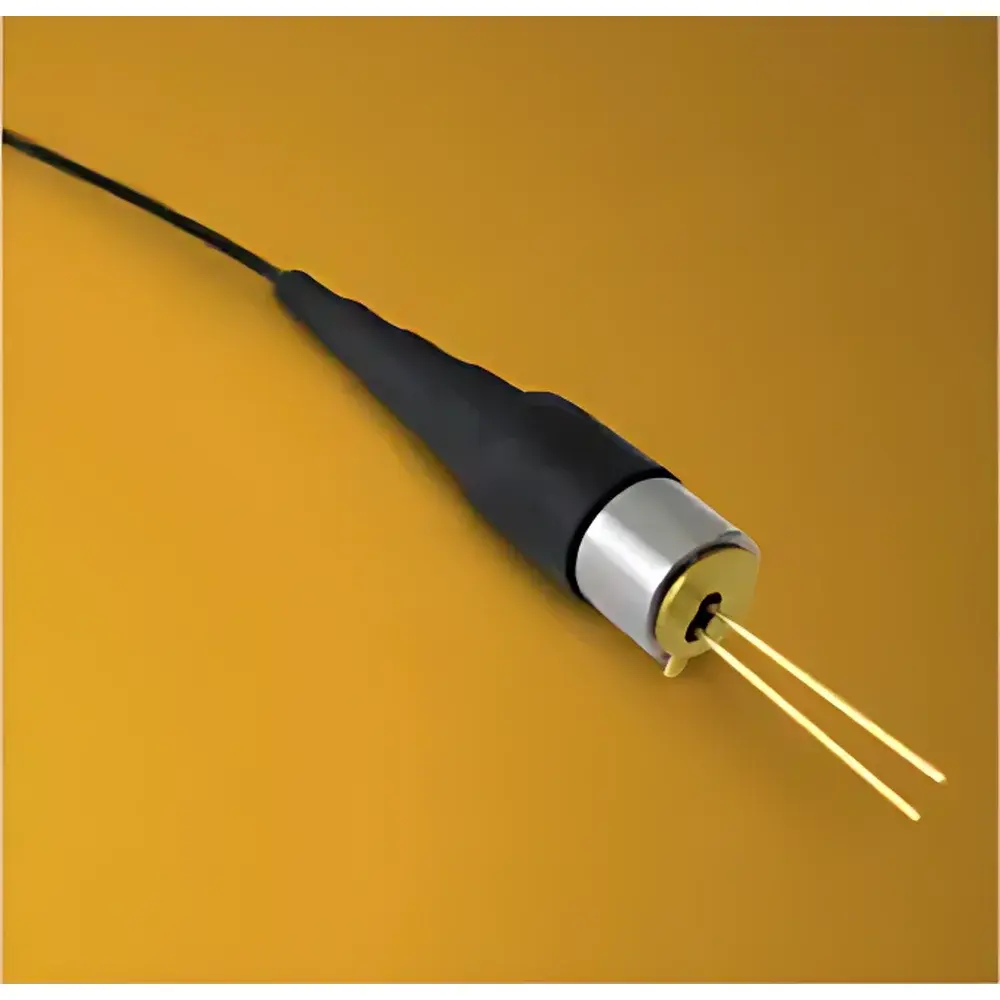
SAP500 Series Geiger-Mode Avalanche Photodiode (GM-APD)
| Brand | — |
|---|---|
| Origin | Germany |
| Manufacturer Type | Authorized Distributor |
| Origin Category | Imported |
| Model | SAP500 Series |
| Pricing | Upon Request |
Overview
The SAP500 Series Geiger-Mode Avalanche Photodiode (GM-APD) is a solid-state single-photon detection device engineered for ultra-low-light applications requiring high timing resolution, robust environmental stability, and operation without cryogenic cooling. Unlike conventional photodiodes or even linear-mode APDs, the SAP500 operates in true Geiger mode—biased above its breakdown voltage (VR > VBR)—enabling deterministic avalanche triggering upon absorption of individual photons. This mechanism, combined with a planar “through-illumination” structure, delivers exceptional quantum efficiency (QE) across the visible to near-infrared spectrum (400–1100 nm), with peak responsivity centered at 700 nm. The device leverages silicon-based semiconductor physics to achieve photon-counting capability at room temperature or under thermoelectric stabilization—making it a technically and economically viable alternative to vacuum-based photomultiplier tubes (PMTs) in demanding scientific and industrial instrumentation.
Key Features
- Geiger-mode and linear-mode dual-operation capability: configurable biasing for either single-photon counting (SPC) or analog current measurement up to gain >250
- High quantum efficiency: optimized anti-reflection coating and back-illuminated architecture yield >65% typical QE at 700 nm
- Ultra-low dark count rate (DCR): engineered junction design and passivation minimize thermally generated carriers, supporting sub-kHz DCR at −20°C with two-stage TEC cooling
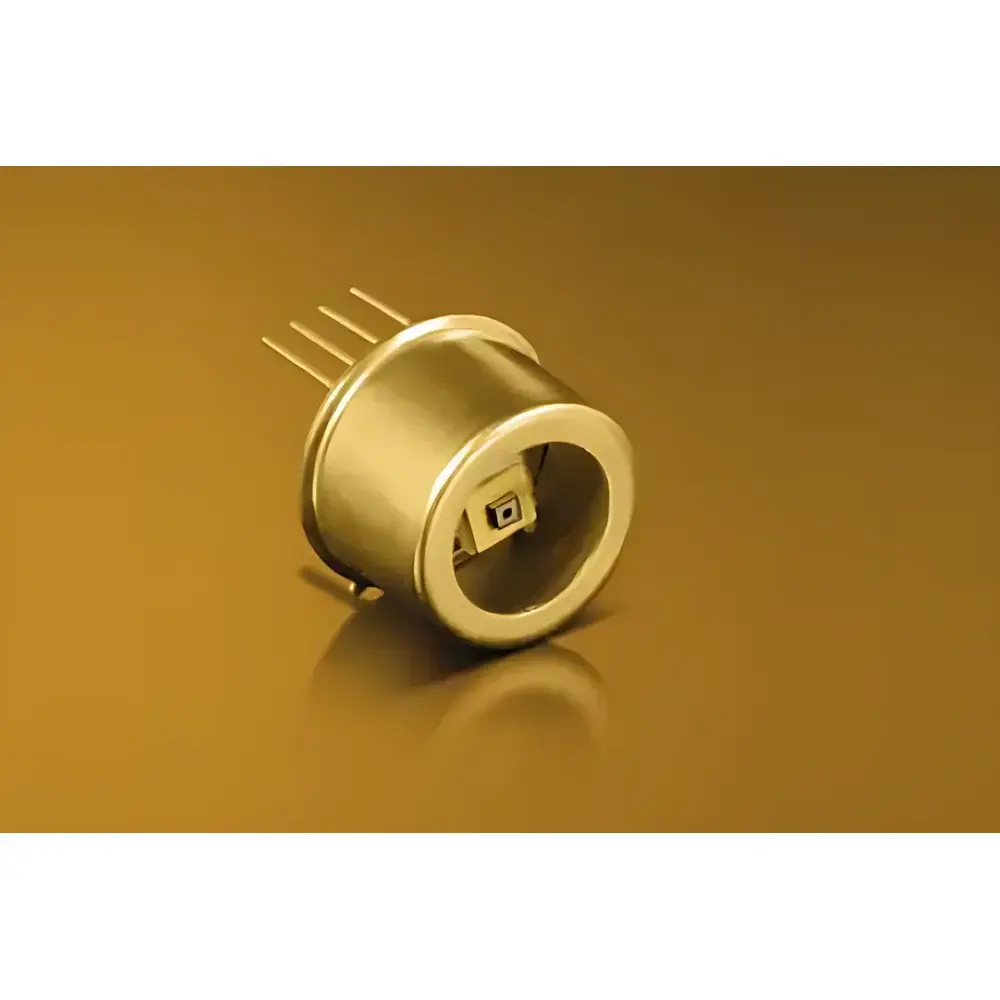
- 500 µm active diameter photosensitive area with ~100° full-angle field of view (FOV), enabling efficient coupling to optical fibers or free-space beam paths
- Three packaging options: standard hermetically sealed TO-46; TO-37 with integrated single-stage thermoelectric cooler (TEC); and TO-8 with dual-stage TEC for deep sub-zero stabilization (down to −40°C)
- Fiber-coupled variants available with FC/PC or SMA connectors, supporting SMF-28 or multimode fiber integration
Sample Compatibility & Compliance
The SAP500 Series is compatible with standard optical bench configurations, OEM modules, and custom detector assemblies used in time-resolved spectroscopy, fluorescence lifetime imaging (FLIM), and time-of-flight (ToF) LIDAR systems. Its TO-can packages conform to JEDEC MO-042 and MIL-STD-750E mechanical and environmental test standards. While not certified as medical-grade hardware per ISO 13485, the device meets RoHS 2015/863/EU and REACH (EC 1907/2006) material compliance requirements. For regulated environments—including GLP/GMP-compliant analytical labs—the SAP500 supports traceable calibration via NIST-traceable reference sources and is compatible with data acquisition systems compliant with FDA 21 CFR Part 11 when integrated with appropriate audit-trail-enabled software.
Software & Data Management
The SAP500 does not include embedded firmware but is fully interoperable with industry-standard photon-counting electronics such as Time-Correlated Single Photon Counting (TCSPC) modules (e.g., PicoQuant HydraHarp, Becker & Hickl SPC-150NX) and digital photon counters (e.g., ID Quantique id120). When paired with compatible DAQ platforms, it enables timestamped event logging with <100 ps timing jitter (FWHM), histogram-based decay analysis, and real-time coincidence gating. Raw photon arrival data can be exported in ASCII, HDF5, or binary formats for post-processing in MATLAB, Python (NumPy/SciPy), or Igor Pro. Integration with LabVIEW and Python APIs allows automated parameter sweeps (bias voltage, temperature setpoint) and synchronized multi-channel acquisition.
Applications
- LIDAR and 3D ToF sensing: high-sensitivity detection of weak return signals from atmospheric scattering or long-range targets
- Time-resolved fluorescence spectroscopy: sub-nanosecond lifetime measurements in biological samples, quantum dots, and organic emitters
- Single-molecule detection: confocal and total internal reflection fluorescence (TIRF) microscopy setups requiring background-limited sensitivity
- Quantum optics experiments: heralded photon generation, Bell-state measurements, and quantum key distribution (QKD) receiver modules
- Industrial process monitoring: low-light emission analysis in plasma diagnostics, combustion studies, and UV-VIS trace gas sensing
FAQ
What is the difference between Geiger-mode and linear-mode operation?
In Geiger mode, the SAP500 is biased above its breakdown voltage, producing a self-sustaining avalanche for each absorbed photon—requiring active quenching. In linear mode, bias remains below breakdown, yielding analog photocurrent proportional to incident flux.
Does the SAP500 require cryogenic cooling?
No. It operates reliably at room temperature, though dark count rate improves significantly with thermoelectric cooling—especially in photon-starved applications.
Can the SAP500 be used with standard TCSPC hardware?
Yes. Its fast rise time (<1 ns) and low capacitance (<1.2 pF) ensure compatibility with commercial TCSPC systems without signal degradation.
Is fiber coupling offered as a factory option?
Yes. FC/PC and SMA-terminated single-mode and multimode fiber pigtails are available with AR-coated collimators and alignment verification reports.
What is the maximum count rate before significant dead-time distortion occurs?
At 50% duty cycle, the practical upper limit is ~10 MHz for standard TO-46 versions; higher-rate variants with active quenching circuits support >50 MHz sustained counting.