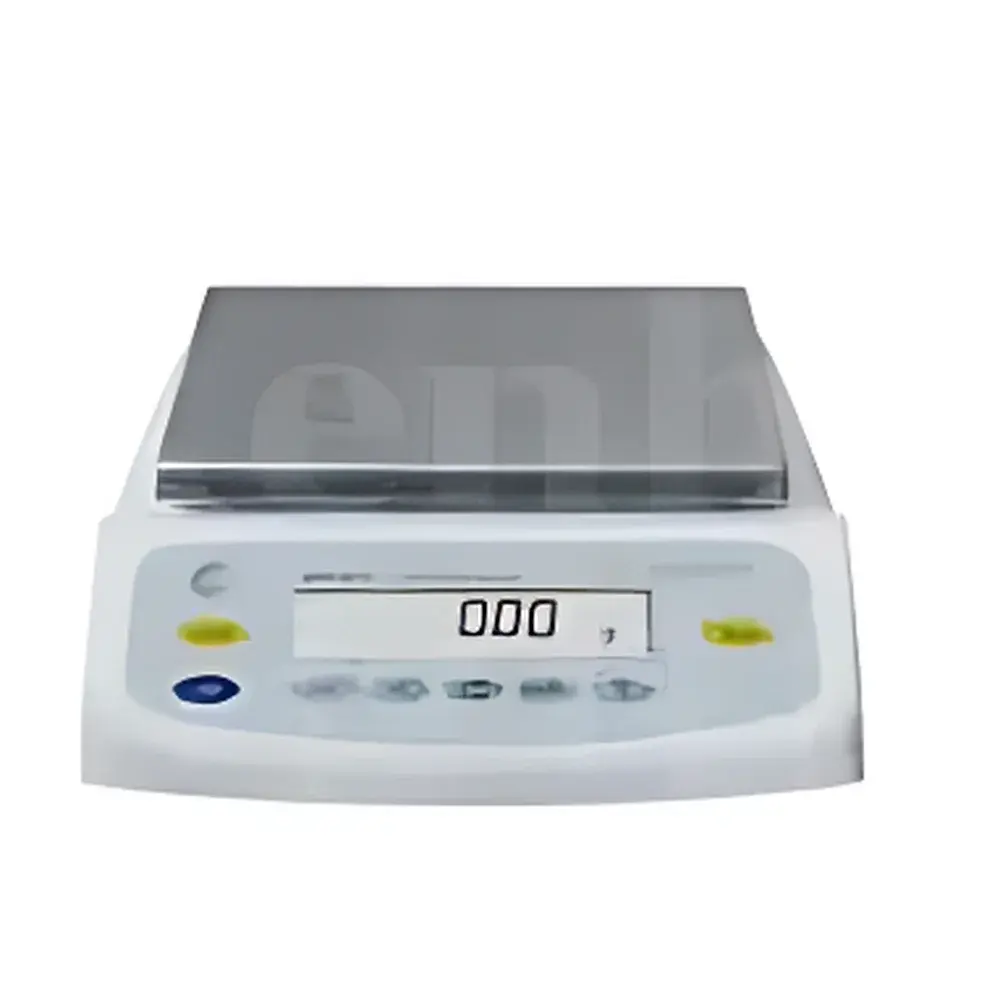
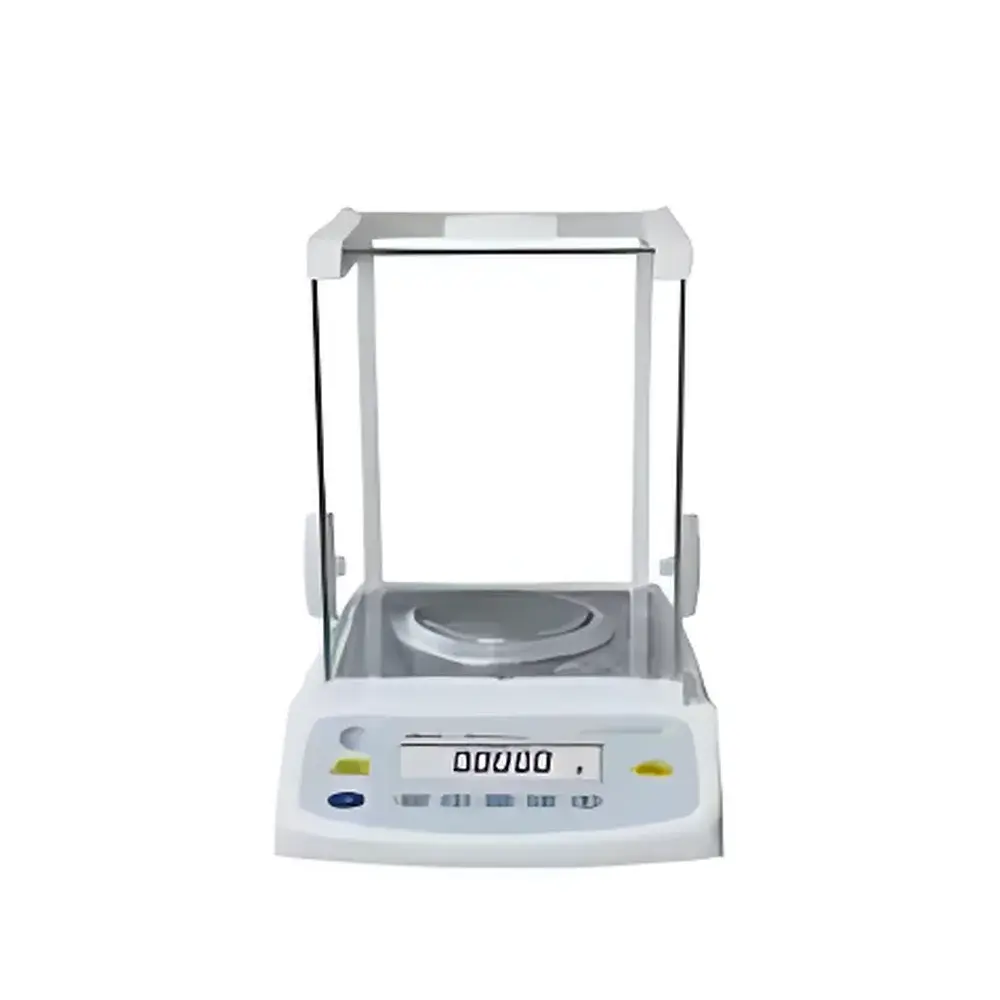
Sartorius BSA124S Analytical Balance with Monolithic Sensor Technology
| Brand | Sartorius |
|---|---|
| Origin | Germany |
| Product Category | Imported Instrument |
| Model | BSA124S |
| Instrument Type | Analytical Balance |
| Maximum Capacity | 120 g |
| Readability | 0.1 mg |
| Repeatability | ≤ 0.1 mg |
| Linearity | ≤ 0.2 mg |
| Calibration Method | External |
| Pan Size | 90 mm diameter |
| Display | Backlit High-Contrast LCD with 15 mm Character Height |
| Interface | RS-232C Bidirectional |
| Operating Languages | English, German, French, Spanish, Chinese |
| Keypad | Tactile Membrane Keys |
| Compliance | ISO/IEC 17025, ASTM E898, USP <41>, GLP/GMP-ready |
Overview
The Sartorius BSA124S Analytical Balance is a high-precision mass measurement instrument engineered for laboratories requiring consistent, traceable, and metrologically sound weighing results. Built around a monolithic electromagnetic force compensation sensor architecture—distinct from traditional dual-beam or strain-gauge designs—the BSA124S delivers enhanced mechanical stability, reduced thermal drift, and superior long-term repeatability. Its 120 g maximum capacity and 0.1 mg readability meet the stringent requirements of quantitative analytical workflows, including sample preparation for HPLC, gravimetric standardization, pharmaceutical active ingredient (API) formulation, and reference material certification. The balance operates in accordance with fundamental principles of electromagnetic force restoration, where the displacement of the weighing pan is counteracted by a precisely regulated current through a coil suspended in a permanent magnetic field; the resulting current is linearly proportional to mass and digitally converted via a 24-bit ADC. This architecture ensures compliance with international metrological standards and supports routine verification under ISO/IEC 17025-accredited quality systems.
Key Features
- Monolithic sensor design eliminates mechanical hysteresis and improves resistance to shock loading and environmental vibration
- Backlit high-contrast LCD display with 15 mm character height ensures legibility under low-light or ambient-bright laboratory conditions
- Intuitive menu-driven interface with five selectable languages (English, German, French, Spanish, Chinese) and cursor-key navigation for rapid parameter configuration
- Tactile membrane keypad with clearly defined functional zones minimizes operational error and supports gloved-hand use
- RS-232C bidirectional serial interface enables direct integration with LIMS, ELN, or custom data acquisition software; optional USB adapter cable available for modern PC connectivity
- No internal motorized calibration mechanism—external calibration using certified Class E2 or better weights maintains full transparency and auditability per ISO 9001 and FDA 21 CFR Part 11 expectations
Sample Compatibility & Compliance
The BSA124S accommodates standard 90 mm diameter weighing pans compatible with ceramic, stainless-steel, and anti-static materials—supporting volatile, hygroscopic, or electrostatic-prone samples when used with draft shields (sold separately). Its performance specifications satisfy critical regulatory benchmarks: repeatability ≤ 0.1 mg and linearity ≤ 0.2 mg are verified per ASTM E898-22 (Standard Practice for Calibration of Analytical Balances) and align with USP “Weights and Balances” requirements for pharmaceutical applications. The balance is designed for GLP and GMP environments, supporting full audit trails when paired with compliant data management software. It meets essential electromagnetic compatibility (EMC) and safety criteria per IEC 61326-1 and IEC 61010-1, and its construction adheres to RoHS and REACH directives.
Software & Data Management
While the BSA124S does not embed proprietary software, its RS-232C interface outputs ASCII-formatted weighing data—including stable weight, time stamp, unit, and status flags—in real time. This facilitates seamless integration with third-party platforms such as LabWare LIMS, Thermo Fisher SampleManager, or custom Python- or LabVIEW-based acquisition scripts. When deployed in regulated settings, users may implement 21 CFR Part 11-compliant electronic signatures and audit trail generation via validated middleware. Sartorius-provided documentation includes full interface protocols, command syntax (e.g., “S” for send weight, “U” for unit change), and error code definitions—enabling reproducible system validation and IQ/OQ/PQ execution.
Applications
- Preparation of certified reference standards in metrology labs
- Gravimetric dilution of stock solutions for ICP-MS and AAS calibration
- Weighing of active pharmaceutical ingredients during batch release testing
- Residue-on-ignition (ROI) and loss-on-drying (LOD) determinations per USP
- Quality control of catalysts, nanomaterials, and high-purity metals where sub-0.1 mg uncertainty is required
- Educational use in university analytical chemistry laboratories emphasizing traceable measurement practice
FAQ
Is internal calibration available on the BSA124S?
No—the BSA124S requires external calibration using traceable reference weights. This design supports full transparency and simplifies verification during regulatory audits.
What draft shield options are compatible?
Sartorius offers the GWP-compatible DSC-120 and DSC-120L acrylic draft shields, both designed for optimal airflow management and minimal static interference.
Can the BSA124S be connected to a networked LIMS without additional hardware?
A serial-to-Ethernet converter or USB-RS232 adapter is required for integration with modern networked infrastructure; no built-in Ethernet or Wi-Fi capability is provided.
Does the balance support automatic tare or preset tare functions?
Yes—tare can be applied manually or programmed as a fixed offset; however, no auto-tare-on-stabilization logic is implemented to preserve measurement integrity.
How often should external calibration be performed?
Frequency depends on usage intensity and risk assessment per ISO/IEC 17025; typical intervals range from daily pre-use checks to weekly full-range verification using at least three calibrated masses spanning 5%, 50%, and 100% of capacity.