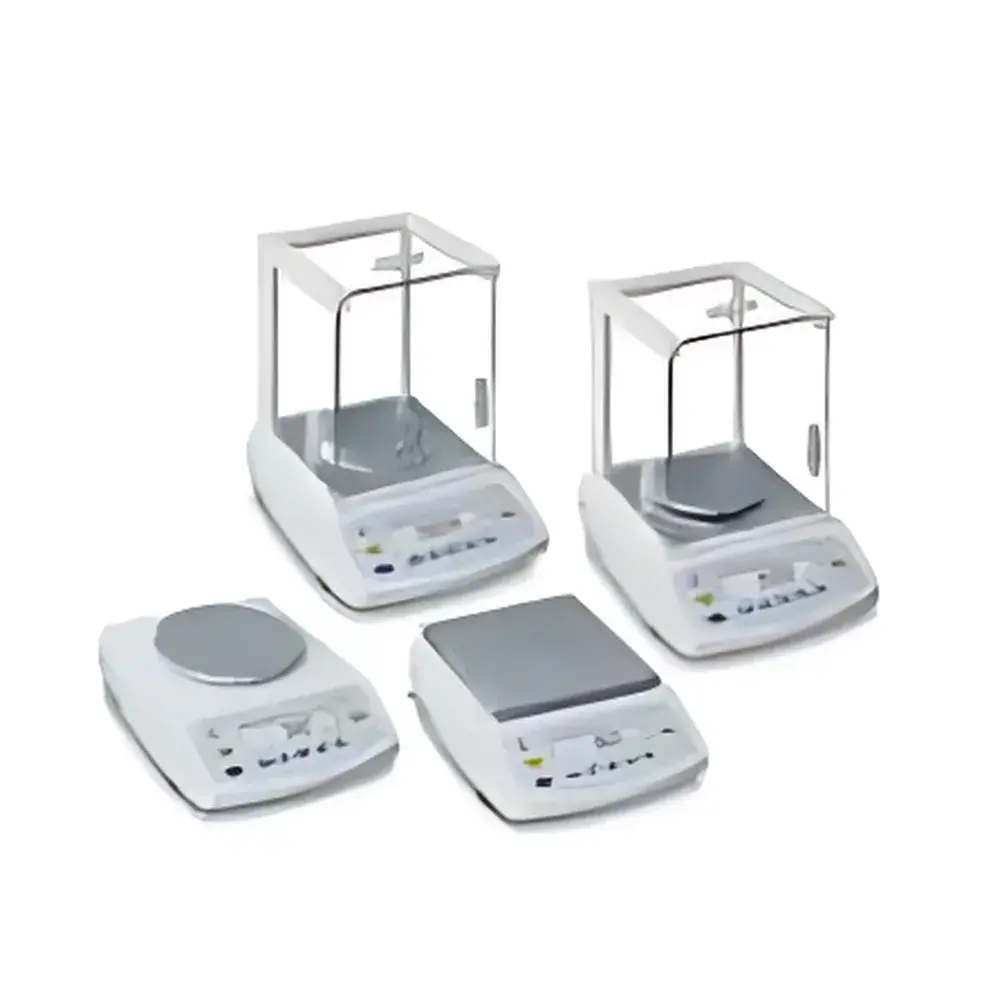
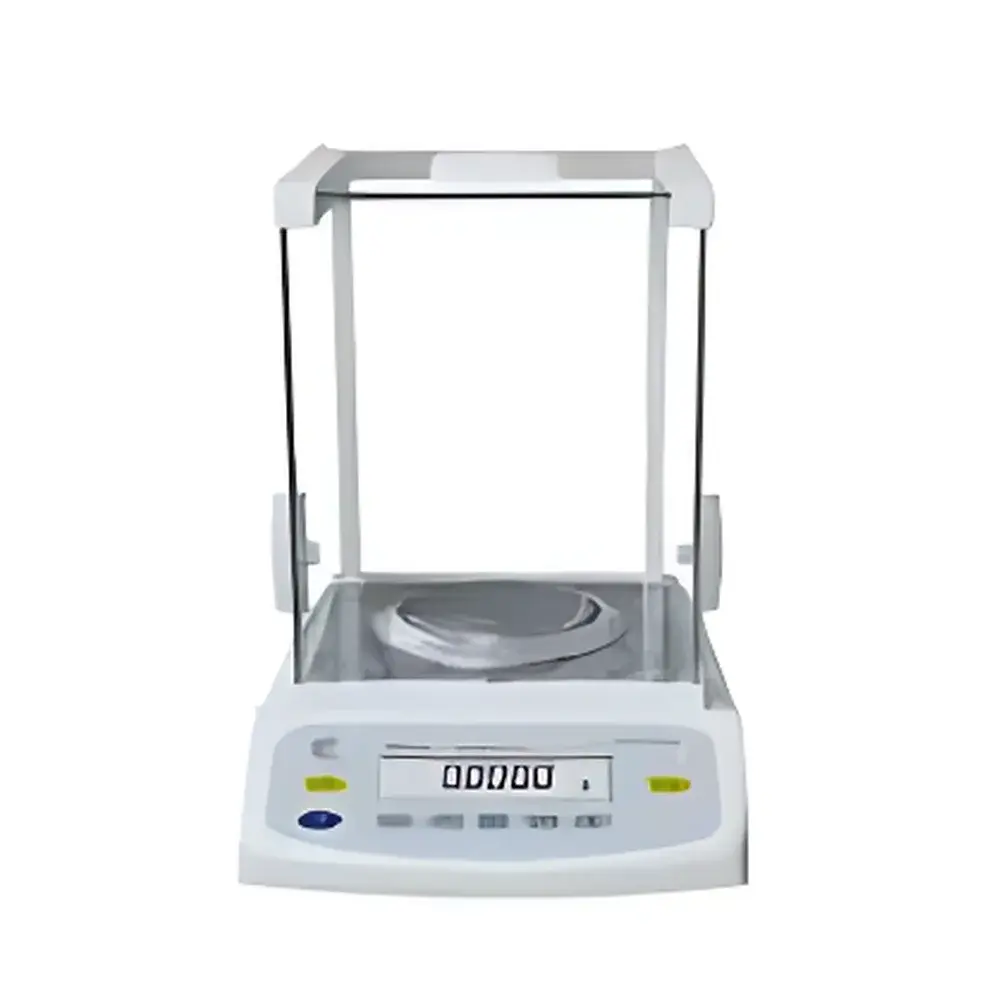
Sartorius BSA224S Analytical Balance
| Brand | Sartorius |
|---|---|
| Origin | Germany |
| Model | BSA224S |
| Maximum Capacity | 220 g |
| Readability | 0.1 mg |
| Repeatability | ≤ 0.1 mg |
| Linearity | ≤ 0.2 mg |
| Pan Size | 90 mm diameter |
| Calibration | External |
| Interface | RS-232C (bidirectional) |
| Display | Backlit high-contrast LCD with 15 mm character height |
| Operating Languages | 5 selectable (English, German, French, Spanish, Chinese) |
| Control | Tactile keypad with intuitive menu-driven navigation |
Overview
The Sartorius BSA224S Analytical Balance is a precision mass measurement instrument engineered for laboratories requiring high reproducibility and traceable accuracy in routine analytical weighing tasks. Based on electromagnetic force compensation (EMFC) technology, the BSA224S delivers stable, drift-compensated measurements under variable environmental conditions—including minor air currents, temperature fluctuations, and bench vibrations common in shared lab spaces. With a maximum capacity of 220 g and readability of 0.1 mg (100 µg), it meets the performance criteria defined in ISO/IEC 17025 for accredited testing laboratories and aligns with USP requirements for analytical balance verification. Its robust mechanical architecture—featuring a monolithic sensor housing and draft shield-compatible design—ensures long-term stability and minimal maintenance over extended operational cycles.
Key Features
- High-contrast backlit LCD display with 15 mm character height for optimal legibility under low-light or high-ambient-brightness conditions
- Tactile keypad interface with ergonomic layout and clearly labeled function keys, supporting intuitive operation without training overhead
- Menu-driven configuration system offering five language options (English, German, French, Spanish, Chinese) to support multilingual laboratory environments
- External calibration capability using certified Class E2 or better weights; no internal motorized calibration mechanism—reducing complexity and service dependency
- RS-232C serial interface as standard, enabling direct integration with LIMS, ELN, or custom data acquisition software; optional USB connectivity via Sartorius-certified adapter cable
- Compliance-ready design: supports audit trails when paired with Sartorius LabX software (optional), facilitating adherence to FDA 21 CFR Part 11 and GLP/GMP documentation requirements
Sample Compatibility & Compliance
The BSA224S accommodates a broad range of sample types—from powdered pharmaceutical actives and reference standards to small-volume liquid aliquots in tared vials—within its 90 mm diameter stainless-steel weighing pan. Its compact footprint (210 × 320 × 320 mm) allows seamless integration beneath standard fume hoods or inside controlled-environment glove boxes. The balance conforms to international metrological standards including OIML R 76-1 (2006), EN 45501:2015, and Directive 2014/32/EU (Measuring Instruments Directive). While not intrinsically compliant with ATEX or IECEx for hazardous areas, its static-dissipative housing and grounding terminal enable safe use in electrostatic-sensitive environments when properly grounded per IEC 61340-5-1.
Software & Data Management
Data export from the BSA224S is fully configurable via RS-232C protocol using ASCII-based command sets (e.g., “S” for stable weight readout, “I” for identification string). When connected to Sartorius LabX software (v3.8+), the device supports automated metadata tagging—including user ID, timestamp, balance ID, and environmental condition logging (if external sensors are interfaced). LabX enables electronic signature workflows, role-based access control, and full 21 CFR Part 11 compliance through encrypted audit trails and immutable record archiving. For labs operating under ISO 17025, the balance’s calibration history, adjustment logs, and performance verification reports can be exported in PDF or CSV formats for inclusion in technical records.
Applications
- Quantitative preparation of standard solutions and calibration standards in QC/QA labs across pharmaceutical, chemical, and food testing sectors
- Weighing of active pharmaceutical ingredients (APIs) during formulation development where ±0.1 mg tolerance is critical to dosage accuracy
- Gravimetric analysis procedures such as loss-on-drying (LOD), ash content determination, and filter residue quantification
- Support of ASTM E898–22 (Standard Practice for Calibration of Analytical Balances) and ISO 9001:2015 clause 7.1.5 (Monitoring and measuring resources)
- Teaching laboratories requiring durable, operator-friendly instrumentation for undergraduate chemistry and materials science curricula
FAQ
Does the BSA224S support internal calibration?
No—the BSA224S requires external calibration using traceable weights. It does not include a built-in motorized calibration mechanism.
Is the RS-232 interface compatible with modern Windows/macOS systems?
Yes, when used with a USB-to-RS-232 adapter that supports standard COM port emulation and appropriate driver installation.
What is the recommended recalibration frequency?
Per ISO/IEC 17025, recalibration intervals should be risk-based; typical practice is daily zero-check, weekly sensitivity verification, and formal recalibration every 3–6 months—or after relocation, repair, or observed performance deviation.
Can the balance be integrated into a networked lab environment?
Standalone units operate independently, but when connected to LabX software on a local server or cloud-hosted instance, multi-user access, centralized reporting, and remote diagnostics become available.
Is the display readable under UV light or in cold rooms?
The high-contrast LCD maintains legibility down to +5 °C; however, prolonged exposure below 10 °C may slow response time. UV illumination does not affect readability, though direct UV exposure is not recommended for extended periods.