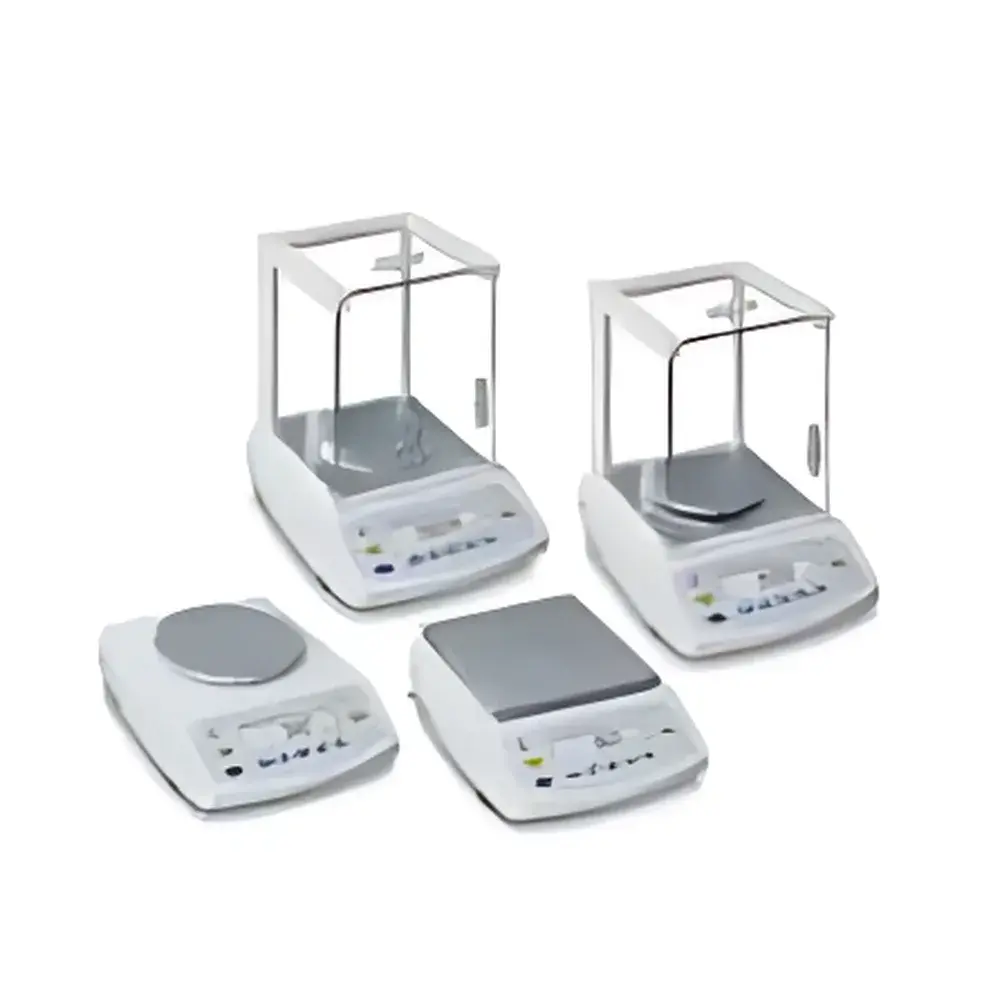
Sartorius BSA423S-CW Precision Balance with Internal Motorized Calibration
| Brand | Sartorius |
|---|---|
| Origin | Germany |
| Model | BSA423S-CW |
| Type | Precision Balance |
| Maximum Capacity | 420 g |
| Readability | 1 mg |
| Repeatability | ≤1 mg |
| Linearity | ≤1 mg |
| Calibration | Motorized Internal Calibration |
| Pan Size | 115 × 120 mm |
| Display | Backlit High-Contrast LCD, 15 mm Character Height |
| Interface | RS-232C Bidirectional |
| Operating Languages | 5 (English, German, French, Spanish, Chinese) |
| Compliance | ISO/IEC 17025, GLP/GMP-ready, FDA 21 CFR Part 11 compatible via optional software |
Overview
The Sartorius BSA423S-CW is a high-performance precision balance engineered for laboratories requiring consistent, traceable mass measurements under routine and regulated conditions. Based on electromagnetic force compensation (EMFC) technology, it delivers stable, drift-resistant weighing results by dynamically balancing the gravitational force of the sample against a precisely controlled electromagnetic field. This principle ensures high reproducibility, minimal thermal drift, and long-term stability—critical attributes for quality control, formulation, and analytical workflows in pharmaceutical, chemical, and academic laboratories. Designed and manufactured in Germany, the BSA423S-CW complies with international metrological standards including OIML R76 and EN 45501, and supports regulatory compliance frameworks such as ISO/IEC 17025, GLP, and GMP through built-in audit trail capabilities and user-accessible calibration logs.
Key Features
- Motorized internal calibration system with integrated, temperature-compensated calibration weights—activated via single-key operation to eliminate manual handling errors and ensure daily verification integrity.
- Backlit, high-contrast LCD display with 15 mm character height for optimal legibility under diverse ambient lighting, including low-light or glare-prone environments.
- Intuitive menu-driven interface with five selectable operating languages (English, German, French, Spanish, Chinese), guided navigation, and context-sensitive prompts for rapid setup and configuration.
- Tactile, ergonomically defined keypad with responsive touch feedback and logically grouped function keys to minimize operational error and support repetitive tasks.
- RS-232C bidirectional communication port standard; optional USB-to-RS232 cable enables seamless integration with LIMS, ELN, or custom data acquisition systems.
- Robust mechanical architecture featuring draft shield compatibility (sold separately), anti-static coating on housing, and vibration-dampening feet for enhanced stability on shared lab benches.
Sample Compatibility & Compliance
The BSA423S-CW accommodates a broad range of solid and granular samples within its 420 g capacity and 1 mg readability envelope. Its 115 × 120 mm stainless-steel weighing pan provides sufficient surface area for volumetric containers, crucibles, and multi-sample trays while maintaining structural rigidity. The balance meets ISO 9001 requirements for measurement process control and supports full traceability through user-defined ID assignment, time-stamped calibration records, and event logging (e.g., calibration, zeroing, overload). When operated with Sartorius’ DataControl or LabX software (optional), it satisfies FDA 21 CFR Part 11 requirements—including electronic signatures, audit trails, and role-based access control—for regulated environments.
Software & Data Management
Data transfer and instrument management are streamlined via native RS-232C protocol support, enabling direct ASCII output to spreadsheets, databases, or validated laboratory informatics platforms. Optional connectivity solutions include Sartorius’ WinCT Balance software for basic data capture and reporting, or LabX™—a scalable, server-based platform offering full method definition, SOP enforcement, real-time deviation alerts, and automated report generation compliant with ALCOA+ principles. All calibration events, including date/time stamps, operator IDs, and deviation values, are stored internally and exportable for internal audits or regulatory inspections.
Applications
- Pharmaceutical QC: Accurate weighing of active pharmaceutical ingredients (APIs), excipients, and reference standards per USP and EP 2.1.3.
- Chemical synthesis: Precise reagent dispensing and reaction stoichiometry validation in R&D and pilot-scale labs.
- Materials science: Density determination, loss-on-drying (LOD), and ash content analysis using built-in application modes.
- Academic research: Teaching and advanced experimentation where repeatability, ease of use, and metrological transparency are essential.
- Environmental testing labs: Sample preparation for ICP-MS, AAS, and gravimetric analysis in accordance with EPA and ISO 11885 protocols.
FAQ
What does “motorized internal calibration” mean, and how often should it be performed?
Motorized internal calibration uses an embedded, temperature-compensated weight actuated by a precision stepper motor. It is recommended before first use, after relocation, following significant ambient temperature shifts (>2 °C), and at user-defined intervals (e.g., daily pre-use check).
Is the BSA423S-CW compliant with FDA 21 CFR Part 11?
The hardware supports Part 11 compliance when paired with validated software (e.g., LabX) that implements electronic signatures, audit trails, and secure user authentication.
Can the balance be connected directly to a Windows PC without additional hardware?
A USB-to-RS232 adapter cable (Sartorius part # YDP30) is required for direct connection to modern PCs lacking native RS-232 ports.
Does the balance support density determination or other advanced applications?
Yes—via optional application modules accessible through the menu system, including parts counting, percentage weighing, checkweighing, and density determination using auxiliary accessories.
What environmental conditions affect measurement stability?
Avoid drafts, direct sunlight, air conditioning vents, and vibration sources. Optimal operation occurs at 18–23 °C with relative humidity 40–60 % RH and stable barometric pressure.