Sartorius CP Series Precision Balances
| Brand | Sartorius |
|---|---|
| Origin | Germany |
| Product Type | Laboratory Balance |
| Accuracy Classes | Micro, Semi-Micro, Analytical, Precision |
| Calibration | Internal Auto-Calibration (micro/semi-micro/analytical models) & External Auto-Calibration (precision models) |
| Display | Backlit LCD (except CP2P, CP2P-F, CP225D) |
| Interface | RS232 bidirectional |
| Compliance | ISO 9001, GLP/GMP traceability support, ASTM E898, USP <41>, EN 45501 |
| Processor | 40 MHz microcontroller |
| Environmental Compensation | Digital filtering for air currents, temperature drift, and vibration |
Overview
The Sartorius CP Series Precision Balances represent a rigorously engineered family of laboratory weighing instruments designed for reproducible, traceable mass measurement across research, quality control, and regulated manufacturing environments. Built in Germany to stringent DIN EN ISO 9001 standards, the CP Series encompasses microbalances (0.001 mg readability), semi-microbalances (0.01 mg), analytical balances (0.1 mg), and precision balances (1 mg to 0.1 g), each optimized for defined metrological performance envelopes. All models operate on electromagnetic force compensation (EMFC) principle — where the restoring force required to maintain zero displacement of the weighing pan is precisely measured and converted into a digital mass value — ensuring high linearity, minimal hysteresis, and long-term stability. The series integrates mechanical robustness (including overload protection up to 150% of capacity) with environmental adaptability, featuring real-time digital filtering algorithms that dynamically suppress noise from air turbulence, floor vibrations, and thermal gradients. This architecture ensures compliance with pharmacopeial requirements such as USP (Balances) and EP 2.1.6, while supporting audit-ready documentation under GLP and GMP frameworks.
Key Features
- Electromagnetic force compensation (EMFC) transduction with temperature-compensated coil and high-stability magnet system
- Internal automatic calibration via motor-driven internal reference weights (standard on micro, semi-micro, and analytical models)
- One-touch external calibration protocol compliant with ISO 17025 verification workflows
- Backlit 16.5 mm character-height LCD display (excluded on CP2P, CP2P-F, CP225D); optimized for low-contrast ambient conditions
- Full-glass draft shield with anti-static conductive coating (resistivity <10⁹ Ω/sq), minimizing electrostatic interference during low-mass handling
- Bidirectional RS232 interface supporting ASCII command protocols for integration with LIMS, ELN, and automated dispensing systems
- Dual tare keys (left/right configuration) accommodating ergonomic workflow preferences
- Adjustable leveling feet with integrated bubble level and anti-theft security ring (models ≤8.2 kg)
- Underhook weighing capability (optional on Type 5 configurations) for density determination and magnetic susceptibility measurements
- Digital filter engine with user-selectable damping profiles (Fast/Medium/Slow) to optimize response time vs. stability trade-offs
Sample Compatibility & Compliance
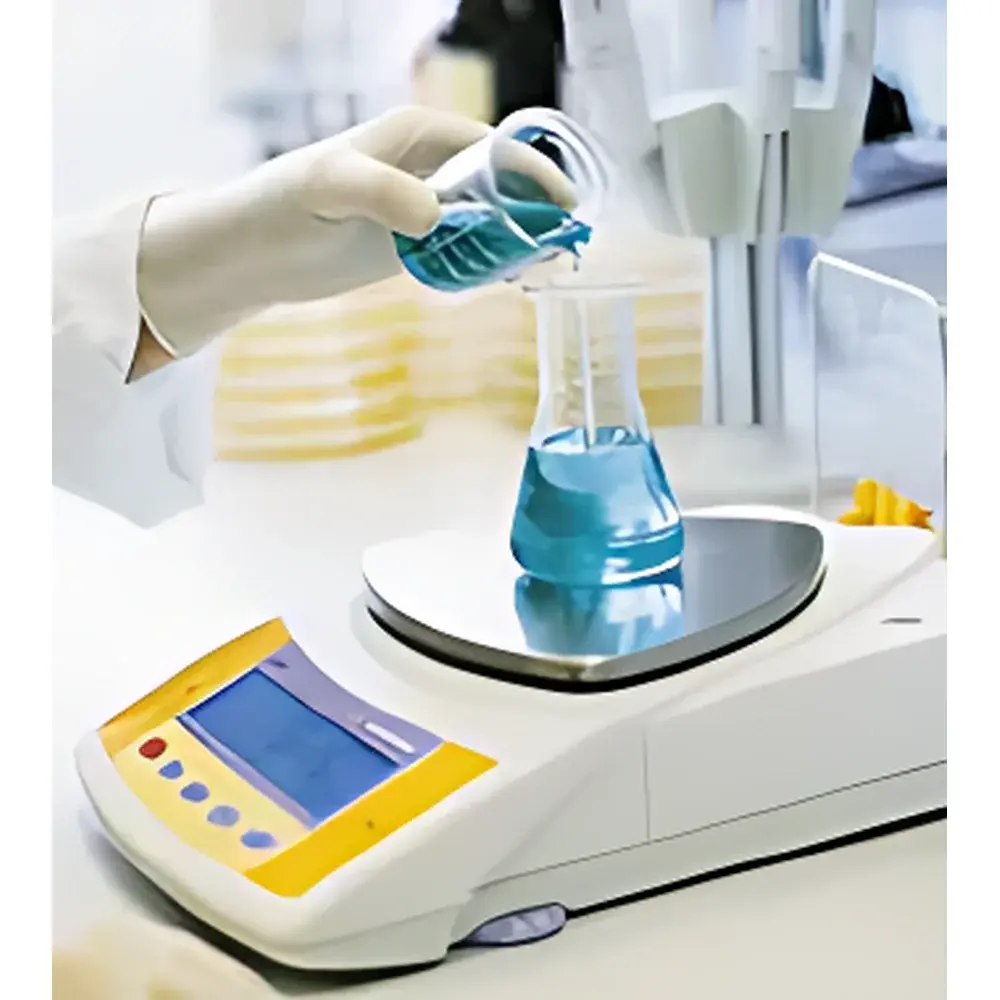
The CP Series accommodates diverse sample forms — powders, granules, liquids in tared vessels, small components, and biological specimens — via configurable pan geometries (Ø20 mm to 400 × 300 mm) and modular draft shields (removable side panels on CP2P-F; hinged top access on CP324S and above). All models meet EN 45501 (formerly OIML R76) for non-automatic weighing instruments and are validated for use in ISO/IEC 17025-accredited laboratories. Data integrity is enforced through built-in timestamped event logging (power-on, calibration, tare, overload), compatible with Sartorius YDP03-OCE printers or third-party software via RS232. When connected to compliant PC-based systems, the balances support FDA 21 CFR Part 11–aligned electronic records, including operator ID, audit trail, and electronic signature readiness.
Software & Data Management
Data output adheres to standardized ASCII format (e.g., “S” for stable reading, “T” for tare, “U” for unstable), enabling seamless parsing by laboratory informatics platforms. Optional Sartorius LabX Lite software provides basic data capture, statistical analysis (mean, SD, CV%), and customizable report templates aligned with ISO/IEC 17025 clause 7.7. For full regulatory compliance, integration with LabX Full Edition enables role-based access control, electronic signatures, and 21 CFR Part 11–compliant audit trails with immutable record retention. All balance firmware supports firmware update via RS232, ensuring long-term alignment with evolving metrological guidance documents (e.g., EURAMET cg-18).
Applications
- Pharmaceutical formulation: Active pharmaceutical ingredient (API) dispensing, blend uniformity testing, and content uniformity assays per USP
- Materials science: Density determination of ceramics and polymers using sink-float methods with underhook suspension
- Environmental testing: Filter weight gain analysis for PM₂.₅/PM₁₀ particulate matter quantification (EPA Method IO-3.2)
- Academic research: Gravimetric preparation of standard solutions for ICP-MS calibration (trace metal analysis)
- Food & beverage QC: Moisture loss tracking in lyophilized products and net weight verification for packaging compliance (EU Directive 2009/155/EC)
- Chemical synthesis: Stoichiometric reagent dosing in inert-atmosphere gloveboxes using static-dissipative draft shields
FAQ
Does the CP Series support internal calibration across all readability classes?
Yes — internal motorized calibration is standard on all micro (0.001 mg), semi-micro (0.01 mg), and analytical (0.1 mg) models. Precision balances (1 mg and coarser) feature one-touch external calibration only.
Can the balance be integrated into a 21 CFR Part 11–compliant environment?
Yes — when paired with LabX Full Edition and configured with user authentication, electronic signatures, and audit-trail archiving, the CP Series meets predicate rules for electronic records and signatures.
What draft shield options are available for volatile or electrostatic-sensitive samples?
All analytical and precision models include full-glass, anti-static coated draft shields. CP2P-F features a removable Ø125 mm filtration disc for gravimetric filter weighing applications.
Is temperature drift compensation automatic or manual?
Automatic — the EMFC sensor includes integrated temperature sensors and real-time compensation algorithms; no user intervention required.
How is overload protection implemented mechanically?
A dual-stage mechanical stop system limits pan displacement beyond ±150% of nominal capacity, preventing damage to the load cell and maintaining metrological integrity after overloading events.