
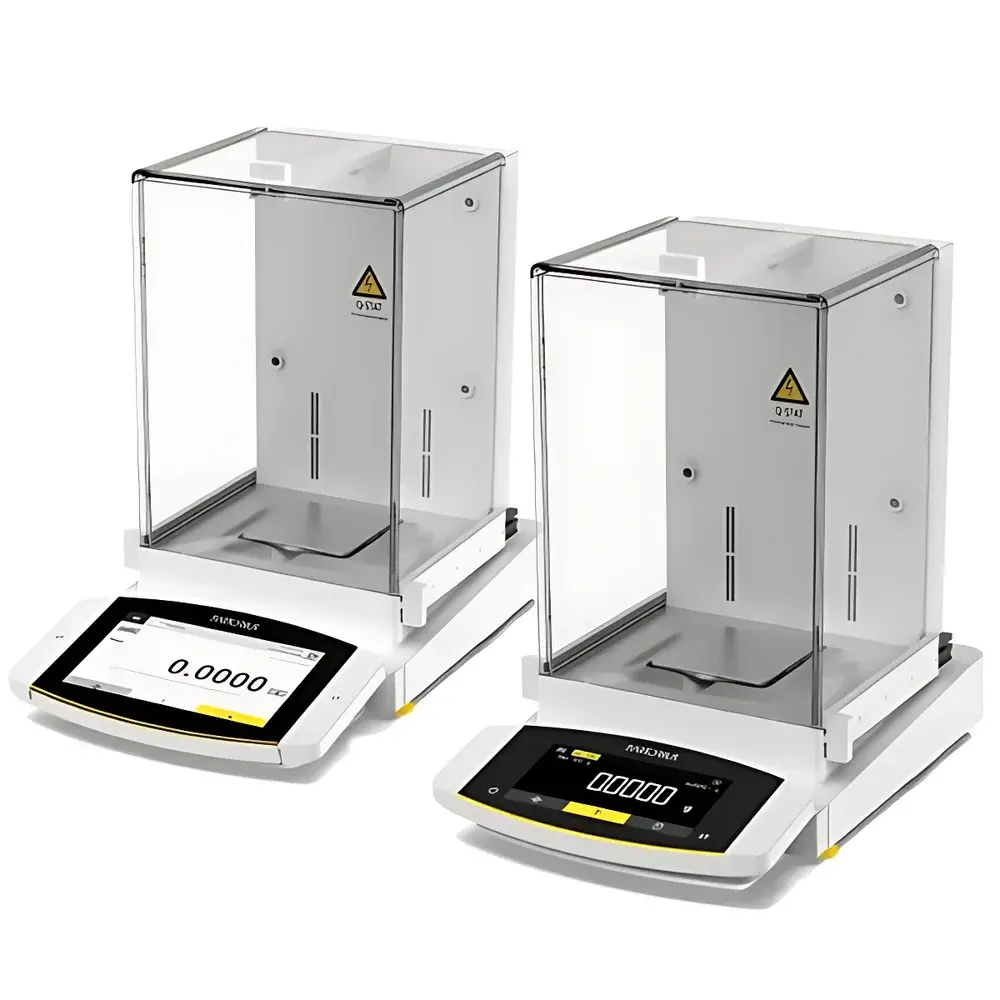
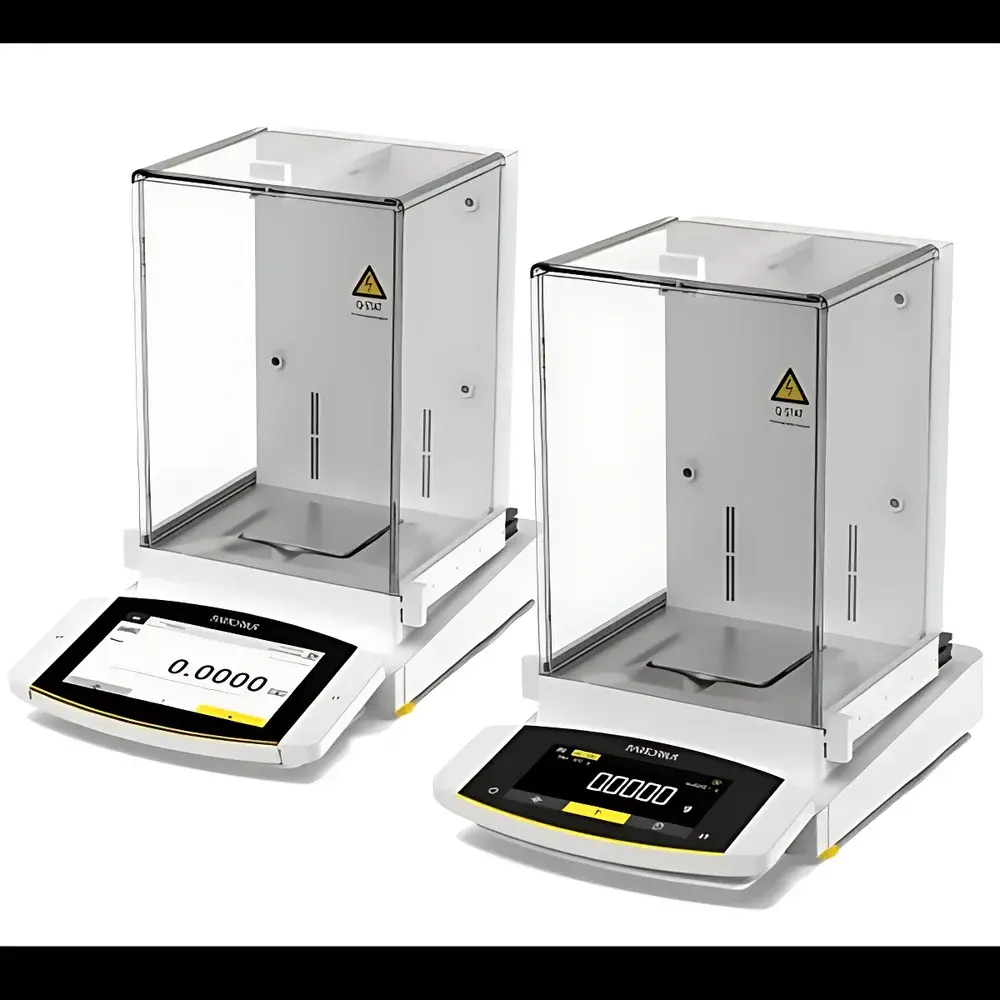
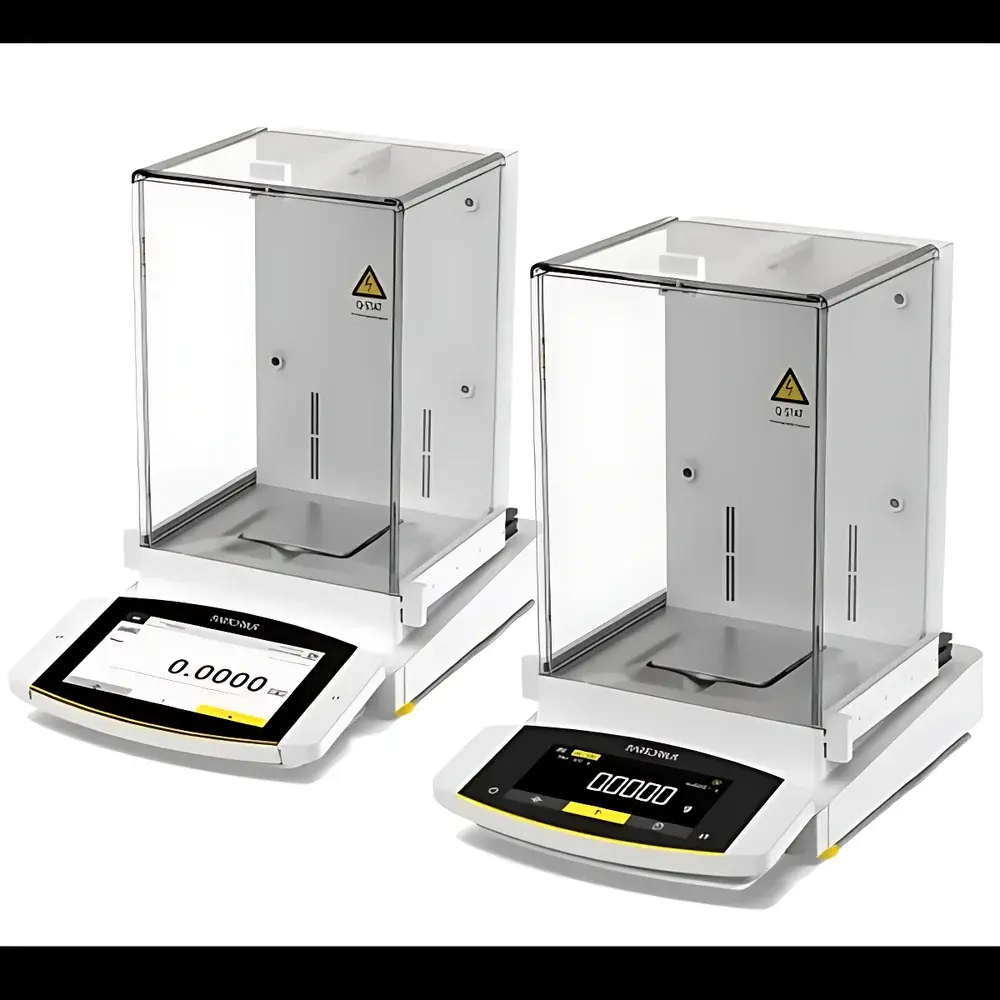
Sartorius Cubis® High-Performance Analytical and Precision Balance
| Brand | Sartorius |
|---|---|
| Origin | Germany |
| Model | Cubis® |
| Module Configurability | Interchangeable Weighing, Display/Control, and Draft Shield Modules |
| Readability Range | 0.0001 mg to 100 mg |
| Maximum Capacity | 6 g to 14.2 kg |
| Compliance | ISO/IEC 17025, ASTM E898, USP <41>, FDA 21 CFR Part 11 (with Q-App and audit trail enabled) |
| Environmental Protection | IP54-rated control unit |
Overview
The Sartorius Cubis® is a modular high-performance weighing platform engineered for metrological excellence in regulated and research-intensive laboratory environments. Unlike monolithic benchtop balances, the Cubis® architecture decouples three core functional domains—weighing module, display & control unit, and draft shield—enabling precise configuration to match application-specific requirements for readability, capacity, environmental resilience, and regulatory traceability. Its measurement principle is based on electromagnetic force compensation (EMFC), delivering high reproducibility, long-term stability, and minimal drift under variable thermal or vibrational conditions. Designed and manufactured in Germany, each Cubis® system adheres to Sartorius’ internal calibration standards aligned with ISO 9001 and fulfills critical performance criteria outlined in EURAMET cg-18 and OIML R76. The platform supports both routine QC workflows and GLP/GMP-compliant operations where full data integrity, user authentication, and electronic signature capability are mandatory.
Key Features
- Modular architecture: Independent selection and replacement of weighing modules (40+ variants), display/control units (MSA, MSU, MSE), and draft shields (DF, DM, DI, DIA, DU, DE) without recalibration.
- Weighing modules span six performance classes: ultra-micro (0.0001 mg / 6 g), micro (0.001 mg / 6 g), semi-micro (0.01 mg / 220 g), analytical (0.1 mg / 520 g), high-capacity precision (0.1 mg / 520 g), and industrial-grade precision (1–100 mg / up to 14.2 kg).
- Advanced display options: MSA unit features a 7-inch high-resolution color TFT touchscreen with Q-App integration; MSU offers tactile feedback keys and monochrome graphical display; MSE delivers intuitive menu navigation for rapid, error-resistant operation.
- Electrostatically optimized draft shields: Conductive glass coating minimizes static-induced weighing errors; automated DM/DI/DIA shields include self-learning door motion control and integrated ionization (DI/DIA) for charged sample handling.
- Full compliance readiness: Firmware supports 21 CFR Part 11-compliant audit trails, role-based access control, electronic signatures, and secure data export via USB or Ethernet (optional Wi-Fi).
Sample Compatibility & Compliance
The Cubis® accommodates diverse sample types—from volatile pharmaceutical actives and nanogram-scale catalysts to dense metal alloys and filter media—through application-tailored configurations. For filter weighing (e.g., EPA Method 13A/B, ISO 12103-1), the DF stainless steel manual shield paired with a 0.001 mg readability module ensures repeatability ≤0.002 mg (2σ). In pharmacopeial applications (USP , ), the DI shield with built-in ionizer eliminates electrostatic artifacts during low-mass API dispensing. All configurations meet mechanical and metrological requirements of ISO 17025-accredited laboratories and support documented instrument qualification (IQ/OQ/PQ) per GAMP 5. Environmental robustness includes temperature compensation across 10–40 °C and vibration resistance validated per ISO 14644-1 Class 5 cleanroom conditions when mounted on certified vibration isolation tables.
Software & Data Management
Q-App software enables workflow-driven method creation—including formulation, differential weighing, density determination, and statistical process control—with configurable prompts, pass/fail limits, and real-time deviation alerts. Data are stored locally with time-stamped, user-identified entries and exported in CSV, PDF, or XML formats compliant with LIMS and ELN systems. Audit trail functionality records all critical events: parameter changes, calibration actions, user logins, and result modifications—with immutable timestamps and digital signatures. Optional Sartorius LabX™ connectivity provides centralized instrument management, remote monitoring, and automated report generation across multi-site deployments.
Applications
- Pharmaceutical development: Active ingredient dispensing, reference standard preparation, and stability-indicating assay support per ICH Q5C.
- Materials science: Nanoparticle mass characterization, catalyst loading verification, and thin-film thickness calculation via gravimetric deposition.
- Environmental testing: Gravimetric analysis of PM2.5/PM10 filters per EN 12341 and EPA TO-13A.
- Academic research: Isotope ratio mass spectrometry (IRMS) sample preparation, microcalorimetry reference mass assignment, and single-cell biomass quantification.
- Quality control labs: Raw material acceptance testing, finished product release checks, and supplier certificate validation per ISO 9001 Clause 8.5.2.
FAQ
Can the Cubis® be validated for GMP environments?
Yes—the system supports full IQ/OQ/PQ documentation packages, 21 CFR Part 11-compliant audit trails, and electronic signatures when configured with Q-App and appropriate user access controls.
Is calibration traceable to national standards?
All factory calibrations are traceable to PTB (Physikalisch-Technische Bundesanstalt) through DAkkS-accredited calibration laboratories, with optional on-site UKAS or NIST-traceable recalibration services.
How does the modular design affect calibration frequency?
Module interchangeability does not require full system recalibration; only the newly installed weighing module undergoes adjustment, verified via internal or external calibration weights per ISO 17025 Section 6.5.
What vibration isolation table specifications are recommended?
For ultra-micro and micro modules (≤0.001 mg readability), use active or passive isolation tables meeting ISO 2631-2 vibration transmissibility ≤0.1 at 1–10 Hz, with resonant frequency 30% critical.
Does the Cubis® support networked data archiving?
Yes—via Ethernet or optional Wi-Fi, data can be routed to LabX servers or third-party LIMS using TLS 1.2 encrypted communication and configurable export schedules.



