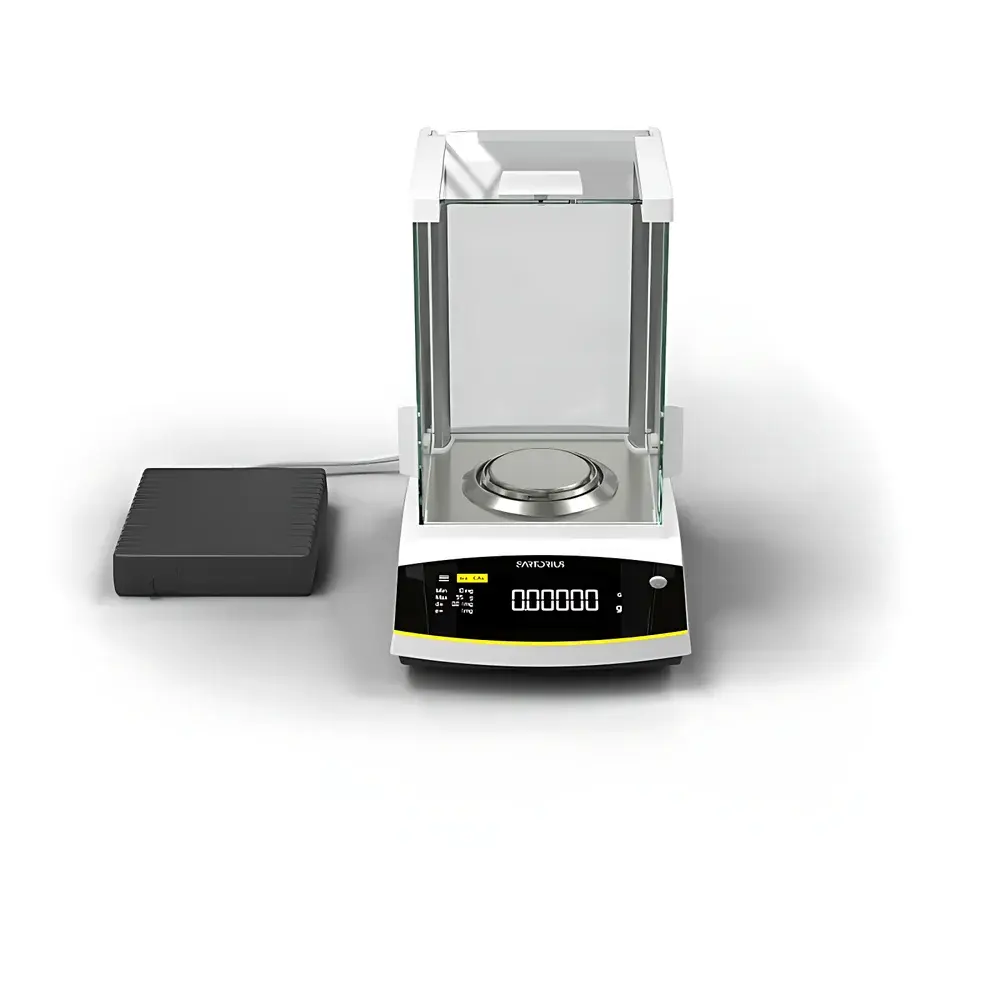
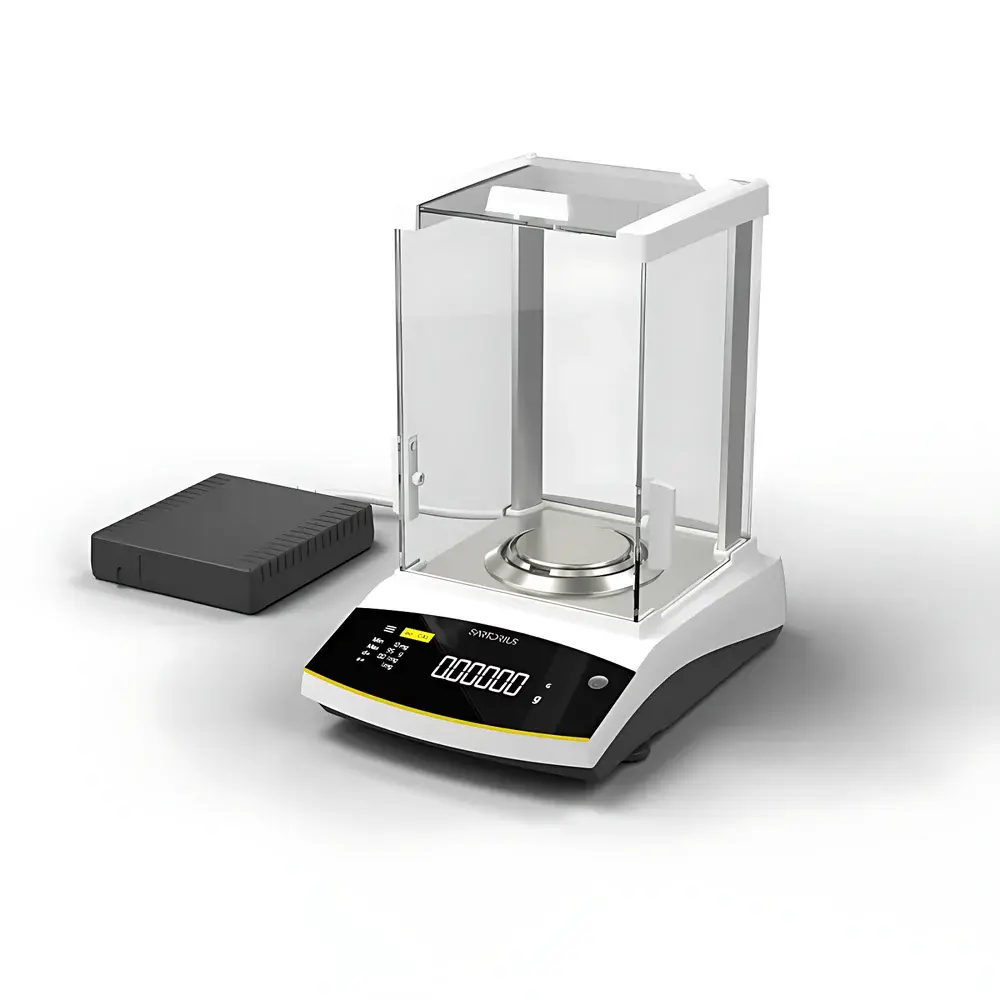
Sartorius Entris® II BCE 95I Semi-Micro Balance
| Brand | Sartorius |
|---|---|
| Origin | Germany |
| Manufacturer Type | Authorized Distributor |
| Product Category | Imported Instrument |
| Model | BCE 95I |
| Instrument Type | Semi-Micro Balance |
| Maximum Capacity | 95 g |
| Readability | 0.01 mg |
| Repeatability | 0.015 mg |
| Calibration | Internal Automatic (isoCAL) |
| Weighing Pan | Rectangular Stainless Steel |
| Construction Materials | PBT polymer housing, stainless steel pan, coated anti-static glass draft shield |
| Compliance | ISO/IEC 17025-ready, GLP/GMP-compliant data logging support |
Overview
The Sartorius Entris® II BCE 95I Semi-Micro Balance is an entry-level precision weighing instrument engineered for laboratories requiring reliable, traceable, and repeatable mass measurement in the 20–95 g range with 0.01 mg readability. Built upon Sartorius’ legacy of German metrological engineering spanning nearly 150 years, this balance employs a monolithic electromagnetic force compensation (EMFC) sensor architecture—optimized for thermal stability, mechanical rigidity, and minimal drift under ambient laboratory conditions. Unlike conventional strain-gauge or load-cell-based platforms, the EMFC design delivers inherently linear response across the full capacity range without calibration interpolation, ensuring compliance with fundamental metrological principles outlined in OIML R 76-1 and ASTM E898. The BCE 95I is specifically configured for semi-micro applications where sub-0.1 mg resolution is required but full microbalance environmental controls (e.g., active temperature stabilization or vibration isolation tables) are not mandated—making it suitable for routine QC testing, formulation preparation, and analytical sample portioning in pharmaceutical, chemical, and academic settings.
Key Features
- Internal automatic calibration (isoCAL) with temperature-triggered recalibration—ensures continuous traceability without manual intervention
- Rectangular stainless steel weighing pan (120 × 120 mm) optimized for volumetric vessel placement and improved center-of-gravity tolerance
- Anti-static draft shield with conductive coating on tempered glass surfaces—reduces electrostatic interference by >90% compared to standard acrylic enclosures
- Self-diagnostic “@start” system performing real-time verification of sensor integrity, zero stability, and internal reference voltage prior to first use each session
- Durable housing constructed from chemically resistant polybutylene terephthalate (PBT), rated for exposure to common solvents including ethanol, acetone, and diluted acids per ISO 10993-5 biocompatibility guidelines
- LED capacitive touch interface with haptic feedback—designed for glove-compatible operation and resistant to repeated disinfectant wiping
- 12 preprogrammed weighing applications including percentage weighing, density determination, parts counting, and animal weighing—each configurable with user-defined tolerances and pass/fail thresholds
Sample Compatibility & Compliance
The BCE 95I accommodates standard laboratory containers—including 50 mL centrifuge tubes, 100 mL volumetric flasks, and 250 mL beakers—without compromising readability or stability. Its open-bottom draft shield design permits seamless integration with automated dispensing arms and robotic sample handlers. From a regulatory standpoint, the balance supports audit-ready documentation through its built-in event log, which records calibration events, operator ID (via optional RFID badge integration), date/time stamps, and environmental metadata (ambient temperature and humidity when paired with external sensors). All logged data conforms to FDA 21 CFR Part 11 requirements for electronic records and signatures when used with Sartorius LabX software. The device meets ISO 9001 quality management system requirements and is validated per USP and EP 2.1.6 for accuracy and repeatability verification protocols.
Software & Data Management
Data export is supported via RS232, USB Device, and optional Ethernet interfaces. When connected to Sartorius LabX standalone software or integrated into enterprise LIMS environments, the BCE 95I enables fully automated reporting with digital signature capture, customizable PDF certificate generation, and secure cloud synchronization. Audit trails include immutable timestamps, operator attribution, and change history for all critical parameters—including calibration weight values, sensitivity adjustments, and application configuration edits. Raw measurement data is stored in .CSV and .XML formats compliant with ASTM E2500-18 for analytical instrument qualification.
Applications
- Pharmaceutical: Active pharmaceutical ingredient (API) dispensing for tablet formulation, excipient ratio verification, and reference standard weighing per ICH Q5C stability protocol requirements
- Chemistry: Stoichiometric reagent preparation, catalyst loading control, and gravimetric titrant standardization
- Materials Science: Powder blending uniformity assessment, thin-film deposition mass tracking, and nanoparticle suspension concentration validation
- Food & Agriculture: Nutrient fortification dosing, pesticide residue reference material preparation, and feed additive homogeneity testing
- Academic Research: Teaching labs requiring ISO/IEC 17025-aligned uncertainty budgets for undergraduate analytical chemistry coursework
FAQ
What is the difference between “semi-micro” and “ultra-micro” balance classifications?
Semi-micro balances, like the BCE 95I, offer readability down to 0.01 mg (10 µg) with capacities up to 100 g; ultra-micro balances provide 1 µg or better readability but typically cap at 5–12 g capacity and require stringent environmental controls.
Does the BCE 95I support external calibration weights?
Yes—the balance accepts external Class E2 or better calibration masses via its guided calibration routine; however, isoCAL internal calibration is recommended for daily use to maintain optimal reproducibility.
Can the draft shield be removed for cleaning without affecting calibration?
Yes—the shield is mechanically decoupled from the sensor assembly; removal and reinstallation do not alter calibration status, though full verification is advised after extended disassembly.
Is the balance compatible with GLP-compliant electronic lab notebooks (ELNs)?
Yes—via LabX or direct API integration, measurement data can be pushed to ELN platforms supporting ASTM E2537 or IEEE 11073-10201 standards.
What is the warm-up time required before achieving specified repeatability?
The unit achieves thermal equilibrium and full specification performance within 30 minutes of power-on under stable ambient conditions (20–25 °C, ≤50% RH).