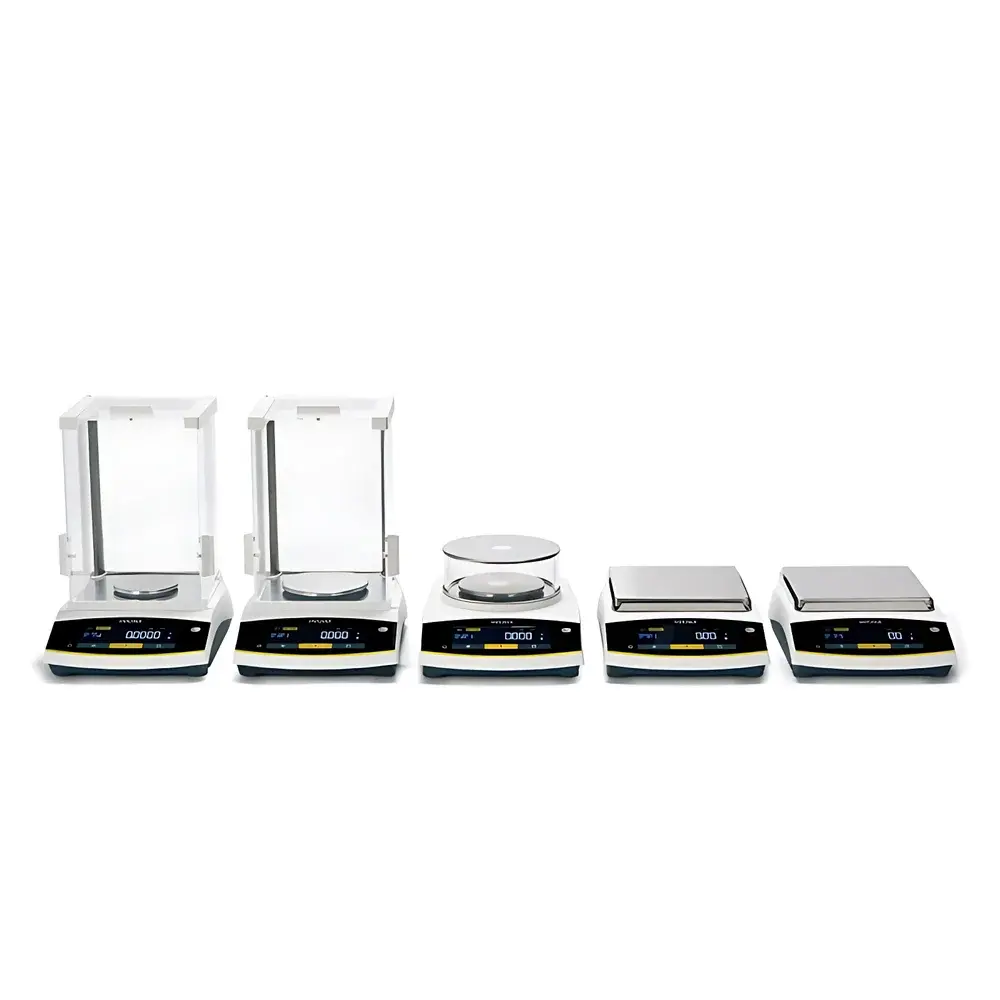
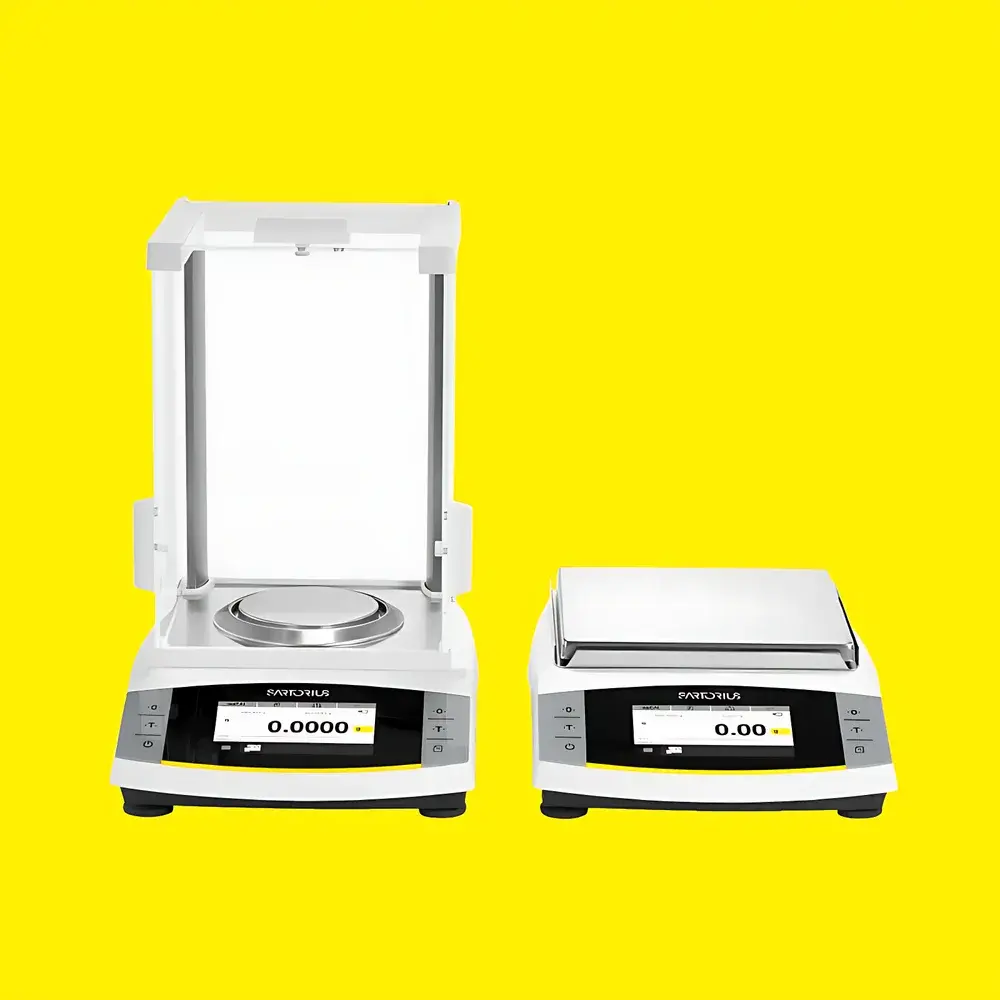
Sartorius Entris® II BCE Precision Laboratory Balance
| Brand | Sartorius |
|---|---|
| Origin | Beijing, China |
| Manufacturer Type | Authorized Distributor |
| Regional Classification | Domestic (China-manufactured) |
| Model | Entris II BCE |
| Instrument Type | Precision Balance |
| Maximum Capacity | 60 g to 8,200 g |
| Readability | 0.1 mg to 1 g |
| Accuracy Class | Class I (0.0001 g resolution at lower capacities) |
| Calibration | Internal (isoCAL) and External |
| Repeatability | ≤ ±0.1 mg |
| Stabilization Time | < 2 s (typical, dependent on capacity & environment) |
| Compliance | ISO 9001, ISO/IEC 17025 (when used per SOP), GLP/GMP-ready |
| Construction | Stainless steel pan, PBT housing, tempered glass draft shield with anti-static coating |
| Operating Temperature Range | 10–30 °C |
| Power Supply | AC adapter or optional battery pack |
Overview
The Sartorius Entris® II BCE Precision Laboratory Balance is an engineered solution for routine analytical and semi-micro weighing tasks in regulated and non-regulated laboratory environments. Built upon Sartorius’ legacy of German metrological design principles and adapted for high-volume domestic manufacturing in Beijing, this balance delivers traceable mass measurement performance aligned with OIML R 76-1 and ASTM E898-22 standards for precision balances. Its core architecture integrates a proprietary monolithic electromagnetic force compensation (EMFC) sensor—distinct from traditional strain-gauge load cells—which ensures long-term stability, minimal drift, and immunity to mechanical hysteresis. The balance operates under controlled thermal equilibrium via integrated temperature monitoring and auto-compensation logic, enabling consistent readability across ambient fluctuations typical in QC labs, university teaching facilities, and pharmaceutical production support areas.
Key Features
- isoCAL™ internal calibration system with time- and temperature-triggered automatic adjustment—fully compliant with ISO 9001 clause 7.6 and FDA 21 CFR Part 11 when paired with audit-trail-enabled software
- High-contrast LED touchscreen interface with intuitive icon-based navigation and multilingual OS support (English, German, French, Spanish, Chinese)
- Twelve pre-installed application modes: percent weighing, density determination, counting, formulation, statistics, checkweighing, animal weighing, net/gross/tare, recipe weighing, dynamic weighing, pipette calibration, and moisture loss simulation
- Rectangular stainless-steel weighing pan (dimensions vary by model; e.g., 120 × 120 mm for 3200 g models) optimized for sample distribution and repeatability ≤ ±0.1 mg
- Anti-static draft shield featuring conductive indium tin oxide (ITO) coating on tempered glass—reducing electrostatic interference by >90% compared to uncoated acrylic shields
- Robust mechanical design with overload protection up to 150% of maximum capacity and self-diagnostic @start function verifying sensor integrity, level status, and environmental readiness at power-on
- Housing constructed from chemically resistant polybutylene terephthalate (PBT), stainless steel components, and corrosion-inhibiting surface finishes—validated for exposure to common solvents including ethanol, acetone, and 10% NaOH
Sample Compatibility & Compliance
The Entris® II BCE accommodates diverse sample types—from powders and granules to viscous liquids and small hardware—across its scalable capacity range (60 g to 8,200 g). Its modular pan geometry and low-profile draft shield allow integration with volumetric flasks, beakers, and filtration assemblies without obstruction. All models are CE-marked and conform to EN 61326-1 (EMC) and EN 61010-1 (safety). For regulated environments, the balance supports full documentation workflows: isoCAL events generate timestamped logs with operator ID (when connected to LabX™ or third-party LIMS), satisfying ALCOA+ data integrity criteria. It meets the functional requirements of USP , EP 2.1.6, and ISO 17025:2017 Annex A.3 for balance verification and routine performance checks.
Software & Data Management
Data export is supported via RS232, USB Device, and optional Ethernet interfaces. When connected to Sartorius LabX™ software (v3.10+), the balance enables automated report generation, electronic signature capture, and 21 CFR Part 11-compliant audit trails—including calibration history, user logins, weight event timestamps, and parameter changes. Raw weighing data can be streamed directly into Excel, ELN platforms, or MES systems using Sartorius’ open ASCII protocol. Local storage retains up to 1,000 weight records with metadata (date/time, stability flag, tare value, application mode) even during network outages.
Applications
This balance serves as a primary weighing instrument in quality control laboratories performing raw material release testing (e.g., API potency assays per USP ), formulation development (tablet blend uniformity per USP ), and environmental monitoring (filter weighing for particulate matter analysis). It is routinely deployed in academic chemistry labs for stoichiometric reagent preparation, in food testing labs for nutritional labeling compliance (FDA 21 CFR 101.9), and in metallurgical QA for alloy composition verification. Its fast stabilization and high repeatability make it suitable for dynamic applications such as loss-on-drying (LOD) pre-weighing and continuous gravimetric feed calibration.
FAQ
Does the Entris® II BCE support GLP-compliant calibration documentation?
Yes—when used with isoCAL and logged via LabX™ or validated CSV export, all calibration events include date/time stamps, operator ID, temperature, and deviation values, fulfilling GLP Annex 4 requirements.
Is external calibration required if isoCAL is enabled?
Periodic external calibration using certified weights is still recommended per ISO/IEC 17025:2017 clause 6.5.2 and internal SOPs—isoCAL maintains accuracy between formal verifications but does not replace them.
Can the balance be operated in a fume hood?
Yes, provided ambient airflow is <0.2 m/s at the pan surface and temperature gradients remain within ±1 °C/hour; draft shield must remain fully assembled.
What is the warranty coverage for Beijing-manufactured units?
Sartorius provides a standard 24-month limited warranty covering materials and workmanship, extendable to 36 months with annual preventive maintenance contracts.
How is traceability ensured for domestic (China-made) units?
Each unit ships with a factory calibration certificate traceable to NIM (National Institute of Metrology, China) and NIST via bilateral CIPM MRA agreements—certificates include uncertainty budgets per GUM (JCGM 100:2008).