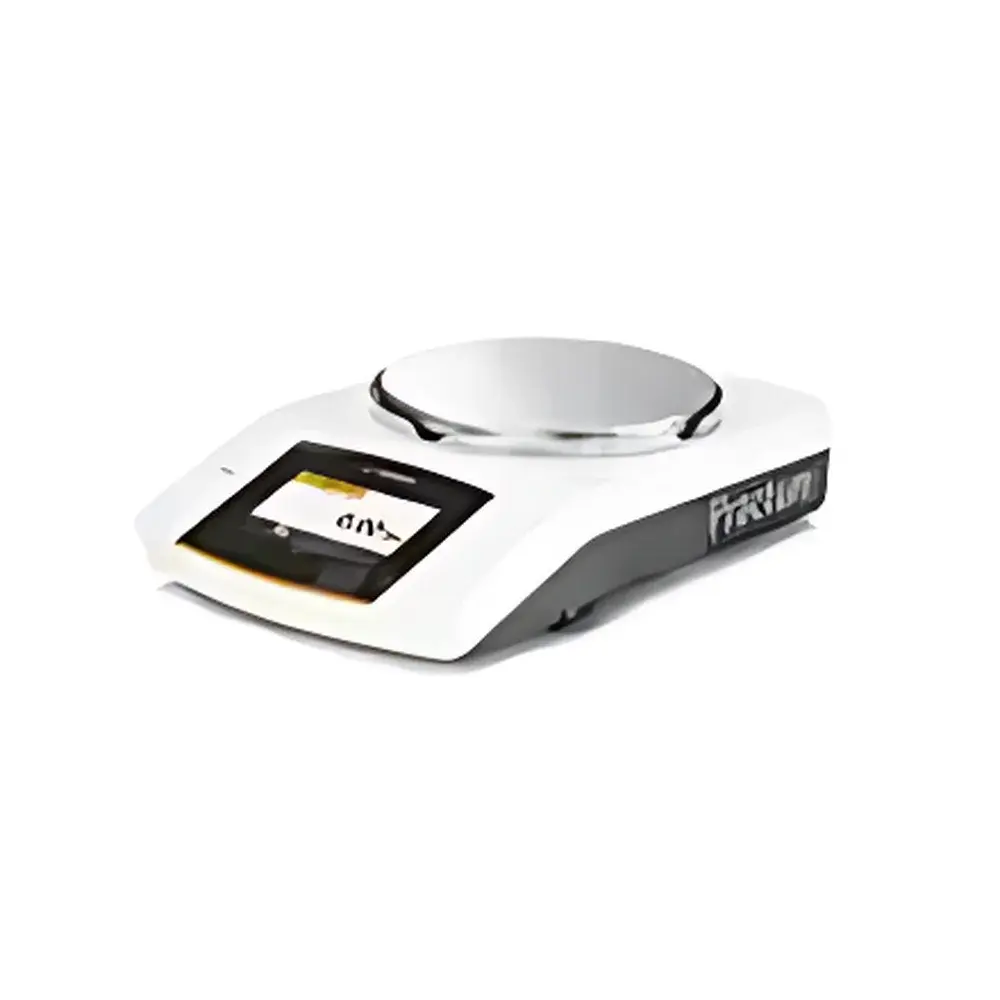
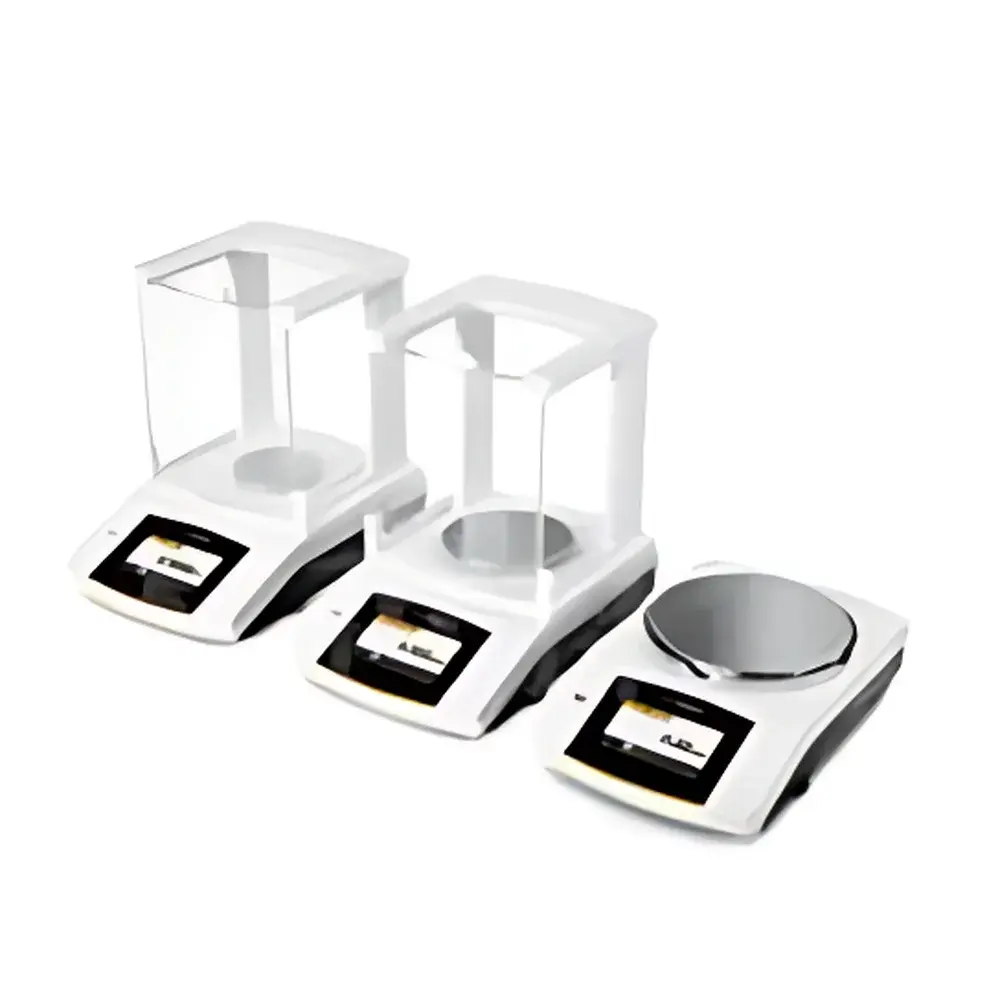
Sartorius Practum2102-1CN Precision Balance
| Brand | Sartorius |
|---|---|
| Origin | Germany |
| Model | Practum2102-1CN |
| Maximum Capacity | 2100 g |
| Readability | 10 mg |
| Repeatability | 10 mg |
| Linearity | 30 mg |
| Stabilization Time | 1.5 s |
| Pan Diameter | 180 mm |
| Dimensions (W × D × H) | 216 × 360 × 95 mm |
| Weight | ~3.1 kg |
| Power Supply | 100–240 V AC |
| Interface | mini-USB |
| Calibration | External |
| GLP/GMP Print Output | Not Supported |
| Regulatory Lock | Yes |
| Kensington Lock | Yes |
| Display | Color Touchscreen |
| Weighing Units | g, ct, mom, kg, lb, oz, ozt, tlh, tls, tlt, GN, dwt, mg, parts, lb, tlc, Kt, tol, bat, MS, N |
| Languages | English, German, French, Italian, Spanish, Portuguese, Polish, Russian, Turkish, Hungarian, Japanese, Chinese |
Overview
The Sartorius Practum2102-1CN is a high-performance precision balance engineered for routine laboratory weighing tasks requiring reliable accuracy, robust repeatability, and intuitive operation. Designed and manufactured in Germany, it employs electromagnetic force compensation (EMFC) technology — the industry-standard principle for analytical and precision balances — to deliver stable, drift-free measurements under standard ambient conditions. With a maximum capacity of 2100 g and readability of 10 mg, the Practum2102-1CN bridges the functional gap between analytical and top-loading balances, making it suitable for applications where sub-gram resolution is required without the sensitivity constraints of micro or ultra-micro instruments. Its compact footprint (216 × 360 × 95 mm), low mass (~3.1 kg), and integrated color touchscreen interface support flexible benchtop deployment across QC labs, academic teaching environments, and industrial quality control stations.
Key Features
- Electromagnetic force compensation (EMFC) sensor architecture ensures high reproducibility (≤10 mg repeatability) and long-term stability, minimizing thermal drift and mechanical hysteresis.
- Regulatory lock functionality prevents unauthorized modification of setup parameters — essential for laboratories operating under internal SOPs or preparing for external audits.
- Kensington security slot enables physical anti-theft anchoring, addressing asset protection requirements in shared or open-access laboratory spaces.
- Ergonomic, removable draft shield with optimized airflow design facilitates rapid stabilization (<1.5 s typical) and reduces operator-induced error during frequent sample handling.
- Multi-language color touchscreen interface supports 12 languages including English, German, Spanish, Chinese, Japanese, and Russian — enabling seamless integration into multinational research and manufacturing facilities.
- Comprehensive built-in application modes: piece counting, percentage weighing, density determination, checkweighing, peak hold, and dynamic weighing — all accessible without external software or configuration files.
- Robust mechanical overload protection safeguards the load cell against accidental overloading up to 150% of nominal capacity, extending service life and reducing maintenance frequency.
Sample Compatibility & Compliance
The Practum2102-1CN accommodates samples up to 2100 g on its 180 mm diameter stainless-steel pan. Its open draft shield design permits easy handling of irregularly shaped or voluminous items (e.g., packaged pharmaceutical intermediates, geological specimens, or metallurgical samples). While not certified for GLP/GMP-compliant data integrity per FDA 21 CFR Part 11 or ISO/IEC 17025 traceability out-of-the-box, the balance supports external documentation via mini-USB connection to Sartorius YDP40 standard lab printers (sold separately), enabling audit-ready paper records for internal QA processes. It complies with international electromagnetic compatibility (EMC) standards IEC 61326-1 and safety standard IEC 61010-1. No factory-installed calibration certificate is included; users must perform external calibration using traceable weights conforming to OIML R111 or ASTM E617 Class M2/M3 specifications.
Software & Data Management
Data output is limited to direct printing via mini-USB-connected Sartorius YDP40 printers. The balance does not feature onboard data logging, USB mass storage mode, Bluetooth, or Ethernet connectivity. No proprietary PC software is bundled or required for basic operation. All configuration changes — including unit selection, application mode activation, and regulatory lock status — are stored non-volatilely and persist after power cycling. Firmware updates are not user-serviceable and require authorized Sartorius service centers. Audit trail functionality (e.g., calibration history, user log, timestamped events) is not implemented; manual recordkeeping remains the responsibility of the end-user per institutional SOPs.
Applications
This balance serves core weighing functions across regulated and non-regulated environments: formulation and dispensing in pharmaceutical education labs; raw material verification in contract manufacturing organizations (CMOs); precious metal valuation (e.g., gold, platinum) in assay and jewelry contexts; general-purpose sample preparation in university chemistry and biology departments; and batch release testing in food and cosmetics QA labs. Its 10 mg readability meets minimum weight requirements for many USP and Ph. Eur. 2.1.6 compliant procedures when used within validated operating ranges. It is not intended for dynamic or continuous process weighing, moisture analysis, or environments with significant vibration, static charge, or corrosive vapors.
FAQ
Does the Practum2102-1CN include a calibration certificate?
No — it requires external calibration using certified reference weights. Documentation must be generated manually or via optional printer integration.
Is this balance suitable for ISO/IEC 17025 accredited testing?
It may be used within an accredited scope if calibrated traceably and operated under documented procedures, but lacks built-in features such as electronic signatures or automated calibration logs.
Can the balance store calibration history internally?
No — no internal memory is allocated for calibration event timestamps, operator IDs, or adjustment values.
What is the recommended environmental class for optimal performance?
Class II (ISO 14644-1) or equivalent clean bench environments with temperature stability ±2 °C/hour and humidity ≤70% RH non-condensing.
Is the touchscreen resistant to common lab solvents?
The display surface is not chemically rated; avoid contact with acetone, ethanol, or chlorinated solvents — use only isopropyl alcohol-dampened lint-free cloths for cleaning.