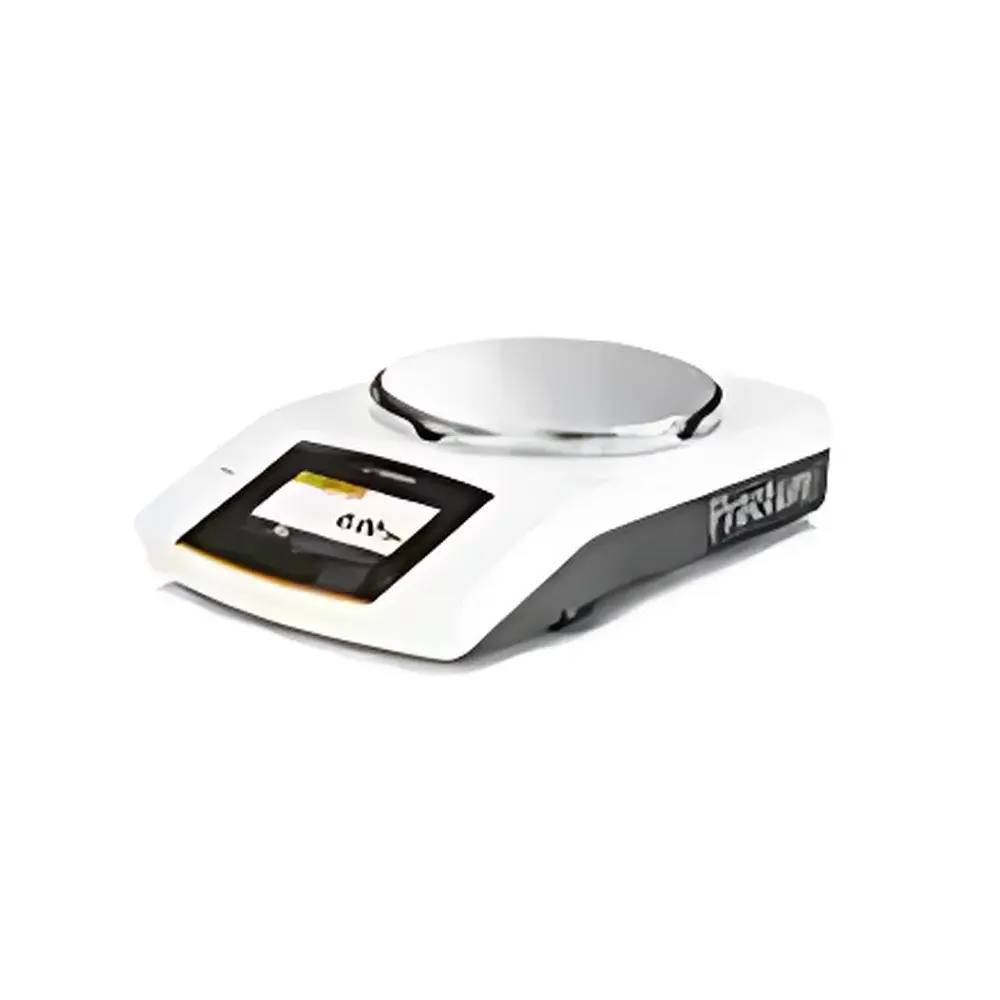
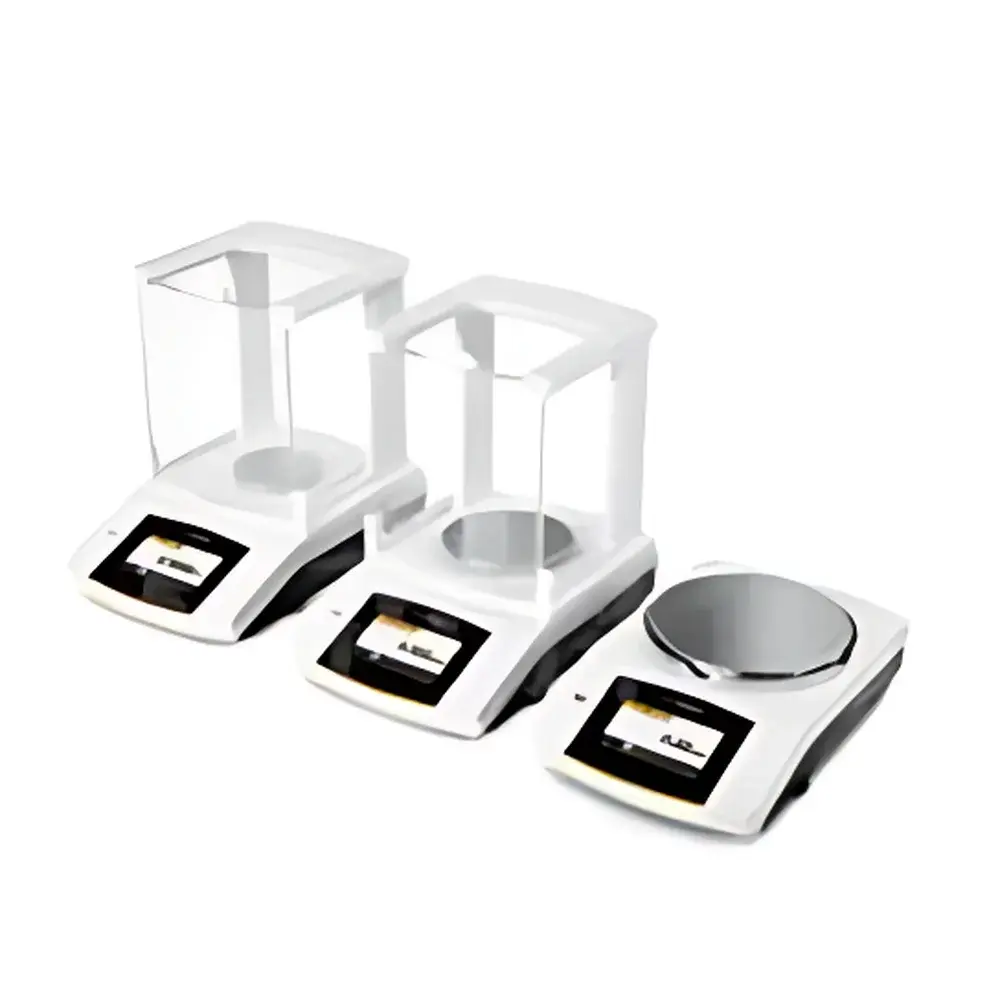
Sartorius Practum313-1CN Precision Balance
| Brand | Sartorius |
|---|---|
| Origin | Germany |
| Model | Practum313-1CN (310 g / 1 mg, External Calibration) |
| Maximum Capacity | 310 g |
| Readability | 1 mg |
| Repeatability | 1 mg |
| Linearity | 3 mg |
| Typical Stabilization Time | 1 s |
| Pan Diameter | 120 mm |
| Weighing Chamber Height | 209 mm |
| Dimensions (W × D × H) | 216 × 360 × 320 mm |
| Net Weight | ~4.9 kg |
| Power Supply | 100–240 V AC |
| Interface | mini-USB |
| Display | Full-color touchscreen |
| Weighing Units | g, ct, mom, kg, lb, oz, ozt, tlh, tls, tlt, GN, dwt, mg, parts |
| Languages | English, German, French, Italian, Spanish, Portuguese, Polish, Russian, Turkish, Hungarian, Japanese, Chinese |
| Compliance | GLP/GMP-compliant print output available via optional YDP40 printer |
| Regulatory Lock | Yes (prevents unauthorized setup changes) |
| Mechanical Overload Protection | Yes |
| Environmental Protection | Draft shield with ergonomic design and robust construction |
| Calibration | External only |
| Legal Metrology Certification | Not included (requires local verification) |
Overview
The Sartorius Practum313-1CN is a high-performance precision balance engineered for routine laboratory applications demanding reliable 1 mg readability and consistent repeatability under variable environmental conditions. Built upon Sartorius’ decades of German metrological expertise, this balance employs electromagnetic force compensation (EMFC) technology — the industry-standard principle for analytical and precision weighing — ensuring stable, drift-resistant measurements across its full 310 g capacity range. Its compact footprint (216 × 360 × 320 mm), integrated full-color touchscreen interface, and ergonomically optimized draft shield support efficient workflow integration in regulated and non-regulated environments alike. Designed for durability and operational integrity, the Practum313-1CN incorporates mechanical overload protection up to 500 g, safeguarding the load cell from accidental overloading during daily use.
Key Features
- 1 mg readability with ≤1 mg repeatability and ≤3 mg linearity — verified per internal performance diagnostics and aligned with ISO 8655-6 and OIML R 76-1 metrological guidelines
- Full-color capacitive touchscreen display with intuitive icon-based navigation and multilingual support (12 languages including English, German, Spanish, Japanese, and Chinese)
- Ergonomic, two-part sliding draft shield with reinforced acrylic panels — optimized for rapid sample access and minimal air turbulence during weighing
- Regulatory lock function prevents unauthorized modification of calibration, unit settings, or system parameters — essential for audit readiness in GLP/GMP environments
- Integrated mini-USB port enables direct connection to Sartorius YDP40 standard laboratory printer for GLP/GMP-compliant documentation (date/time stamp, operator ID, weight value, stability indicator)
- Robust die-cast metal housing and shock-absorbing feet ensure mechanical stability on standard lab benches; operating temperature range: 10–30 °C, humidity: 20–80 % RH (non-condensing)
Sample Compatibility & Compliance
The Practum313-1CN accommodates samples up to 310 g on its 120 mm diameter stainless-steel pan, with a vertical clearance of 209 mm inside the draft shield — suitable for volumetric flasks, weighing boats, crucibles, and small pharmaceutical containers. While the balance itself does not include built-in legal-for-trade certification, it meets foundational metrological requirements for Class II precision balances per OIML R 76 and ASTM E898. When paired with traceable external calibration weights (e.g., Sartorius YCW series) and documented calibration procedures, it supports compliance with ISO/IEC 17025, USP , and EU GMP Annex 11 data integrity expectations. The regulatory lock and optional YDP40 printer facilitate adherence to ALCOA+ principles (Attributable, Legible, Contemporaneous, Original, Accurate) for raw weight data.
Software & Data Management
The Practum313-1CN operates autonomously without PC dependency, storing no user data internally and generating no electronic audit trail by default. Data export is limited to real-time printing via mini-USB-connected YDP40 printer — supporting timestamped, operator-identified records required for basic GLP documentation. No internal memory, user accounts, password protection, or electronic signature functionality is provided. For laboratories requiring electronic record retention, integration with third-party LIMS or ELN systems must be implemented externally via serial-to-USB converters and ASCII-compatible protocols (not natively supported). Firmware updates are performed exclusively via Sartorius-certified service technicians.
Applications
This balance serves core functions across multiple regulated and academic domains: quantitative sample preparation in pharmaceutical QC labs (e.g., active ingredient dispensing per USP ); density determination using sink-float methods; percentage weighing for formulation development; piece counting of uniform components (e.g., tablets, microcomponents); and peak-hold measurement for unstable or vibrating samples. Its fast stabilization time (<1 s) and anti-vibration algorithms make it suitable for shared lab spaces with moderate floor-borne disturbances. Common use cases include university teaching labs (chemistry, materials science), precious metal assay (carat weighing), and routine quality control in food and cosmetics manufacturing.
FAQ
Does the Practum313-1CN support internal calibration?
No — it is externally calibrated only. Users must perform calibration using certified reference weights traceable to national standards.
Is the balance compliant with FDA 21 CFR Part 11?
No — it lacks electronic signatures, audit trails, and user-level access controls required for Part 11 compliance. It supports only paper-based GLP documentation via YDP40 printer.
Can it be connected to a computer for data logging?
Not natively. Mini-USB is printer-only; RS-232 or Ethernet interfaces are unavailable. Third-party hardware adapters may enable ASCII output but are unsupported by Sartorius.
What is the minimum weighable sample for accurate results?
Per USP , the minimum weight is calculated as 2000 × readability = 2 g. For critical applications, users should validate minimum weight per their SOPs.
Does it meet ISO/IEC 17025 requirements for accredited testing labs?
Yes — when operated with documented calibration, environmental monitoring, and traceable standards — though full accreditation requires lab-specific validation and uncertainty budgeting.