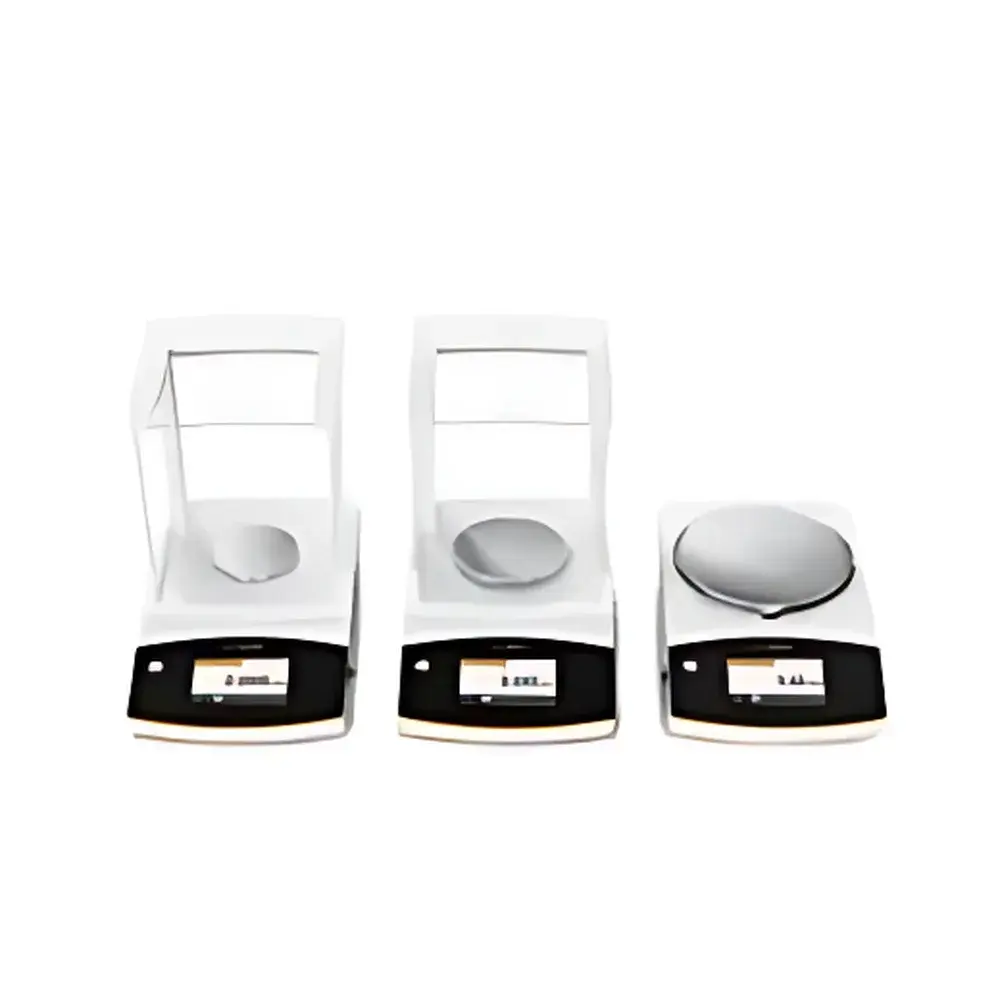
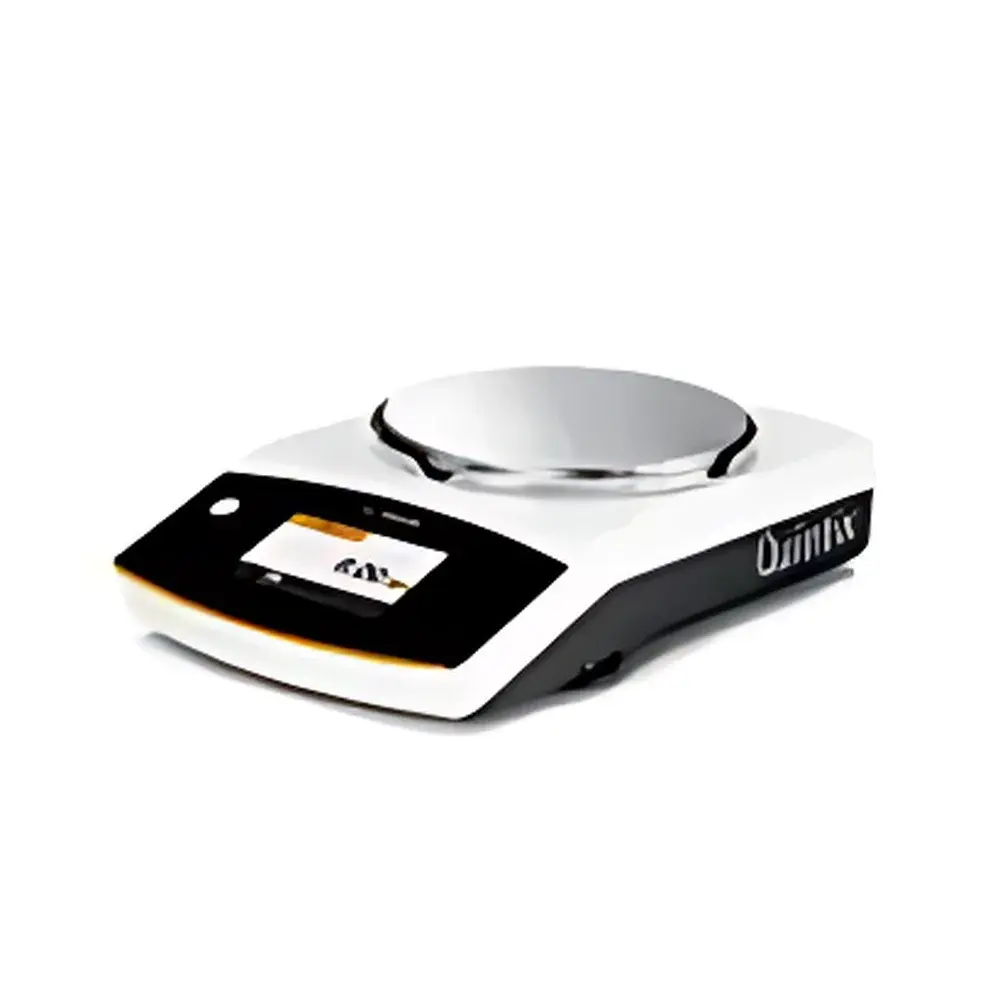
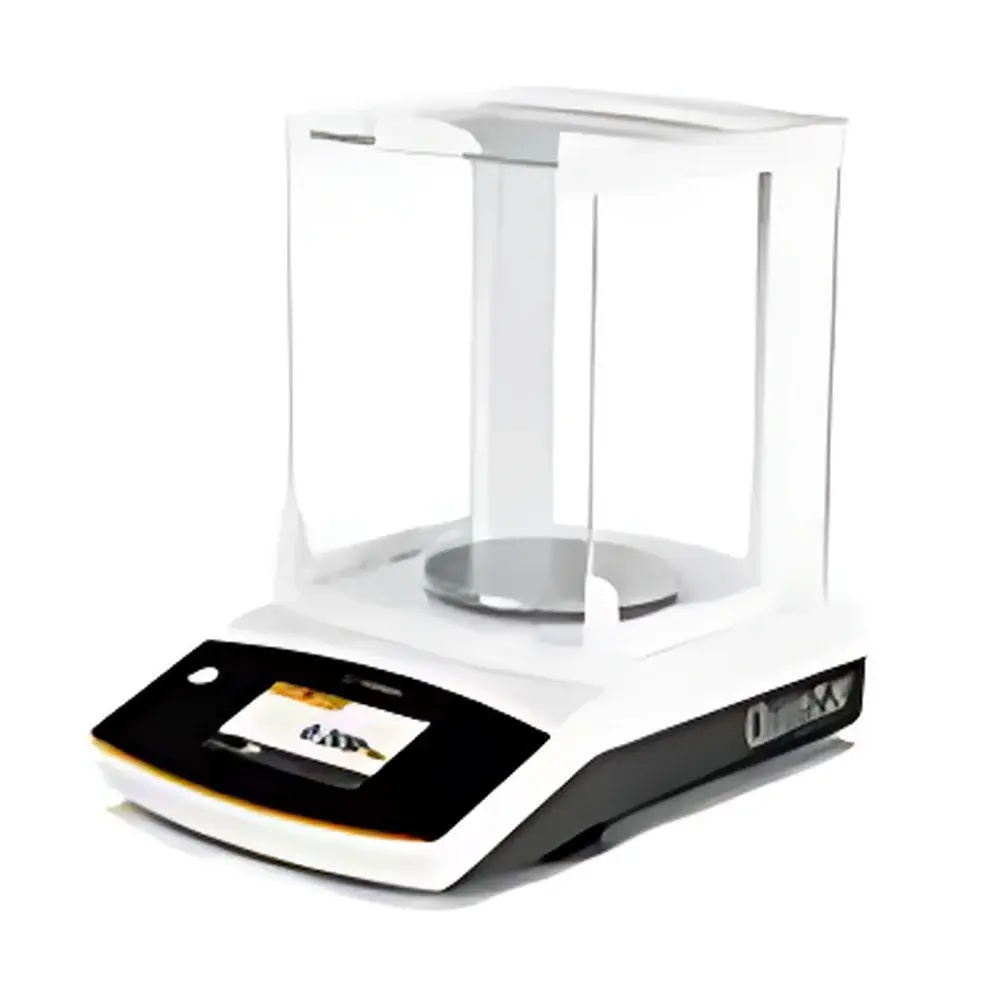
Sartorius Quintix 313-1CN Precision Balance
| Brand | Sartorius |
|---|---|
| Origin | Germany |
| Model | Quintix 313-1CN (310 g / 1 mg, internal calibration) |
| Max Capacity | 310 g |
| Readability | 1 mg |
| Repeatability | 1 mg |
| Linearity | 2 mg |
| Stabilization Time | 1 s |
| Pan Diameter | 120 mm |
| Chamber Height | 209 mm |
| Dimensions (W × D × H) | 216 × 360 × 320 mm |
| Weight | ~4.9 kg |
| Power Supply | 100–240 V AC |
| Interface | mini-USB |
| Compliance | ISO/IEC 17025 traceable calibration, CMC certification (China), GLP/GMP-compliant print output |
| Operating Languages | English, German, French, Spanish, Italian, Portuguese, Russian, Polish, Turkish, Hungarian, Japanese, Chinese |
Overview
The Sartorius Quintix 313-1CN is a high-performance precision balance engineered for routine laboratory weighing tasks requiring accuracy, repeatability, and regulatory compliance. Designed and manufactured in Germany, this 310 g / 1 mg readability balance operates on electromagnetic force compensation (EMFC) technology — the industry-standard principle for analytical and precision balances — ensuring stable, drift-free measurements under varying environmental conditions. Its compact footprint (216 × 360 × 320 mm), integrated leveling feet, and 120 mm stainless steel pan support ergonomic placement on standard lab benches while maintaining mechanical stability. The Quintix 313-1CN meets the functional requirements of ISO 17025-accredited laboratories and supports full traceability through built-in calibration history logging and CMC-certified metrological validation per Chinese national standards.
Key Features
- isoCAL™ fully automatic internal calibration and adjustment — triggered by time, temperature drift (>1.5 °C), or user command — ensures continuous accuracy without manual intervention.
- Full-color 4.3-inch capacitive touchscreen interface with intuitive icon-based navigation; no manual required for basic operations including weighing, percentage, counting, density, and peak hold.
- GLP/GMP-compliant direct printing via optional Sartorius YDP30 or YDP40 printers — all reports include date/time stamp, operator ID (if enabled), balance ID, calibration status, and uncertainty statements.
- Direct data transmission to Windows applications (e.g., Excel, LIMS, ELN) via mini-USB — no proprietary software installation needed; supports ASCII and Sartorius SCS protocols.
- Chemically resistant housing compatible with acetone cleaning; IP54-rated enclosure provides protection against dust and incidental splashes.
- Multi-language support (12 languages), configurable user-defined units (g, mg, ct, oz, lb, dwt, etc.), and customizable application shortcuts for rapid workflow execution.
Sample Compatibility & Compliance
The Quintix 313-1CN accommodates a broad range of sample types — from pharmaceutical powders and reference standards to metal alloys, catalysts, and polymer granules — within its 310 g capacity and 209 mm chamber height. Its draft shield-compatible design minimizes air-current-induced variability during low-mass measurements. Regulatory alignment includes full support for Good Laboratory Practice (GLP) and Good Manufacturing Practice (GMP) documentation requirements: audit-trail-capable calibration logs, tamper-evident printouts, and electronic records compliant with FDA 21 CFR Part 11 when integrated into validated systems. The balance carries China Metrology Certification (CMC) and conforms to OIML R76-1 and EN 45501 for non-automatic weighing instruments.
Software & Data Management
Data integrity is maintained through native USB connectivity — enabling seamless, real-time transfer of weight values, metadata (e.g., tare, unit, timestamp), and status flags directly into laboratory information management systems (LIMS) or electronic lab notebooks (ELN). No middleware or driver installation is required; the device enumerates as a standard HID-compliant serial port. Internal memory stores up to 100 calibration events with full traceability (date, operator, deviation, pass/fail status). All printed outputs include mandatory GLP fields: instrument ID, calibration due date, ambient temperature/humidity (if external sensor connected), and digital signature placeholder for authorized reviewer sign-off.
Applications
This balance serves critical roles across regulated and research-intensive environments: formulation and batch release testing in pharmaceutical QA/QC; precious metal assay and karat verification in jewelry metrology labs; stoichiometric reagent preparation in synthetic chemistry; quality control of automotive component coatings and composites; and student training in university teaching labs. Its density determination mode (with optional density kit), parts counting function (with sample count >10), and statistical analysis (mean, SD, CV%) support method development and process validation studies. The 1 mg readability and ≤1 mg repeatability meet USP requirements for Class III balances used in non-sterile dosage form manufacturing.
FAQ
Does the Quintix 313-1CN support external temperature or humidity sensors for environmental compensation?
No — environmental compensation is handled internally via isoCAL’s temperature-triggered recalibration logic; no external sensor integration is supported.
Can multiple users be assigned distinct access levels or password protection?
No — the Quintix 313-1CN does not include user management or password-based privilege tiers; it is designed for single-operator or shared-access environments where procedural controls govern access.
Is the balance compatible with Ethernet or Wi-Fi for networked data transfer?
No — connectivity is limited to mini-USB; Ethernet or wireless interfaces are available only on higher-tier Sartorius models (e.g., Entris II+, Cubis®).
What is the minimum sample weight recommended for reliable measurement at 1 mg readability?
Per USP , the minimum weight is calculated as 2000 × readability = 2 g; below this mass, measurement uncertainty exceeds acceptable limits for quantitative work.
Does the device support automatic tare reset upon sample removal?
Yes — Auto-Tare mode can be enabled to zero the display automatically after sample removal, improving throughput in repetitive weighing workflows.