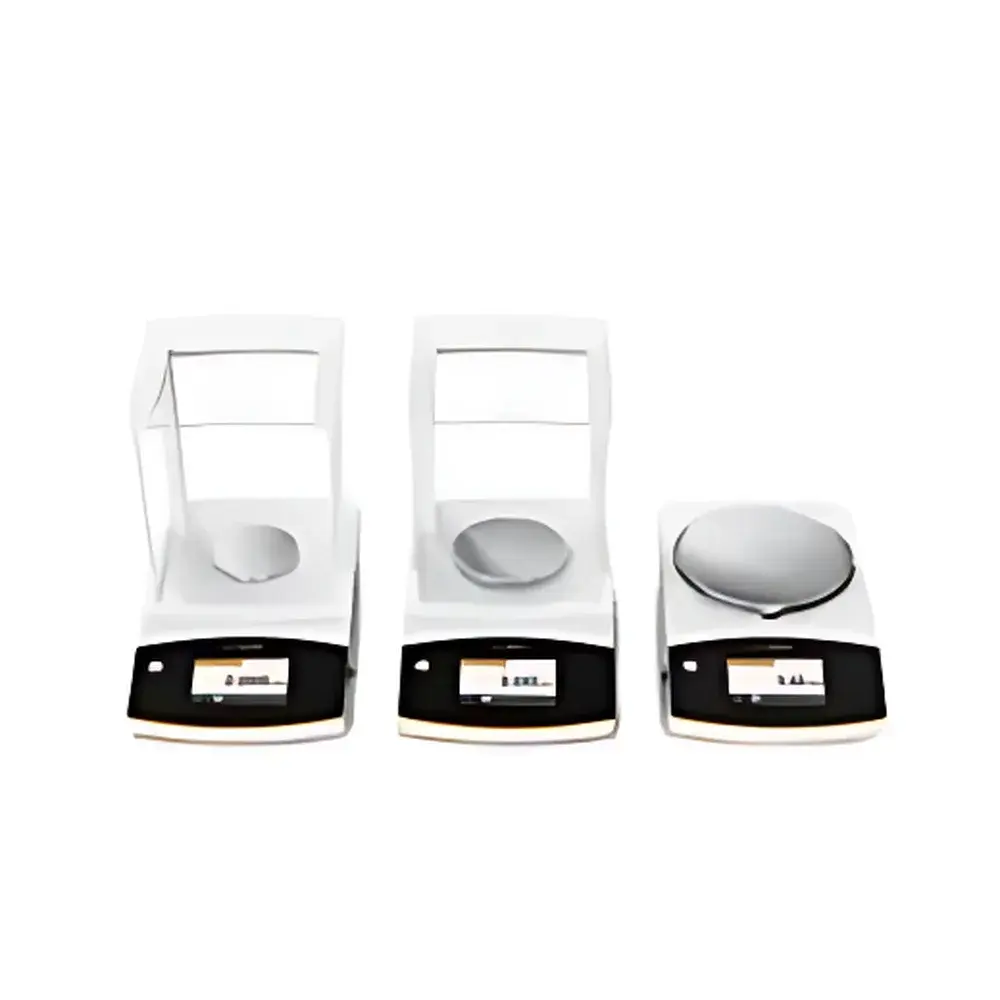
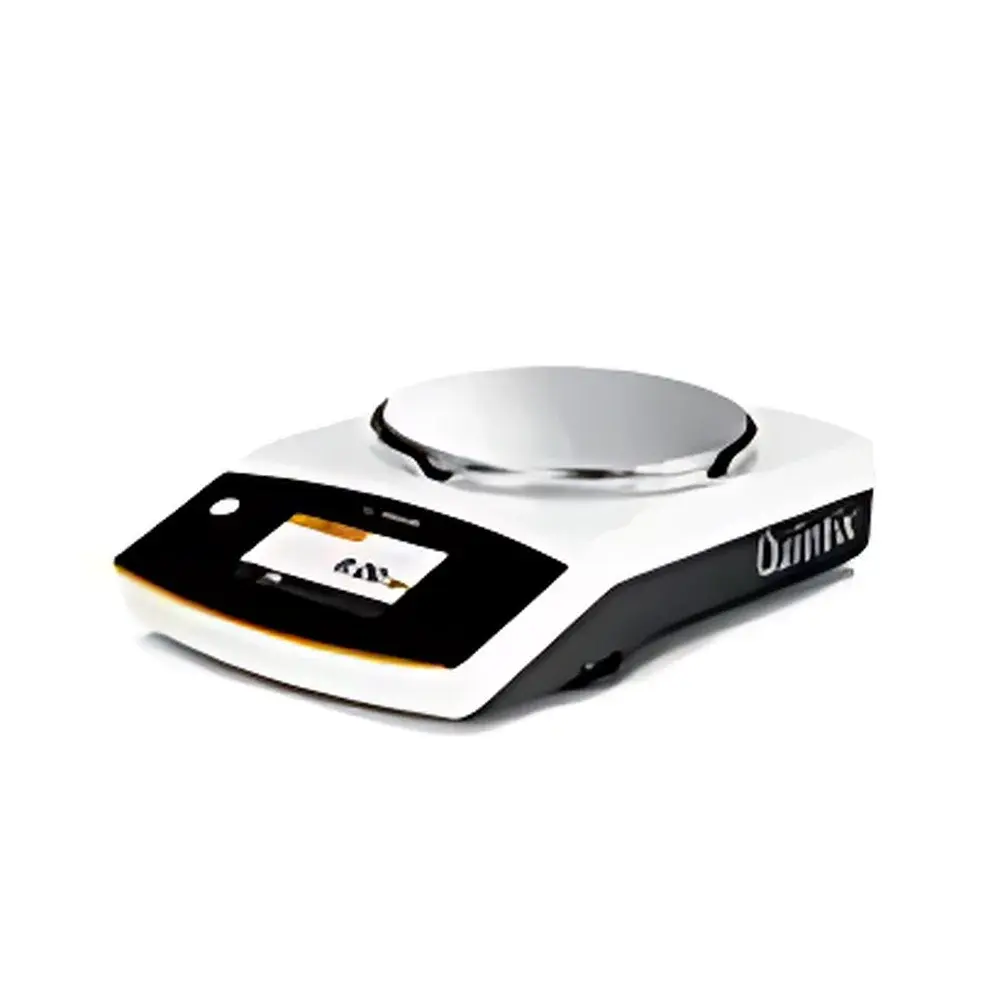
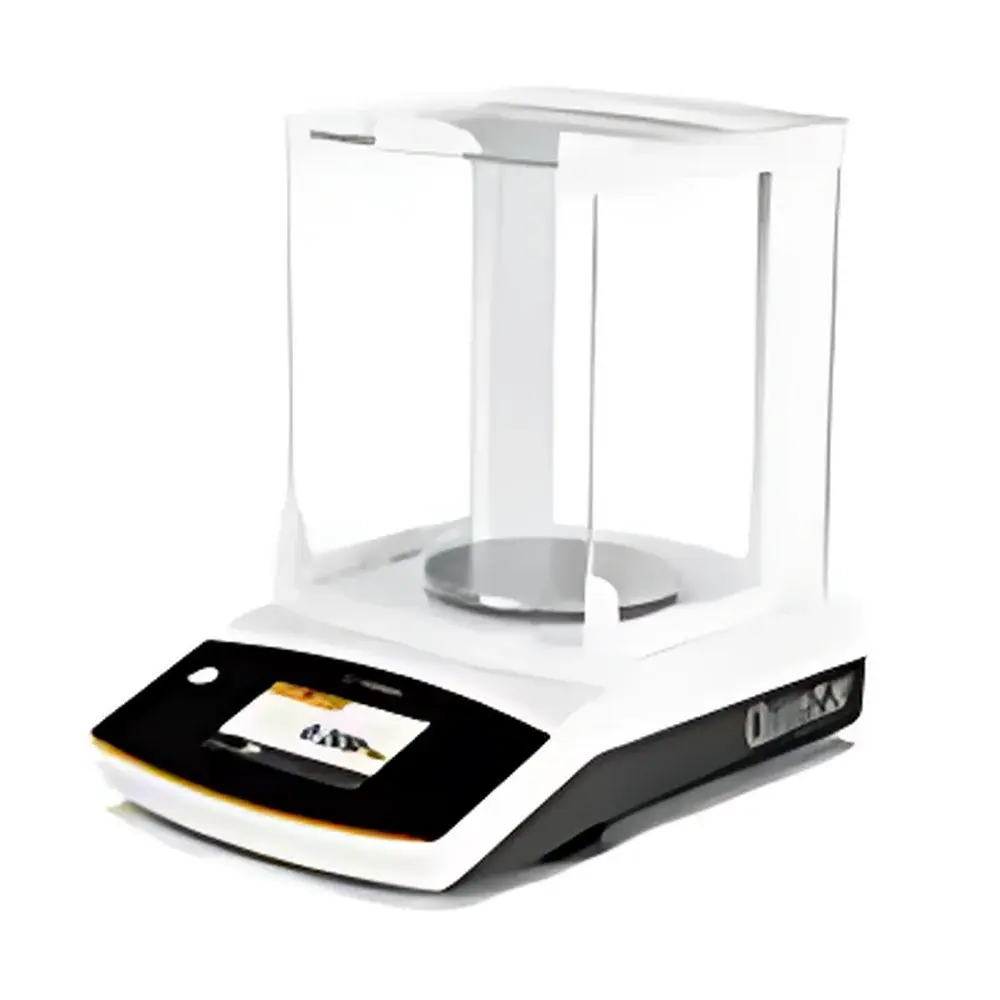
Sartorius Quintix213-1CN Precision Balance
| Brand | Sartorius |
|---|---|
| Origin | Germany |
| Model | Quintix213-1CN (210 g / 1 mg, internal calibration) |
| Max Capacity | 210 g |
| Readability | 1 mg |
| Repeatability | 1 mg |
| Linearity | 2 mg |
| Stabilization Time | 1.5 s |
| Pan Diameter | 120 mm |
| Chamber Height | 209 mm |
| Dimensions (W × D × H) | 216 × 360 × 320 mm |
| Weight | ~4.9 kg |
| Power Supply | 100–240 V AC |
| Interface | miniUSB |
| Compliance | ISO/IEC 17025 traceable calibration, GLP/GMP-compliant print output, CMC certification (China), ISO CAL automatic internal adjustment |
Overview
The Sartorius Quintix213-1CN is a high-performance precision balance engineered for routine laboratory weighing tasks requiring consistent accuracy, regulatory compliance, and operational efficiency. Designed and manufactured in Germany, it employs electromagnetic force compensation (EMFC) technology — the industry-standard principle for analytical and precision balances — to deliver stable, drift-resistant measurements across varying environmental conditions. With a maximum capacity of 210 g and a readability of 1 mg, the Quintix213-1CN meets the performance criteria defined in ISO 9001, USP , and ASTM E898 for Class II precision balances. Its integrated isoCAL™ system performs fully automatic internal calibration and adjustment at user-defined intervals or upon temperature change (>1.5 °C), ensuring continuous metrological traceability without manual intervention. The balance conforms to GLP and GMP documentation requirements through built-in audit-trail-capable printing and data integrity safeguards.
Key Features
- Intuitive 4.3-inch full-color capacitive touchscreen interface with multilingual support (12 languages including English, German, French, Spanish, Chinese, Japanese, and Russian)
- isoCAL™ automatic internal calibration and adjustment — triggered by time, temperature shift, or manual command — eliminating external weights and reducing downtime
- GLP/GMP-compliant direct printing via optional Sartorius YDP30 or YDP10 lab printers; all printouts include date/time stamp, operator ID (if configured), balance ID, calibration status, and uncertainty indicators
- Direct data transmission to Windows-based applications (e.g., Excel, LIMS, ELN) via miniUSB — no proprietary software required; supports ASCII and Sartorius-compatible protocols
- Ergonomic design with front-accessible level indicator, adjustable feet, and compact footprint (216 × 360 × 320 mm) optimized for fume hoods and benchtop integration
- Chemically resistant housing — safe for cleaning with acetone or 70% ethanol — suitable for QC labs handling solvents, APIs, or aggressive reagents
- Comprehensive weighing modes: standard weighing, parts counting, percentage weighing, density determination, checkweighing, peak hold, formulation, statistics, unit conversion (g, mg, ct, oz, lb, dwt, etc.)
Sample Compatibility & Compliance
The Quintix213-1CN accommodates a broad range of sample types — from solid powders and granules to small metallic components and pharmaceutical dosage forms — within its 120 mm diameter stainless-steel pan and 209 mm-high draft shield enclosure. Its mechanical design minimizes air current sensitivity while maintaining accessibility for volumetric flasks, crucibles, and tared containers. The balance complies with national metrological regulations under China’s CMC (China Metrology Certification) framework and supports ISO/IEC 17025-accredited calibration workflows. It generates audit-ready records aligned with FDA 21 CFR Part 11 principles when used with validated printer configurations and controlled user access protocols (though native user management is not embedded, external authentication layers may be applied via networked LIMS integration).
Software & Data Management
Data handling is streamlined through plug-and-play miniUSB connectivity, enabling real-time transfer to local PCs without drivers or middleware. All measurement events — including calibration logs, stability checks, and weighing sequences — are timestamped and stored internally. Print outputs adhere to GLP templates, embedding balance identification, environmental metadata (e.g., internal temperature sensor readings), and calibration history. While the Quintix213-1CN does not feature onboard user administration or password protection, its output structure supports integration into enterprise-grade quality systems where identity verification and electronic signatures are managed externally. Raw data export follows standardized ASCII formatting, facilitating automated parsing into statistical analysis tools or electronic lab notebooks.
Applications
This balance serves critical functions across regulated and non-regulated environments: raw material receipt inspection in pharmaceutical manufacturing; formulation batch record generation in R&D labs; student experiments in university chemistry teaching labs; precious metal valuation in jewelry QA; catalyst mass verification in automotive catalyst development; and reference standard preparation in government metrology institutes. Its 1.5-second stabilization time and 1 mg repeatability ensure high-throughput throughput in production QC lines, while its isoCAL™ assurance supports uninterrupted operation during extended shifts or unattended overnight runs.
FAQ
Does the Quintix213-1CN support external calibration with certified weights?
Yes — although isoCAL™ enables fully automatic internal calibration, the balance also accepts manual external calibration using Class M1 or better certified砝码 per ISO 9001 and EURAMET cg-18 guidelines.
Is the balance compatible with LIMS or ELN systems?
Yes — via miniUSB serial emulation, it transmits data directly to any Windows application supporting ASCII input, including major LIMS vendors and electronic lab notebook platforms.
Can multiple users be assigned unique IDs for traceability?
No — the Quintix213-1CN lacks native multi-user account management; however, operator ID fields in printed reports can be populated manually or via upstream system integration.
What environmental conditions affect its performance?
Optimal operation requires ambient temperatures between 10–30 °C, relative humidity <80% RH non-condensing, and minimal vibration or air turbulence — consistent with ISO 4765 recommendations for precision weighing equipment.
Is firmware upgrade supported in the field?
Yes — firmware updates are distributed by Sartorius via USB flash drive and installed through the balance’s service menu, ensuring continued alignment with evolving regulatory expectations and feature enhancements.