
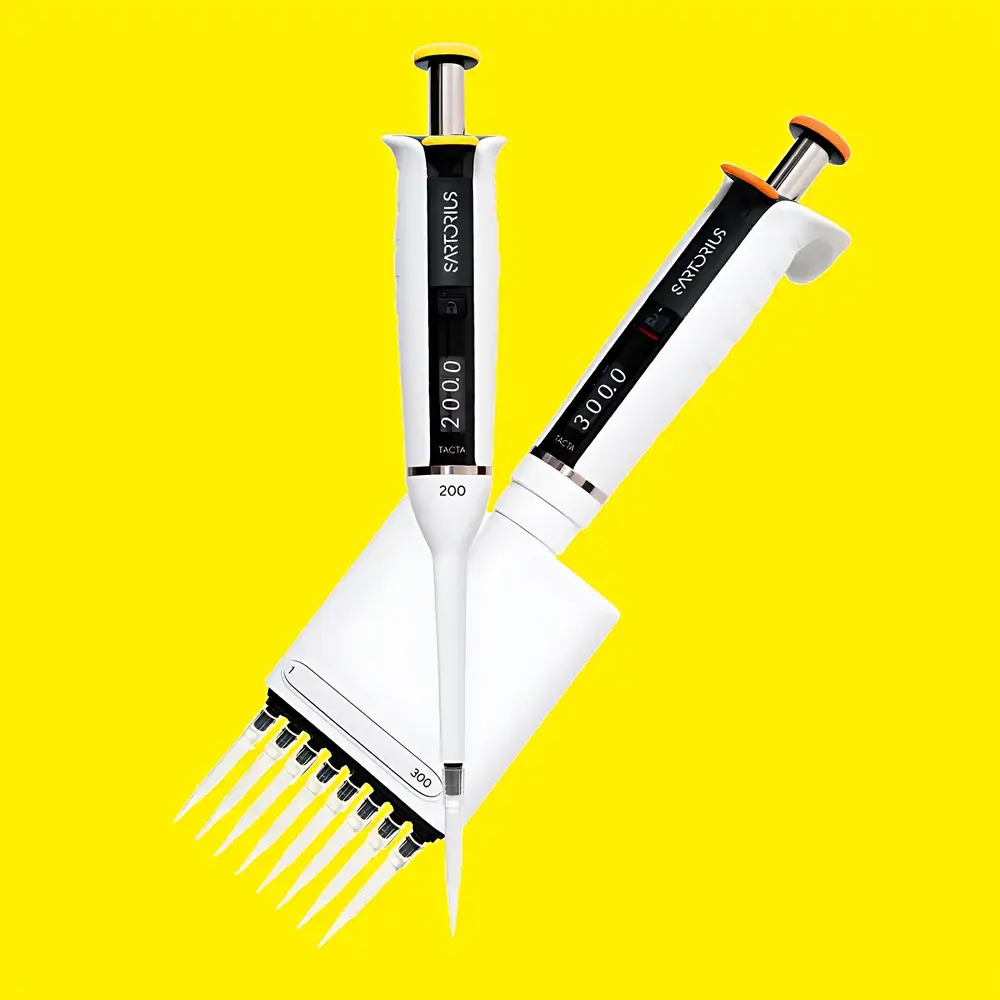
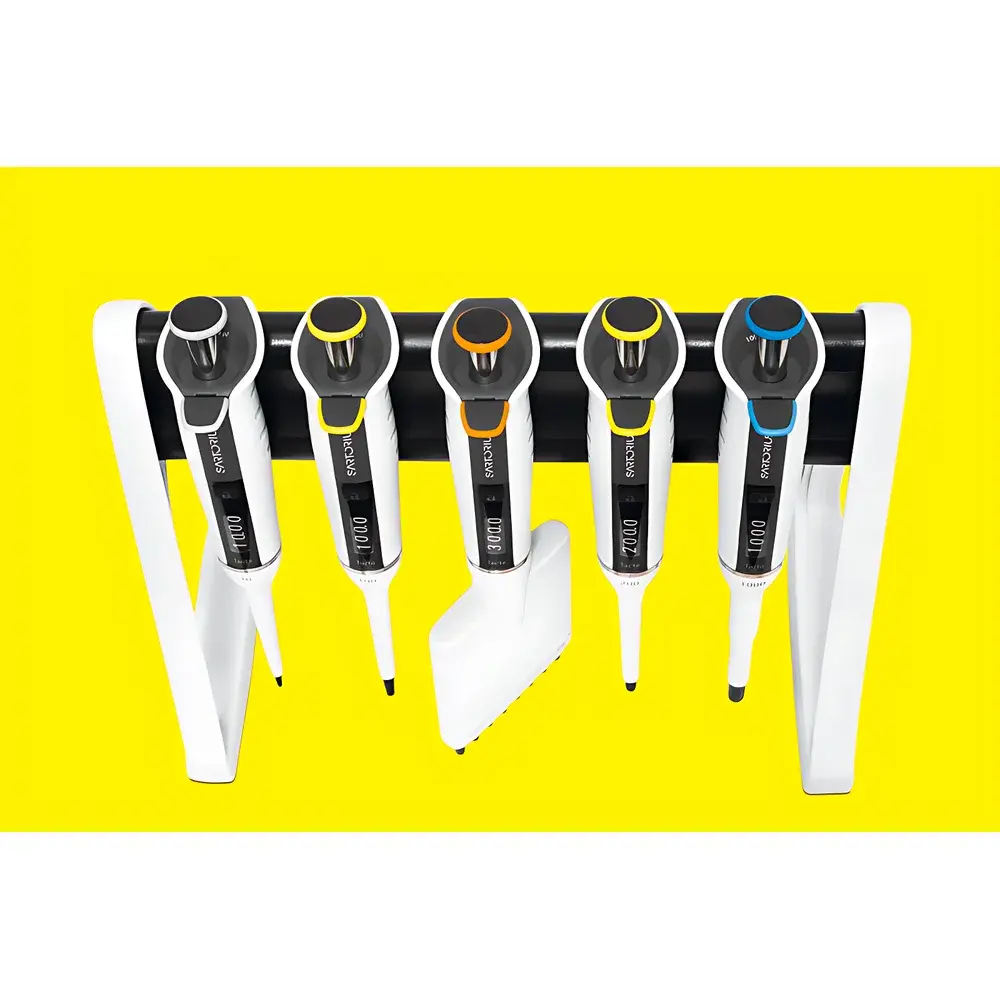
Sartorius Tacta® Manual Pipette
| Brand | Sartorius |
|---|---|
| Origin | Finland |
| Model | LH-729010 |
| Pipette Type | Single-Channel Manual Pipette |
| Channel Options | 1-, 8-, or 12-Channel |
| Volume Range | 0.1–10,000 µL |
| Maximum Capacity | 10 mL |
| Accuracy | ±0.15% to ±10% (volume-dependent) |
| Sterilization | Fully autoclavable (121°C, 20 min) |
| Operating Principle | Air-displacement positive-pressure pipetting |
| Display | 4-digit digital volume indicator |
| Weight | 70–100 g (single-channel), 140–170 g (multi-channel) |
| Length | 199–242 mm |
| Tip Ejection | Optiject™ lever-assisted ejection system |
| Volume Lock | Optilock™ dual-mode locking (rotary + push-button) |
| Tip Attachment | Optiload™ elastic conical tip interface |
| Filter Option | Integrated safety conical filter (optional) |
Overview
The Sartorius Tacta® Manual Pipette is an ergonomically engineered air-displacement pipetting instrument designed for high-frequency, precision liquid handling in regulated and research-intensive laboratory environments. Built upon decades of Sartorius expertise in metrology and fluid dynamics, the Tacta® platform integrates mechanical stability with human-factor optimization to reduce operator fatigue and minimize variability associated with repetitive manual pipetting tasks. Its positive-pressure air-displacement mechanism ensures consistent aspiration and dispensing across a broad volume range—from ultra-low volumes (0.1 µL) to high-capacity transfers (10 mL)—while maintaining traceable accuracy per ISO 8655 standards. The device is fully compliant with GLP and GMP operational requirements when used with documented calibration and maintenance protocols.
Key Features
- Ergonomic design with low-force plunger activation and tip ejection—reducing risk of work-related upper limb disorders (WRULD) during extended use.
- Optilock™ dual-mode volume adjustment system: rotary dial for fine-tuning and push-button lock for rapid, tamper-resistant setting retention.
- Optiject™ lever-assisted tip ejection mechanism delivers controlled, consistent force—eliminating thumb strain and preventing accidental tip drop or aerosol generation.
- Optiload™ elastic conical tip interface ensures secure, leak-free attachment across diverse tip brands and lot batches—enhancing reproducibility in cross-lab workflows.
- Full autoclavability (121°C, 20 min, fully assembled) supports stringent contamination control in cell culture, molecular biology, and diagnostic applications.
- 4-digit digital volume display enables unambiguous, parallax-free reading—critical for audit-ready documentation under FDA 21 CFR Part 11-compliant environments when paired with validated software.
- Integrated conical filter option provides economical, high-efficiency barrier protection against aerosol-borne contaminants without compromising flow dynamics.
Sample Compatibility & Compliance
The Tacta® pipette accommodates standard conical polypropylene tips (including universal-fit and low-retention variants) and demonstrates stable performance with aqueous buffers, viscous glycerol solutions (up to 50% v/v), ethanol-water mixtures, and diluted protein samples. It meets ISO 8655-2 (volumetric performance) and ISO 8655-5 (testing methods) specifications across its full volume range. Calibration certificates issued by Sartorius-accredited service centers are traceable to national metrology institutes (e.g., NIST, PTB). The device supports compliance with ISO/IEC 17025, CLIA, and CAP accreditation requirements when integrated into a documented equipment management program.
Software & Data Management
While the Tacta® is a manually operated instrument, its design facilitates seamless integration into digital lab ecosystems. Volume settings, usage logs, and calibration records can be captured via Sartorius LabX® Liquid Handling software (when connected through compatible electronic pipette adapters or benchtop stations). LabX supports electronic signatures, audit trails, and automatic report generation aligned with FDA 21 CFR Part 11 and EU Annex 11 requirements. Standalone Tacta® units maintain full traceability through engraved serial numbers and optional RFID-enabled service tags for automated asset tracking within CMMS platforms.
Applications
- Quantitative sample preparation for HPLC, GC, and LC-MS analysis.
- Serial dilution and standard curve generation in ELISA, qPCR, and immunoassay workflows.
- Cell seeding and media exchange in adherent and suspension culture systems.
- Reagent dispensing in high-throughput screening (HTS) and assay development labs.
- Calibration standard preparation in reference material laboratories operating under ISO/IEC 17034 guidelines.
- Quality control testing in pharmaceutical manufacturing environments governed by ICH Q2(R2) validation principles.
FAQ
Is the Tacta® pipette suitable for handling volatile or corrosive solvents?
Yes—when equipped with chemically resistant seals (e.g., FFKM O-rings, optional upgrade) and used with solvent-compatible tips, the Tacta® maintains integrity with common organic solvents including acetonitrile, methanol, and chloroform. Refer to Sartorius Chemical Compatibility Guide (Document No. 9802-001-EN) for full material resistance data.
Can the Tacta® be calibrated in-house?
Yes—Sartorius provides certified calibration kits (e.g., Gravimetric Calibration Set LH-729020) and detailed SOPs compliant with ISO 8655-6. In-house calibration requires analytical balances meeting OIML R76 Class I specifications and environmental controls per ISO 4787.
What is the recommended recalibration interval?
Annual calibration is advised for routine QC use; however, frequency must be justified based on risk assessment, usage intensity, and regulatory context—e.g., biopharma process labs often implement semi-annual calibration with intermediate performance verification.
Does the Tacta® support tip compatibility with third-party manufacturers?
Yes—the Optiload™ conical interface conforms to ISO 8655-3 dimensional tolerances, ensuring reliable sealing and accuracy with all major tip brands validated per Sartorius Tip Compatibility Matrix (Rev. 4.2, 2023).
How does the Optilock™ system enhance data integrity?
By enabling both tactile confirmation (audible click) and visual lock indication, Optilock™ prevents unintentional volume drift during operation—supporting ALCOA+ principles (Attributable, Legible, Contemporaneous, Original, Accurate) in GxP environments.



