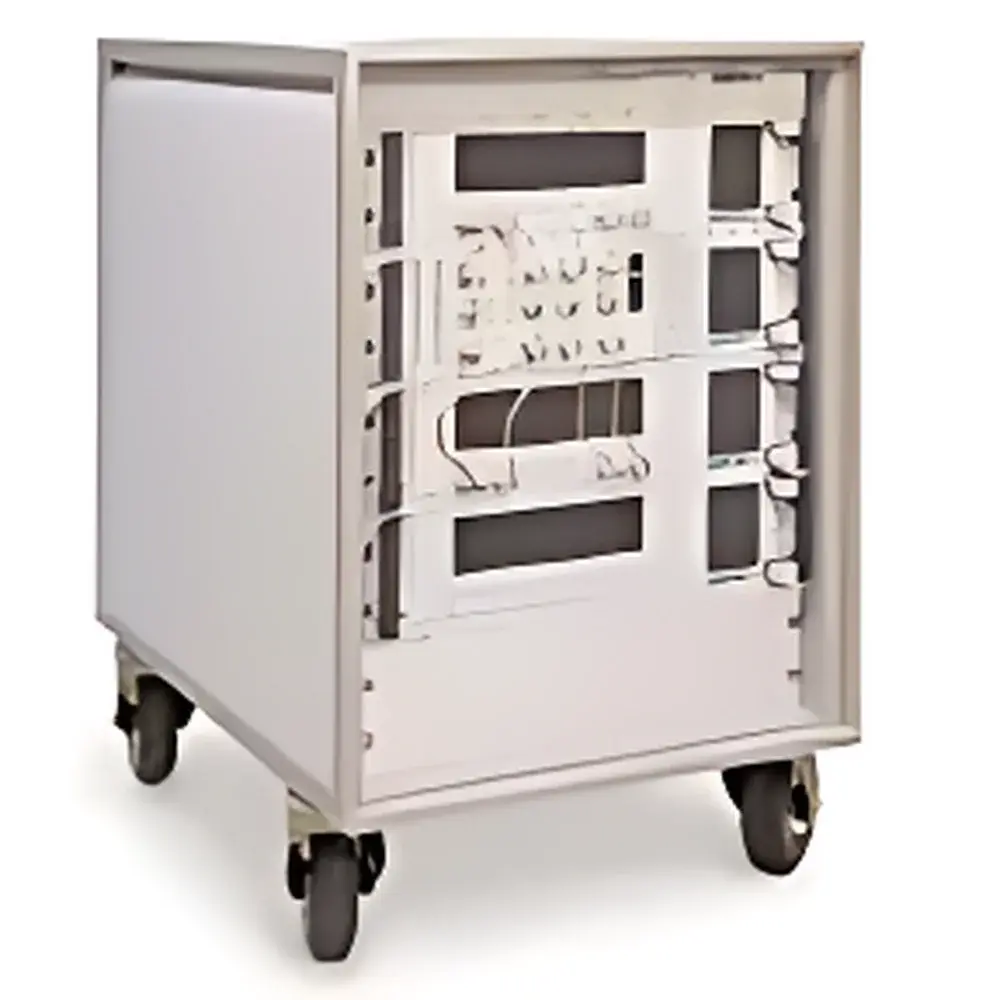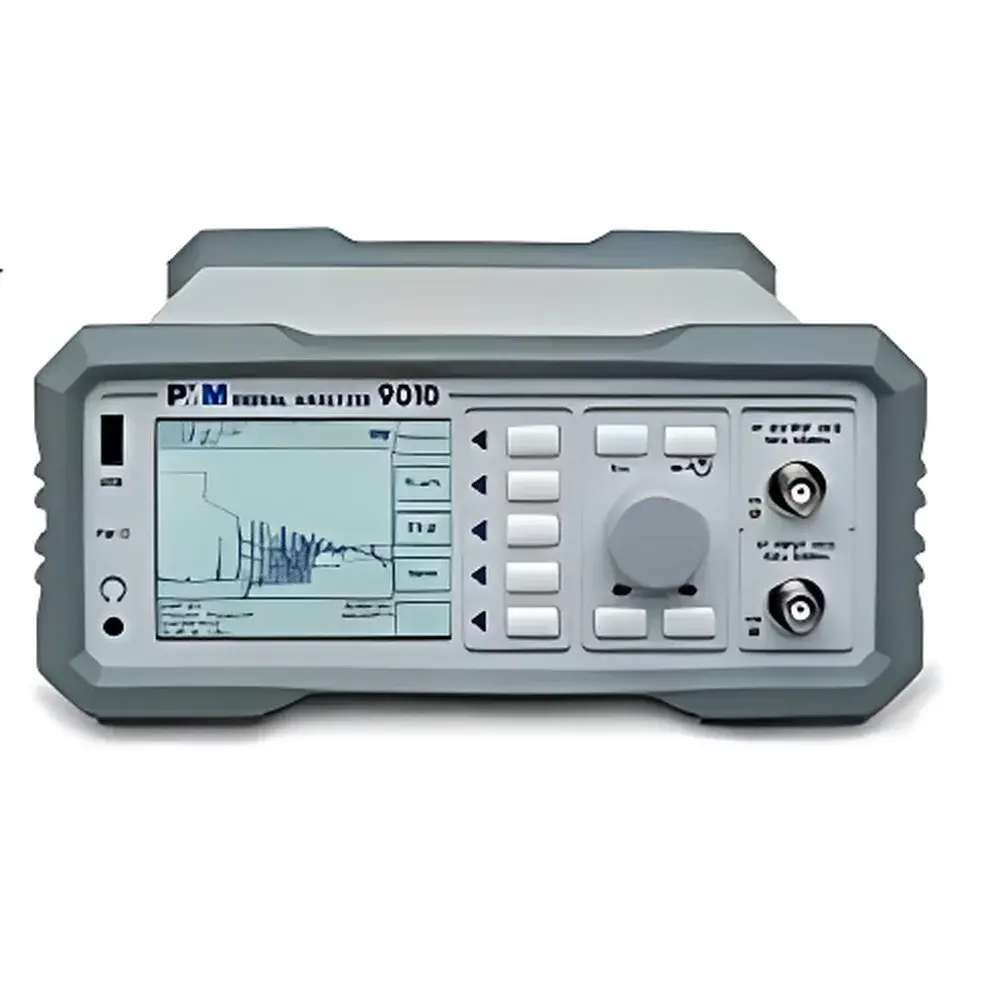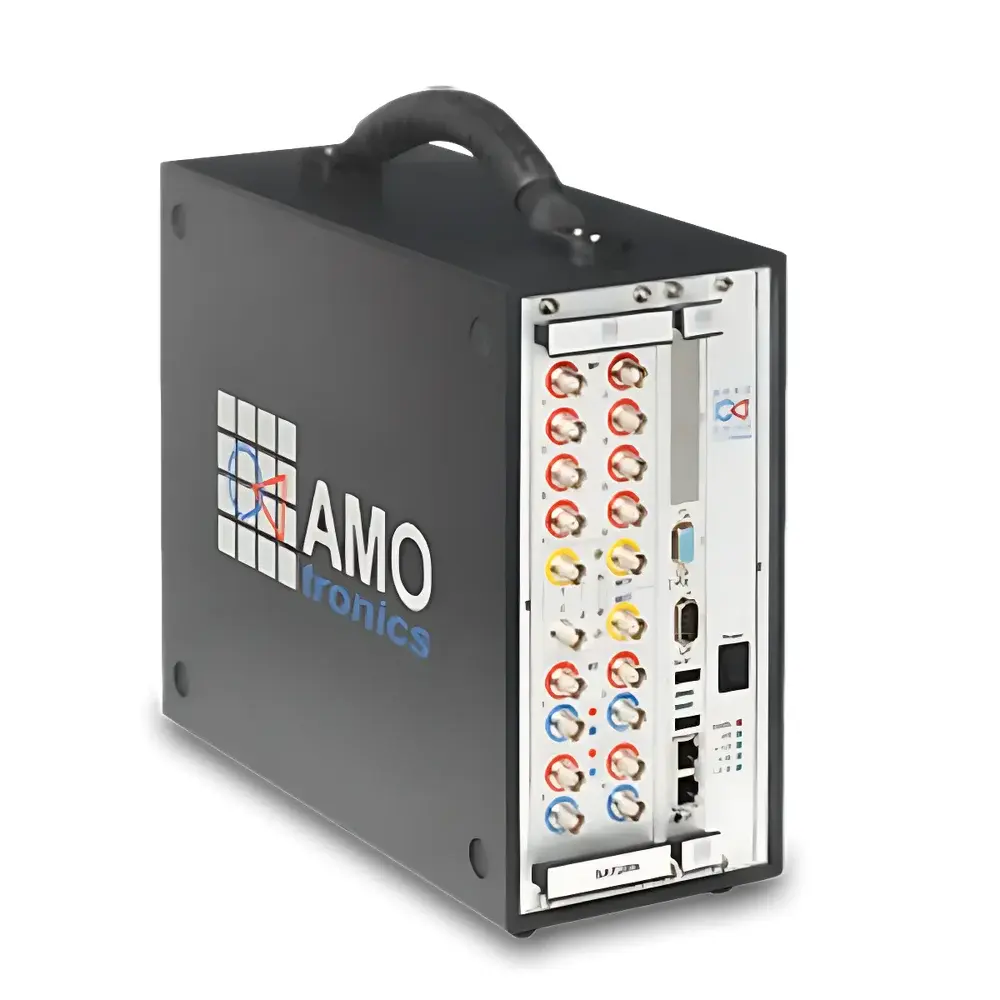
SATURN Transient Recorder by AMOtronics
| Brand | auniontech |
|---|---|
| Origin | Shanghai, China |
| Manufacturer Type | Authorized Distributor |
| Product Category | Domestic |
| Model | SATURN Series Transient Recorder for Time-Interval & Frequency Analysis |
| Pricing | Available Upon Request |
Overview
The SATURN Transient Recorder by AMOtronics is a high-performance, modular digital measurement platform engineered for precision time-domain analysis and ultra-fast frequency characterization in demanding industrial, aerospace, automotive, and scientific environments. Based on high-fidelity analog-to-digital conversion (ADC) architecture and real-time signal acquisition principles, the SATURN system captures transient electrical phenomena—including voltage spikes, switching events, pulse trains, jitter, and phase transients—with nanosecond-scale timing resolution and exceptional amplitude fidelity. Its core measurement methodology relies on synchronous multi-channel sampling with programmable trigger logic, enabling deterministic capture of rare or non-repetitive events across wide dynamic ranges. Designed for mission-critical applications such as high-voltage insulation testing, explosive shockwave monitoring, electromagnetic compatibility (EMC) validation, and pulsed power diagnostics, the SATURN recorder integrates galvanic isolation, fiber-optic data transmission, and cPCI-based hardware scalability to ensure operational safety, metrological integrity, and long-term maintainability.
Key Features
- Modular cPCI-based hardware architecture supporting field-upgradable ADC, I/O, and control modules
- Sampling rates from 200 kS/s up to 2 GS/s (with optional 12-bit @ 20 GS/s interleaved mode)
- ADC resolution configurable from 8-bit to 20-bit per channel, depending on selected module
- Up to 240 synchronized analog input channels—expandable via SMB, BNC, UHF, or LEMO connectors
- Fiber-optic remote head interface for intrinsic safety in high-potential, explosive, or EMI-intensive environments
- Programmable input voltage range: ±100 mV to ±1 kV, with 6–8 user-definable full-scale steps and optional 50 Ω termination
- DC/AC/GND coupling modes; input impedance: 1 MΩ || ~10 pF (standard), 50 Ω (optional for RF-grade signals)
- Flexible trigger system with pre-trigger capture (up to 99% record length), post-trigger delay, and multi-level logic conditions
- Integrated GPS-disciplined clock for traceable time-stamping and multi-system synchronization (sub-nanosecond skew)
- Onboard FPGA resources for real-time signal processing, decimation, filtering, and edge detection
Sample Compatibility & Compliance
The SATURN Transient Recorder accommodates a broad spectrum of physical quantities through compatible signal conditioning modules—including voltage, current (via shunt or Rogowski coil inputs), pressure (piezoelectric), strain (Wheatstone bridge), acceleration (IEPE), and charge (capacitive). Its modular design supports direct sensor interfacing without external amplifiers in most cases. The system complies with IEC 61000-4 series for immunity to electrostatic discharge (ESD), radiated RF fields, and fast transients. When equipped with fiber-optic satellite heads, it meets IEC 61000-4-5 (surge immunity) and IEEE Std 510-1983 for high-voltage test environments. All firmware and software components are designed to support GLP/GMP-aligned workflows, including audit trails, electronic signatures (per FDA 21 CFR Part 11 requirements), and calibration certificate traceability to NIST or PTB standards.
Software & Data Management
SATURN Studio II is the native Windows-based application suite delivering complete system configuration, acquisition control, visualization, and post-processing capabilities. It features an intuitive drag-and-drop interface for channel setup, trigger definition, and memory segmentation (segmented acquisition mode for burst-event capture). Raw binary data is stored in HDF5 format for interoperability with MATLAB, Python (h5py), and LabVIEW. Advanced analysis tools include FFT-based spectral estimation, histogram-based jitter analysis, eye diagram generation, statistical parameter extraction (min/max/mean/rms/stddev), and automated pass/fail evaluation against user-defined limits. Reporting modules generate PDF or Excel outputs compliant with ISO/IEC 17025 documentation requirements. Remote operation is supported via TCP/IP and RESTful API, enabling integration into automated test benches and CI/CD pipelines.
Applications
- High-voltage switchgear transient analysis (IEC 62271-100)
- Pulsed laser diode and flashlamp driver characterization
- Ignition system diagnostics in internal combustion engines
- EMI/EMC pre-compliance testing (transient emission profiling)
- Explosive detonation velocity and shock front propagation studies
- Power electronics validation (SiC/GaN inverter switching loss, ringing, and cross-talk)
- Time-of-flight measurements in ultrasonic NDT systems
- Quantum device readout synchronization in cryogenic setups
FAQ
What sampling rate and resolution combinations are available?
Standard configurations support 200 kS/s to 2 GS/s at 12–16 bits; high-speed variants reach 20 GS/s at 12 bits using time-interleaved ADCs. Resolution is module-dependent and selectable per channel group.
Can multiple SATURN units be synchronized?
Yes—using GPS-disciplined clocks or dedicated 10 MHz/1 PPS reference inputs, sub-nanosecond inter-unit skew is achievable across up to 16 chassis.
Is fiber-optic isolation available for all input types?
Fiber-linked satellite heads are available for voltage, current, and charge inputs; custom optical interfaces can be developed for specific sensor types upon request.
Does SATURN Studio II support automated compliance reporting?
Yes—it includes templates aligned with ASTM E29, ISO 13528, and IEC 61000-4-x standards, with customizable report generation and digital signature support.
How is calibration maintained over time?
Each system ships with a factory calibration certificate (traceable to national standards); annual recalibration services and on-site verification kits are available through authorized service centers.