
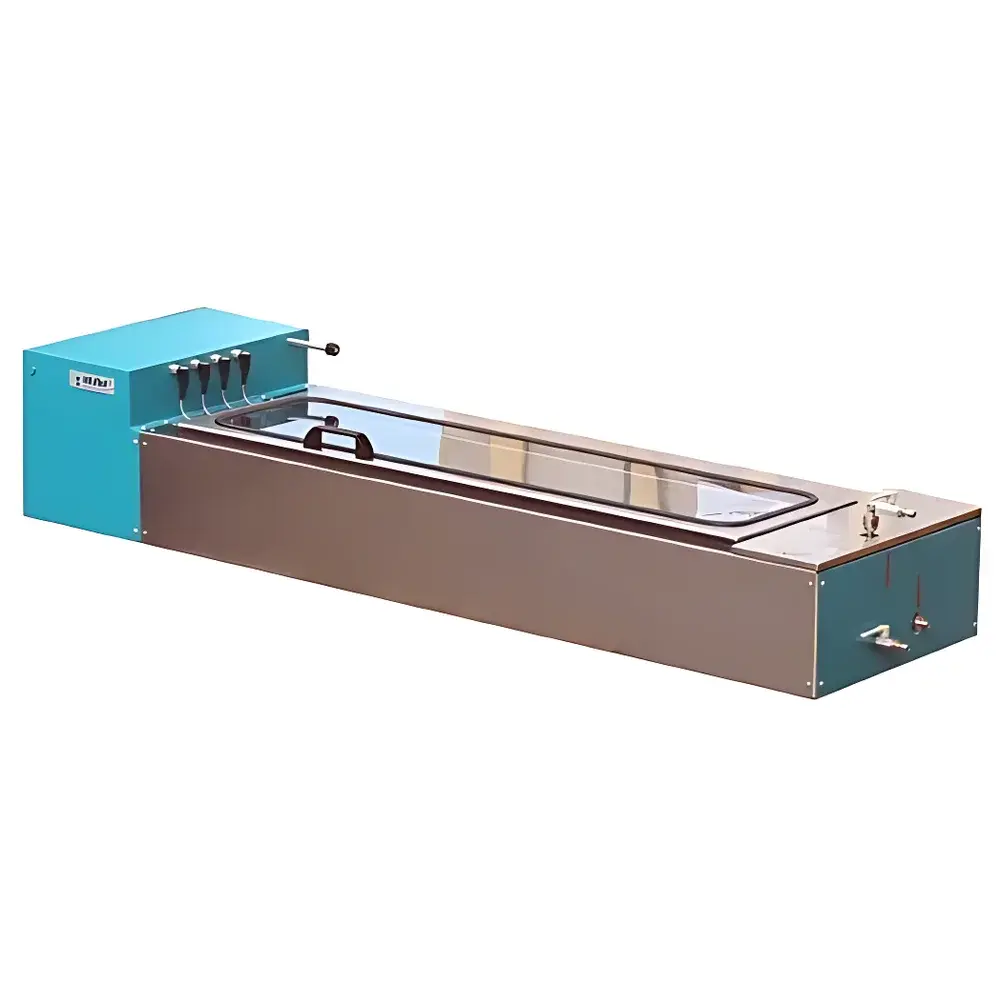
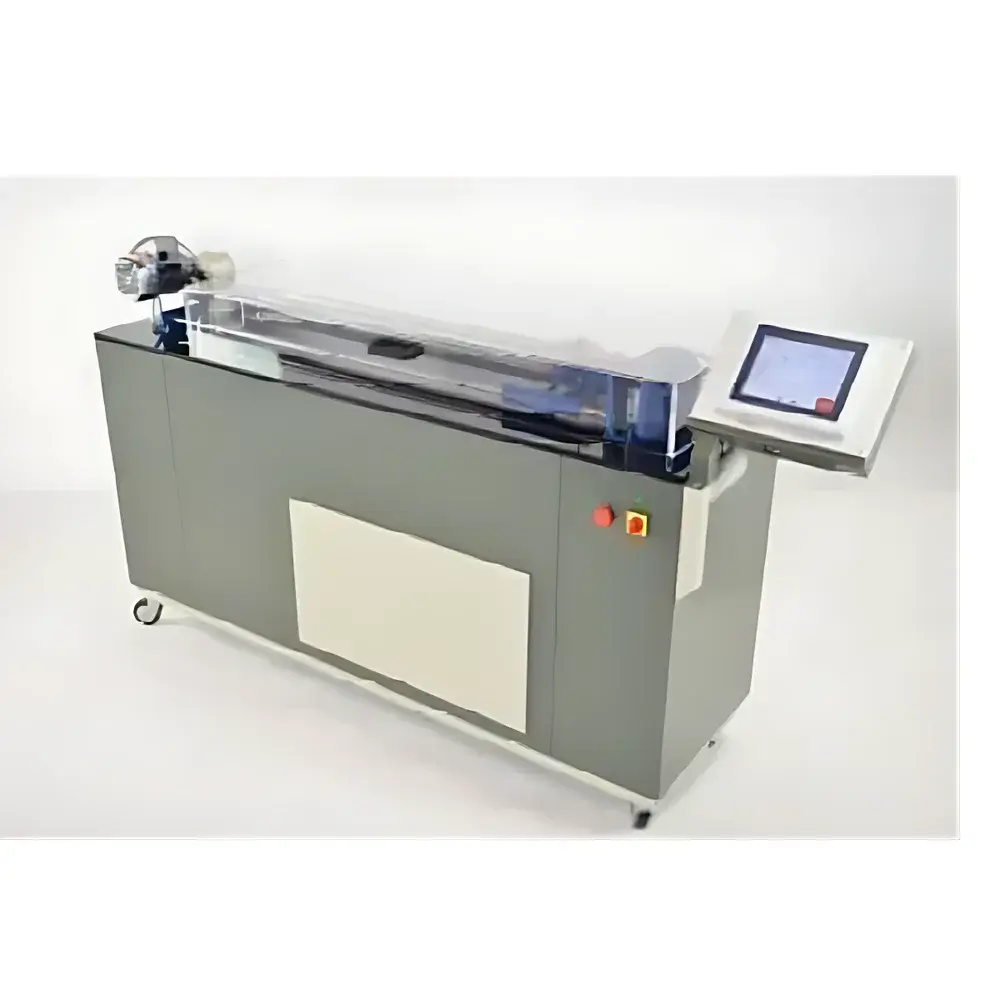
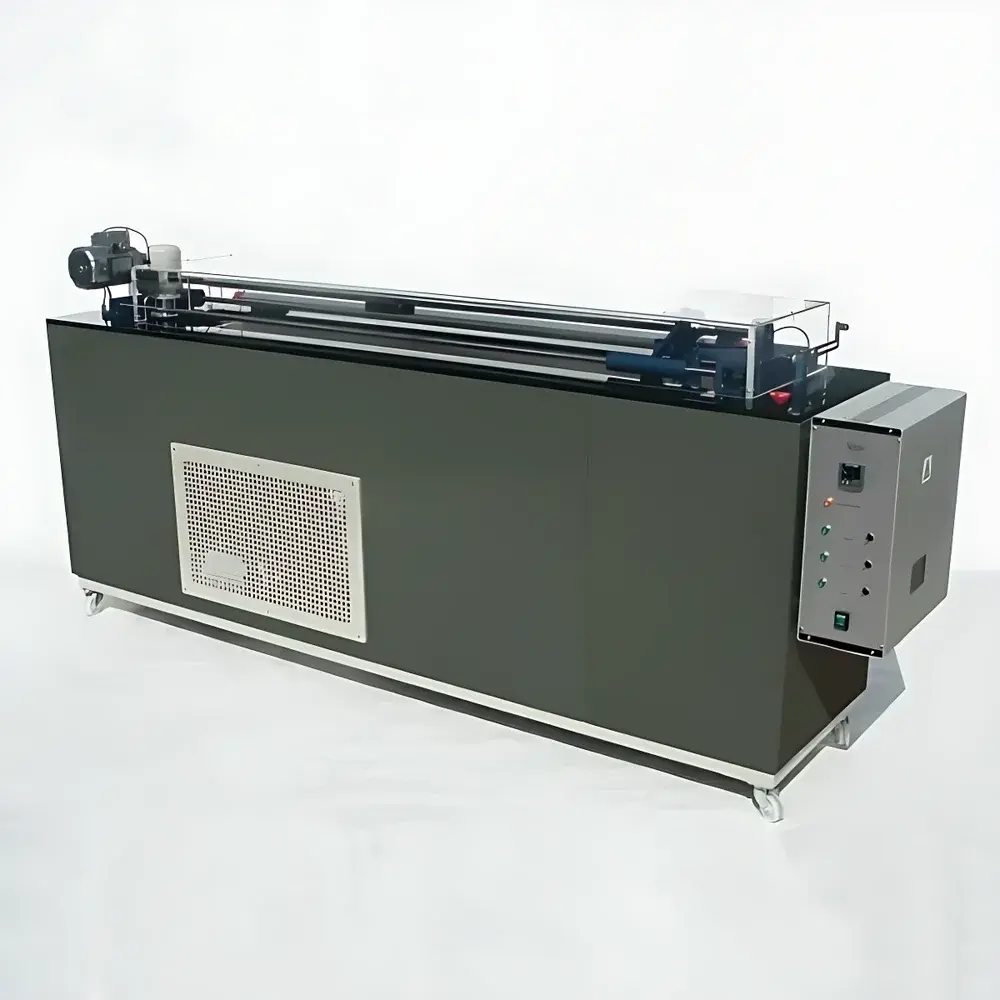
SCAVINI AD113 Automatic Asphalt Ductility Tester
| Brand | SCAVINI |
|---|---|
| Origin | Germany |
| Model | AD113 |
| Temperature Range | −10 °C to 40 °C |
| Ductility Extension Lengths | 50 cm, 100 cm, 150 cm |
| Load Measurement Range | 0–200 N |
| Load Resolution | 0.5 N |
| Temperature Control Accuracy | ±0.1 °C |
| Bath Material | Stainless Steel with PTFE-coated base |
| Cooling System | Integrated hermetic refrigeration compressor |
| Drive Mechanism | Variable-speed electric motor |
| Sample Capacity | 2 specimens simultaneously |
| Data Interface | RS-232 |
| Compliance | ASTM D113, ASTM D5976, IP 32, ISO 1208, GB/T 4508 |
Overview
The SCAVINI AD113 Automatic Asphalt Ductility Tester is a precision-engineered instrument designed for the quantitative determination of ductility—the ability of bituminous binders to undergo plastic deformation under tensile stress at controlled temperature and extension rate. Based on the fundamental principle of uniaxial tensile elongation, the AD113 applies a constant or variable-rate pulling force to standardized asphalt specimens immersed in a thermally regulated water bath. The test terminates automatically upon specimen fracture, recording both the maximum extension (in centimeters) and the corresponding load profile (in Newtons). This measurement directly informs binder performance grading, particularly with respect to low-temperature cracking resistance and compatibility with polymer-modified formulations. As a fully automated system compliant with ASTM D113 and D5976, ISO 1208, IP 32, and GB/T 4508, the AD113 delivers repeatable, auditable results required for quality control laboratories, asphalt production facilities, and road materials research centers operating under ISO/IEC 17025 or AASHTO R 18 frameworks.
Key Features
- Integrated refrigerated water bath with precise PID-controlled temperature regulation (−10 °C to 40 °C), calibrated to ±0.1 °C using PT100 sensors
- Hermetically sealed refrigeration compressor enabling stable sub-ambient operation without external chillers
- Dual-specimen testing capability with independent mold alignment and synchronized extension
- Variable-speed motor drive permitting user-selectable extension rates per ASTM and regional standards
- High-fidelity dual load cells (0–200 N range, 0.5 N resolution) mechanically coupled to the pulling mechanism for real-time tensile force acquisition
- PTFE-coated stainless steel bath floor for optical clarity during fracture observation and enhanced corrosion resistance
- Translucent acrylic hinged lid minimizing thermal loss while allowing unobstructed visual monitoring
- Comprehensive safety interlocks: automatic power cutoff triggered by low water level or overtemperature conditions, with illuminated fault indicators
- Robust construction featuring ceramic-coated stainless steel housing, castor-mounted chassis for lab mobility, and corrosion-resistant chromium-plated copper circulation pump
Sample Compatibility & Compliance
The AD113 accommodates standard asphalt specimens prepared in trapezoidal molds per ASTM D113 (76.2 mm × 25.4 mm × 13.0 mm) or modified geometries specified in ASTM D5976 for polymer-modified binders. Specimen conditioning follows strict thermal equilibration protocols—typically 30 minutes at test temperature prior to initiation. The system meets full mechanical and metrological requirements for regulatory submission under ASTM, ISO, and national standards. Its digital data capture architecture supports audit-ready documentation aligned with GLP practices; raw sensor outputs (load, displacement, bath temperature) are time-stamped and stored with traceable calibration metadata. While not inherently 21 CFR Part 11-compliant, the instrument’s RS-232 interface enables integration with validated LIMS or ELN platforms that enforce electronic signature, audit trail, and data integrity controls.
Software & Data Management
The AD113 operates with Windows-based acquisition and analysis software that acquires synchronized streams from load cells, linear displacement transducers, and bath temperature sensors via RS-232. Data are logged at configurable sampling intervals (default: 10 Hz), generating timestamped .CSV files compatible with third-party statistical packages (e.g., Minitab, JMP) and laboratory informatics systems. Real-time visualization includes overlay plots of load vs. extension, temperature drift over time, and derivative curves highlighting yield points and fracture onset. Reporting templates adhere to ASTM reporting conventions, including ductility value, failure mode classification (ductile, brittle, or cohesive separation), and environmental deviation flags. All datasets are stored locally on encrypted drives with optional network backup; no cloud transmission occurs unless explicitly configured by the end user.
Applications
- Quality assurance of penetration-grade and viscosity-grade bitumens in refinery and blending plant environments
- Evaluation of aging effects (RTFOT, PAV) on ductility retention for performance-graded binder specification (AASHTO M 320)
- Comparative assessment of polymer-modified asphalt (PMB) formulations for improved crack resistance
- Research into bio-based modifiers and reclaimed asphalt pavement (RAP) binder compatibility
- Calibration verification of manual ductility baths and cross-validation against dynamic shear rheometer (DSR) G*/sinδ data
- Supporting pavement design models that correlate ductility with thermal contraction coefficients and fracture energy parameters
FAQ
What standards does the AD113 support out-of-the-box?
ASTM D113, ASTM D5976, IP 32, ISO 1208, and GB/T 4508 — all implemented via preconfigured test protocols and report templates.
Can the instrument operate continuously at −10 °C?
Yes, the integrated hermetic compressor maintains stable bath temperature at −10 °C for extended durations without auxiliary cooling.
Is calibration traceability provided?
Load cells and PT100 sensors are supplied with factory calibration certificates traceable to national metrology institutes (e.g., PTB, NIST); annual recalibration is recommended.
Does the software support multi-user access control?
The base software does not include role-based permissions; however, it integrates seamlessly with enterprise LIMS platforms enforcing user authentication and workflow governance.
How is specimen fracture detected?
Fracture is identified by a sustained drop in tensile load below a programmable threshold (default: 2 N for 0.5 seconds), triggering immediate motor stop and data logging termination.






