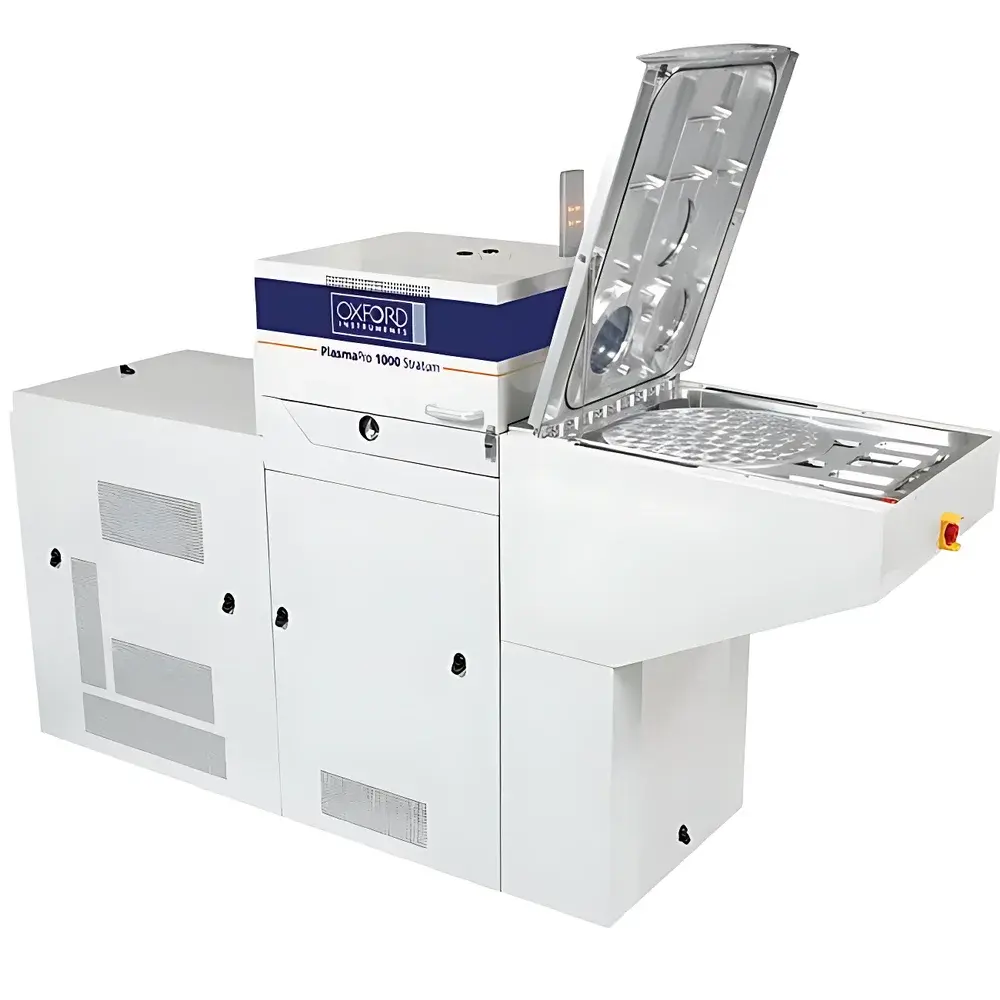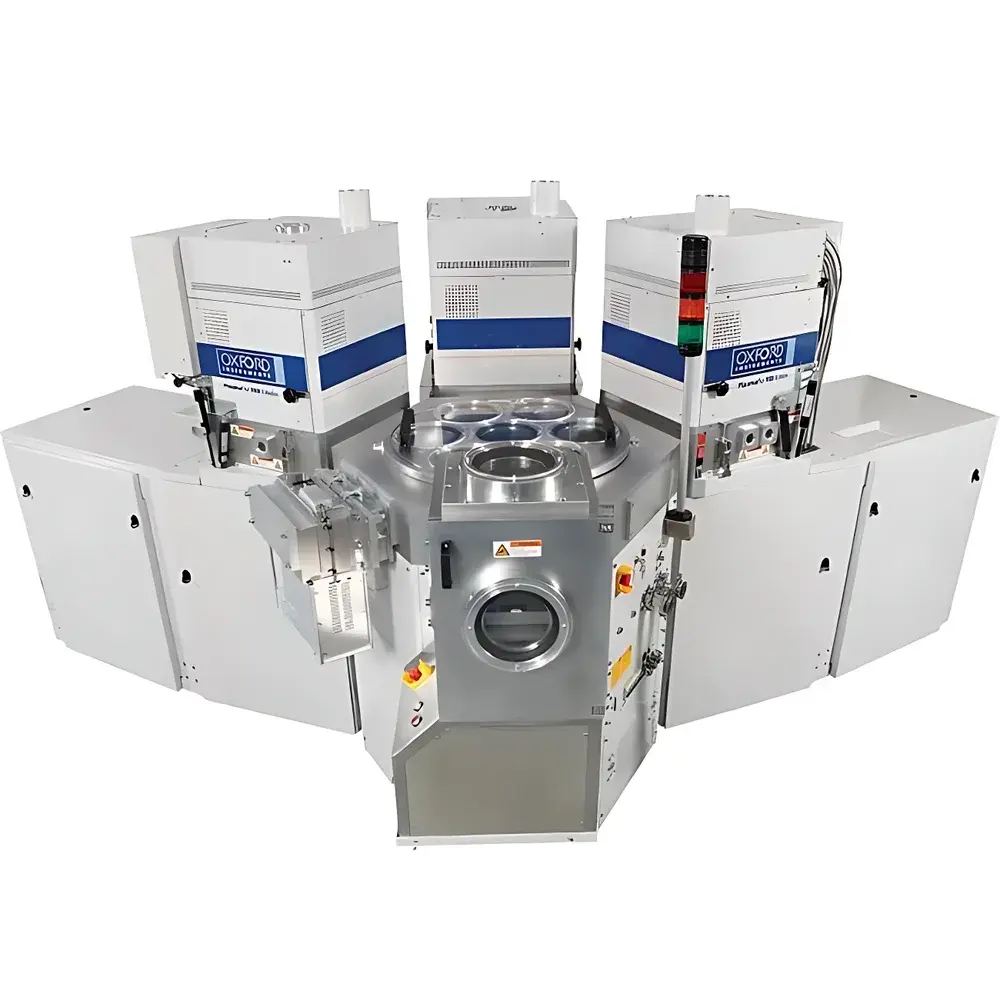
SciDre HKZ High-Temperature High-Pressure Optical Floating-Zone Single Crystal Furnace
| Brand | SciDre |
|---|---|
| Origin | Germany |
| Model | HKZ |
| Maximum Melting Zone Temperature | Up to 3000 °C |
| Melting Zone Pressure Range | 10–300 bar (selectable) |
| Vacuum Level | 1×10⁻⁵ mbar |
| Atmosphere Options | Ar, O₂, N₂, air, or custom gas mixtures |
| Xenon Lamp Power Options | 3 kW, 5 kW, 6.5 kW |
| Sample Rod Diameter | 6.8 mm or 9.8 mm |
| Pulling Rate | 0.1–50 mm/h |
| Rotation Speed | 0–70 rpm |
Overview
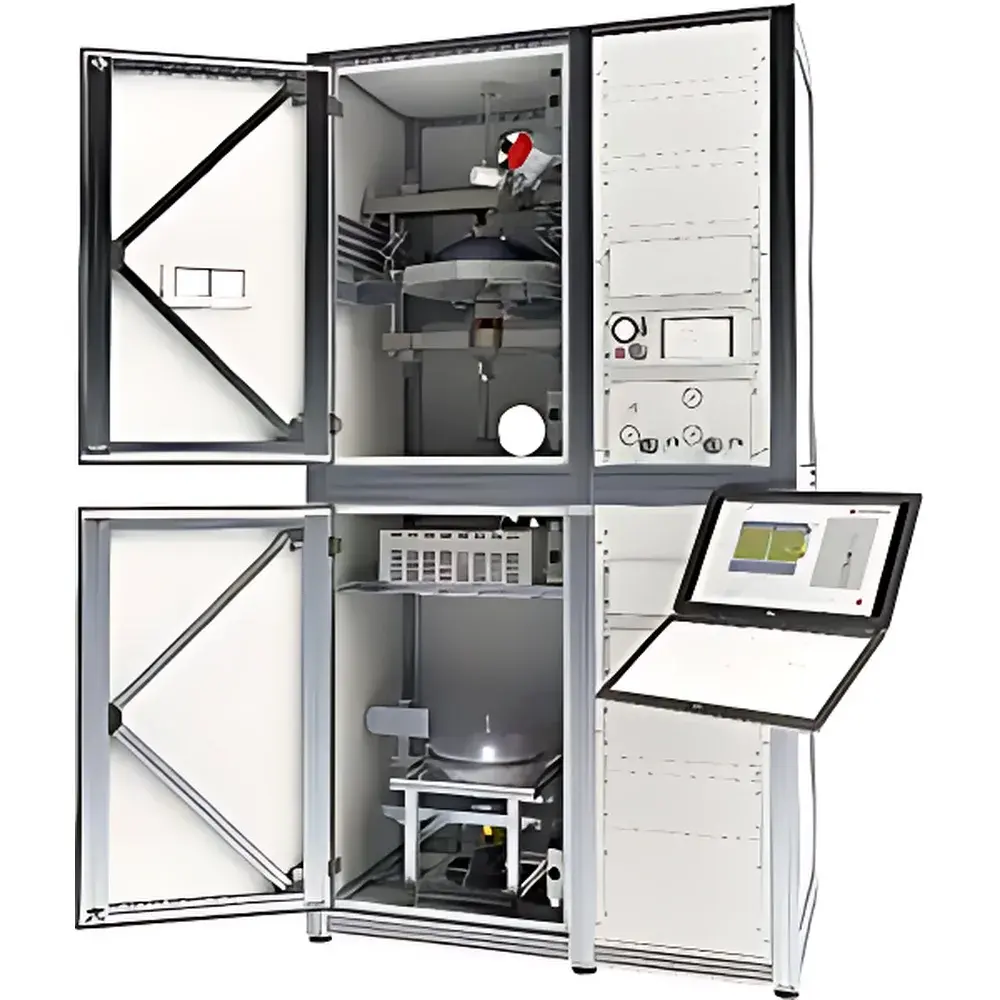
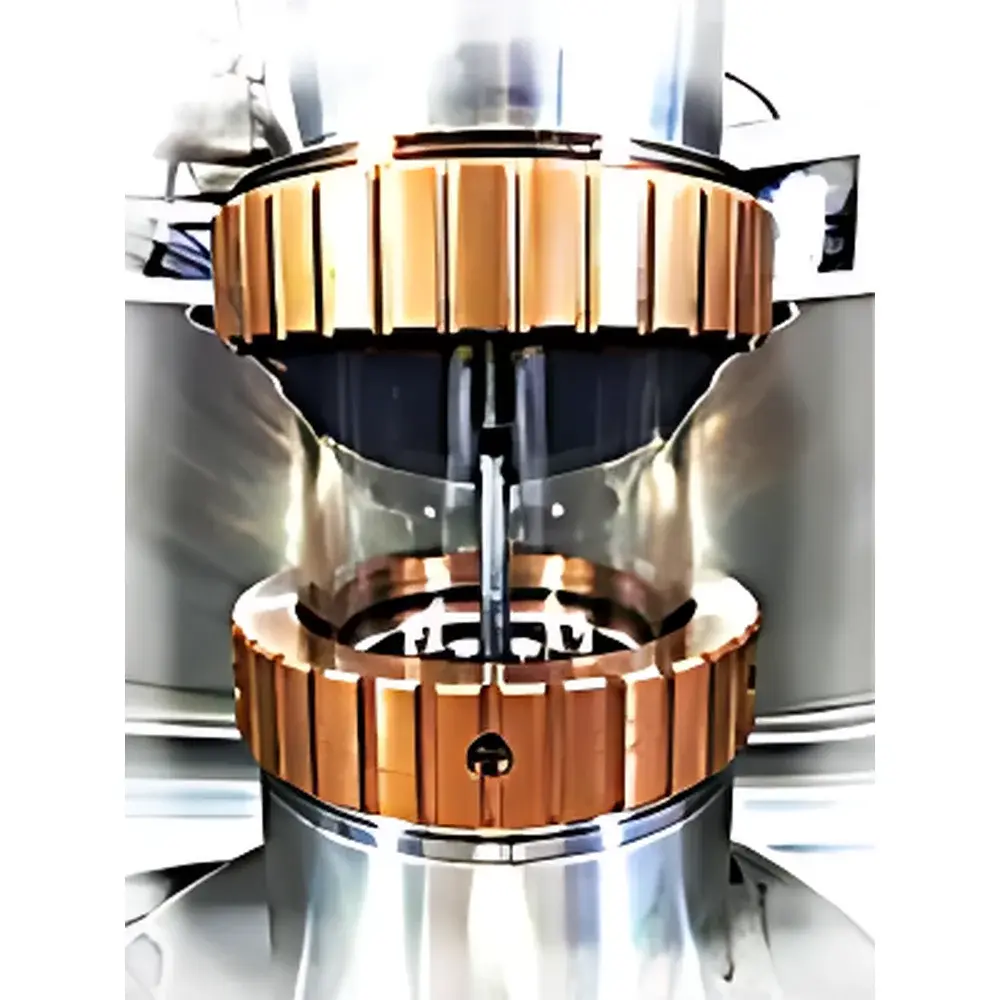
The SciDre HKZ is a research-grade high-temperature, high-pressure optical floating-zone (OFZ) single crystal furnace engineered for the synthesis of advanced functional materials under precisely controlled thermodynamic conditions. Based on the principle of image heating—where collimated light from high-intensity short-arc xenon lamps is focused via ellipsoidal mirrors onto a narrow molten zone of a vertically oriented polycrystalline feed rod—the HKZ enables containerless crystal growth with minimal contamination and exceptional thermal gradient control. Its dual-mode chamber architecture supports operation across an unprecedented pressure range: from ultra-high vacuum (1×10⁻⁵ mbar) to extreme hydrostatic pressures up to 300 bar, making it uniquely suited for stabilizing metastable phases, suppressing volatile element loss, and enabling solid-state reactions under reactive or oxidizing atmospheres (e.g., high-pO₂ growth of nickelates or ruthenates). Designed and validated in collaboration with the Fraunhofer Institute for Applied Optics and Precision Engineering (IOF), the system integrates optomechanical precision with industrial-grade robustness, meeting the stringent reproducibility and traceability requirements of academic and national-laboratory crystal growth programs.
Key Features
- Vertical optical path configuration with computer-controlled ellipsoidal mirror alignment, ensuring optimal radiation coupling and symmetric melt-zone geometry.
- Modular xenon lamp system offering 3 kW, 5 kW, and 6.5 kW power options—each matched to specific material absorption profiles and thermal mass requirements.
- Grating-based optical power modulation enabling continuous, stepless adjustment of heating intensity (0–100%), critical for nucleation control and suppression of constitutional supercooling.
- Dual-mode sample chamber fabricated from high-purity fused silica and Inconel alloys, rated for simultaneous high-temperature (>3000 °C localized), high-pressure (300 bar), and high-vacuum (1×10⁻⁵ mbar) operation.
- Integrated multi-channel gas handling system supporting independent mass-flow control of Ar, O₂, N₂, air, or pre-mixed gases—with optional catalytic purification to reduce residual oxygen to <10⁻¹² ppm in argon carrier streams.
- Motorized sample translation and rotation stages with sub-micron positional resolution and programmable ramp profiles for pulling rate (0.1–50 mm/h) and rotation speed (0–70 rpm).
- Industrial-grade touchscreen HMI running real-time embedded control firmware with configurable PID loops, event logging, and audit-trail-capable operation history.
Sample Compatibility & Compliance
The HKZ supports single crystal growth of oxide perovskites (e.g., LaNiO₃, PrNiO₃), intermetallics (RAlGe, Co₂CrAl), pyroxenes (CoGeO₃), spinels, borocarbides, and high-Tc superconductors—including systems requiring elevated oxygen partial pressure (>10 bar pO₂) or inert high-pressure stabilization (e.g., Fe-based pnictides). All chamber components comply with DIN EN ISO 15649 for pressure equipment and are CE-marked for safe operation within EU machinery directives. The gas delivery subsystem meets ISO 8573-1 Class 1 purity standards when equipped with purification modules. Data acquisition and control software architecture conforms to ALCOA+ principles (Attributable, Legible, Contemporaneous, Original, Accurate, Complete, Consistent, Enduring, Available) and supports 21 CFR Part 11-compliant electronic signatures when deployed in regulated GMP/GLP environments.
Software & Data Management
The SciDre HKZ is operated via a dedicated Linux-based touchscreen interface with intuitive workflow-driven menus. Process parameters—including lamp power, pulling/rotation profiles, gas flow rates, pressure setpoints, and vacuum sequencing—are defined in reusable recipe files with version control and user-level access permissions. Real-time temperature monitoring is available via optional two-color pyrometry calibrated against blackbody references (NIST-traceable). All operational data—including timestamps, sensor readings, actuator states, and alarm events—are logged in CSV and SQLite formats with automatic daily archival. Exported datasets include metadata tags compliant with ICAT and NOMAD schema conventions, facilitating direct ingestion into institutional materials databases and FAIR-aligned repositories.
Applications
- Growth of metastable oxide single crystals under high oxygen fugacity for strongly correlated electron studies (e.g., rare-earth nickelates, cobaltites).
- Synthesis of air-sensitive intermetallic compounds (e.g., Heusler phases, Weyl semimetals) under purified inert atmospheres.
- Containerless processing of reactive or volatile compositions (e.g., Li-, Na-, or S-containing battery cathode precursors) without crucible-induced impurities.
- High-pressure phase stabilization of quantum materials exhibiting pressure-tuned magnetic, orbital, or topological transitions.
- In-situ post-melt annealing under controlled pO₂ to tune cation valence states and oxygen stoichiometry in transition-metal oxides.
- Method development for floating-zone growth of large-diameter (≥9.8 mm) boules suitable for neutron scattering or synchrotron diffraction.
FAQ
What is the maximum operating temperature at the melting zone?
The HKZ achieves localized melting zone temperatures exceeding 3000 °C using high-radiance xenon arc lamps and optimized ellipsoidal focusing optics. Bulk chamber temperature remains significantly lower due to radiative heat confinement.
Can the system grow crystals under pure oxygen at high pressure?
Yes—integrated high-pressure O₂ delivery with back-pressure regulation and leak-tight ceramic-sealed fittings enables stable operation up to 300 bar pO₂, validated for perovskite nickelate synthesis.
Is remote monitoring and control supported?
The system includes Ethernet connectivity and RESTful API endpoints for integration with lab-wide SCADA systems, enabling secure remote parameter adjustment and status polling via authenticated HTTPS requests.
How is temperature calibrated during growth?
Two-color pyrometry (650/900 nm) provides non-contact, emissivity-compensated measurement; calibration is performed using NIST-traceable blackbody sources prior to each campaign.
Are service and spare parts available outside Germany?
SciDre maintains authorized service partners in North America, Japan, and China, with global spare parts logistics managed through ISO 9001-certified distribution hubs. On-site engineering support is available under annual maintenance agreements.