
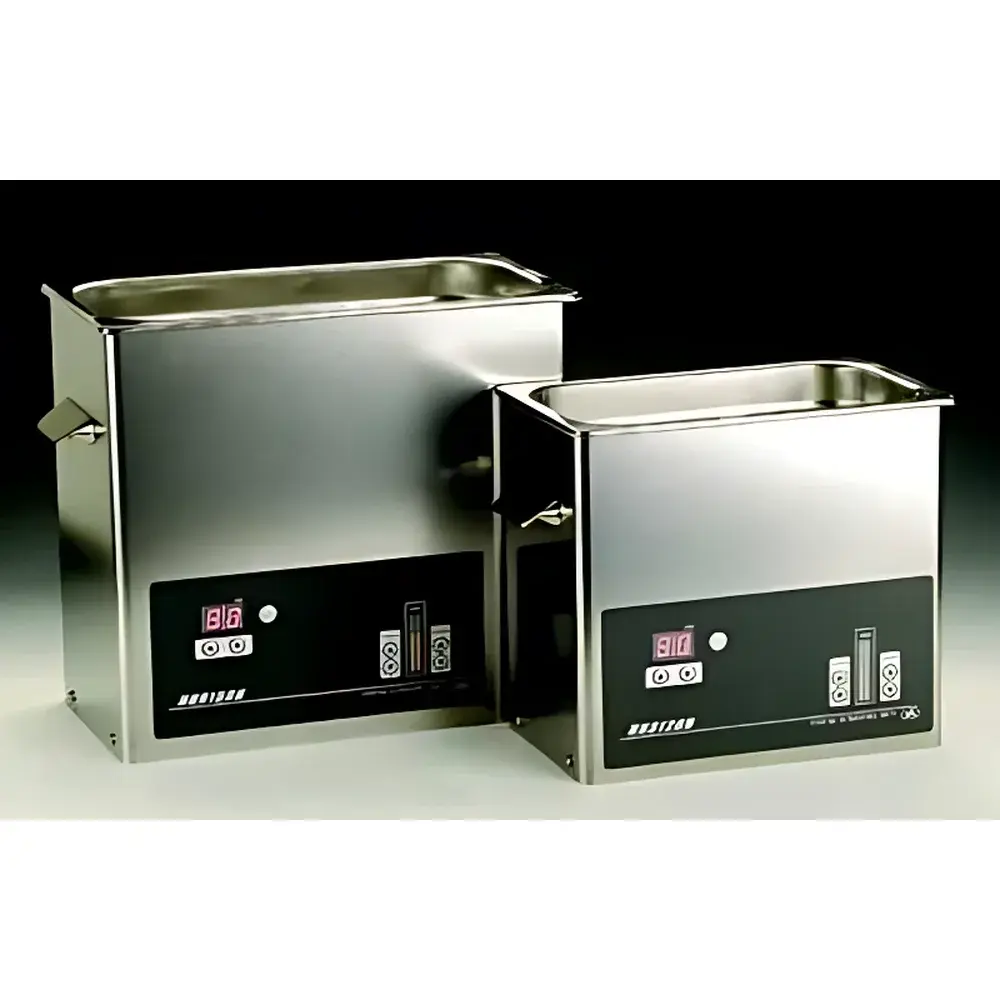
Scienhome SC-Ultrasonic Cleaner Series (2L–160L)
| Brand | Scienhome |
|---|---|
| Origin | Tianjin, China |
| Type | General-purpose ultrasonic cleaner |
| Capacity | 4 L |
| Ultrasonic Frequency | 40 kHz |
| Ultrasonic Power | 100 W |
| Power Adjustment | Yes |
| Temperature Control | Yes |
| Timer Function | Yes |
| Sound-Dampening Lid | Included |
| Drain & Fill Valve | Integrated |
Overview
The Scienhome SC-Ultrasonic Cleaner Series is a precision-engineered general-purpose laboratory cleaning system designed for consistent, non-invasive removal of particulate, organic, and oily contaminants from delicate and complex surfaces. It operates on the principle of acoustic cavitation: high-frequency (40 kHz) ultrasonic energy is transmitted into an aqueous or solvent-based cleaning bath via piezoelectric transducers bonded to the tank bottom. This generates rapid pressure fluctuations—alternating between negative and positive phases—inducing the formation, growth, and violent collapse of microscopic vapor cavities. Each implosion releases localized energy exceeding 1000 atm, producing intense micro-jets and shockwaves that penetrate blind holes, crevices, and microstructures without mechanical abrasion or thermal stress. Unlike manual scrubbing or solvent soaking, this process delivers uniform cleaning across heterogeneous geometries—including pipette tips, glassware, surgical instruments, printed circuit boards, and optical components—while preserving dimensional integrity and surface finish.
Key Features
- Programmable digital control interface with independent adjustment of ultrasonic power (0–100% in fine increments), bath temperature (room temperature to 80 °C), and cleaning duration (1–99 minutes).
- Advanced pulse-modulated ultrasonic output: dynamically modulates duty cycle to optimize cavitation efficiency, reduce standing wave interference, and minimize sample erosion during extended cycles.
- Integrated degassing mode: automatically initiates low-power sonication to remove dissolved gases from fresh solvent, significantly accelerating cavitation onset and enhancing reproducibility.
- Stainless steel 304 tank with reinforced transducer mounting and corrosion-resistant sealing; equipped with a hinged, acoustically damped lid to attenuate airborne noise and prevent solvent evaporation.
- Full fluid management system: front-mounted drain valve with quick-connect fitting, calibrated fill port with level indicator, and optional recirculation pump compatibility for continuous-flow applications.
- Compliance-ready architecture: supports GLP/GMP documentation workflows through timestamped operation logs (when paired with optional PC software); meets IEC 61000-6-3 EMC emission standards and UL/CSA safety requirements for lab environments.
Sample Compatibility & Compliance
The SC-Series accommodates a broad spectrum of laboratory substrates—including borosilicate glass, fused silica, stainless steel, titanium alloys, anodized aluminum, ceramic substrates, and polymer-based microfluidic devices—without inducing pitting, etching, or delamination under standard operating conditions. Cleaning efficacy has been validated per ASTM D2272 (cavitation intensity mapping) and ISO 13485 Annex A (cleaning validation for medical device reprocessing). All models are CE-marked and comply with RoHS 2011/65/EU restrictions on hazardous substances. For regulated QC/QA laboratories, optional audit-trail-enabled firmware (SC-FW-AT v2.1) provides 21 CFR Part 11–compliant electronic records, including user authentication, parameter change history, and session timestamps.
Software & Data Management
While standalone operation requires no external software, the SC-Series supports optional USB-connected PC control via Scienhome LabControl Suite (v4.3). This platform enables remote scheduling, multi-step protocol sequencing (e.g., degas → heat → sonicate → rinse → dry), real-time monitoring of bath temperature and power draw, and export of CSV-formatted operation logs for traceability. Data files include metadata fields compliant with ALCOA+ principles (Attributable, Legible, Contemporaneous, Original, Accurate, Complete, Consistent, Enduring, Available), facilitating integration into LIMS or ELN systems. Firmware updates are delivered via signed binary packages to ensure integrity and version control.
Applications
- Pre-analytical sample preparation: decontamination of HPLC vials, GC autosampler trays, and ICP-MS nebulizer components to eliminate memory effects.
- Microelectronics: residue removal from SMT stencils, wafer carriers, and MEMS sensor housings prior to bonding or coating.
- Clinical & diagnostic labs: cleaning of reusable endoscope accessories, biopsy forceps, and centrifuge rotors in accordance with AAMI ST91 guidelines.
- Materials science: particle dispersion for TEM grid preparation, surface activation of carbon nanotubes, and post-etch residue removal from photomasks.
- Pharmaceutical R&D: cleaning of dissolution apparatus baskets, tablet friability testers, and lyophilizer shelves to meet USP cleanliness criteria.
FAQ
What cleaning solutions are compatible with the SC-Series?
Aqueous alkaline, neutral, or acidic formulations—as well as low-volatility solvents such as isopropanol, ethanol, and terpenes—are suitable. Avoid halogenated hydrocarbons (e.g., chloroform) and highly flammable solvents unless used in explosion-proof enclosures.
Is the 40 kHz frequency fixed or selectable?
All SC-Series units operate at a nominal 40 kHz fundamental frequency. While frequency tuning is not available, pulse modulation and power ramping provide effective control over cavitation intensity and thermal load.
Can the unit be operated continuously for >8 hours?
Yes—continuous operation is supported with active thermal management. The integrated temperature controller maintains bath stability within ±1 °C, and duty-cycle modulation prevents transducer overheating during prolonged cycles.
Does the drain valve support connection to a floor drain or waste collection system?
Yes—the 1/2″ NPT female outlet accepts standard laboratory tubing or threaded fittings for direct gravity-fed drainage into secondary containment or centralized waste lines.
How is calibration verified for routine maintenance?
Users may perform performance verification using ASTM E2810 aluminum foil erosion test or conductance-based cavitation intensity probes (e.g., Sonotrode™ CAV-100). Scienhome provides annual calibration service documentation upon request.
Related Products



