
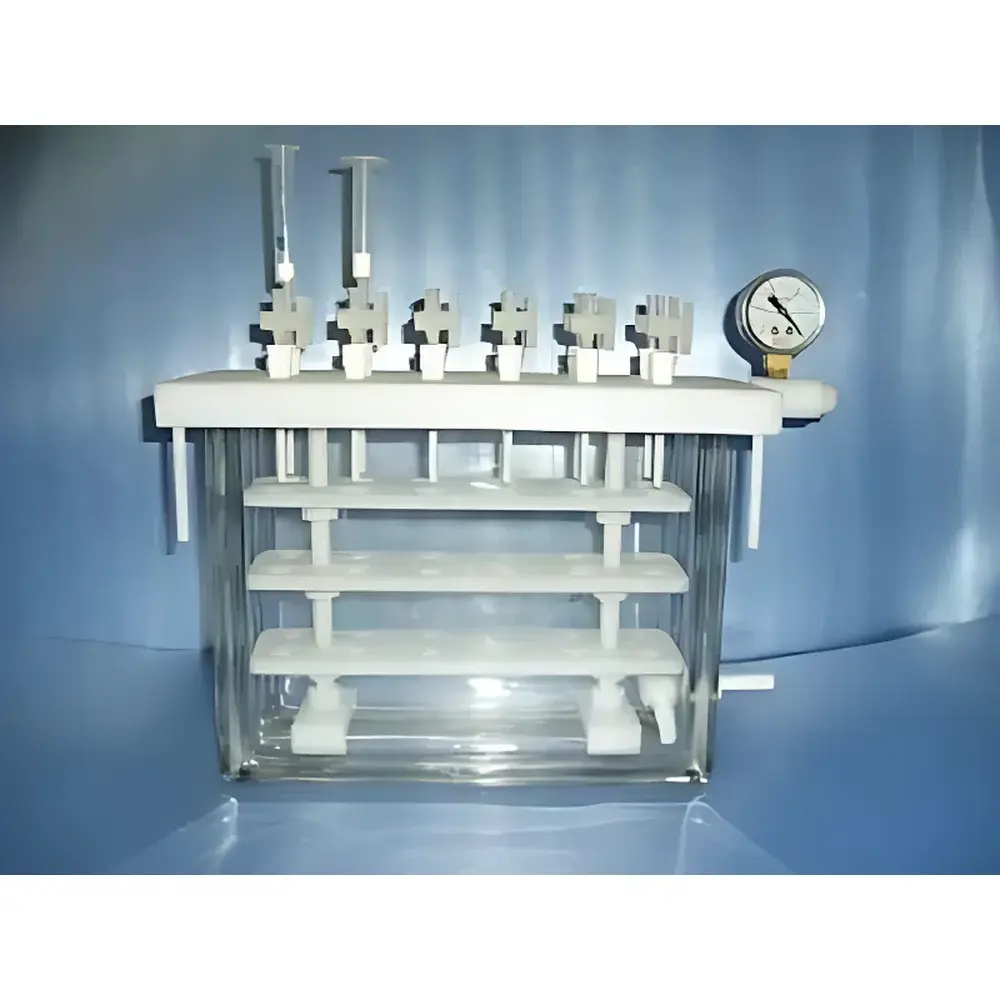
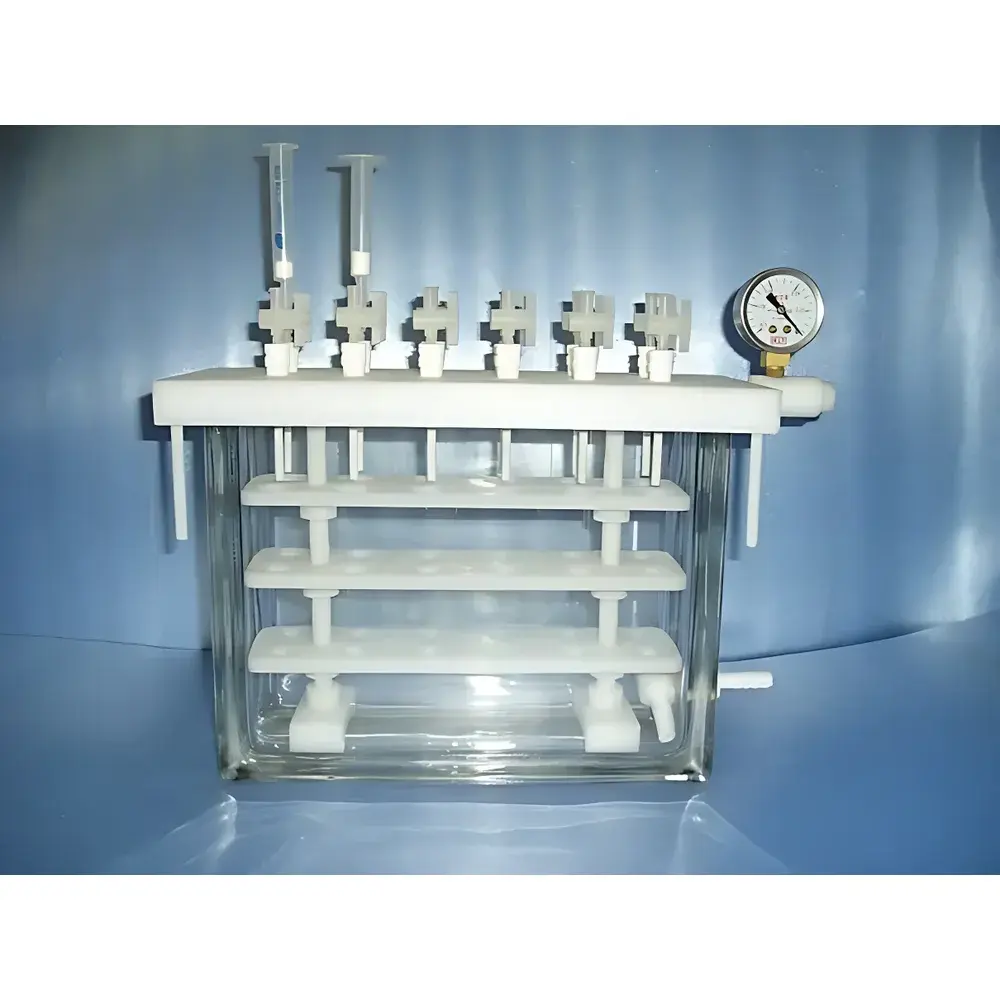
Scienhome WSE Semi-Automatic Multi-Channel Solid Phase Extraction System
| Brand | Scienhome |
|---|---|
| Origin | Tianjin, China |
| Manufacturer Type | Authorized Distributor |
| Country of Origin | China |
| Model | WSE |
| Automation Level | Semi-Automatic |
| Number of Channels | Multi-Channel (4 Parallel Sample Positions) |
| Extraction Mode | Dispersive SPE (dSPE) |
| Flow Rate Control | Up to 30 mL/min |
| Solvent Selection Ports | 5 Independent Solvent Lines |
| Maximum Sample Volume per Channel | 30 mL |
| Wetted Materials | Chemically Resistant PTFE, Borosilicate Glass, and SPE-Compatible Polymers |
| Compliance | Designed for GLP-compliant workflows in regulated laboratories |
Overview
The Scienhome WSE Semi-Automatic Multi-Channel Solid Phase Extraction System is an engineered solution for reproducible, scalable sample preparation in analytical laboratories. Based on the fundamental principles of solid-phase extraction (SPE)—a physicochemical separation process leveraging selective adsorption, retention, and elution on functionalized sorbent materials—the WSE system bridges manual precision with semi-automated throughput. Unlike liquid–liquid extraction (LLE), SPE minimizes solvent consumption, eliminates emulsion formation, and significantly improves analyte recovery and matrix cleanup efficiency. The WSE operates via vacuum-assisted or positive-pressure-driven flow control across four parallel SPE columns, enabling simultaneous conditioning, loading, washing, and elution steps. Its design adheres to core chromatographic preconcentration paradigms used in conjunction with HPLC, GC, LC-MS, and ICP-MS workflows—particularly where low-concentration analytes (e.g., pesticides, pharmaceutical residues, endocrine disruptors) must be isolated from complex biological, environmental, or food matrices.
Key Features
- Four independent, parallel sample channels with individual vacuum/pressure control—enabling true batch processing without cross-contamination.
- Dispersive SPE (dSPE) compatibility: supports both cartridge-based and dispersive sorbent formats (e.g., PSA, C18, graphitized carbon black) for flexible method development.
- Precision flow regulation up to 30 mL/min per channel, adjustable via calibrated vacuum manifold or optional pressure controller (not included).
- Five dedicated solvent inlet ports—allowing automated sequential delivery of conditioning, wash, and elution solvents without manual line switching.
- Chemically inert fluid path: borosilicate glass collection rack, PTFE-coated valves, and SPE-compatible polymer manifolds ensure compatibility with aggressive solvents (e.g., acetonitrile, methanol, dichloromethane, 5% formic acid).
- Vacuum manifold with anti-fogging, sealed chamber design—prevents solvent vapor ingress into vacuum lines and maintains stable negative pressure during extended runs.
- Modular architecture: accommodates standard 1-mL, 3-mL, and 6-mL SPE cartridges; optional adapters available for 96-well plate formats.
Sample Compatibility & Compliance
The WSE system supports a broad range of sample types—including plasma, urine, wastewater, fruit extracts, soil leachates, and honey—provided they are pre-filtered (≤0.45 µm) to avoid column clogging. Sorbent compatibility includes silica, alumina, Florisil®, polymeric reversed-phase (C8/C18), ion-exchange (SCX/SAX), and mixed-mode phases. All wetted components comply with USP Class VI biocompatibility standards and meet ISO 9001 manufacturing traceability requirements. The system’s operational repeatability aligns with ASTM D7277 (Standard Practice for SPE of Organic Compounds from Water) and EPA Method 508.1/525.3 for drinking water and wastewater analysis. While not inherently 21 CFR Part 11–compliant, audit trails and instrument logs can be integrated into validated LIMS environments supporting GLP/GMP audits.
Software & Data Management
The WSE operates via tactile manual controls and calibrated analog vacuum gauges—no embedded software or touchscreen interface is included. This design prioritizes method transparency, operator control, and long-term serviceability in resource-constrained or high-reliability settings. Users document all procedural parameters (e.g., conditioning volume, load rate, wash solvent sequence, elution volume) in laboratory notebooks or electronic lab notebooks (ELNs). For labs requiring digital workflow integration, third-party SCADA or LabWare LIMS modules may interface via I/O signals (optional relay kit available). All hardware configurations support full traceability under ISO/IEC 17025 accreditation requirements when paired with documented SOPs and calibration records.
Applications
- Residue analysis: multi-residue pesticide screening in fruits, vegetables, and cereals per EU SANTE/11312/2021 guidelines.
- Pharmaceutical QC: isolation of active pharmaceutical ingredients (APIs) and metabolites from plasma prior to LC-MS/MS quantification (USP & Ph. Eur. compliant methods).
- Environmental monitoring: extraction of PAHs, PCBs, and PFAS from surface water and sediment extracts per EPA 8270/8321 protocols.
- Food safety: mycotoxin cleanup (e.g., aflatoxins, ochratoxin A) in grain and feed samples using immunoaffinity or multifunctional cartridges.
- Clinical toxicology: opiate and benzodiazepine enrichment from whole blood and oral fluid specimens prior to GC-MS confirmation.
FAQ
What types of SPE cartridges are compatible with the WSE system?
Standard 1-mL, 3-mL, and 6-mL polypropylene or polyethylene SPE cartridges with fritted disks are fully supported. Custom adapter sleeves enable use of reinforced glass or metal-bodied cartridges.
Can the WSE perform sequential solvent delivery without manual intervention?
Yes—its five independent solvent ports allow pre-programmed, stepwise delivery of conditioning, washing, and elution solvents across all four channels simultaneously.
Is the system suitable for volatile organic compound (VOC) extraction?
It is not optimized for headspace or purge-and-trap VOC workflows; however, it effectively isolates semi-volatile organics (SVOCs) such as phthalates and flame retardants when coupled with appropriate sorbents and low-temperature elution.
How is method validation supported?
The system enables precise control over critical SPE variables (flow rate, solvent volume, contact time), facilitating recovery studies, matrix effect assessment, and ruggedness testing per ICH Q2(R2) guidelines.
Does the WSE include vacuum pump or nitrogen gas supply?
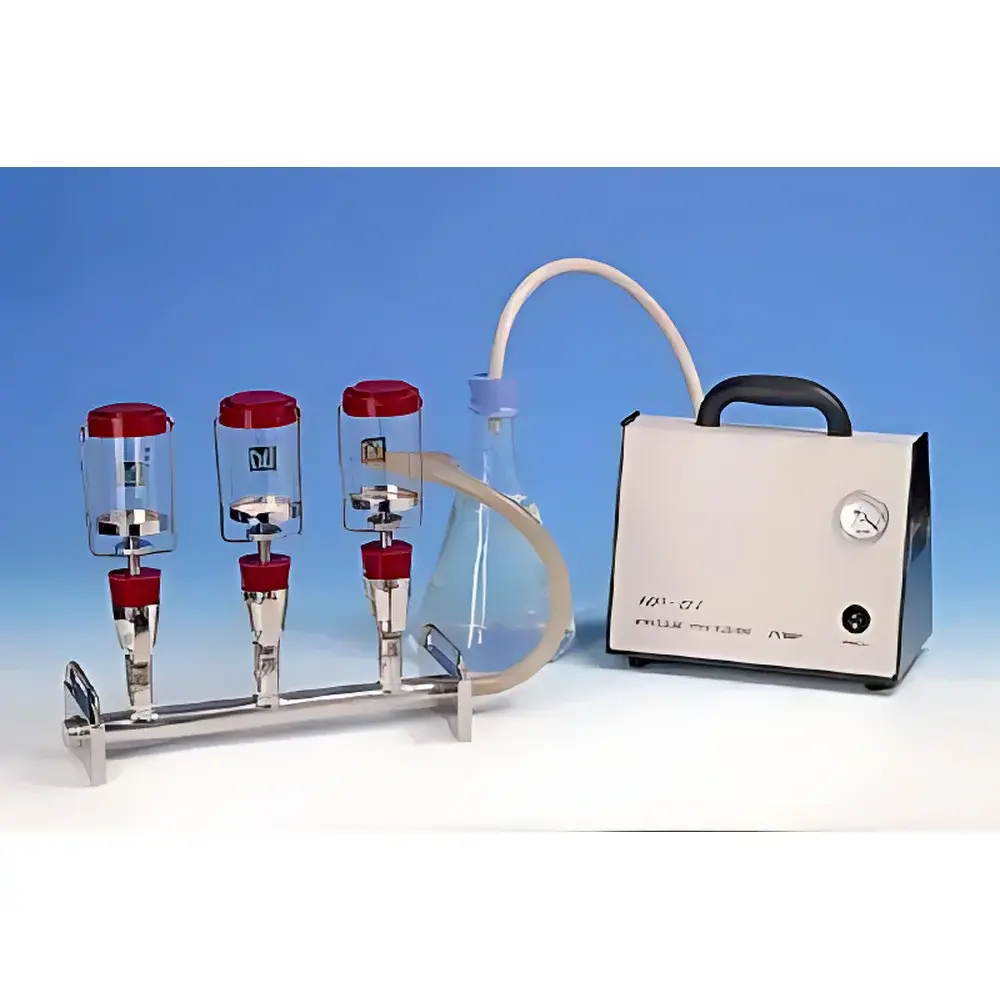
No—these are external accessories. A diaphragm vacuum pump (≤150 mbar ultimate vacuum) or regulated nitrogen manifold (0–30 psi) is required for operation.



