
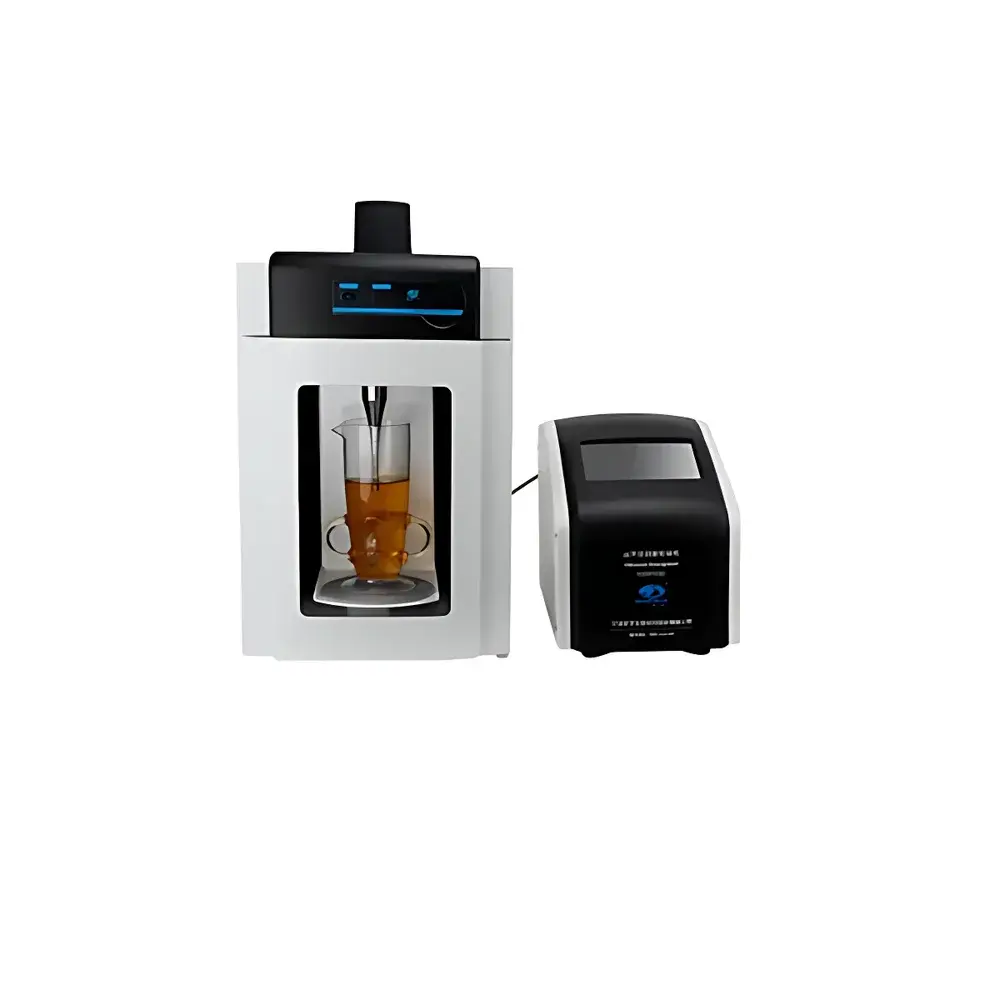
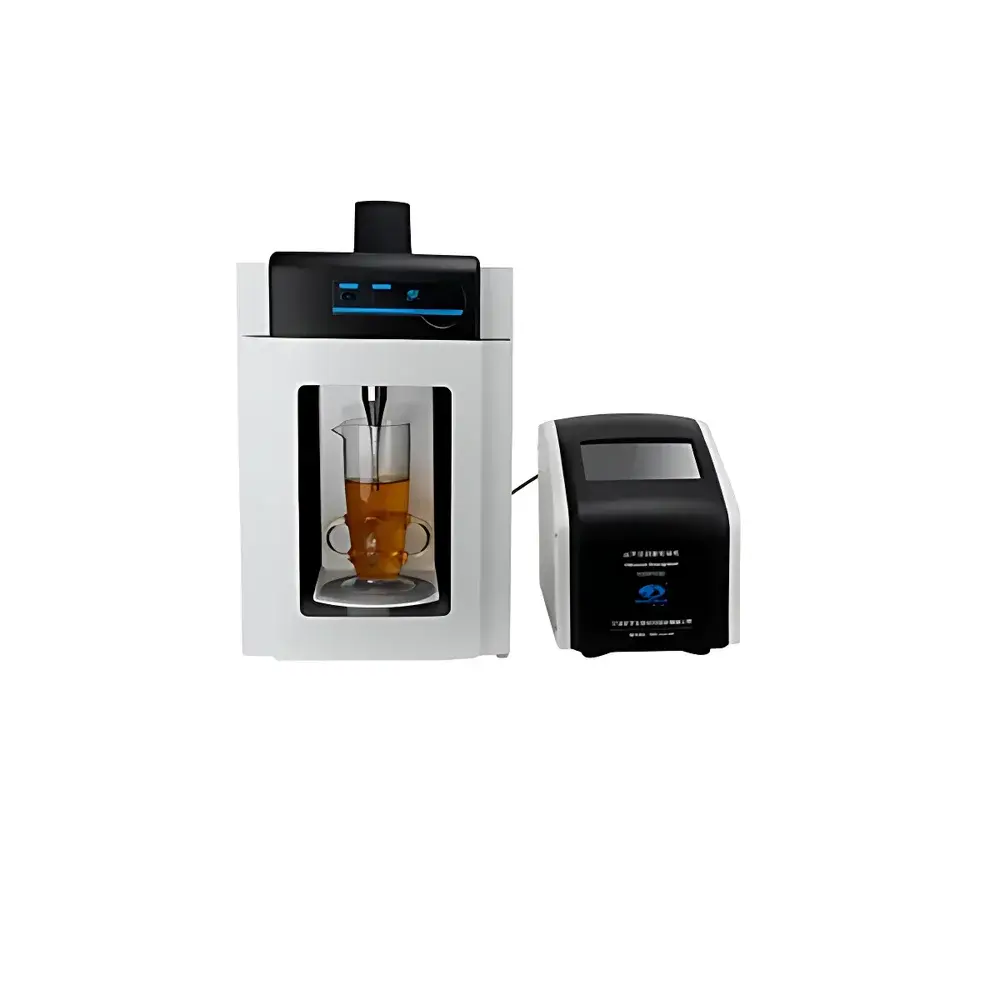
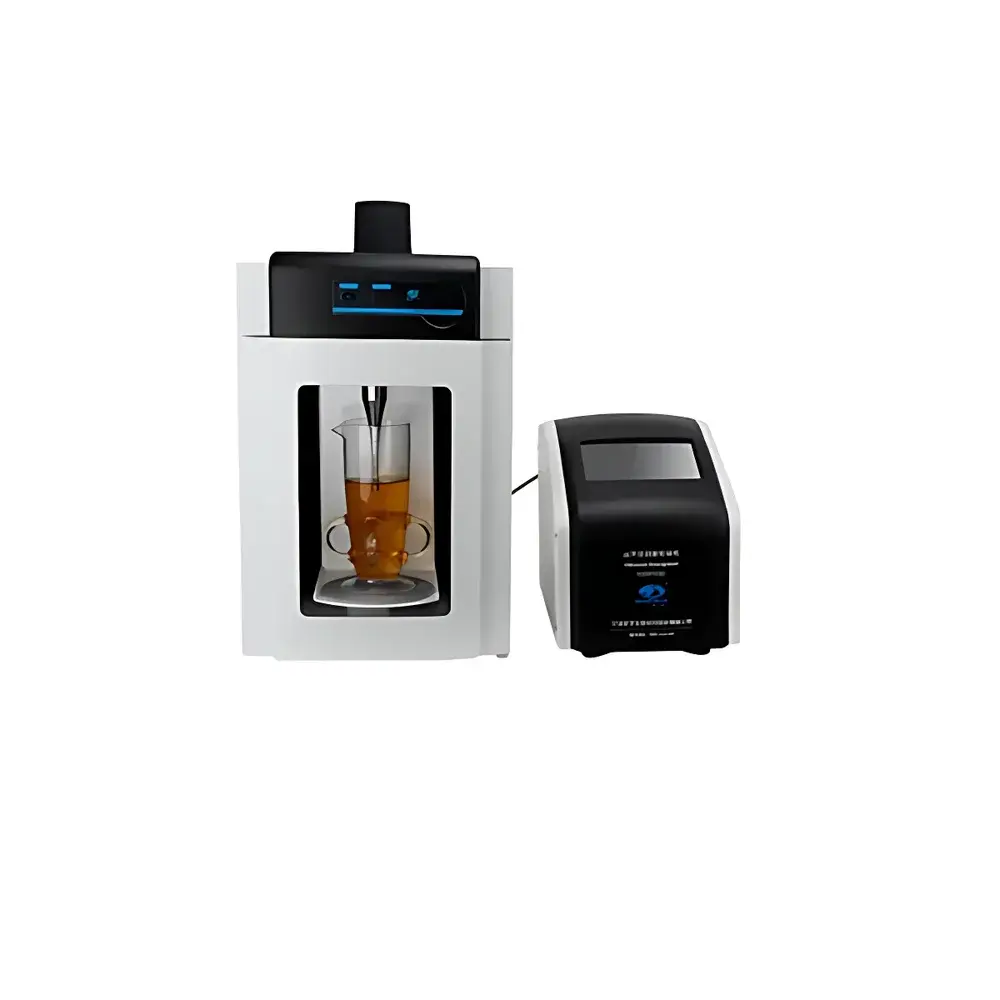
Scientz JY88-IIN Ultrasonic Cell Disruptor
| Brand | Scientz |
|---|---|
| Origin | Zhejiang, China |
| Model | JY88-IIN |
| Instrument Type | Ultrasonic Cell Disruptor |
| Temperature Range | 0–99.9 °C |
| Operating Frequency | 20–25 kHz |
| Ultrasonic Power Output | 250 W (adjustable from 1% to 100%) |
| Sample Volume Capacity | 10–200 mL |
| Display | 7-inch Touchscreen Interface |
| Duty Cycle Range | 0.1–99.9% |
| Standard Probe | 6 mm titanium alloy (TC4) horn |
| Optional Probes | 2 mm, 3 mm, 10 mm |
| Safety Features | Overtemperature, overload, and timer alarms |
| Dimensions (Main Unit) | 430 × 245 × 300 mm |
| Weight (Unit + Transducer) | 8.5 kg |
| Optional Acoustic Enclosure Dimensions | 345 × 345 × 535 mm |
Overview
The Scientz JY88-IIN Ultrasonic Cell Disruptor is a benchtop sonication system engineered for precision lysis of biological samples through controlled acoustic cavitation. It operates on the principle of high-intensity ultrasonic energy transmission—converted from electrical input via a piezoelectric transducer—into mechanical oscillations at 20–25 kHz. These vibrations are amplified and delivered through a TC4 titanium alloy probe (standard 6 mm diameter), generating localized transient cavitation bubbles in liquid media. Upon collapse, these microbubbles produce extreme local shear forces, shockwaves, and microstreaming—mechanically disrupting cell membranes, organelles, and microbial structures without significant thermal degradation when operated under temperature-controlled conditions. Designed for reproducible, scalable sample processing, the JY88-IIN supports both continuous and pulsed sonication modes, enabling optimization for heat-sensitive biomolecules such as proteins, nucleic acids, and extracellular vesicles.
Key Features
- Precision Power & Timing Control: Adjustable ultrasonic output (1–100% of 250 W nominal power) with 0.1% resolution; programmable sonication duration (0.1–999.9 s) and duty cycle (0.1–99.9%), ensuring consistent energy delivery across replicates.
- Integrated Temperature Monitoring: Real-time digital temperature sensing (range: 0–99.9 °C) with configurable alarm threshold to prevent thermal denaturation—critical for preserving enzymatic activity or native protein conformation during lysis.
- Titanium Alloy Sonotrode System: Standard 6 mm TC4 (Ti-6Al-4V) probe optimized for durability, corrosion resistance, and acoustic efficiency; compatible with optional probes (2 mm, 3 mm, 10 mm) to match sample volume, viscosity, and target particle size requirements.
- Intuitive Touchscreen Interface: 7-inch capacitive touchscreen display with multilingual UI (English default), graphical parameter visualization, and non-volatile memory for up to 20 user-defined protocols.
- Robust Safety Architecture: Dual-level protection including hardware-based overtemperature cutoff, real-time current monitoring for overload detection, and automatic shutdown upon probe detachment or impedance mismatch.
- Acoustic Containment Ready: Designed for seamless integration with optional sound-dampening enclosures (345 × 345 × 535 mm) compliant with ISO 9241-307 ergonomic noise exposure guidelines.
Sample Compatibility & Compliance
The JY88-IIN accommodates aqueous and low-viscosity suspensions ranging from 10 mL to 200 mL per cycle, supporting common laboratory formats including centrifuge tubes (15–50 mL), microcentrifuge tubes (with microtip adaptation), and custom reaction vessels. It is routinely validated for applications requiring adherence to GLP and GMP-aligned workflows—including lysate preparation for Western blotting, RNA-Seq library construction, and bacterial inclusion body solubilization. While not certified to IEC 61000-4 electromagnetic compatibility standards out-of-the-box, its design conforms to general laboratory equipment safety expectations per EN 61010-1. For regulated environments, users may implement procedural controls (e.g., audit-trail-enabled protocol logging via external PC interface) to support FDA 21 CFR Part 11 compliance where electronic records are employed.
Software & Data Management
The instrument features an embedded firmware platform supporting USB export of session logs (CSV format), including timestamped parameters: applied power (%), actual power (W), duration (s), duty cycle (%), measured temperature (°C), and alarm events. No proprietary software installation is required for basic operation; however, optional RS-232 or USB-to-serial connectivity enables integration into centralized lab information management systems (LIMS) or custom automation scripts. All settings are retained after power cycling, and firmware updates are performed via USB drive without service intervention. Protocol cloning, versioning, and operator ID tagging are supported through manual entry—suitable for multi-user academic or QC laboratories maintaining traceability under ISO/IEC 17025 requirements.
Applications
- Life Sciences: Mammalian and insect cell lysis; bacterial and yeast disruption (including Gram-positive strains); chromatin shearing for ChIP-seq; mitochondrial isolation; viral capsid disassembly.
- Molecular Biology: Plasmid DNA extraction; ribonucleoprotein (RNP) complex dissociation; preparation of soluble antigen fractions for immunoassay development.
- Pharmaceutical R&D: Nanoparticle dispersion (liposomes, polymeric micelles); botanical extract standardization; solubilization of poorly water-soluble APIs.
- Materials Science: Exfoliation of 2D materials (graphene oxide, MoS₂); deagglomeration of metal oxide nanoparticles (TiO₂, Fe₃O₄); carbon nanotube functionalization.
- Environmental Analysis: Extraction of intracellular metabolites from algal blooms; homogenization of sediment cores for heavy metal speciation; soil microbiome DNA recovery.
FAQ
What is the maximum recommended sample volume for continuous operation?
For optimal cavitation efficiency and thermal management, continuous-mode operation is validated for volumes between 50 mL and 150 mL using the standard 6 mm probe. Volumes below 30 mL require pulsed mode (e.g., 5 s on / 10 s off) to minimize localized heating.
Can the JY88-IIN be used for cryogenic sonication?
No—the unit is not designed for sub-zero bath operation. For cold lysis, pre-chill samples and use short pulse durations with active cooling (e.g., ice-water jacketed vessel) while monitoring temperature via the built-in sensor.
Is probe sterilization possible?
Yes—TC4 titanium alloy probes tolerate autoclaving (121 °C, 20 min, saturated steam), ethanol immersion, and UV irradiation. Avoid alkaline cleaners or prolonged exposure to strong oxidizers (e.g., sodium hypochlorite).
How does duty cycle affect reproducibility in nucleic acid shearing?
Lower duty cycles (10–30%) reduce average power deposition and mitigate DNA fragmentation beyond target size ranges (e.g., 200–700 bp for NGS). Empirical calibration against agarose gel electrophoresis or Bioanalyzer traces is recommended for each new sample type.
Does the instrument support remote start/stop via TTL or Ethernet?
Not natively—only USB serial and RS-232 interfaces are provided. External relay control or third-party DAQ integration requires custom hardware interfacing and is not covered under warranty or technical support.




