
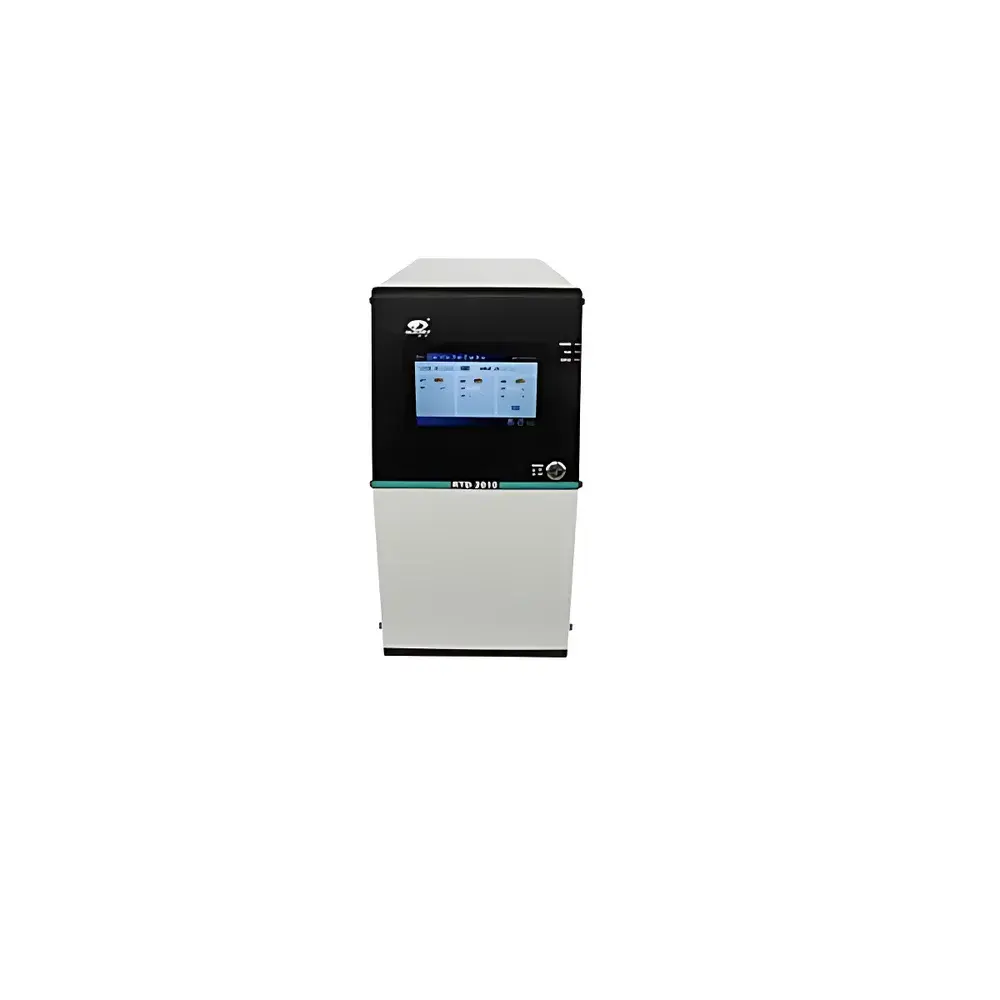
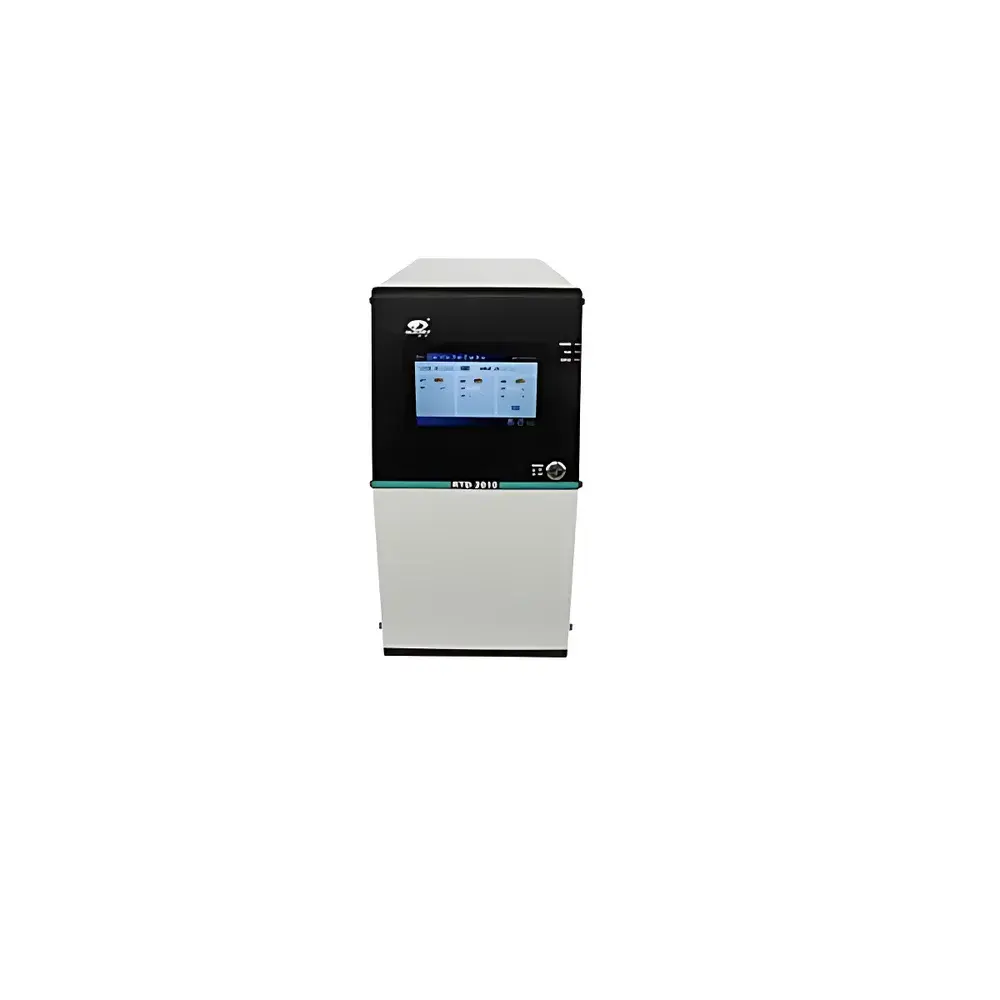
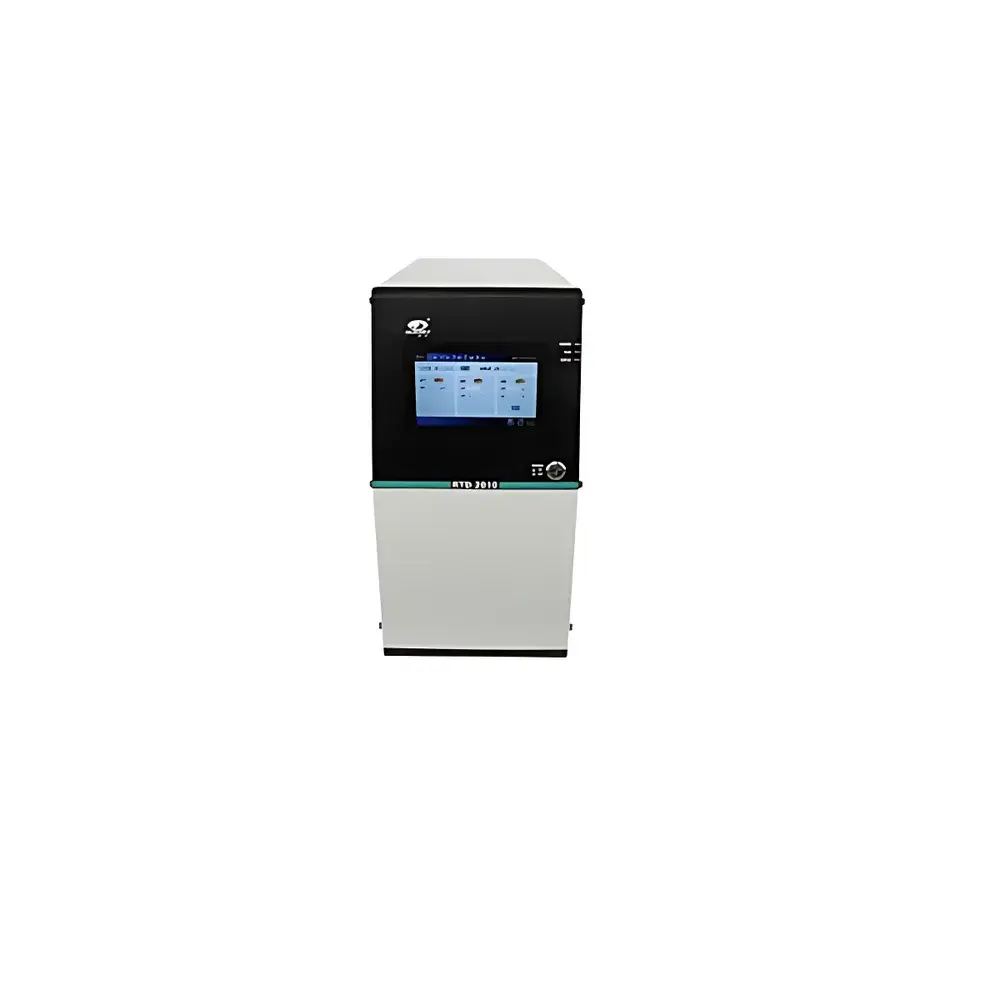
Scientz RTD-2010 Real-Time Constant-Temperature Degasser
| Brand | Scientz |
|---|---|
| Model | RTD-2010 |
| Heating Range | 25–45.0 °C (Max ΔT = 15 °C) |
| Temperature Resolution | 0.1 °C |
| Temperature Control Accuracy | ±2 °C |
| Volume Resolution | 0.1 mL |
| Volumetric Accuracy | ≤±1 % @ 1000 mL |
| Degassing Rate | ≈1000 mL/min |
| Vacuum Resolution | 0.1 kPa |
| Ultimate Vacuum | ≤−90 kPa |
| Power Supply | 220 VAC ±10%, 1100 W |
| Dimensions | 530 × 300 × 560 mm |
| Weight | 23 kg |
| Dissolved Oxygen Target | ≤2.8 mg/L |
| EMC Compliance | IEC 61000-4-2, -4-4, -4-5, -4-11 |
| Operating Temp | 5–40 °C |
| Storage Temp | −20–60 °C |
| Operating Humidity | 20–80 % RH |
| Storage Humidity | 5–95 % RH |
Overview
The Scientz RTD-2010 Real-Time Constant-Temperature Degasser is an engineered solution for the precise, continuous removal of dissolved gases—primarily oxygen and carbon dioxide—from aqueous solvents used in pharmaceutical dissolution testing, HPLC mobile phase preparation, and analytical sample conditioning. It employs a membrane-based vacuum degassing principle: solvent flows under controlled pressure through the lumen of hydrophobic hollow-fiber membranes, while a vacuum is maintained on the shell side. Due to the selective permeability of the membrane material, dissolved gas molecules diffuse across the fiber wall into the vacuum chamber, whereas liquid-phase components—including water and polar solutes—are retained. This physical separation mechanism avoids thermal degradation, foaming, or chemical alteration of sensitive media. Integrated inline heating ensures temperature stabilization prior to delivery, enabling direct compatibility with USP Apparatus 1–4 dissolution vessels and automated sampling systems requiring thermally equilibrated, low-dissolved-oxygen media.
Key Features
- Tri-Mode Process Integration: Simultaneous vacuum application, precise temperature control (25–45.0 °C), and recirculation-driven degassing ensure rapid equilibrium—achieving ≤2.8 mg/L dissolved oxygen in under 90 seconds for 1000 mL batches.
- Pharmaceutical-Grade Precision Engineering: Automated volumetric dispensing with ≤±1 % accuracy at 1000 mL; temperature resolution of 0.1 °C and vacuum resolution of 0.1 kPa support method reproducibility required by USP & ChP dissolution protocols.
- Audit-Ready Data Integrity: Onboard logging captures time-stamped records of vacuum level, temperature setpoint/actual, volume dispensed, and system status—fully compliant with ALCOA+ principles and supporting 21 CFR Part 11 audit trail requirements when connected to validated LIMS environments.
- Intelligent Fluid Handling: Dual-mode inlet detection (self-priming and external-pressure compatible) enables seamless integration with reservoir tanks, peristaltic feed pumps, or pressurized solvent delivery systems without manual reconfiguration.
- Human-Centric Interface: 7-inch color capacitive touchscreen provides intuitive navigation, real-time parameter visualization, and context-sensitive guidance—reducing operator training time and minimizing input errors.
- Robust Electromagnetic Compatibility: Certified to IEC 61000-4 series standards (including ESD, burst, surge, and voltage dip immunity), ensuring stable operation in shared laboratory environments with centrifuges, shakers, and RF-emitting instrumentation.
Sample Compatibility & Compliance
The RTD-2010 is validated for use with deionized water, distilled water, buffer solutions (e.g., phosphate, acetate), organic-aqueous mixtures (up to 20 % v/v methanol or acetonitrile), and common dissolution media including 0.1 N HCl, pH 4.5 acetate buffer, and pH 6.8 phosphate buffer. It meets the procedural specifications outlined in Chapter General Chapter 2.9.30 “Dissolution Media Preparation” of the Chinese Pharmacopoeia (ChP) 2020 Edition, and aligns with the degassing methodology referenced in USP General Chapter <711> Dissolution. All wetted materials—PTFE-coated stainless-steel housing, medical-grade silicone tubing, and polypropylene fluid path components—are USP Class VI certified and non-leaching under standard operating conditions.
Software & Data Management
No proprietary software installation is required for basic operation; all configuration and monitoring occur via the embedded touchscreen HMI. For laboratory-wide integration, the device supports RS-232 and optional Ethernet (Modbus TCP) communication protocols. Logged data exports in CSV format via USB port, preserving ISO 17025 traceability metadata (operator ID, timestamp, instrument serial number, calibration status). Audit trails record user login/logout events, parameter changes, and error states—enabling retrospective review during internal QA audits or regulatory inspections (e.g., FDA pre-approval inspections, MHRA GLP assessments).
Applications
- Preparation of degassed dissolution media for USP Apparatus 1 (basket) and Apparatus 2 (paddle) testing
- Mobile phase conditioning for HPLC and UHPLC systems to prevent bubble formation in pumps and detectors
- Blank matrix preparation in LC-MS bioanalysis to minimize background noise from dissolved air artifacts
- Standardization of oxygen-sensitive electrochemical assays (e.g., Clark-type electrode calibration)
- Formulation development workflows requiring consistent, temperature-controlled solvent baselines
FAQ
Does the RTD-2010 require periodic membrane replacement?
Yes—the hollow-fiber membrane cartridge is a consumable component with a recommended service life of 6 months under continuous operation or after processing 2000 L of solvent, whichever occurs first. Replacement is tool-free and takes less than 90 seconds.
Can it be integrated into an automated dissolution station?
Yes—via dry-contact relay outputs and Modbus TCP, the RTD-2010 synchronizes dispensing cycles with robotic samplers and vessel temperature controllers in fully automated dissolution suites.
Is validation documentation available?
Scientz provides a Factory Acceptance Test (FAT) report, IQ/OQ protocol templates, and a traceable calibration certificate for temperature, volume, and vacuum sensors—supporting GMP-compliant installation qualification.
What maintenance is required beyond membrane replacement?
Daily visual inspection of tubing integrity and weekly verification of vacuum decay rate (<0.5 kPa/min at −85 kPa); no lubrication or internal cleaning is needed due to the non-contact membrane design.
Does it support multi-solvent switching?
No—single-fluid-path architecture requires manual line purging between chemically incompatible solvents (e.g., switching from acid to base buffers); however, its rapid equilibration minimizes downtime during sequential batch preparation.



