
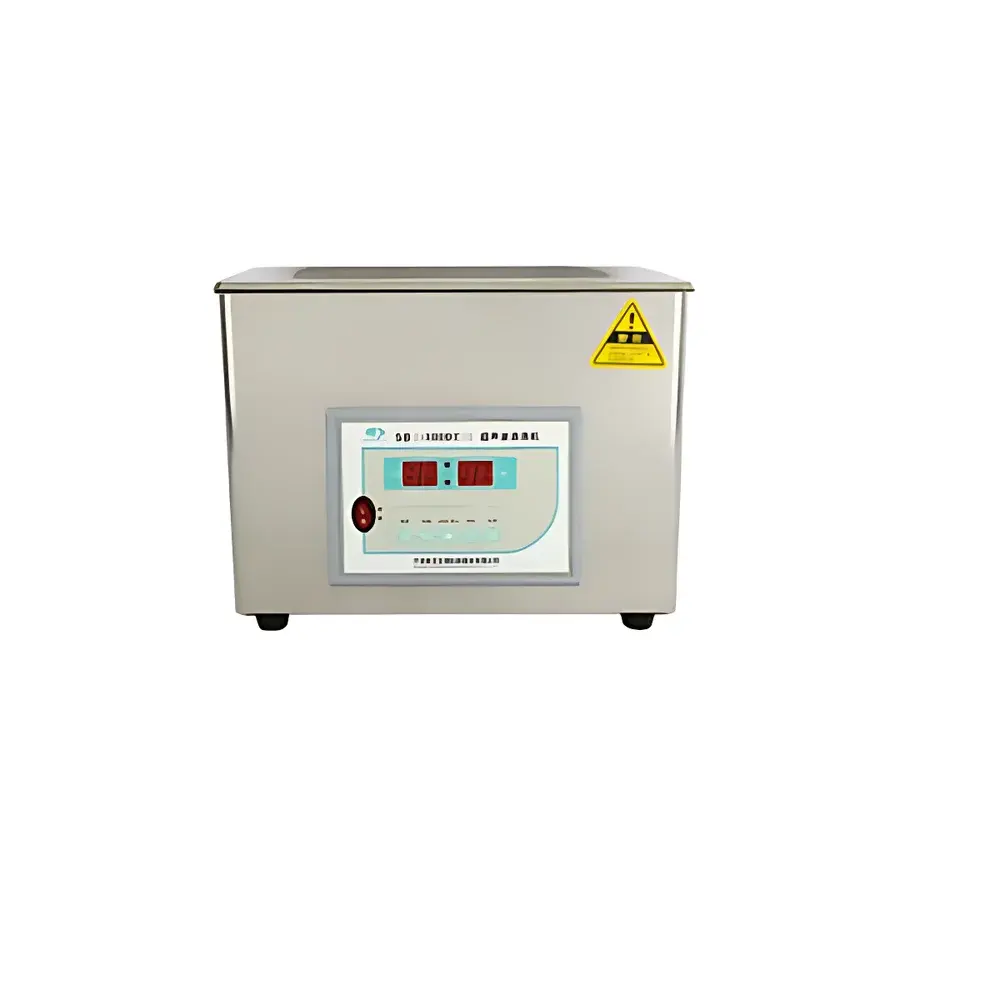
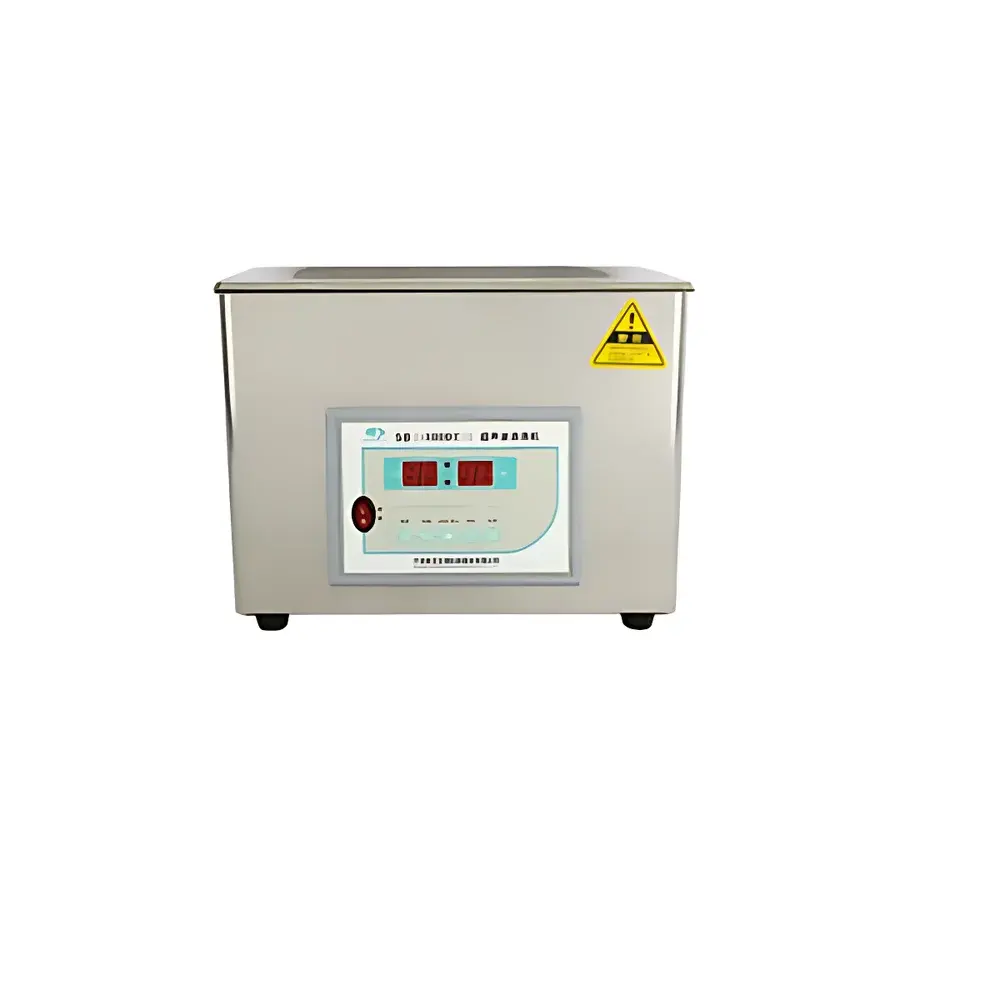
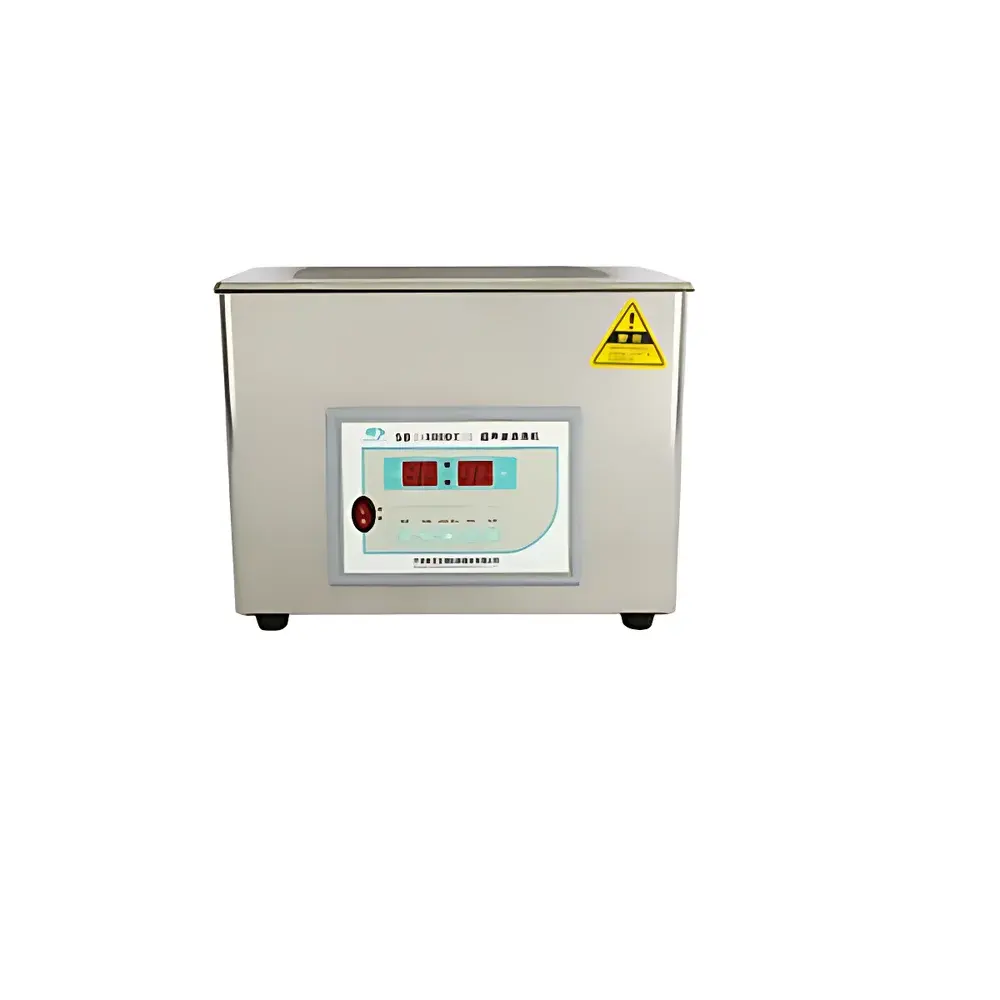
SCIENTZ SB-100DT Heated Ultrasonic Cleaner
| Brand | SCIENTZ |
|---|---|
| Origin | Zhejiang, China |
| Model | SB-100DT |
| Tank Capacity | 4.5 L |
| Ultrasonic Frequency | 40 kHz |
| Ultrasonic Power | 100 W |
| Heating Power | 200 W |
| Temperature Range | Ambient to 80 °C |
| Timer Range | 1–99 min |
| Drain Port | Yes |
Overview
The SCIENTZ SB-100DT Heated Ultrasonic Cleaner is an engineered benchtop solution for precision cleaning of laboratory and industrial components. It operates on the principle of ultrasonic cavitation: high-frequency sound waves (40 kHz) propagate through a liquid medium, generating transient microbubbles that rapidly grow and collapse—producing localized shockwaves and intense shear forces. This physical mechanism enables effective removal of particulate contaminants, organic residues (e.g., oils, greases, biofilms), and adsorbed impurities from complex geometries—including blind holes, narrow lumens, porous surfaces, and delicate optical substrates—without mechanical abrasion or chemical aggression. Designed for reproducible, non-destructive cleaning under controlled thermal conditions, the SB-100DT integrates a thermostatically regulated heating system (ambient to 80 °C), allowing users to optimize solvation kinetics and contaminant solubility while maintaining sample integrity.
Key Features
- Stainless steel tank (300 × 150 × 100 mm internal dimensions) with corrosion-resistant finish and integrated drain valve for safe, efficient fluid disposal.
- Digital LED display with real-time countdown timer (1–99 minutes) and adjustable temperature setpoint (±1 °C accuracy).
- Independent control of ultrasonic output and heating function—enabling simultaneous or sequential operation modes for process flexibility.
- High-efficiency piezoelectric transducers mounted directly to the tank base ensure uniform energy distribution and minimal standing-wave interference.
- Automatic shutdown with memory retention: power interruption does not erase previously configured time/temperature settings.
- Over-temperature and over-current protection circuits compliant with IEC 61010-1 safety standards for laboratory equipment.
Sample Compatibility & Compliance
The SB-100DT supports cleaning of a broad range of materials including borosilicate glassware (vials, cuvettes, pipette tips), stainless steel instruments (surgical tools, dental scalers), aluminum and titanium components, quartz optics, polymer-based microfluidic chips, and ceramic substrates. It is routinely deployed in environments requiring adherence to GLP (Good Laboratory Practice) and GMP (Good Manufacturing Practice) protocols—particularly where residue-free preparation of analytical vessels is critical prior to HPLC, ICP-MS, or trace elemental analysis. While the unit itself is not certified to ISO 13485 or FDA 21 CFR Part 11, its programmable parameters and stable thermal performance support audit-ready documentation when integrated into validated cleaning SOPs aligned with ASTM D2603 (Standard Test Method for Sonic Shear Stability of Lubricants) and ISO 12100 (Safety of Machinery).
Software & Data Management
The SB-100DT operates via embedded firmware without external PC dependency. All operational parameters—including elapsed time, set temperature, and active mode—are logged locally in non-volatile memory with timestamped entries retained across power cycles. Though no proprietary software interface is provided, the device’s deterministic behavior and repeatable parameter recall facilitate integration into laboratory information management systems (LIMS) via optional RS-232 or analog signal outputs (available on upgraded variants). For regulatory environments, users may implement manual logbook entries or integrate digital camera-based verification workflows to document pre- and post-cleaning visual inspection outcomes per USP Analytical Instrument Qualification guidelines.
Applications
- Routine decontamination of volumetric flasks, graduated cylinders, and centrifuge tubes prior to calibration or analytical use.
- Removal of residual solvents and particulates from HPLC autosampler vials and GC injection ports.
- Preparation of electron microscopy grids and TEM sample holders requiring ultra-low particle counts.
- Cleaning of microelectromechanical systems (MEMS) devices and semiconductor wafer carriers where electrostatic discharge (ESD) safety is maintained.
- Supporting sample preparation workflows in environmental testing labs—e.g., extraction vessel cleaning prior to EPA Method 525.3 (GC/MS analysis of pesticides).
- De-gassing of mobile phases and buffer solutions to prevent bubble formation in sensitive flow-based instrumentation.
FAQ
What is the maximum recommended operating temperature for aqueous cleaning solutions?
The unit is rated for continuous operation up to 80 °C; however, for long-term stability of water-based detergents and to minimize evaporation losses, we recommend sustained use between 40–60 °C.
Can this cleaner be used with flammable solvents?
No. The SB-100DT is not explosion-proof and must not be operated with acetone, ethanol, or other volatile organic solvents unless equipped with optional intrinsically safe modifications and installed in a certified fume hood with vapor monitoring.
Is the ultrasonic frequency fixed or variable?
The SB-100DT operates at a fixed nominal frequency of 40 kHz, optimized for general-purpose cleaning efficiency and transducer longevity. Sweep-frequency or dual-frequency variants (e.g., 40/80 kHz) are available under separate model numbers.
Does the unit include a degassing mode?
Yes—the default startup sequence includes a 3-minute degassing cycle to remove entrained air from fresh solvent, improving cavitation efficiency before initiating timed cleaning.
How often should the transducers be serviced or calibrated?
Under normal laboratory use, no routine calibration is required. Transducer performance is verified during factory acceptance testing (FAT) per SCIENTZ QM-UL-001. Annual visual inspection of tank weld integrity and electrical continuity is advised as part of preventive maintenance.



