
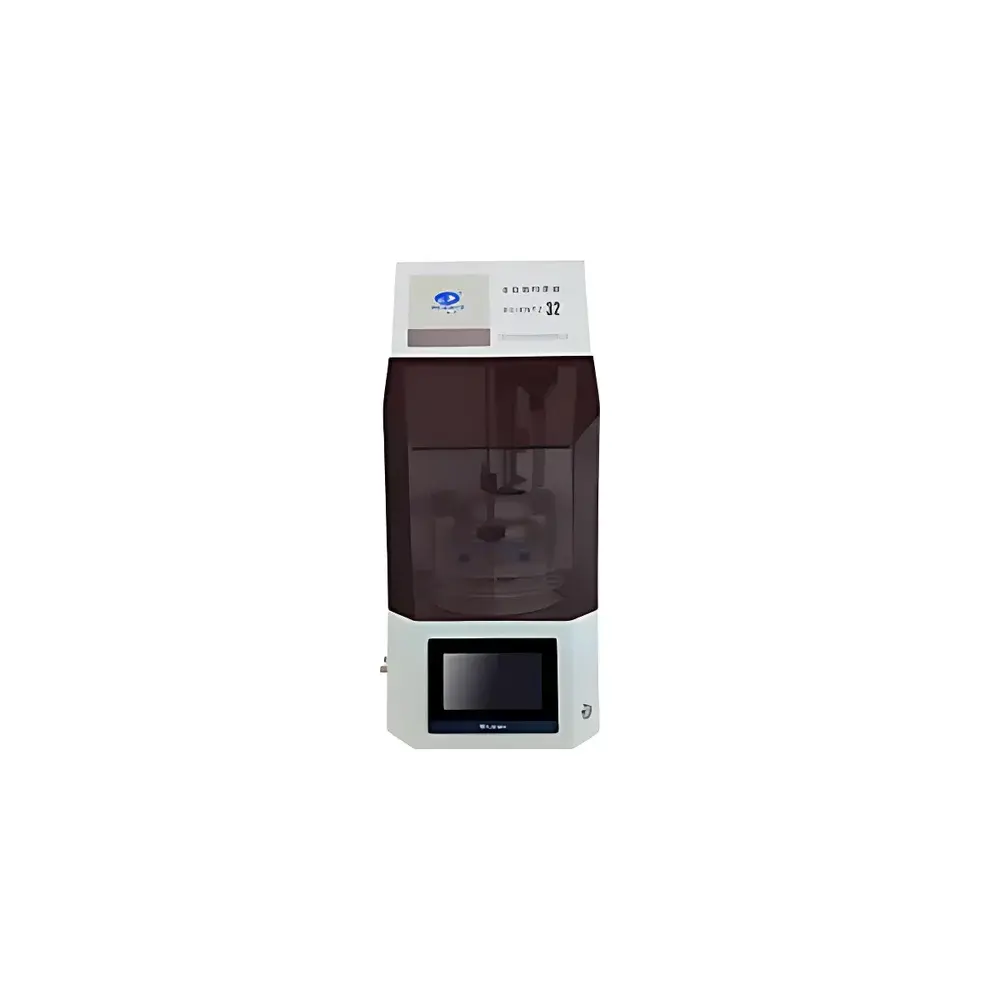
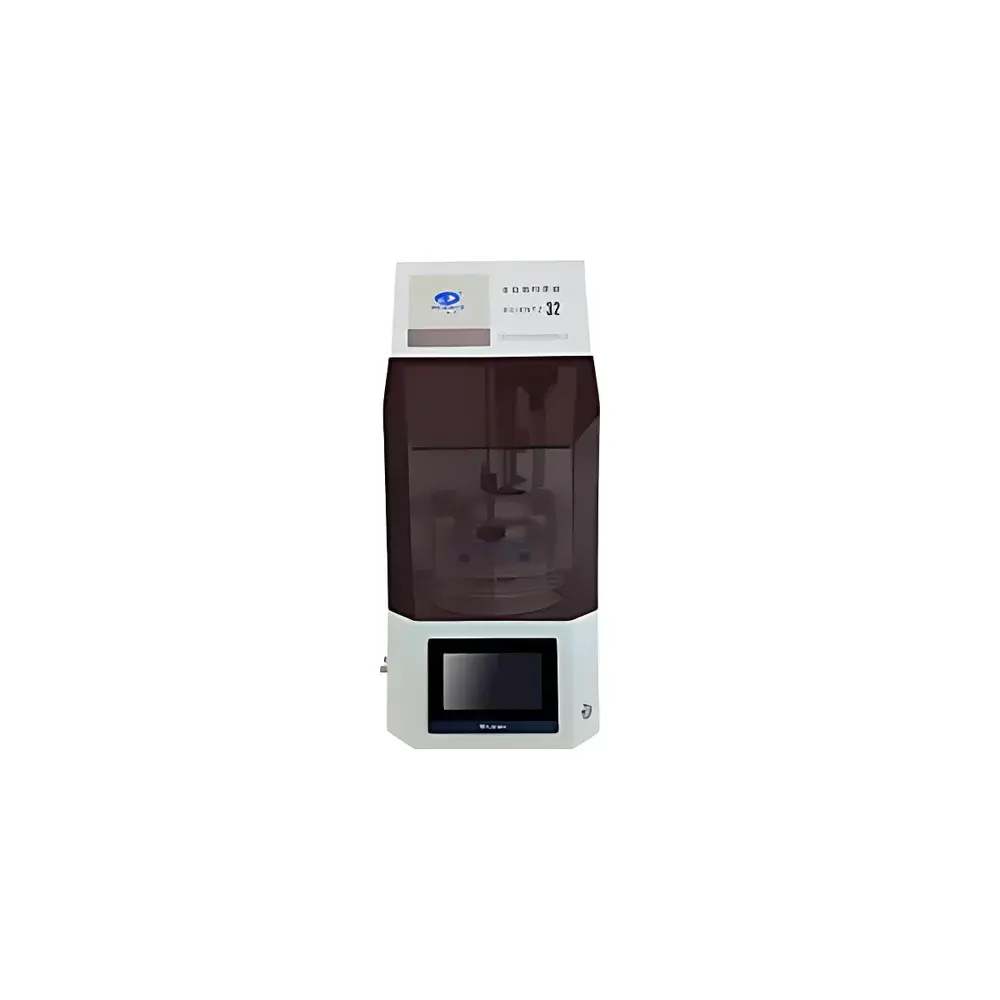
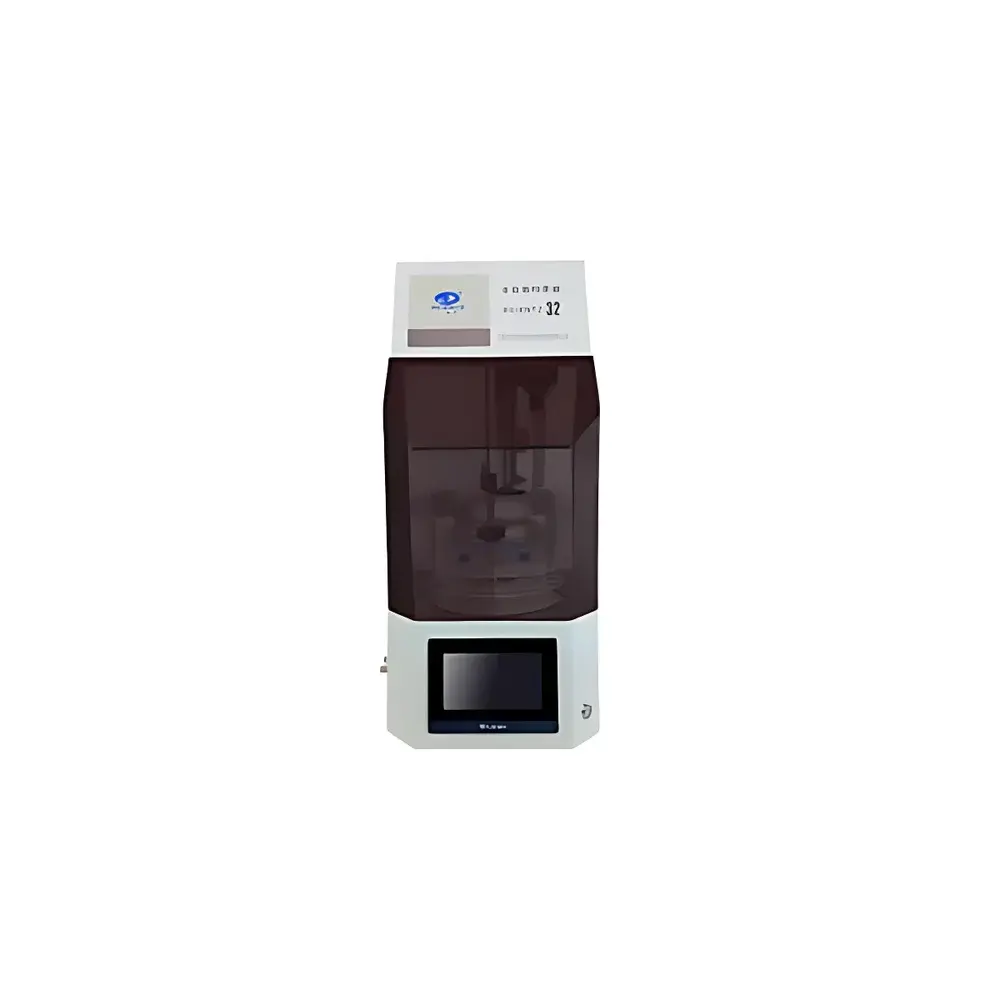
Scientz SCIENTZ-32 Fully Automated Rotational Homogenizer
| Brand | Scientz |
|---|---|
| Origin | Zhejiang, China |
| Manufacturer Type | Authorized Distributor |
| Product Category | Domestic |
| Model | SCIENTZ-32 |
| Instrument Type | Probe-type Rotating Blade Homogenizer |
| Sample Volume Range | 10–200 mL |
| Maximum Throughput | 32 samples per run |
| Power Consumption | <1000 W |
| Speed Range | 3000–36000 rpm |
| Speed Accuracy | ±1% |
| Maximum Viscosity Handling | 5000 mPa·s |
| Cleaning Modes | Water rinse, Organic solvent wash, Ultrasonic spray cleaning |
| Noise Level | <60 dB(A) |
| Display | 7-inch industrial-grade touchscreen |
| Blade Dimensions | 10×195 mm or 19×195 mm flat-bottom mechanical blades |
| Sample Holder Configurations | Standard — 32×10 mL, 16×50 mL, 10×100 mL |
| Exhaust System | Integrated active fume extraction |
| Safety Features | Overtemperature/overspeed auto-shutdown, emergency stop, blade position sensing, door interlock |
Overview
The Scientz SCIENTZ-32 Fully Automated Rotational Homogenizer is an integrated high-throughput sample preparation system engineered for precision homogenization, automated blade cleaning, and controlled decontamination in regulated laboratory environments. It operates on the principle of high-speed rotational shearing—where a motor-driven probe-type blade rotates within a sealed sample tube to generate intense hydrodynamic forces, facilitating efficient cell lysis, tissue disruption, emulsification, and particle size reduction. Unlike manual or semi-automated homogenizers, the SCIENTZ-32 employs a programmable servo-controlled motion architecture to precisely index the blade between sample positions and dedicated cleaning stations, minimizing operator intervention while maintaining consistent mechanical energy input across all samples. Designed for reproducible pre-analytical processing, it supports workflows requiring strict traceability and contamination control—particularly in food safety testing, biopharmaceutical development, and molecular biology applications where batch-to-batch consistency and low carryover are critical.
Key Features
- High-throughput automation: Processes up to 32 samples per cycle using a rotating carousel-style sample tray with configurable rack options (e.g., 32×10 mL, 16×50 mL, or 8×200 mL), reducing hands-on time and human error.
- Intelligent blade positioning: Motorized vertical adjustment of the homogenizing probe ensures optimal immersion depth relative to sample volume and viscosity—enhancing shear efficiency and preventing vortexing or splashing.
- Multi-mode cleaning system: Three validated cleaning protocols—deionized water rinse, organic solvent flush (e.g., ethanol or isopropanol), and ultrasonic-assisted spray—each with user-defined duration and drainage timing to eliminate cross-contamination.
- Real-time environmental control: Integrated active exhaust ducting continuously evacuates volatile organic compounds (VOCs), aerosols, or biohazards generated during homogenization, complying with OSHA-recommended exposure limits and supporting ISO 15190:2020 laboratory safety requirements.
- Remote operation & audit-ready interface: WiFi-enabled connectivity allows monitoring and control via desktop, tablet, or smartphone; all parameter changes, run logs, and alarm events are timestamped and stored locally on the device’s internal memory.
- Acoustically optimized design: Equipped with a brushless high-speed motor and vibration-damping chassis, achieving sustained operational noise levels below 60 dB(A) at 1 m distance—suitable for shared lab spaces without acoustic enclosures.
Sample Compatibility & Compliance
The SCIENTZ-32 accommodates a broad range of biological, chemical, and food matrices—including soft animal tissues, plant leaves, microbial pellets, viscous protein solutions (up to 5000 mPa·s), and fortified food extracts. Its stainless-steel probe assembly and chemically resistant fluid pathways support compatibility with common solvents (e.g., acetone, chloroform, methanol) used in extraction protocols. The system adheres to general electrical safety standards (IEC 61010-1) and incorporates hardware-level safeguards aligned with GLP and GMP principles: automatic thermal cutoff at >65°C, speed deviation detection (>±1%), and mechanical door interlock preventing operation when the chamber is open. While not certified under FDA 21 CFR Part 11 out-of-the-box, its data logging architecture—including immutable run records and user authentication via touchscreen login—facilitates validation for regulated environments upon IQ/OQ/PQ execution.
Software & Data Management
The embedded 7-inch industrial touchscreen runs a deterministic real-time OS optimized for lab instrumentation. Users can store over 100 customizable homogenization methods—each defining speed ramp profiles, dwell times, blade depth offsets, and post-run cleaning sequences. All executed runs are archived with metadata: date/time stamp, operator ID (if logged in), method name, sample position map, and any triggered alarms. Export is supported via USB flash drive in CSV format for integration into LIMS or ELN systems. Firmware updates are delivered via secure HTTPS download and require digital signature verification prior to installation—ensuring integrity and version traceability.
Applications
- Food safety laboratories: Rapid homogenization of composite food samples (meat, dairy, produce) prior to pesticide residue analysis (e.g., LC-MS/MS), pathogen enrichment (ISO 6579), or mycotoxin quantification (AOAC 2005.02).
- Biopharmaceutical R&D: Consistent disruption of CHO or HEK293 cell cultures for intracellular protein recovery; preparation of nanoemulsions for adjuvant formulation; homogenization of lipid nanoparticles (LNPs) during mRNA vaccine process development.
- Clinical and academic research: High-fidelity lysis of fibrous tissues (e.g., cardiac muscle, tumor biopsies) for downstream RNA-seq or proteomics; mechanical fragmentation of biofilms for antimicrobial susceptibility testing.
- Materials science: Dispersion of nanocellulose suspensions, graphene oxide slurries, or polymer nanocomposites where shear history directly impacts colloidal stability and rheological behavior.
FAQ
What types of sample tubes are compatible with the SCIENTZ-32?
Standard configurations include conical-bottom centrifuge tubes (10–200 mL) made from polypropylene or glass. Custom adapters are available for cryovials, deep-well plates, or custom-shaped vessels upon request.
Can the SCIENTZ-32 be validated for use in GMP environments?
Yes—the system supports full qualification (IQ/OQ/PQ) through documented test protocols covering speed accuracy, temperature stability, cleaning efficacy (ATP bioluminescence or residual protein assay), and data integrity. Scientz provides technical documentation packages for regulatory submission.
Is remote troubleshooting supported by the manufacturer?
Field service engineers can initiate secure remote diagnostics via encrypted VNC session after user authorization—provided the instrument maintains stable WiFi or Ethernet connectivity.
How does the blade self-cleaning function prevent carryover between samples?
Each cleaning cycle includes sequential steps: solvent delivery, ultrasonic agitation (if enabled), vacuum-assisted drainage, and air-drying—all timed and verified by flow sensors and pressure transducers to confirm complete removal of residual material.
Does the SCIENTZ-32 meet international electrical safety standards?
It complies with IEC 61010-1:2010 for laboratory equipment and carries CE marking for EMC and low-voltage directives; additional certifications (e.g., UL, CSA) are available for regional deployment upon request.



