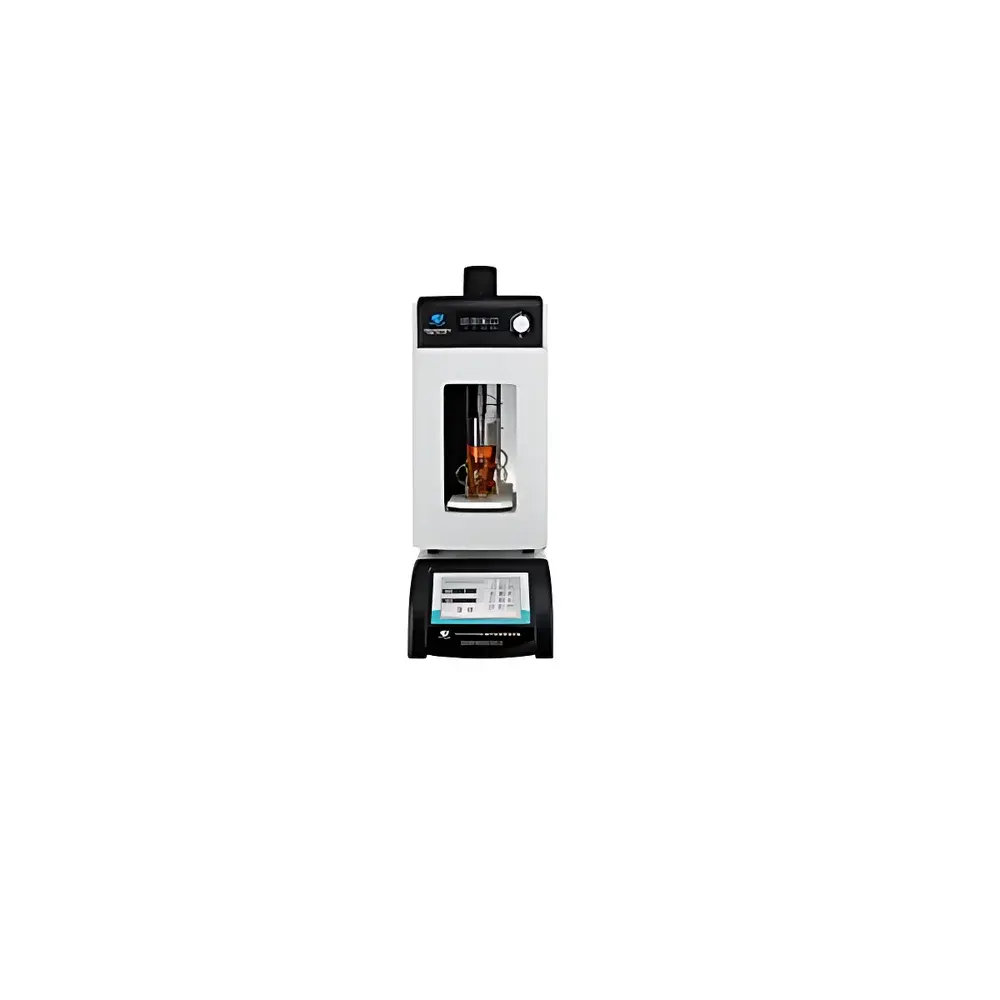
Scientz SCIENTZ-950E Intelligent Ultrasonic Cell Disruptor
| Brand | Scientz |
|---|---|
| Origin | Zhejiang, China |
| Instrument Type | Ultrasonic Cell Disruptor |
| Model | SCIENTZ-950E |
| Temperature Range | 0–99°C |
| Operating Frequency | 20–25 kHz (auto-tracking & adaptive) |
| Ultrasonic Power Output | 5–950 W (adjustable) |
| Sample Volume Capacity | 100 µL – 600 mL (probe-dependent) |
Overview
The Scientz SCIENTZ-950E Intelligent Ultrasonic Cell Disruptor is a benchtop ultrasonic processor engineered for precision lysis of biological and material samples through controlled acoustic cavitation. It operates on the physical principle of high-intensity ultrasound propagation in liquid media, where rapid pressure oscillations induce transient microcavitation—formation, growth, and violent collapse of vapor-filled bubbles—generating localized shear forces exceeding 10⁴ m/s², hydrodynamic microjets (>100 m/s), and extreme transient temperatures (>5,000 K). This mechanism enables efficient disruption of cell membranes, organelles, and extracellular matrices without thermal denaturation when properly temperature-regulated. Designed for reproducible, scalable sample preparation, the SCIENTZ-950E supports both contact-mode sonication (via titanium alloy probes) and indirect processing (e.g., water-bath or cup-horn configurations), making it suitable for applications ranging from single-cell lysate generation to nanoparticle dispersion in GMP-aligned workflows.
Key Features
- Intelligent adaptive frequency tracking: Real-time monitoring and automatic adjustment within 20–25 kHz range ensures stable energy delivery despite load variation or probe wear.
- Wide dynamic power range: Continuously adjustable output from 5 W to 950 W with ±1% linearity, enabling fine-tuned optimization for sensitive samples (e.g., chromatin shearing) or robust materials (e.g., bacterial spores).
- Integrated temperature control: Built-in Pt100 sensor and Peltier-assisted cooling interface maintain sample temperature between 0°C and 99°C; programmable thermal setpoints prevent thermal degradation during extended cycles.
- Dual-mode operation: Supports both pulsed and continuous sonication modes with user-defined duty cycles (1–99%) and total duration (1–999 min), minimizing heat accumulation and preserving biomolecular integrity.
- Secure remote management: RS485/USB/Ethernet interfaces enable integration into LIMS environments; supports TCP/IP-based network control, remote parameter setting, real-time status logging, and audit-compliant event export.
- Modular probe architecture: Compatible with standard titanium alloy probes (Φ2 mm to Φ12 mm) and optional high-capacity horns (Φ15 mm, Φ25 mm); includes quick-lock coupling and auto-calibration recognition.
- Acoustic containment system: Motorized lift mechanism, UV-C sterilization lamp (254 nm), interlocked safety door, and LED-lit acoustic chamber comply with IEC 61000-3-2 EMC and ISO 13857 mechanical safety standards.
Sample Compatibility & Compliance
The SCIENTZ-950E accommodates diverse sample types across life science and materials research domains—including mammalian cells (HEK293, CHO), microbial cultures (E. coli, yeast), plant tissues, viral particles, lipid vesicles, carbon nanotubes, rare-earth oxide suspensions, and soil extracts. Its design adheres to key regulatory expectations for analytical instrumentation: temperature and time parameters are logged with timestamped metadata; password-protected user profiles support role-based access (administrator/operator); all operational events—including overtemperature, overload, and door-open interrupts—are recorded in non-volatile memory. While not certified as FDA 21 CFR Part 11 compliant out-of-the-box, the system provides raw data export (CSV/JSON), electronic signature readiness, and audit trail functionality compatible with GLP/GMP validation protocols when deployed with validated SOPs and third-party e-signature middleware.
Software & Data Management
The instrument ships with Scientz ControlSuite v3.x—a Windows-based application supporting method creation, execution scheduling, and multi-instrument fleet monitoring. Each stored protocol (up to 20 user-defined methods) retains full parameter history: amplitude (%), power (W), cycle count, pulse width, hold time, target temperature, and actual thermal profile. Raw sensor data (temperature, current draw, frequency drift) can be exported at 1 Hz resolution for post-acquisition statistical analysis. The software generates PDF reports with embedded calibration certificates, operator ID, and timestamped execution logs—formatted to align with ISO/IEC 17025 documentation requirements. Optional API integration allows bidirectional communication with ELN platforms (e.g., LabArchives, Benchling) via RESTful endpoints.
Applications
- Molecular biology: Chromatin fragmentation for ChIP-seq, nuclear extract preparation, plasmid DNA release from E. coli, RNA isolation from fibrous tissues.
- Biopharmaceutical development: Liposome size reduction, monoclonal antibody formulation homogenization, vaccine adjuvant dispersion, sterile filtration pre-treatment of viscous biologics.
- Materials science: Exfoliation of 2D nanomaterials (graphene, MoS₂), deagglomeration of metal-organic frameworks (MOFs), stabilization of quantum dot colloids.
- Food & beverage R&D: Enzyme activation/inactivation studies, polyphenol extraction from botanicals, wine aging acceleration via controlled oxidative stress induction.
- Environmental analysis: Extraction of PAHs and PCBs from sediment cores, cell lysis of cyanobacterial blooms for toxin quantification, microplastic fragmentation for FTIR identification.
FAQ
What is the minimum recommended sample volume for reproducible lysis?
For optimal cavitation efficiency and thermal stability, the minimum working volume is 100 µL using a Φ2 mm microprobe under pulsed mode (e.g., 5 s ON / 10 s OFF) with active cooling.
Can the SCIENTZ-950E be validated for use in regulated GMP laboratories?
Yes—when combined with documented IQ/OQ/PQ protocols, traceable calibration (NIST-traceable power meter and thermometer), and configured with audit trail-enabled software, it meets baseline requirements for equipment qualification per Annex 15 and USP <1058>.
Is probe replacement required after a certain number of operating hours?
Titanium probes exhibit measurable erosion beyond 200–300 hours of cumulative active sonication; Scientz recommends periodic amplitude verification using a calibrated calorimetric test and replacement if output deviation exceeds ±5% at nominal settings.
Does the system support non-contact sonication (e.g., for microplate-based workflows)?
Yes—optional cup-horn transducers and microplate carriers allow simultaneous processing of up to 96 wells without direct probe immersion, maintaining cross-contamination prevention and thermal uniformity across wells.
How is acoustic energy output calibrated and verified?
Power output is calibrated using a NIST-traceable radiation force balance (RFB) according to ASTM E2810-11; users may perform routine verification with calorimetric methods (ΔT measurement in water) per ISO 20443:2017 Annex B.