
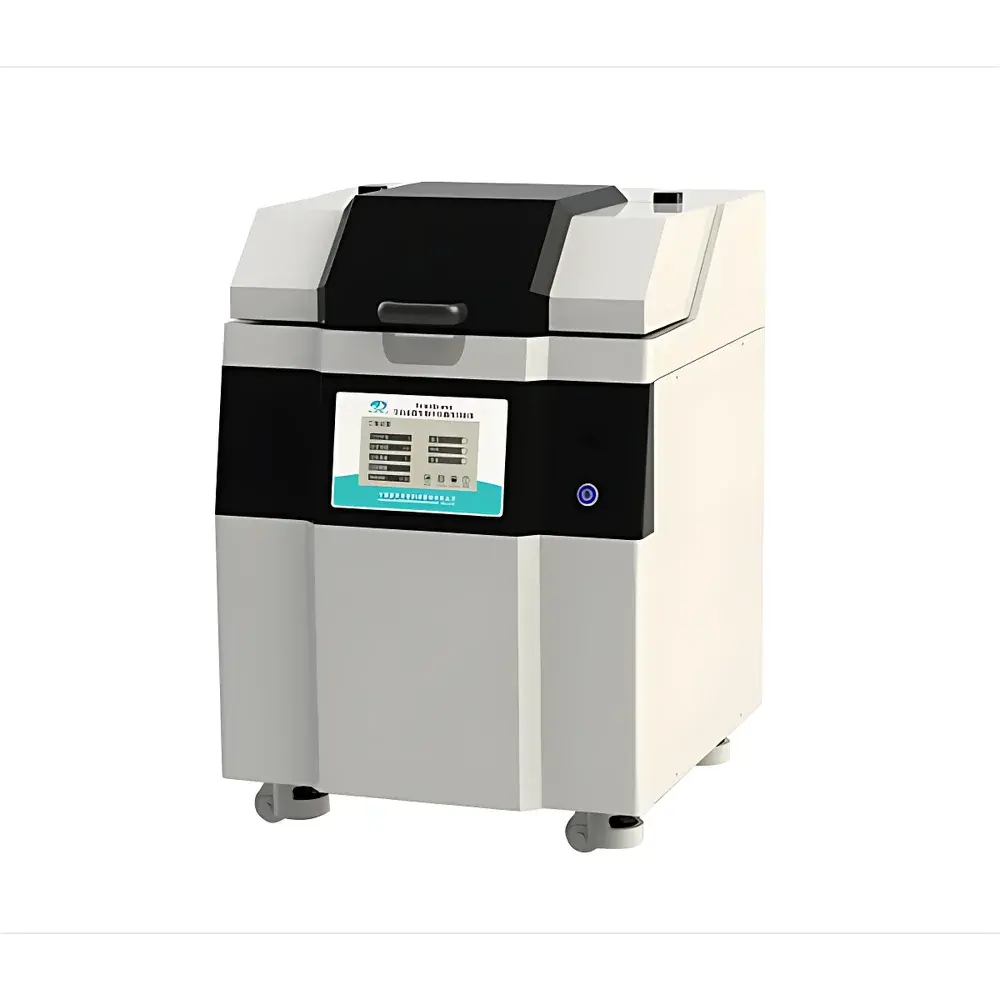
Scientz SCIENTZ-WSQ Automated Microbial Growth Curve Analyzer
| Brand | Scientz |
|---|---|
| Origin | Zhejiang, China |
| Manufacturer Type | Original Equipment Manufacturer (OEM) |
| Country of Origin | China |
| Model | SCIENTZ-WSQ |
| Pricing | Available upon request |
Overview
The Scientz SCIENTZ-WSQ Automated Microbial Growth Curve Analyzer is an integrated, benchtop optical density (OD)-based monitoring system engineered for real-time, non-invasive kinetic profiling of microbial populations in liquid culture. It operates on the principle of turbidimetric measurement—quantifying light scattering at a fixed wavelength (typically 600 nm) as a proxy for cell density—combined with precisely controlled temperature regulation and orbital shaking to maintain homogeneous aerobic growth conditions. Unlike conventional manual OD sampling protocols, the SCIENTZ-WSQ performs continuous, in-situ optical measurements without sample withdrawal, eliminating dilution artifacts, volumetric drift, and contamination risks associated with intermittent pipetting. Its architecture supports standardized microbial growth phase characterization—lag, exponential (log), stationary, and death phases—enabling quantitative comparison across strains, media formulations, antimicrobial agents, or environmental perturbations. Designed for reproducibility and traceability, the instrument meets foundational requirements for GLP-compliant microbiological research and early-stage bioprocess development.
Key Features
- Non-destructive, real-time OD600 monitoring via integrated photometric sensor array—no sampling, no volume loss, no cross-contamination
- Programmable temperature control (range: ambient +5°C to 50°C, ±0.3°C stability) with PID feedback loop
- Adjustable orbital shaking (100–300 rpm, ±5 rpm accuracy) with configurable amplitude (10–50 mm) to optimize oxygen transfer and suspension homogeneity
- High-throughput capacity: simultaneous monitoring of up to 36 independent culture wells (standard 96-well microplate format)
- Automated data acquisition at user-defined intervals (1–120 min resolution), with timestamped metadata logging
- Robust stainless-steel chassis with sealed optical chamber, HEPA-filtered air inlet, and UV-resistant acrylic viewing window for biosafety compliance
- Self-calibrating optical path: automatic baseline correction prior to each measurement cycle using blank-reference wells
Sample Compatibility & Compliance
The SCIENTZ-WSQ accommodates a broad spectrum of microorganisms—including Gram-positive/negative bacteria (e.g., E. coli, B. subtilis), yeasts (S. cerevisiae, C. albicans), filamentous fungi, bacteriophages, microalgae (C. reinhardtii, D. salina), and mammalian suspension cells—provided they remain in stable suspension during shaking. Culture volumes range from 100 µL to 300 µL per well. The system complies with ISO 8573-1 (compressed air purity) for internal airflow, and its closed-loop design aligns with CLSI M07-A10 and EUCAST guidelines for standardized antimicrobial susceptibility testing workflows. While not FDA 510(k)-cleared, its data integrity framework supports audit readiness under GLP and GMP Annex 11 principles, including electronic signature capability and full audit trail export (CSV/Excel).
Software & Data Management
The proprietary Scientz BioKinetics™ software (v3.2+, Windows 10/11 compatible) provides intuitive experiment setup, real-time visualization, and advanced curve analytics. Users define multi-step protocols—including temperature ramps, shake pauses, and dynamic OD thresholds for event-triggered actions. Raw OD time-series data are stored with full metadata (instrument ID, operator, date/time, environmental logs). Built-in algorithms compute generation time, maximum specific growth rate (µmax), lag phase duration, and area under the curve (AUC). Export options include PNG/SVG plots, tabular kinetics reports, and FAIR-compliant JSON-LD for integration with LIMS or ELN systems. All data files are digitally signed and version-controlled; software adheres to ALCOA+ principles (Attributable, Legible, Contemporaneous, Original, Accurate, Complete, Consistent, Enduring, Available).
Applications
- Antibiotic mode-of-action studies and MIC/MBC determination under dynamic growth conditions
- Strain fitness assessment in synthetic biology and metabolic engineering pipelines
- Fermentation media optimization and carbon/nitrogen source screening
- Toxicity profiling of nanomaterials, heavy metals, or industrial effluents on microbial consortia
- Viral replication kinetics (via host-cell lysis monitoring in co-culture assays)
- Algal biomass productivity modeling under variable light/nutrient regimes
- Quality control of starter cultures in food & beverage manufacturing (ISO 20948)
FAQ
Does the SCIENTZ-WSQ require calibration with standard microbe suspensions before each run?
No—factory-calibrated optical path and automated blank referencing eliminate routine suspension-based calibration. Users perform only one-time verification using NIST-traceable OD standards annually.
Can the system accommodate custom plate formats beyond 96-well?
Only standard flat-bottom, clear polystyrene or glass-bottom 96-well plates are supported. Deep-well or PCR plates are incompatible due to optical path length constraints.
Is remote monitoring or cloud data synchronization available?
Local network access (HTTP/HTTPS) is supported for real-time dashboard viewing; however, cloud upload requires on-premise server deployment per institutional IT security policies.
How is sterility maintained during extended runs (>72 h)?
The sealed chamber, filtered air exchange, and optional integrated UV-C sterilization cycle (post-run, 30 min) mitigate biofilm formation and airborne contamination.
What validation documentation is provided for regulatory submissions?
A complete IQ/OQ protocol package—including installation checklist, operational parameter verification, and software validation summary—is supplied with each unit, compliant with ASTM E2500-13 and ICH Q5C principles.
Related Products




