
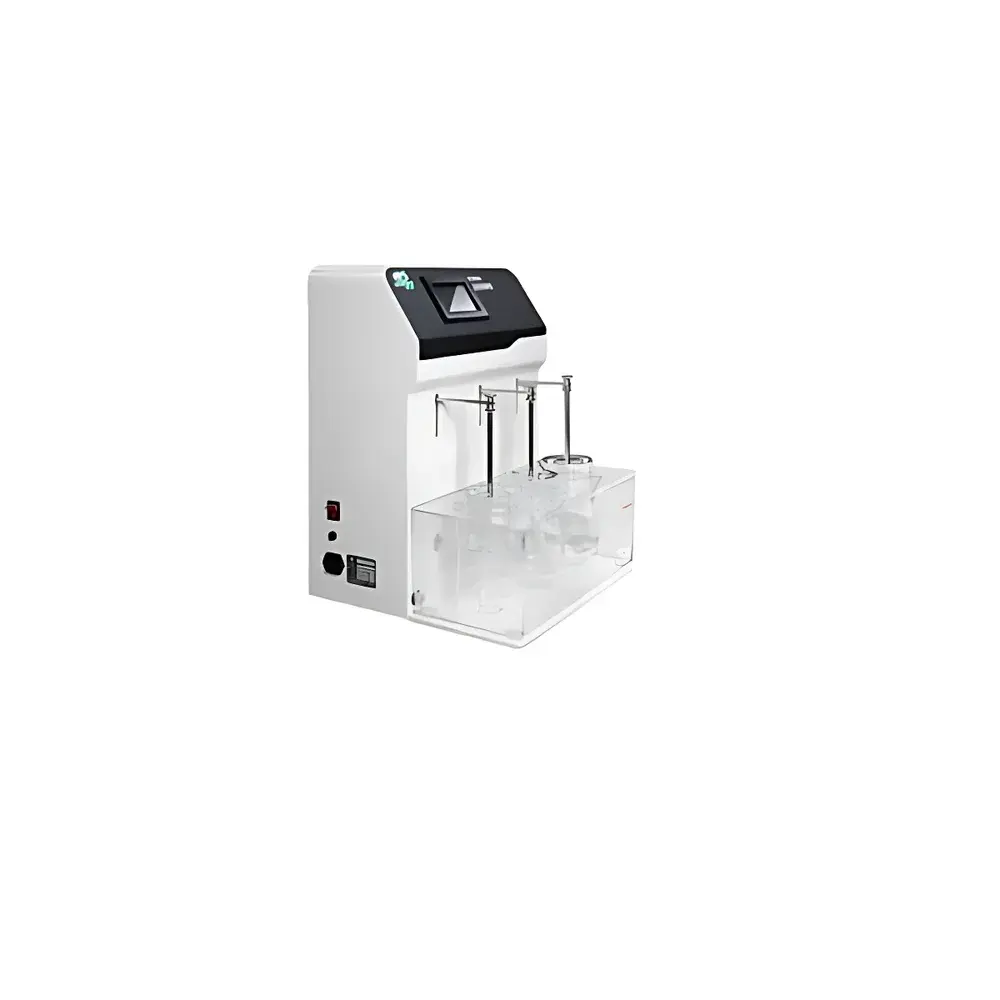
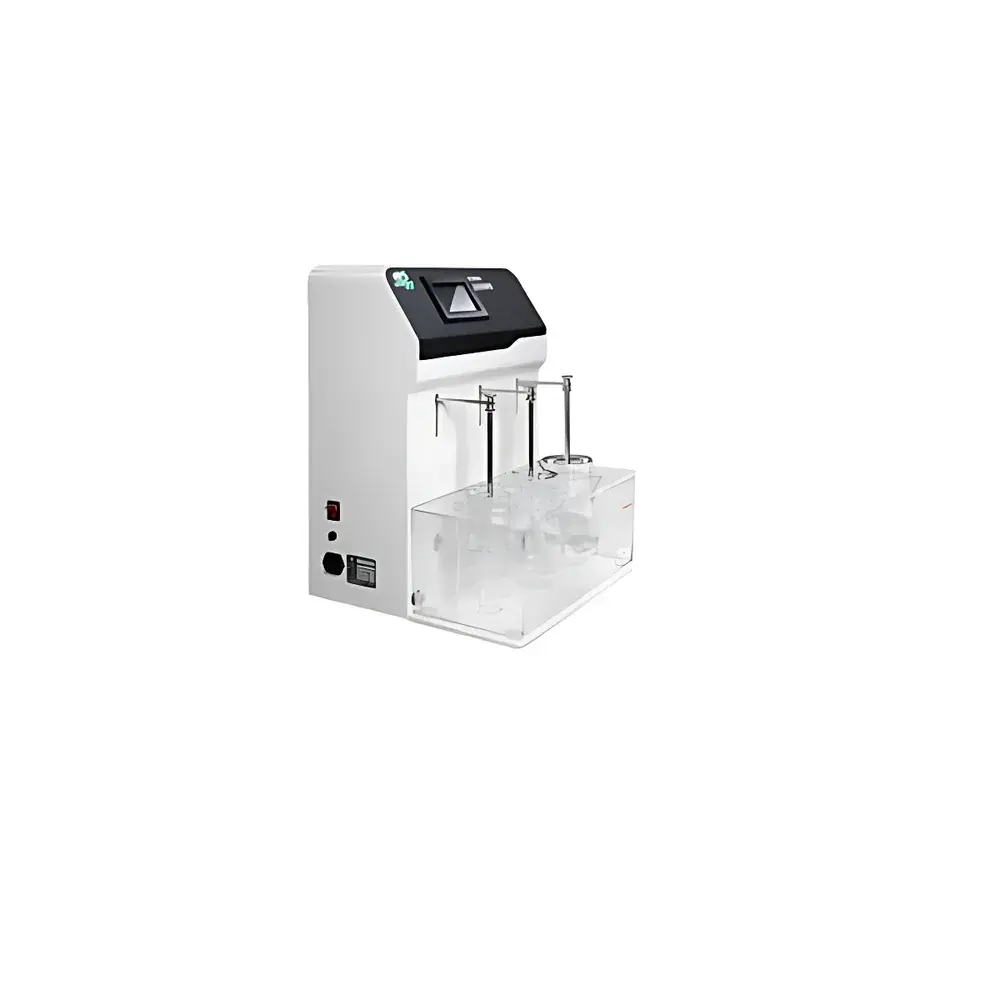
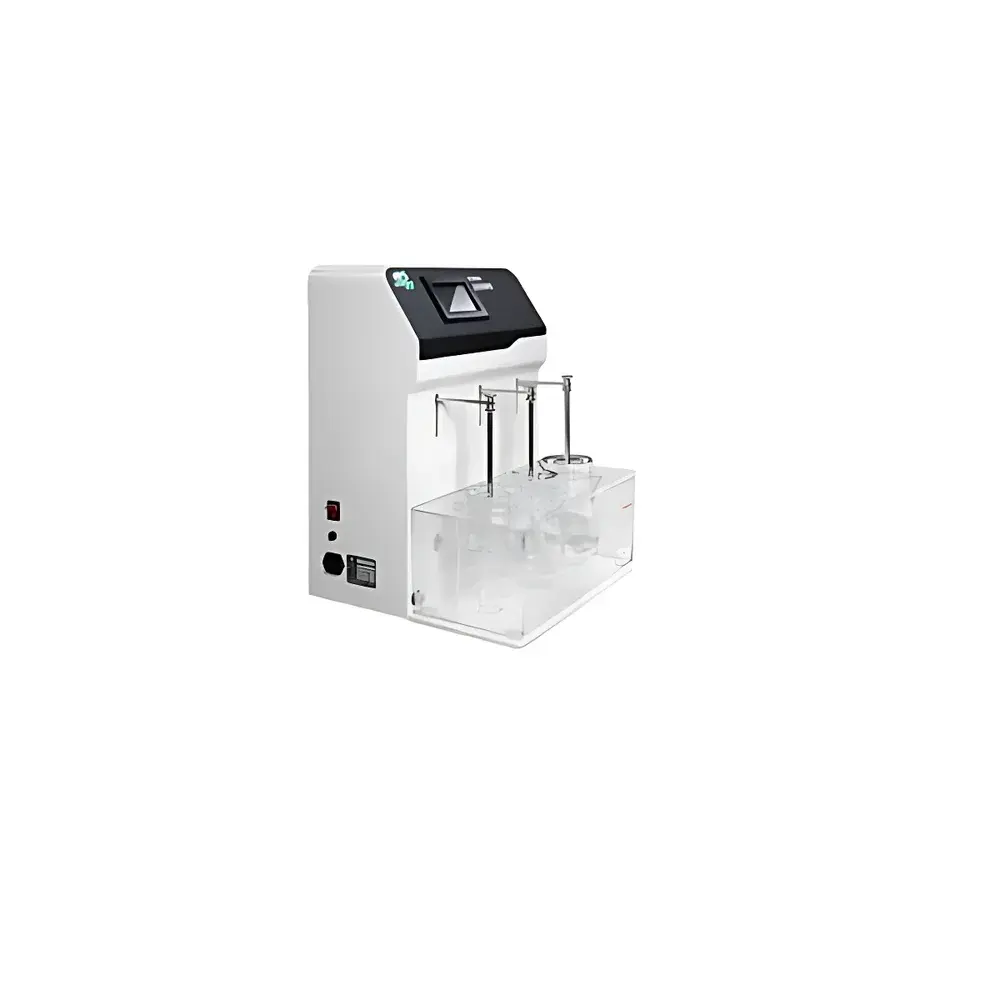
SCIENTZ ZBJ01 Intelligent Disintegration Tester
| Brand | SCIENTZ |
|---|---|
| Origin | Zhejiang, China |
| Manufacturer Type | Authorized Distributor |
| Country of Origin | China |
| Model | ZBJ01 |
| Pricing | Available Upon Request |
| Number of Test Stations | 3 |
| Stroke Distance | 55 mm ± 1 mm |
| Cycle Frequency | 30–32 cycles/min |
| Bath Temperature Range | Ambient to 45 °C |
| Temperature Resolution | 0.01 °C |
| Temperature Control Accuracy | ±0.3 °C at 37 °C |
| Standard Sieve Aperture | 2 mm |
| Optional Sieves | 1 mm, 0.71 mm, 0.42 mm |
| User Access Levels | 3-tier |
| Max Users | 7 |
| Audit Trail Capacity | 96 entries × 366 days |
| Login Methods | Username + Password, Fingerprint |
| Temperature Sensor | High-Accuracy Pt1000 Platinum Resistance Thermometer |
| Circulation System | Brushless DC Recirculating Pump |
| Safety Features | Over-Temperature Protection Switch |
| Housing | Integrated Powder-Coated Injection-Molded Enclosure with Sandblasted Locating Baseplate |
| Display | Full-Color Touchscreen Interface |
| Illumination | Independent LED Lighting per Station |
| Basket Mounting | Quick-Release Cam Lock Mechanism |
| Bath Design | Monolithic Water Bath Chamber |
Overview
The SCIENTZ ZBJ01 Intelligent Disintegration Tester is a fully automated, GMP-aligned pharmaceutical testing instrument engineered for precise and reproducible evaluation of solid oral dosage forms—including tablets, capsules, and effervescent tablets—according to pharmacopoeial standards (USP , EP 2.9.1, ChP 0921). It operates on the principle of mechanical immersion cycling: test units are suspended in a thermostatically controlled aqueous medium within standardized baskets, which undergo vertical reciprocating motion at defined stroke amplitude and frequency. The endpoint is determined when no palpable core remains or when the dosage form disintegrates completely into fragments that pass through the specified mesh aperture. Designed for regulatory compliance and laboratory efficiency, the ZBJ01 integrates hardware-level temperature stability, software-enforced user accountability, and structural modularity to support routine QC workflows and method validation studies.
Key Features
- Triple-station architecture enabling simultaneous execution of three independent disintegration tests—improving throughput without cross-contamination risk.
- Monolithic water bath chamber with optimized thermal mass and uniform flow distribution, minimizing spatial temperature gradients across all stations.
- Pt1000 platinum resistance thermometer calibrated to NIST-traceable standards, delivering real-time bath temperature monitoring with 0.01 °C resolution and ±0.3 °C accuracy at the critical 37 °C setpoint.
- Brushless DC recirculating pump ensures silent, maintenance-free fluid circulation and eliminates pulsation-induced mechanical noise or basket vibration artifacts.
- Quick-release cam-lock basket mounting system allows tool-free installation and removal of baskets—reducing setup time and operator-induced variability.
- Individual high-intensity LED illumination per station provides consistent, shadow-free visual observation under ambient lab lighting conditions.
- Integrated color touchscreen interface with intuitive icon-driven navigation; supports multi-language UI (English default) and on-screen calibration prompts.
- Embedded safety logic includes automatic thermal cutoff at 48 °C and fault logging for abnormal cycle timing or temperature deviation events.
Sample Compatibility & Compliance
The ZBJ01 accommodates standard USP/ChP-compliant baskets (10 mm internal diameter) and accepts optional sieve inserts of 1.0 mm, 0.71 mm, and 0.42 mm for specialized formulations such as orally disintegrating tablets (ODTs) or sustained-release matrix systems. Its mechanical design conforms to ISO 8536-1:2022 (infusion equipment) dimensional tolerances where applicable and meets essential requirements of IEC 61010-1 for electrical safety in laboratory instruments. The system supports full audit trail generation per FDA 21 CFR Part 11 Annex 11 guidelines, including timestamped records of user logins, parameter changes, test initiation/termination, and error events—with immutable storage for ≥366 days.
Software & Data Management
Firmware v3.2+ implements role-based access control (RBAC) with three permission tiers (Administrator, Supervisor, Operator) and up to seven configurable user accounts. Each login session requires dual-factor authentication via password and optional fingerprint biometrics. All operational parameters—including temperature setpoint, cycle count, stroke duration, and sieve selection—are stored in non-volatile memory with version-stamped configuration snapshots. Data export is supported via USB flash drive in CSV format; optional thermal printer integration enables immediate hard-copy documentation of test reports compliant with GLP/GMP record retention policies. Software updates are delivered via encrypted firmware packages validated with SHA-256 checksums.
Applications
- Routine quality control release testing of immediate-release tablets and hard gelatin capsules per USP/EP/ChP monographs.
- Formulation development studies assessing excipient influence on disintegration kinetics under variable pH or surfactant conditions.
- Stability-indicating method development for modified-release products requiring differentiation between surface erosion and bulk degradation mechanisms.
- Comparative bioequivalence support through dissolution–disintegration correlation modeling (e.g., using Noyes–Whitney-derived kinetic fits).
- Regulatory submission dossier preparation, including IQ/OQ/PQ protocol execution and raw data archiving for FDA, EMA, or NMPA audits.
FAQ
Does the ZBJ01 comply with 21 CFR Part 11 requirements for electronic records?
Yes—the system enforces electronic signature capture, audit trail integrity, and secure user authentication aligned with FDA guidance for computerized systems in regulated environments.
Can the instrument operate continuously for extended stability studies?
Yes—designed for unattended 72-hour operation with redundant thermal monitoring and automatic fault recovery protocols.
Is calibration certificate traceable to national standards included?
A factory calibration report with Pt1000 sensor verification against NIST-traceable reference is supplied; field recalibration tools and SOP templates are available upon request.
What maintenance is required for long-term reliability?
Annual verification of basket alignment, stroke repeatability, and temperature uniformity is recommended; no consumables beyond standard sieves and distilled water are required.
Can third-party LIMS integrate with the ZBJ01’s data output?
CSV exports are structured to LIMS ingestion specifications; API-based integration is available via optional RS-232/Modbus RTU communication module.




