Scintomics GRP 2V-6V Modular Radiopharmaceutical Synthesizer
| Brand | Scintomics |
|---|---|
| Origin | Germany |
| Model | GRP 2V–6V Modular System |
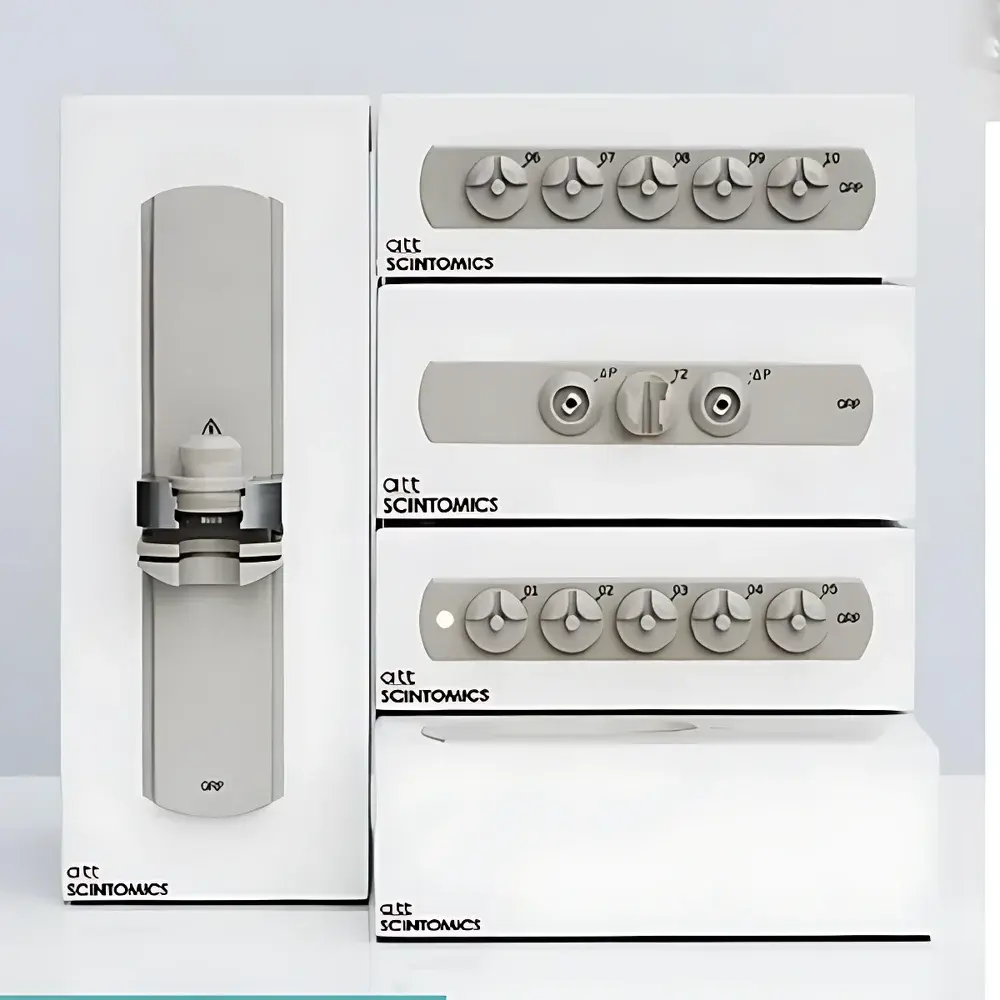
| Configuration | Fully modular (base module + up to 5 valve modules + up to 4 syringe-driven distribution modules) |
| Regulatory Design Basis | Compliant with GMP, ISO 13485, and applicable IEC 61010-1 safety standards for Class II medical device manufacturing environments |
| Software Architecture | Windows-based control interface with audit trail, user access levels, and electronic signature support per FDA 21 CFR Part 11 requirements |
| Radiation Shielding | Integrated lead–tungsten composite shielding (≥15 cm Pb-equivalent for 511 keV photons) |
| Operating Environment | Designed for hot cell integration (Class C cleanroom compatible, IP54-rated modules) |
Overview
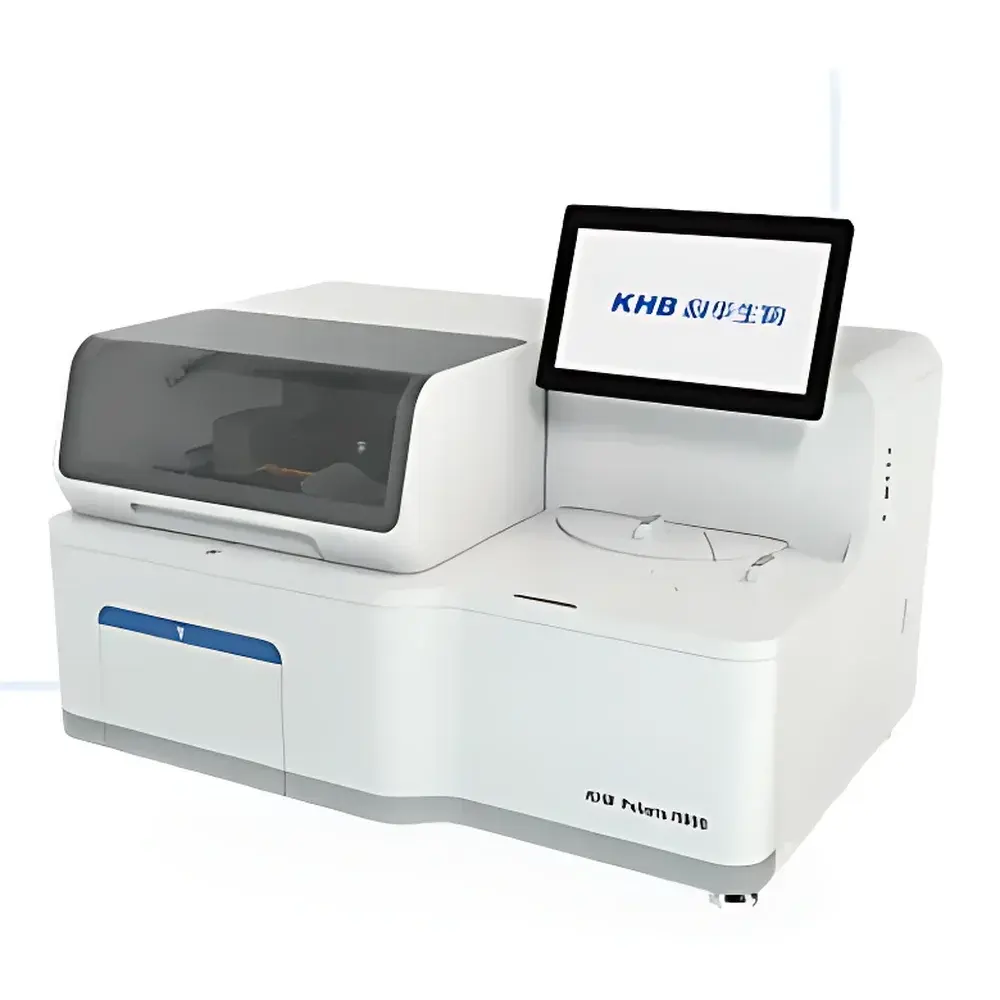
The Scintomics GRP 2V–6V Modular Radiopharmaceutical Synthesizer is an engineered platform for the automated, GMP-compliant synthesis of positron-emitting radiopharmaceuticals—including 18F-FDG, 68Ga-DOTATATE, 18F-Fluciclovine, and 18F-DOPA—under controlled radiation containment conditions. Based on a validated microfluidic–valve–reactor architecture, the system implements sequential reagent delivery, temperature-controlled reaction chamber cycling (−10 °C to 200 °C), and integrated purification via solid-phase extraction (SPE) or HPLC-compatible elution. Its core operational principle relies on precise pneumatic actuation of chemically resistant solenoid valves (Viton®/Kalrez® seals), synchronized with real-time pressure monitoring and radiation dose rate feedback from built-in Geiger–Müller detectors. Designed for deployment in hospital radiopharmacy hot cells or centralized radiopharmaceutical production facilities, the GRP series meets the mechanical, electrical, and radiation safety requirements defined in IEC 61010-1 and EN 62353 for Class II medical device manufacturing infrastructure.
Key Features
- Fully modular hardware architecture: Base module (with valves V1–V5), standard nuclear reaction module (heated reaction vial station with magnetic stirring), detection module (integrated gamma probe with energy discrimination), and optional expansion modules including additional valve banks (up to five total) and syringe-driven distribution units (up to four, supporting 1–20 mL disposable glass or polymer syringes).
- Chemical compatibility: Fluidic pathways constructed from PFA, PTFE, and stainless steel 316L; all wetted components certified for exposure to anhydrous acetonitrile, DMSO, HCl, NaOH, and [18F]fluoride in K2.2.2/K2CO3 solution.
- Process validation support: Pre-loaded, editable synthesis methods with step-by-step parameter logging (temperature, pressure, valve state, radiation count rate, elapsed time); method versioning and digital signature capability compliant with FDA 21 CFR Part 11 Annex 11.
- Hot cell integration: Compact footprint (W × D × H: 600 × 550 × 450 mm per base module); front-access service panel; radiation-shielded viewing window; and standardized pneumatic/electrical interlock interfaces for seamless coupling to lead-glass hot cells.
- Redundant safety systems: Dual-channel radiation interlock circuitry, emergency purge valve activation upon dose threshold exceedance, and automatic reactor quenching via inert gas injection upon thermal runaway detection.
Sample Compatibility & Compliance
The GRP synthesizer supports synthesis of both cyclotron-produced (18F, 68Ga, 124I) and generator-derived (68Ga, 99mTc) radiotracers. All synthesis protocols are developed in alignment with European Pharmacopoeia (Ph. Eur.) monographs and USP <71> and <823> chapters for radiopharmaceutical preparation. The system’s design documentation includes full traceability to ISO 13485:2016 quality management system certification, and its software validation package satisfies GLP/GMP requirements for routine QC release testing in clinical radiopharmacies accredited under national health authority frameworks (e.g., BfArM, MHRA, PMDA).
Software & Data Management
Control is executed via Scintomics SynthOS™ v4.x, a Windows 10–based application with role-based user permissions (Operator, Supervisor, Administrator). Each synthesis run generates a structured XML log file containing timestamped metadata for every hardware event, sensor reading, and manual intervention. Audit trails are immutable and encrypted at rest; electronic signatures meet ALCOA+ principles (Attributable, Legible, Contemporaneous, Original, Accurate, Complete, Consistent, Enduring, Available). Data export supports CSV, PDF report generation, and HL7-compatible transmission to PACS/RIS/LIS systems via configurable OPC UA or RESTful API endpoints.
Applications
- Clinical-scale 18F-FDG production for PET imaging in oncology, neurology, and cardiology departments.
- On-demand synthesis of theranostic pairs (e.g., 68Ga-PSMA-11 for diagnosis / 177Lu-PSMA-617 for therapy) within shared radiopharmacy infrastructure.
- Method development and batch optimization for novel radiolabeled peptides, antibodies, and small molecules under research-use-only (RUO) configurations.
- Training platform for radiopharmacist certification programs requiring hands-on experience with automated synthesis workflows and regulatory documentation practices.
FAQ
Can the GRP 2V–6V be retrofitted with additional modules after initial installation?
Yes—modular expansion is supported via field-installable kits, provided mechanical mounting space and power/air supply capacity are verified during site survey.
Does the system include validation documentation for GMP environments?
Scintomics supplies IQ/OQ documentation templates and URS-aligned test protocols; PQ execution requires site-specific radiopharmaceutical process qualification per local regulatory guidance.
Is remote diagnostics and software update support available?
SynthOS™ supports secure remote maintenance via TLS-encrypted VNC session; firmware updates require authenticated download from Scintomics’ customer portal.
What radiation shielding level does the base module provide?
The integrated shielding achieves ≥15 cm Pb-equivalent attenuation for 511 keV annihilation photons, verified per DIN 6818-2:2021 testing methodology.
Are consumables such as SPE cartridges and reaction vials supplied by Scintomics?
Yes—Scintomics offers OEM-certified SPE cartridges (C18, SCX, Alumina-N), borosilicate reaction vials (10 mL), and pre-sterilized tubing sets with lot-specific CoA and radiolysis stability data.