
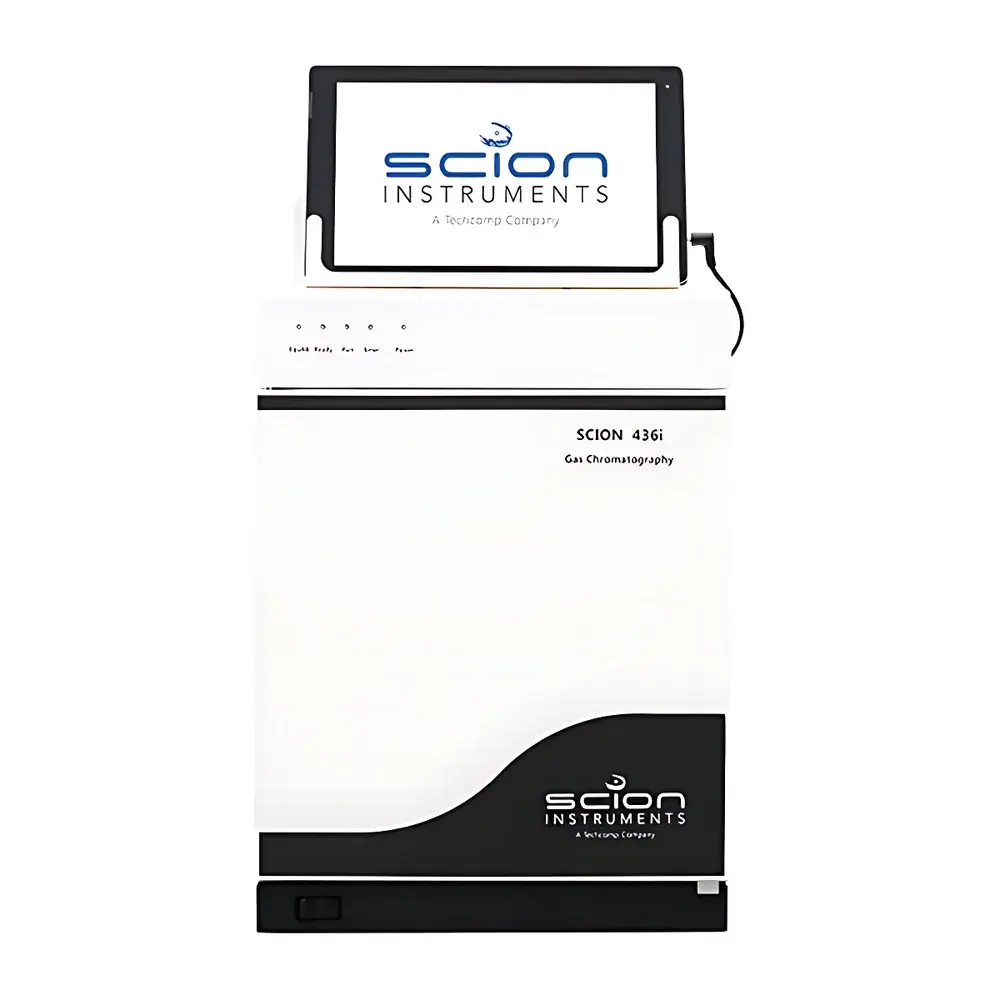
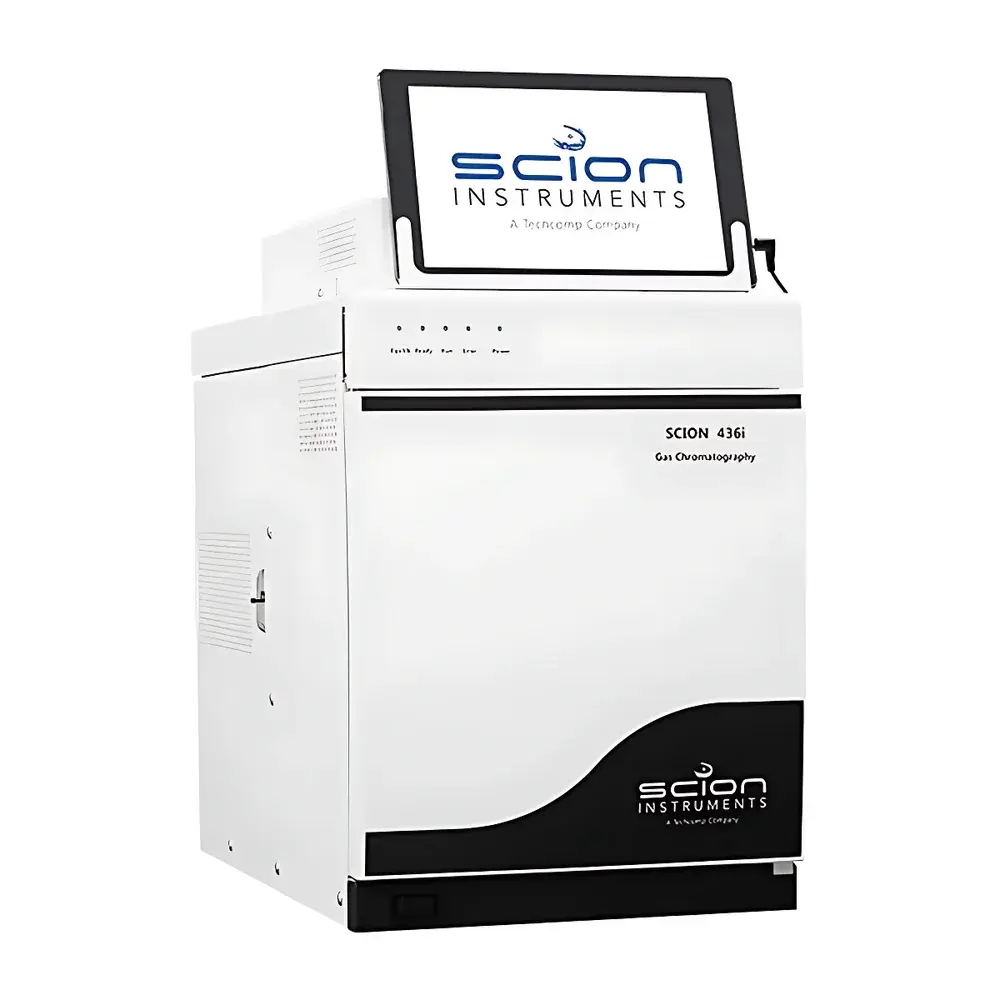
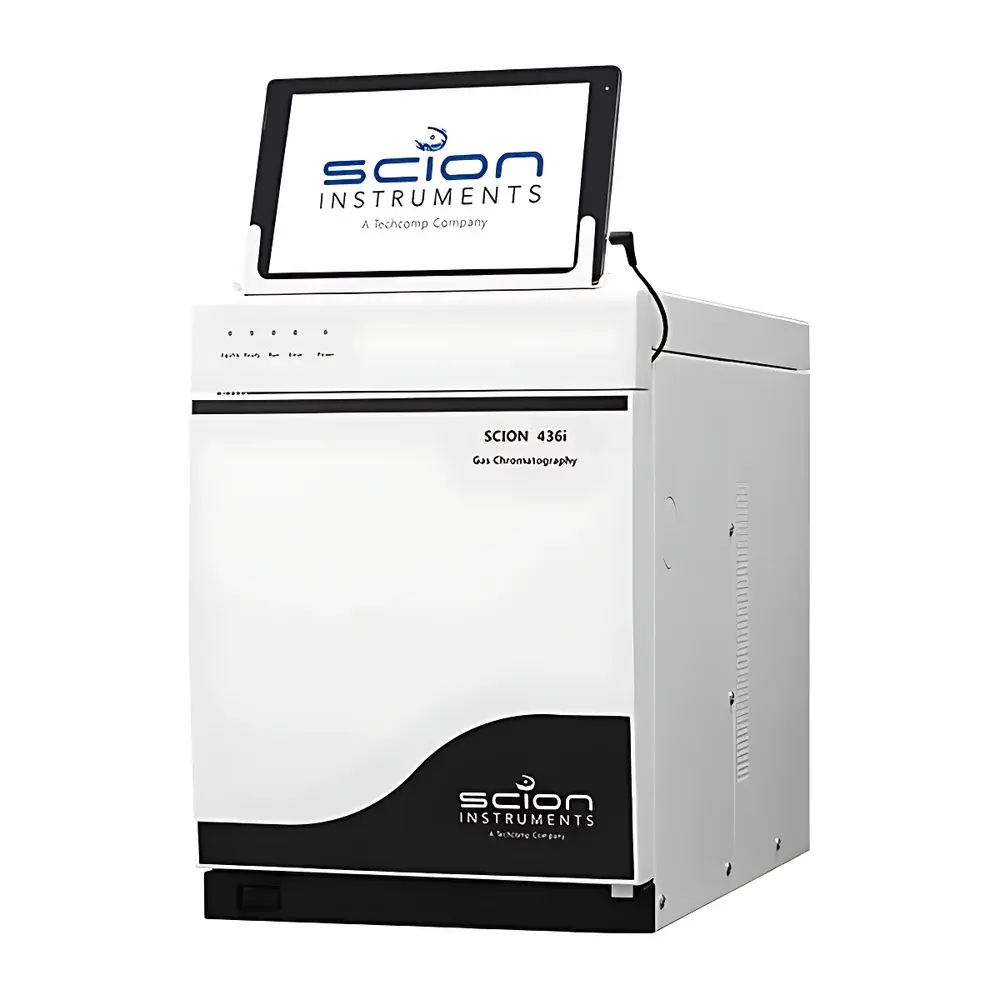
Scion 436i Gas Chromatograph
| Brand | Scion |
|---|---|
| Origin | Shanghai, China |
| Manufacturer Type | Original Equipment Manufacturer (OEM) |
| Regional Classification | Domestic Instrument |
| Model | 436i |
| Instrument Type | Laboratory Gas Chromatograph |
| Application Scope | General-Purpose |
| Oven Temperature Range | –100 °C to 450 °C |
| Maximum Ramp Rate | 150 °C/min |
| Maximum Cool-Down Rate | 150 °C/min |
| Carrier Gas Flow Range & Control | 0–1500 mL/min |
| Carrier Gas Pressure Range & Control | 0–150 psi |
| Injector Maximum Operating Temperature | 450 °C |
| Injector Pressure Setting Range | 0–150 psi |
| Injector Total Flow Setting Range | 0–1500 mL/min |
Overview
The Scion 436i Gas Chromatograph is a high-performance, laboratory-grade analytical instrument engineered for precision separation and quantitative analysis of volatile and semi-volatile organic compounds. Based on proven gas chromatographic principles—employing capillary column separation coupled with carrier-gas-driven solute elution—the 436i delivers robust thermal control, ultra-stable pneumatic regulation, and modular detector compatibility. Its heritage traces to legacy Varian and Bruker GC platform architectures, refined through Tianmei’s manufacturing integration in Shanghai. Designed for routine QC, research, and regulatory-compliant environments, the system supports method development, validation, and long-term operational stability under GLP and GMP-aligned workflows.
Key Features
- Ultra-wide oven temperature range (–100 °C to 450 °C) enabled by cryogenic cooling and high-temperature heating modules—ideal for early-eluting volatiles and late-eluting heavy compounds.
- High-speed thermal programming: up to 150 °C/min ramp and cool-down rates ensure rapid cycle times without compromising baseline stability or peak shape fidelity.
- Full Electronic Flow Control (EFC) across all gas channels—including split/splitless injectors and detectors—with pressure resolution of 0.001 psi and flow accuracy ≤±0.2% of setpoint.
- Modular inlet configuration: supports two interchangeable inlet types (e.g., Split/Splitless and Programmable Temperature Vaporizing) with independent pressure and flow control per channel.
- Detector flexibility: compatible with four detector options—FID, TCD, ECD, and NPD—with analog data acquisition at 600 Hz for high-resolution peak capture and deconvolution.
- Integrated 9-inch full-color touchscreen interface with multilingual support (13 languages), intuitive icon-based navigation, and embedded contextual help—including interactive maintenance videos and electronic operation manuals.
- Wireless tablet-based remote operation via secure local network—enabling real-time status monitoring, parameter adjustment, and sequence initiation from benchside or adjacent workstations.
Sample Compatibility & Compliance
The Scion 436i accommodates diverse sample introduction methods via optional accessories—including headspace samplers, liquid autosamplers (up to 160 vials), thermal desorption units, gas-tight syringe modules, and multi-mode autosamplers. It meets fundamental requirements for compliance-driven laboratories: hardware timestamps, audit-trail-enabled software logging, user-access controls, and electronic signature support align with FDA 21 CFR Part 11 readiness when deployed with CompassCDS. The system adheres to ISO/IEC 17025 calibration traceability frameworks and supports method validation per ICH Q2(R2), USP , and ASTM D3699/D6729 standards where applicable. All pneumatic components are certified for inertness and low bleed, minimizing background interference in trace-level analyses.
Software & Data Management
CompassCDS serves as the native chromatography data system—architected for client-server (C/S) deployment without dedicated acquisition servers. It natively integrates with major LIMS platforms (e.g., Thermo Fisher SampleManager, LabVantage, STARLIMS) via standard OPC UA and ASTM E1384 interfaces. Key software capabilities include IntelliUpdate™ retention time alignment (auto-adjusts retention windows during column aging or method transfer), customizable report templates compliant with ISO 17025 reporting clauses, and configurable audit trails covering method edits, sequence changes, and result reprocessing events. Data files conform to ANDI/NetCDF format for third-party processing interoperability. Software validation documentation packages—including IQ/OQ protocols and UAT test scripts—are available upon request for regulated environments.
Applications
- Food Safety: Pesticide residue screening (multi-residue GC-ECD/FID), food additive quantification (e.g., BHA/BHT, sorbates), flavor compound profiling in fermented beverages (GC-MS coupling ready), and migration testing of packaging migrants (e.g., BADGE, NOGE).
- Environmental Monitoring: VOC analysis in drinking water (EPA Method 524/624), ambient air toxics (TO-14/TO-15), soil extractables (SW-846 Method 8260), and landfill leachate characterization.
- Pharmaceutical & Biotech: Residual solvent testing per ICH Q3C guidelines (Class 1–3 solvents), herbal active constituent profiling (e.g., terpenes, alkaloids), and impurity identification in API synthesis intermediates.
- Polymer & Materials Science: Monomer purity assessment, plasticizer quantitation (e.g., phthalates), and extractables/leachables studies for medical device packaging.
FAQ
Is the Scion 436i compliant with 21 CFR Part 11?
Yes—when operated with CompassCDS configured in validated mode, the system supports electronic signatures, role-based access control, and immutable audit trails required for FDA-regulated submissions.
Can the 436i be integrated into an existing LIMS without additional server hardware?
Yes—CompassCDS uses a lightweight C/S architecture that allows direct LIMS connectivity over standard Ethernet; no separate acquisition server is required.
What is the minimum detectable pressure resolution for EFC modules?
The electronic pressure controllers achieve 0.001 psi resolution across the full 0–150 psi operating range.
Does the system support unattended overnight analysis?
Yes—combined with optional autosamplers and method-scheduled run sequences, the 436i supports fully automated batch processing with real-time failure alerts and auto-recovery logic.
Are column compensation algorithms included for retention time drift correction?
Yes—IntelliUpdate™ dynamically adjusts retention windows based on internal standard behavior or reference peaks, reducing manual revalidation frequency during extended method use.




