
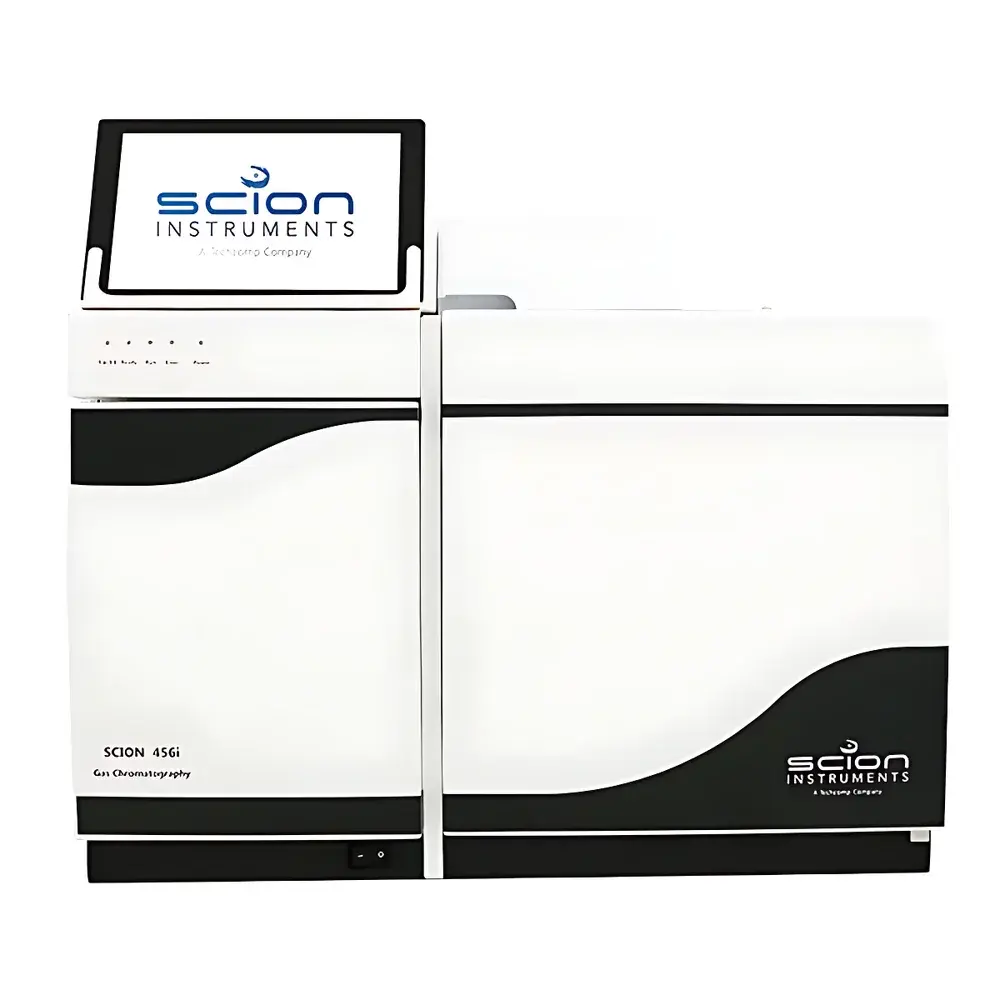
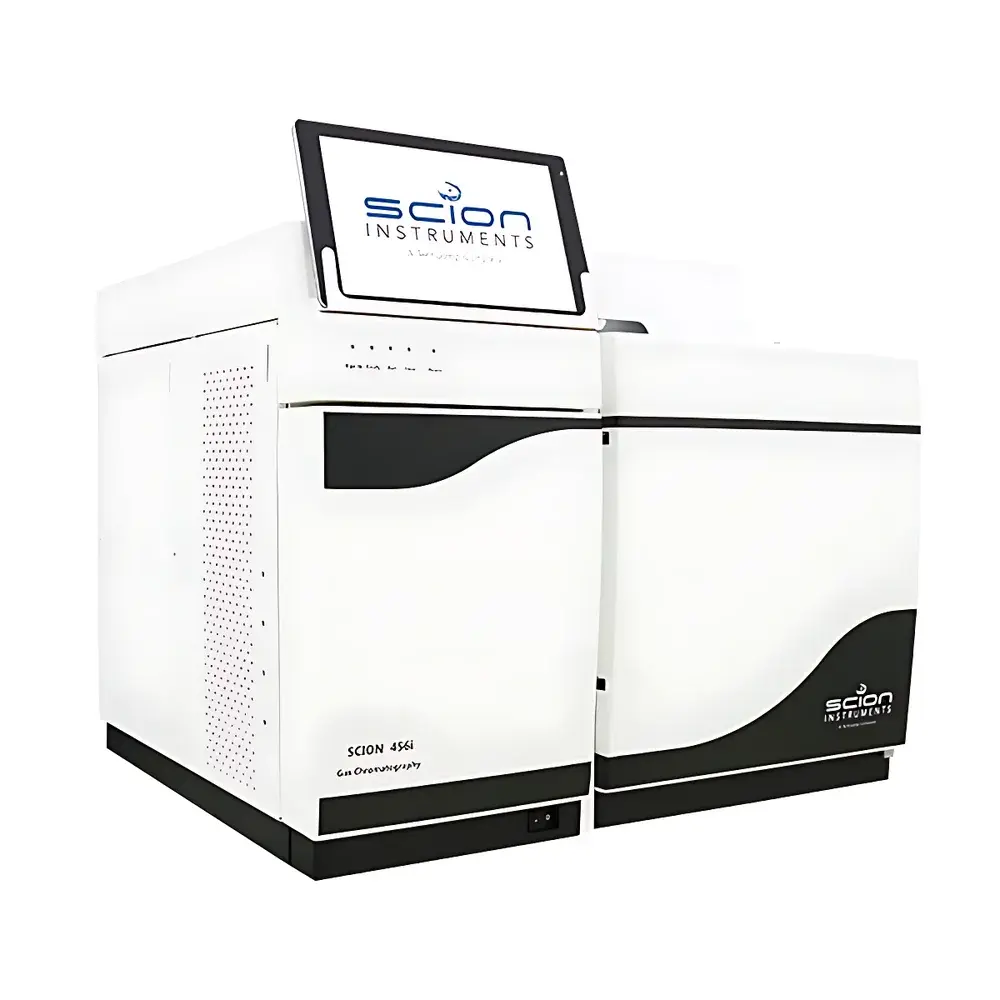
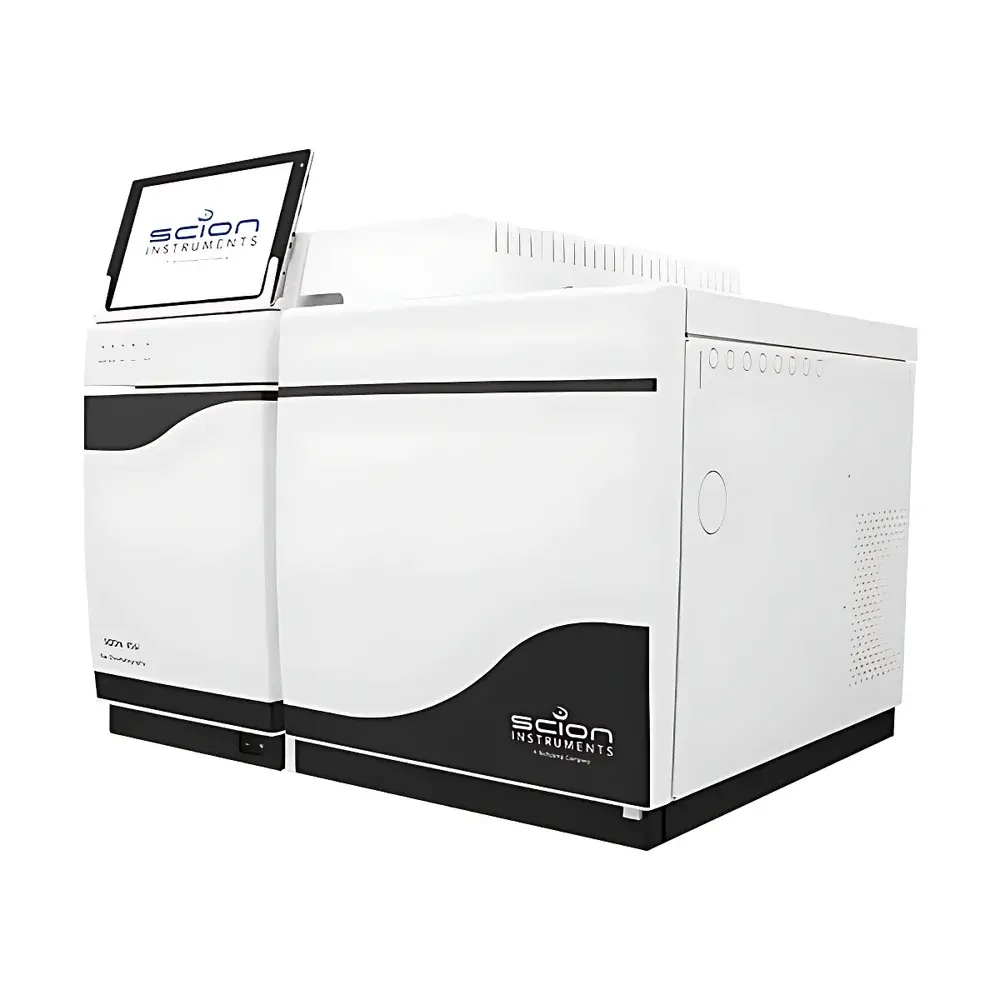
SCION 456i Gas Chromatograph
| Brand | SCION |
|---|---|
| Origin | Shanghai, China |
| Manufacturer Type | Original Equipment Manufacturer (OEM) |
| Regional Classification | Domestic (China) |
| Model | 456i |
| Instrument Type | Laboratory Gas Chromatograph |
| Application Scope | General-Purpose |
| Oven Temperature Range | –100 °C to 450 °C |
| Maximum Ramp Rate | 150 °C/min |
| Maximum Cool-Down Rate | 150 °C/min |
| Carrier Gas Flow Range & Control | 0–1500 mL/min |
| Carrier Gas Pressure Range & Control | 0–150 psi |
| Injector Maximum Operating Temperature | 450 °C |
| Injector Pressure Setting Range | 0–150 psi |
| Injector Total Flow Setting Range | 0–1500 mL/min |
Overview
The SCION 456i Gas Chromatograph is a high-performance, laboratory-grade analytical instrument engineered for precision separation and quantitative analysis of volatile and semi-volatile organic compounds. Based on robust capillary gas chromatography principles—employing temperature-programmed elution, precise carrier gas flow and pressure regulation via electronic pressure control (EPC), and thermally stable column oven architecture—the 456i delivers consistent retention time reproducibility and peak resolution across demanding routine and research applications. Designed and manufactured in Shanghai by Techcomp (Shanghai) Co., Ltd., the system inherits core technologies from legacy Varian and Bruker GC platforms, integrating modern digital instrumentation with proven chromatographic fidelity. Its modular architecture supports seamless integration into regulated environments, including those governed by ISO/IEC 17025, USP , ASTM D3699, and EPA Methods 502.2, 624, and 8260.
Key Features
- Advanced thermal management: Ultra-fast oven ramping and cooling (up to 150 °C/min) enables rapid method development and high-throughput sample turnover without compromising column stability or baseline integrity.
- Full electronic flow and pressure control (EFC/EPC): Dual-stage digital pneumatic control with 0.001 psi pressure resolution ensures exceptional retention time repeatability (<0.005 min RSD) and method transfer reliability.
- Modular injector and detector configuration: Supports multiple inlet types—including split/splitless, PTV, and cool-on-column—and detectors such as FID, TCD, ECD, and NPD—with high-speed data acquisition (≥500 Hz) and low-noise analog-to-digital conversion.
- Integrated mobile operator interface: Replaces fixed touchscreen with Wi-Fi–enabled tablet interface, enabling remote monitoring, real-time status visualization, and full instrument control from any location within the lab network.
- CompassCDS chromatography data system: Native client-server architecture compliant with FDA 21 CFR Part 11 requirements, featuring audit trail, electronic signatures, user role-based access, and automatic IntelliUpdate retention time calibration.
- On-device contextual support: Embedded operation manuals, maintenance video guides, and troubleshooting wizards accessible directly through the tablet UI—reducing dependency on external documentation and minimizing training overhead.
Sample Compatibility & Compliance
The SCION 456i accommodates a broad range of sample matrices—including aqueous extracts, headspace vials, thermal desorption tubes, and liquid-injection standards—via compatible autosamplers (e.g., HS-40, ALS-40, TD-40) and inlet modules. All hardware and firmware comply with IEC 61000-4 electromagnetic compatibility standards and meet CE marking requirements for safety and performance. The CompassCDS software implements ALCOA+ data integrity principles and supports GLP/GMP workflows through configurable audit trails, secure data archiving, and version-controlled method storage. Validation documentation packages—including IQ/OQ protocols and 21 CFR Part 11 readiness assessments—are available upon request for regulated laboratories.
Software & Data Management
CompassCDS provides a scalable, network-deployable platform supporting both standalone and multi-instrument C/S (client-server) configurations. It eliminates the need for dedicated acquisition servers and imposes no hard limit on connected instruments, facilitating expansion in centralized QC labs. Data files adhere to ASTM E1947-compliant .cdf format and are exportable to LIMS via standard ODBC or RESTful API interfaces. Integrated peak browsing tools allow rapid review of area counts, retention times, and calibration curves without reprocessing. Optional modules include residual solvent analysis kits (per ICH Q3C), pesticide screening libraries (EPA 3540C/8081B), and flavor/aroma compound databases for food and fragrance applications.
Applications
- Food Safety: Quantitative analysis of pesticide residues (organophosphates, carbamates), food additives (BHA/BHT, sorbates), volatile flavor compounds in fermented beverages, and migrant substances from packaging materials (e.g., phthalates, BADGE derivatives).
- Environmental Monitoring: Detection and quantification of VOCs in drinking water (EPA 524.4), ambient air canisters (TO-14/TO-15), soil extracts (EPA 8260D), and landfill leachates.
- Pharmaceutical & Biotech: Residual solvent profiling in APIs per ICH Q3C guidelines, assay of chiral intermediates using cyclodextrin columns, and stability-indicating methods for degradation product identification.
- Clinical & Forensic Toxicology: Blood alcohol testing (headspace-GC/FID), drug metabolite screening (urine extracts), and pyrolysis-GC analysis of synthetic cannabinoids.
FAQ
Does the SCION 456i support 21 CFR Part 11 compliance?
Yes—CompassCDS includes electronic signature capability, immutable audit trails, and role-based access controls validated for regulated pharmaceutical and clinical laboratories.
Can the 456i be integrated into an existing LIMS environment?
Yes—it supports direct ODBC connectivity and offers REST API endpoints for bidirectional data exchange with major LIMS platforms without requiring third-party middleware.
What is the maximum operating temperature for the split/splitless inlet?
The standard inlet operates up to 450 °C, with optional high-temperature seals available for extended durability at sustained elevated temperatures.
Is method transfer between SCION 436i and 456i systems feasible?
Yes—both platforms share identical pneumatic architecture, oven thermal dynamics, and CompassCDS software versioning, ensuring seamless method portability and inter-system comparability.
Does the system include validation documentation for GxP environments?
Standard delivery includes factory test reports; IQ/OQ protocols and risk-based validation support packages are available under separate service agreement.
Related Products



