
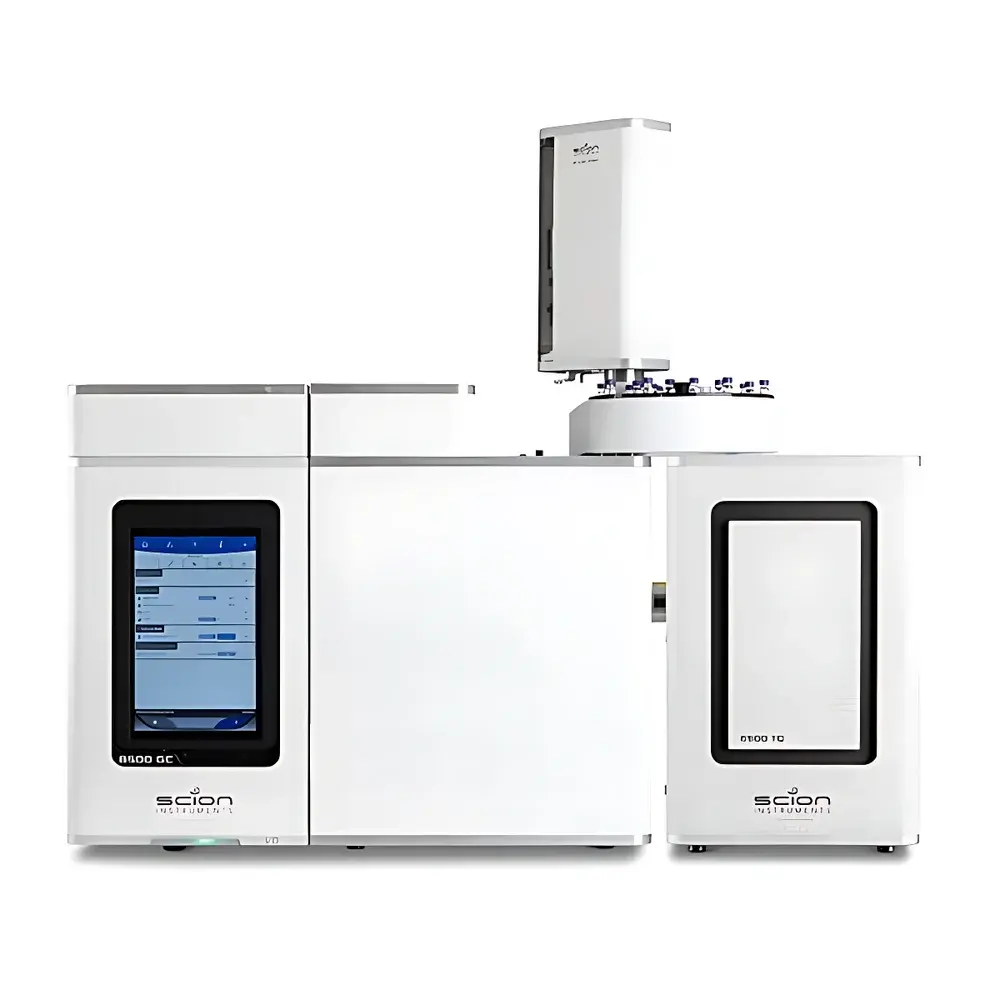
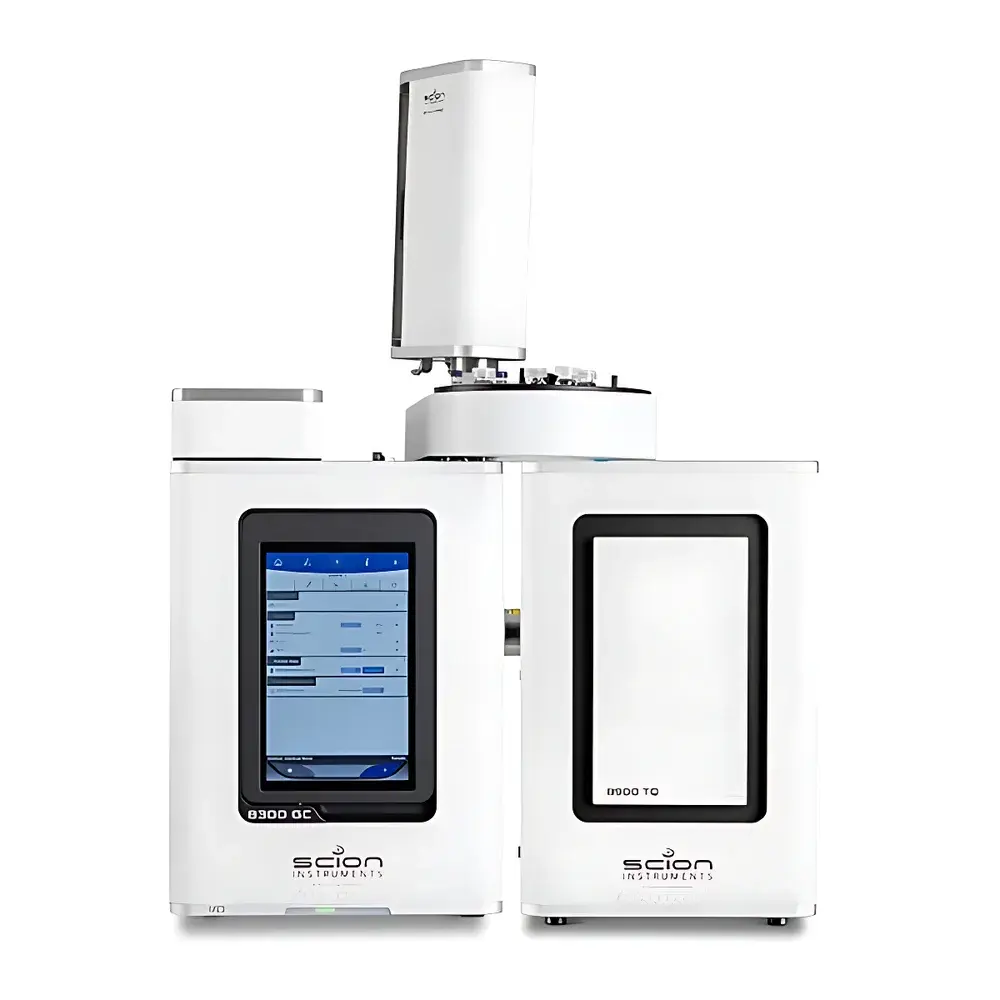
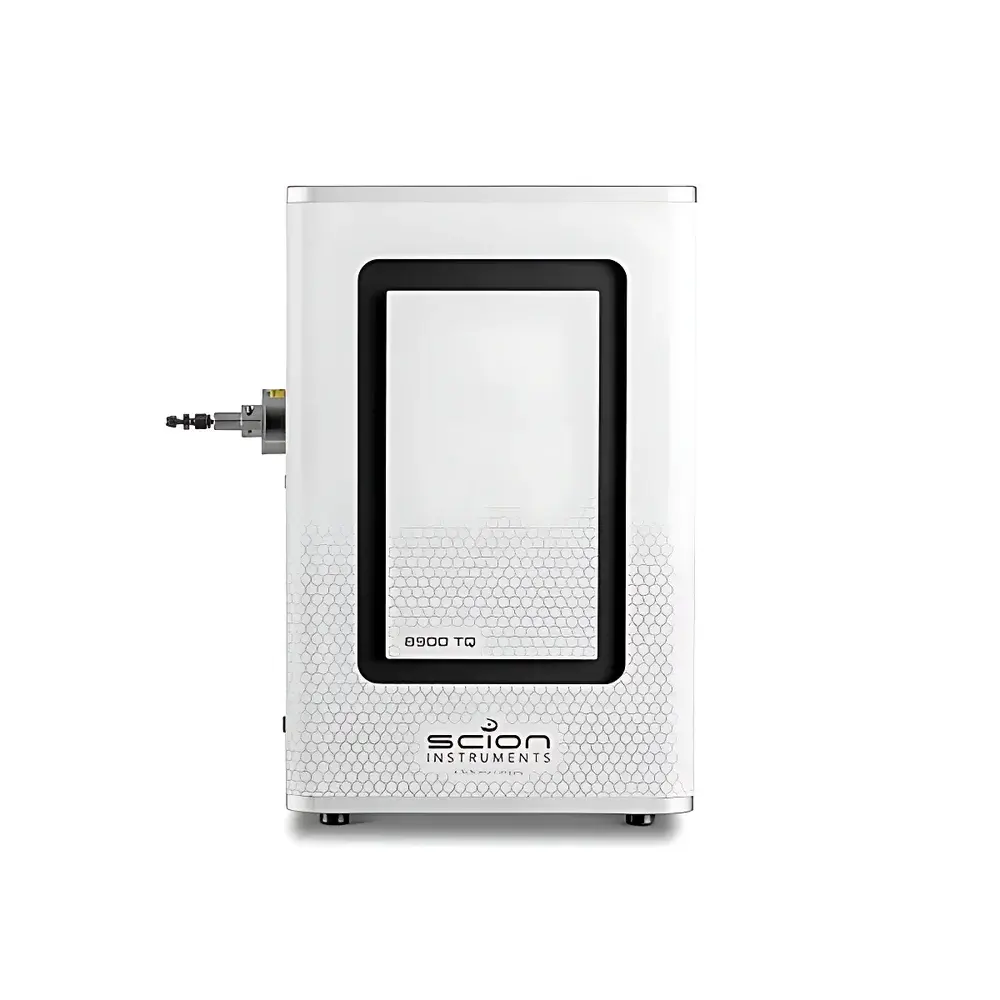
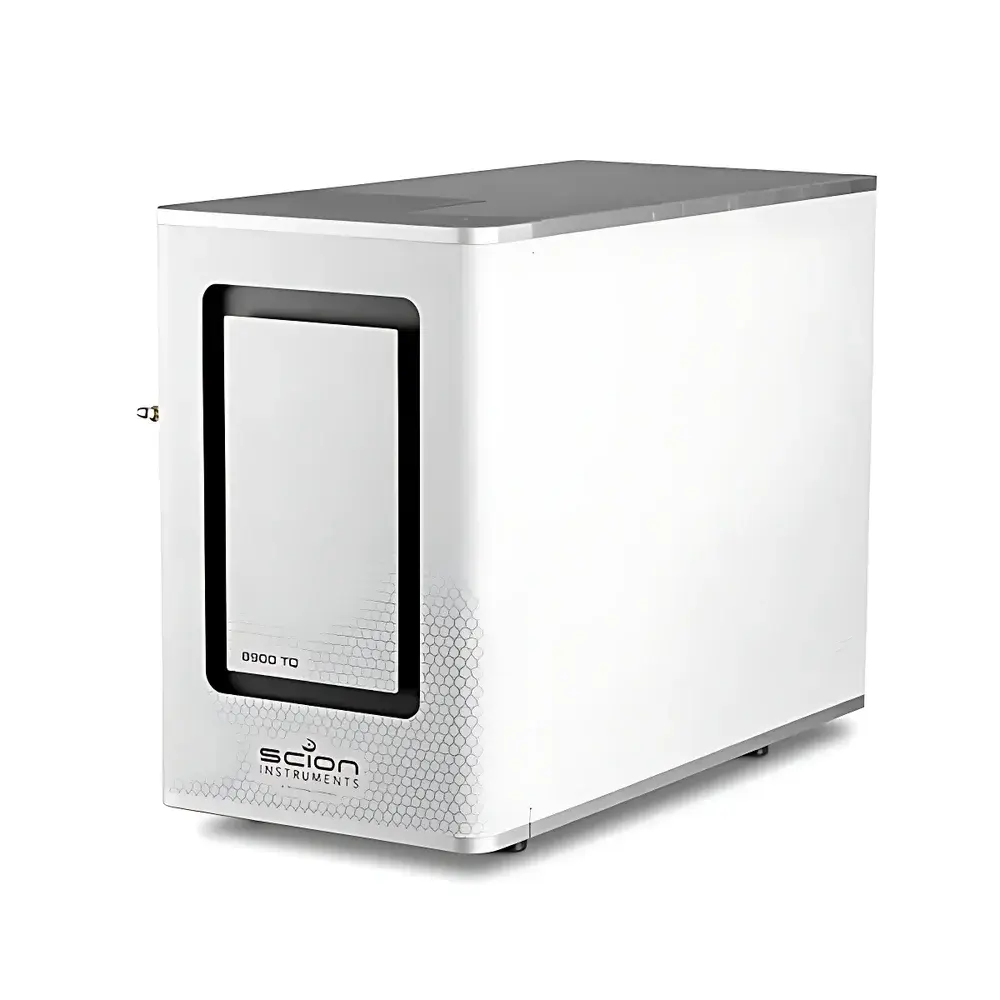
SCION 8900 TQ Triple Quadrupole Gas Chromatography-Mass Spectrometry System
| Brand | SCION |
|---|---|
| Origin | Netherlands |
| Manufacturer | SCION Instruments (a part of Antec Scientific Group) |
| Instrument Type | Triple Quadrupole Mass Spectrometer |
| GC Configuration | Conventional Capillary GC-Coupled |
| Mass Range | 1–1200 Da |
| Resolution | 0.7–4.0 Da (full width at half maximum, FWHM) |
| Sensitivity | ≥1500:1 S/N for 1 pg Octafluoronaphthalene (OFN) at m/z 272 |
| Scan Speed | 30,000 Da/s |
| Oven Ramp Rate | Up to 180 °C/min |
| Pressure Control Precision | ±0.001 psi |
Overview
The SCION 8900 TQ is a high-performance triple quadrupole gas chromatography–mass spectrometry (GC-MS/MS) system engineered for demanding quantitative and confirmatory analysis in regulated and research laboratories. Built upon proven SCION GC platform integration, the 8900 TQ employs tandem mass spectrometry via three quadrupole mass filters—Q1 (mass selection), Q2 (collision cell with controlled inert gas), and Q3 (mass analysis)—to deliver exceptional selectivity, sensitivity, and reproducibility in multiple reaction monitoring (MRM) mode. Its design prioritizes robustness, operational stability, and compliance-ready data integrity, making it suitable for routine analysis across environmental monitoring, food safety testing, pharmaceutical impurity profiling, agrochemical residue screening, and forensic toxicology workflows.
Key Features
- Lens-free ion transmission pathway: Eliminates electrostatic lenses to reduce ion scattering and signal loss, enhancing long-term sensitivity stability and simplifying daily tuning procedures.
- High-speed MRM acquisition: Achieves ultra-fast dwell times and cycle times optimized for multi-analyte quantitation without sacrificing peak fidelity or dynamic range.
- Dual ionization capability: Standard configuration supports both electron ionization (EI) and combined EI/chemical ionization (CI) modes, enabling flexible method development and compound characterization.
- Enhanced Dynamic Range (EDR) detector: A newly engineered discrete-dynode electron multiplier with extended linear response up to six orders of magnitude, preserving signal linearity during both positive- and negative-ion detection.
- High-precision pneumatic control: GC oven and inlet pressure regulation maintained within ±0.001 psi, ensuring retention time stability and method transferability across instruments.
- Compact, low-footprint architecture: Optimized internal geometry with multi-bend ion optics reduces background noise while conserving valuable bench space in modern analytical labs.
Sample Compatibility & Compliance
The SCION 8900 TQ accommodates standard capillary columns (0.10–0.53 mm ID) and interfaces seamlessly with split/splitless, PTV, and cold on-column injectors. It supports derivatized and underivatized volatile and semi-volatile organic compounds—including pesticides, PAHs, PCBs, phthalates, mycotoxins, and residual solvents. The system is designed to meet essential regulatory requirements including ISO/IEC 17025:2017, ASTM D7622–21 (for petroleum hydrocarbons), USP <621>, and EPA Methods 525.3, 8270, and 1613. Data acquisition and processing comply with 21 CFR Part 11 principles through audit-trail-enabled software controls, electronic signatures, and secure user access management.
Software & Data Management
Target Analysis Software provides an integrated workflow for targeted screening and quantitation, supporting simultaneous identification, confirmation, and calibration across hundreds of analytes in a single run. The software includes built-in spectral libraries (NIST, Wiley), automated peak integration with customizable baseline algorithms, batch processing with QC flagging, and report generation compliant with GLP/GMP documentation standards. Raw data files are stored in open-format .cdf (NetCDF) containers, ensuring long-term archival integrity and third-party software interoperability. All instrument methods, sequences, and results are managed within a centralized project database with version control and exportable metadata tags.
Applications
- Environmental analysis: Quantification of persistent organic pollutants (POPs), endocrine disruptors, and emerging contaminants in water, soil, and air matrices.
- Food safety: Multi-residue pesticide screening in fruits, vegetables, grains, and animal-derived products per EU SANTE/11312/2021 guidelines.
- Pharmaceutical quality control: Residual solvent analysis (ICH Q3C), genotoxic impurity detection, and extractables/leachables profiling.
- Agricultural science: Metabolite profiling in plant tissues and soil microbiome studies involving volatile organic signaling molecules.
- Academic research: Method development for complex mixture analysis, isotopic labeling experiments, and reaction mechanism elucidation using selective fragmentation pathways.
FAQ
What ionization sources are supported on the SCION 8900 TQ?
The system ships with dual-mode EI/CI source capability as standard, allowing rapid switching between ionization modes without venting the vacuum system.
Is the 8900 TQ compatible with legacy SCION GC systems?
Yes—it is fully compatible with SCION 436-GC and 456-GC platforms via standardized GC-MS interface hardware and firmware synchronization protocols.
Does the system support scheduled MRM transitions?
Yes, Target Analysis Software enables retention-time-based scheduling of MRM transitions to maximize dwell time per analyte and improve quantitative precision.
What vacuum system configuration is used?
A high-capacity turbomolecular pump (≥300 L/s for heavy gases) ensures rapid pump-down and stable operating pressure across extended runs, even with high-flow carrier gas conditions.
Can the instrument be validated for GxP environments?
Yes—the platform supports IQ/OQ/PQ documentation packages, and software features include electronic signatures, audit trails, and configurable user roles aligned with FDA 21 CFR Part 11 and EU Annex 11 expectations.
Related Products




