
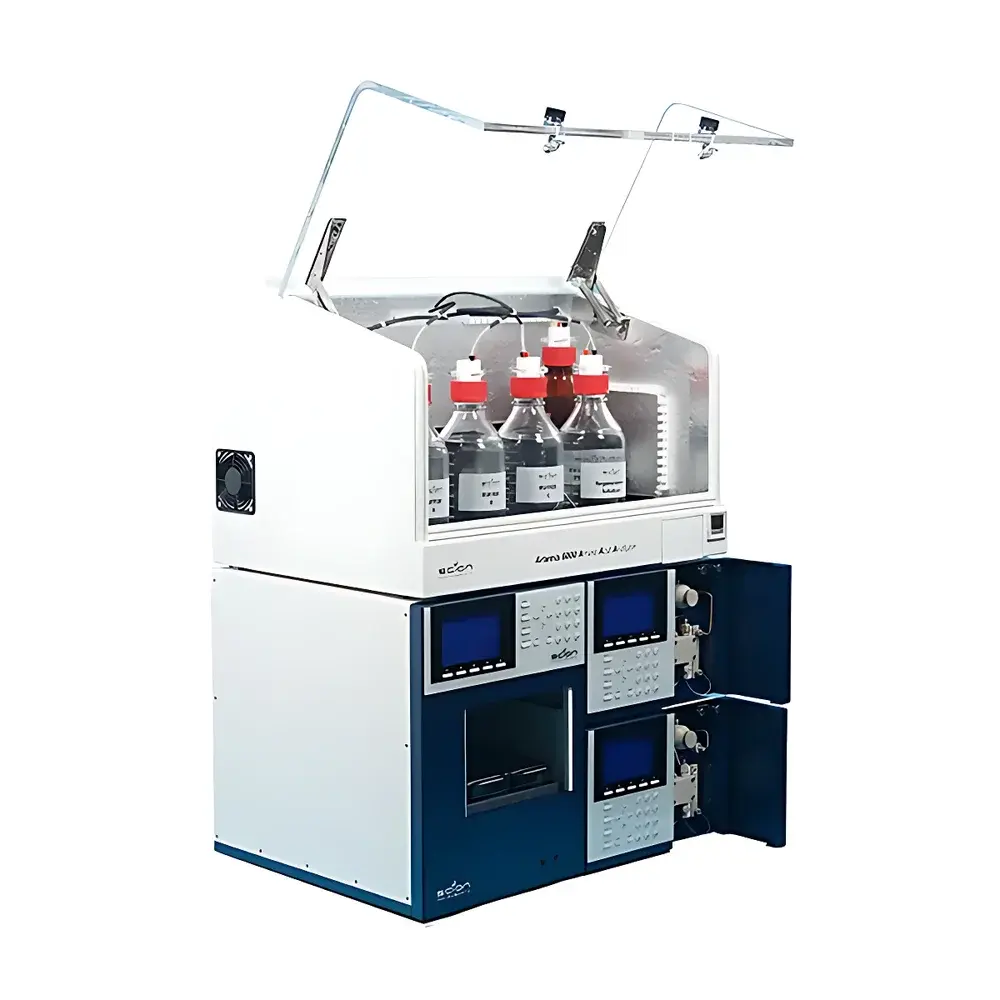
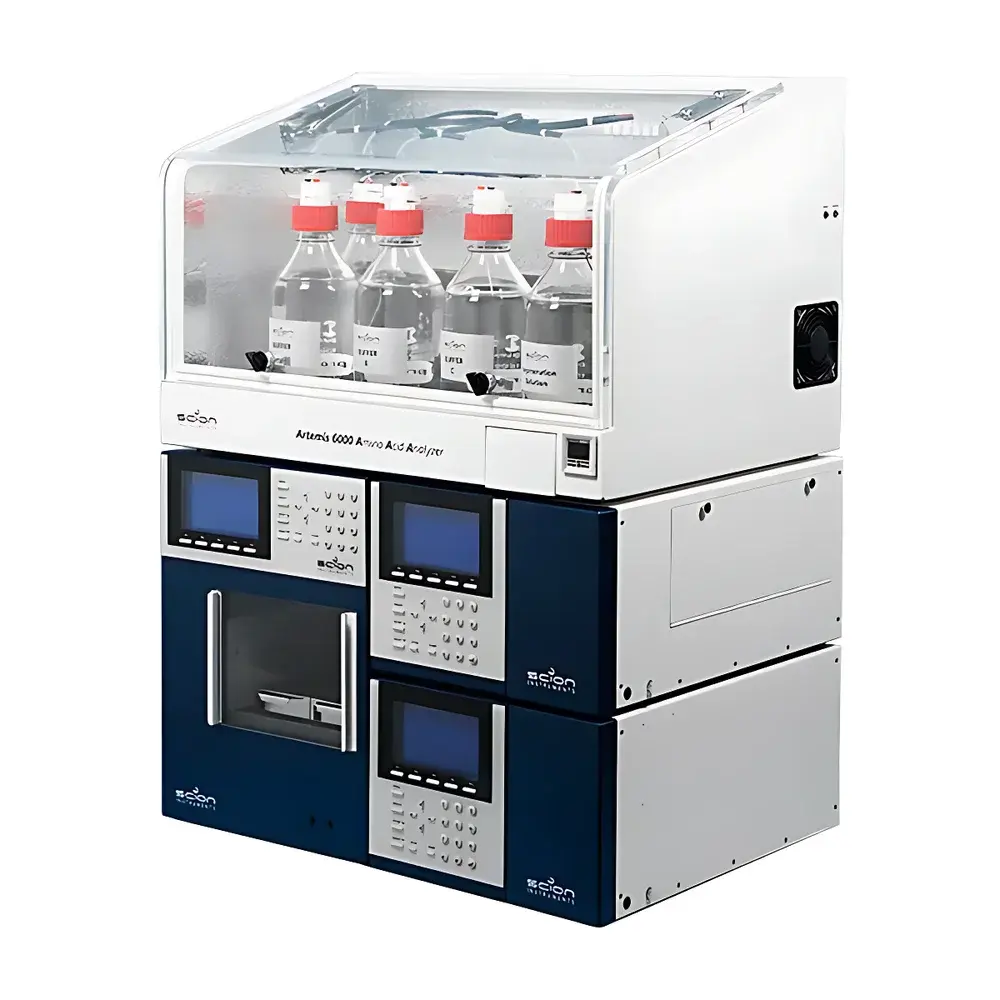
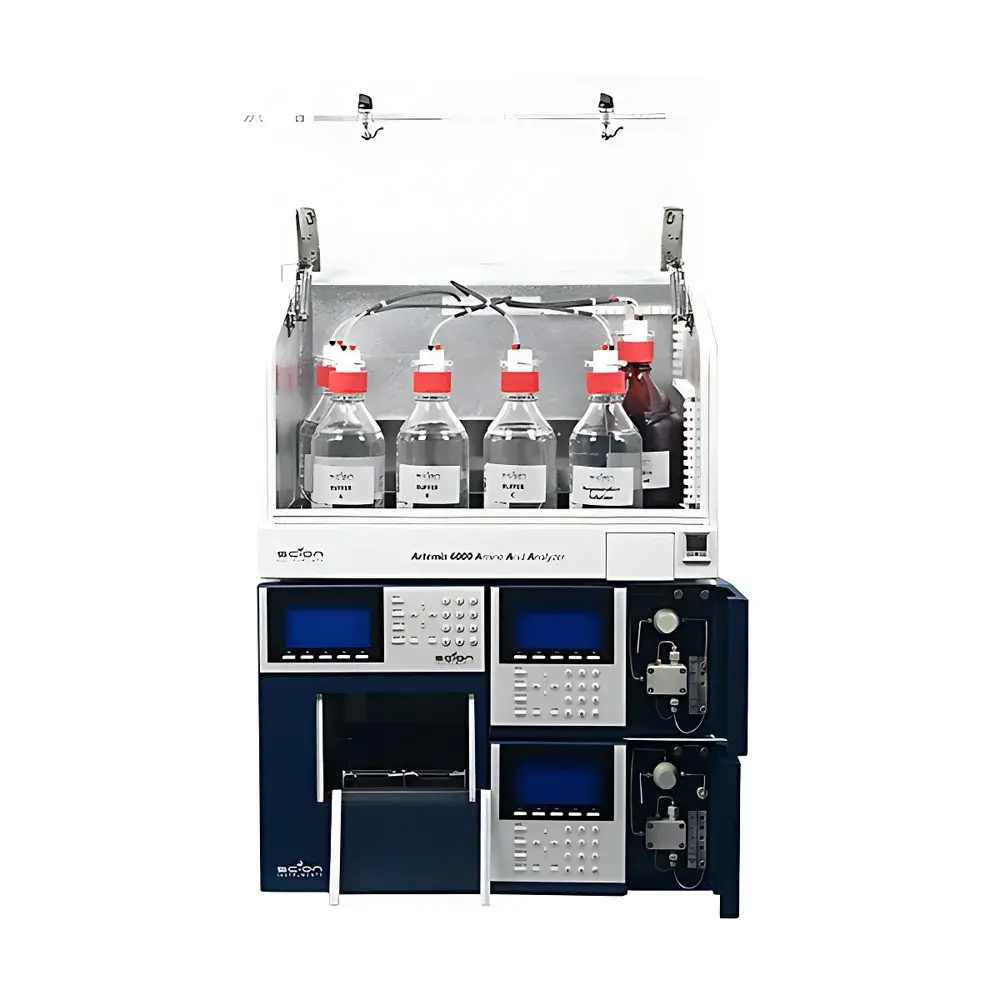
SCION Artemis 6000 Fully Automated Amino Acid Analyzer
| Brand | SCION |
|---|---|
| Origin | Netherlands |
| Manufacturer Type | Original Equipment Manufacturer (OEM) |
| Origin Category | Imported |
| Model | Artemis 6000 |
| Instrument Type | Post-Column Derivatization System |
| Pump Flow Rate | 0.01–10.0 mL/min |
| Maximum Pump Pressure | 40 MPa |
| Autosampler Injection Volume | 0–500 µL |
| Autosampler Temperature Control | Yes |
| Post-Column Reactor Temperature Range | Ambient to 180 °C |
| Detection Wavelengths | 570 nm and 440 nm |
| Flow Cell Volume | 8 µL |
Overview
The SCION Artemis 6000 is a fully automated, high-performance amino acid analyzer engineered for precision, reproducibility, and regulatory compliance in demanding laboratory environments. It implements the classical ninhydrin-based post-column derivatization method—recognized as the reference technique by ISO 13903, AOAC Official Method 994.12, and USP —for quantitative analysis of both free and hydrolyzed amino acids in complex matrices including animal feed, pharmaceutical excipients, biologics, and clinical specimens. Unlike conventional ion-exchange HPLC systems requiring four to five gradient buffers, the Artemis 6000 achieves complete resolution of all 20 proteinogenic amino acids—and key non-proteinogenic species such as taurine, cystine, and hydroxyproline—using only two optimized eluents for hydrolysate analysis (three for physiological fluids), significantly reducing solvent consumption, method development time, and operational cost without compromising chromatographic fidelity.
Key Features
- Integrated dual-pump gradient delivery system (A6100): Four-channel quaternary gradient pump with integrated online degasser, supporting up to 100-step gradient profiles and delivering flow stability ≤0.1% RSD over 24 h.
- High-precision, refrigerated autosampler (A6200): Dual 60-position sample racks with Peltier-cooled zone (4–40 °C), syringe-driven injection (0–500 µL, ±0.5% accuracy), and optional pre-column derivatization or on-line dilution modules.
- Compact, inert-flow-path derivatization unit (A6300): Combines column oven (ambient–120 °C), high-temperature reaction coil (ambient–180 °C), automatic post-run reactor cleaning cycle, and dual-wavelength photometric detection (570 nm for primary amines, 440 nm for secondary amines like proline).
- Intelligent solvent manager (A6400): Refrigerated (4–10 °C), N₂-purged solvent reservoirs with individual solenoid valves and transparent shield for real-time monitoring; eliminates buffer oxidation and ensures long-term baseline stability.
- Full-system inertization: All fluidic paths—from pump heads to detector flow cell—are constructed from PEEK, titanium, or passivated stainless steel to prevent metal-catalyzed degradation of labile amino acids (e.g., cysteine, tryptophan).
Sample Compatibility & Compliance
The Artemis 6000 supports diverse sample types across regulated and research workflows: acid-hydrolyzed proteins (6M HCl, 110 °C, 22–24 h), enzymatically digested peptides, plasma/serum, urine, plant extracts, and formulated feedstuffs. Its hardware architecture and software framework are designed to meet stringent data integrity requirements: full 21 CFR Part 11 compliance—including electronic signatures, audit trails with immutable timestamps, role-based access control, and secure user authentication—is embedded at the firmware and application layer. The system adheres to GLP and GMP principles and supports IQ/OQ/PQ documentation packages aligned with ISO/IEC 17025 and ASTM E2500-15.
Software & Data Management
AminoChrom™ Workstation provides complete bidirectional instrument control, method development, peak integration, calibration curve generation (linear, quadratic, weighted), and customizable reporting (PDF, CSV, XML). It supports multi-language UI (English, German, French, Spanish, Chinese), automated QC flagging (e.g., retention time drift >0.5%, peak area RSD >2%), and seamless LIMS integration via ASTM E1384-compliant interfaces. All raw data, methods, and audit logs are stored in encrypted, timestamped databases with configurable retention policies and automatic backup scheduling.
Applications
- Quality control of amino acid supplements and fortified animal feed (AOAC 982.30, ISO 13903)
- Release testing of therapeutic proteins and peptide APIs (ICH Q5E, USP )
- Stability-indicating assays for oxidized or deamidated variants
- Clinical nutrition assessment (plasma amino acid profiling per CLIA guidelines)
- Raw material verification for nutraceutical and biopharma manufacturing
FAQ
Does the Artemis 6000 support both hydrolysate and physiological fluid analysis in a single method sequence?
Yes—the system’s flexible gradient programming and three-buffer capability for biological fluids enable unattended switching between sample types without hardware reconfiguration.
Is column regeneration or backflushing supported?
Yes—AminoChrom™ includes pre-programmed column maintenance routines, including high-pH wash, organic flush, and equilibration steps, all executed under validated conditions.
Can the system be integrated into an existing enterprise network with centralized IT security policies?
Yes—it supports LDAP/Active Directory authentication, TLS 1.2+ encrypted communications, and operates within standard VLAN and firewall configurations without requiring open inbound ports.
What is the typical runtime for a full 23-amino-acid hydrolysate analysis?
Under standard conditions (25 min gradient), total cycle time—including injection, separation, derivatization, detection, and column re-equilibration—is ≤32 minutes, with intra-day precision <1.2% RSD for peak area.
Are consumables (columns, buffers, derivatization reagents) supplied as part of a validated kit?
Yes—SCION offers certified amino acid analysis kits (e.g., FeedKit™, PharmaKit™), each containing pre-tested columns, pH-stabilized buffers, ninhydrin reagent, and system suitability standards traceable to NIST SRM 2389a.
Related Products





