
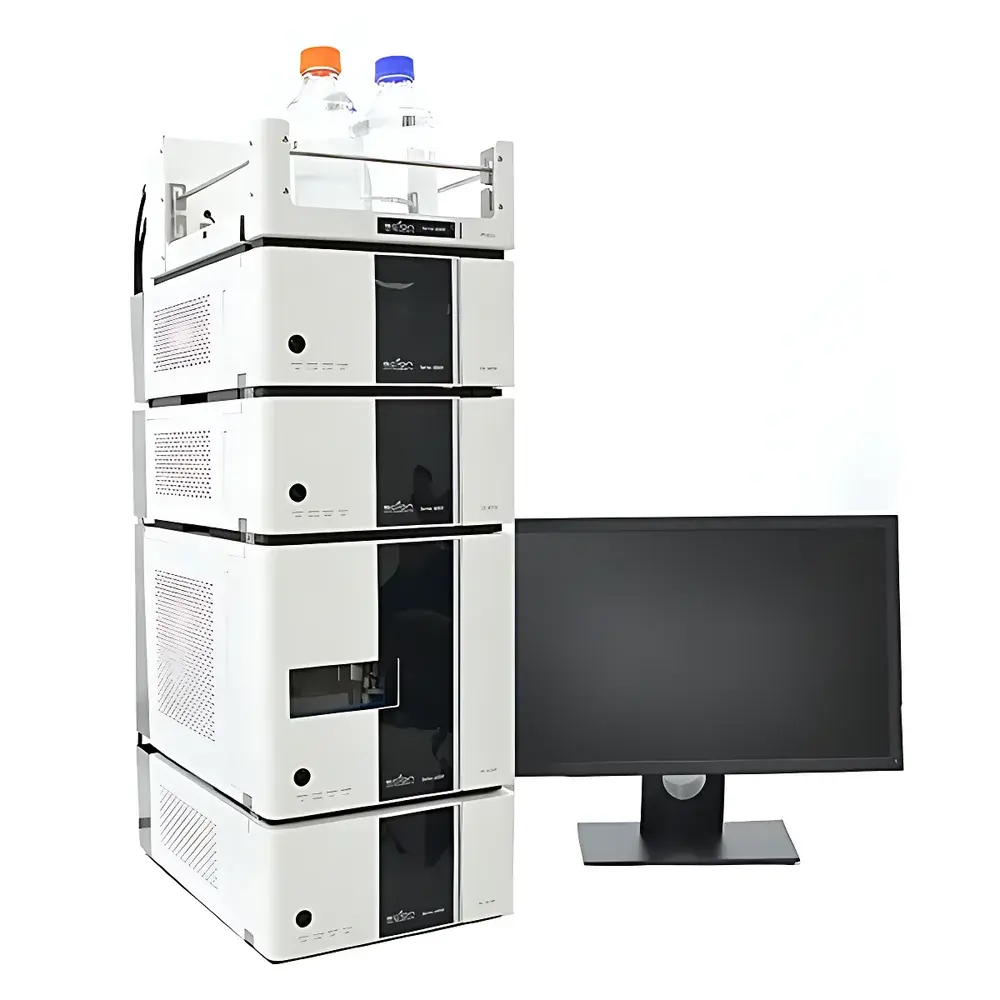
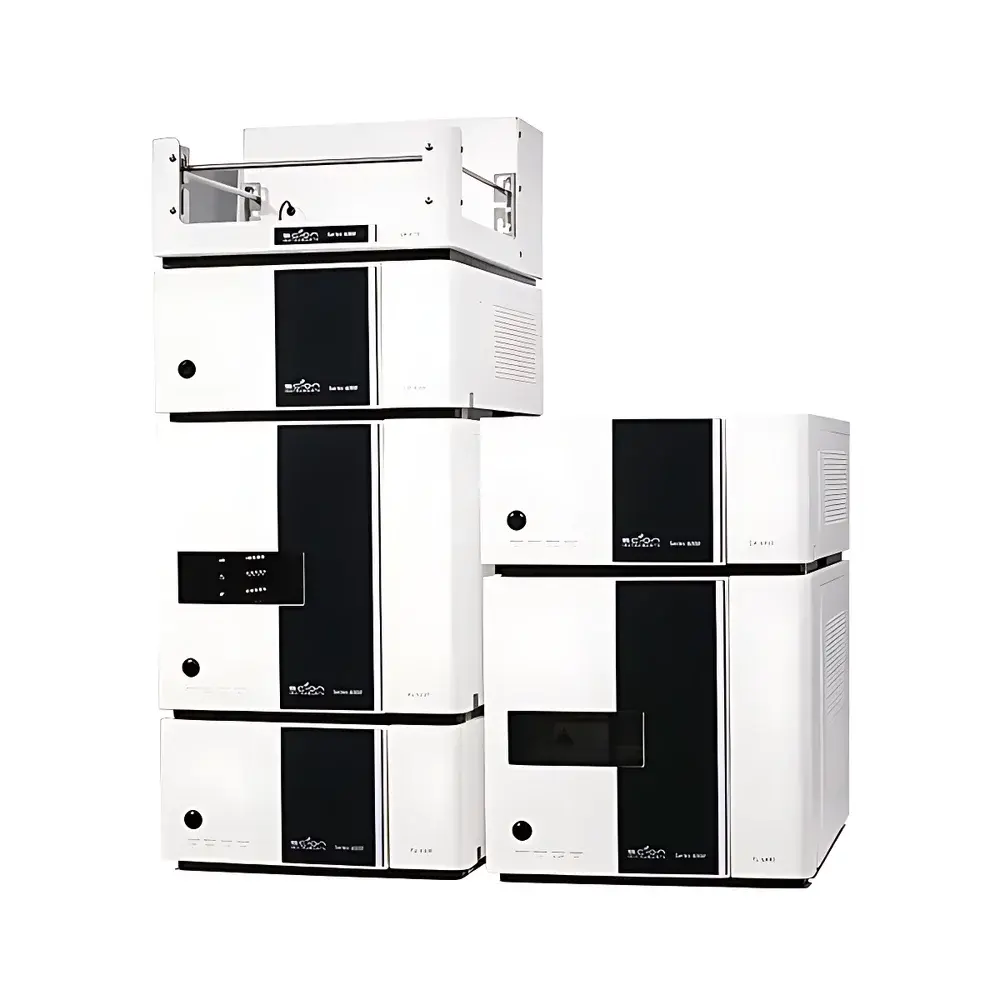
SCION Compass CDS Chromatography Data System (CDS) Workstation
| Brand | SCION |
|---|---|
| Origin | Shanghai, China |
| Manufacturer Type | Original Equipment Manufacturer (OEM) |
| Regional Classification | Domestic |
| Model | Compass CDS |
| Price Range | USD 35,000 – 85,000 |
| Instrument Type | Conventional High-Performance Liquid Chromatograph (HPLC) |
| Application Scope | General-Purpose Analytical HPLC |
| Flow Rate Range | 0.001–5.000 mL/min |
| Maximum Pressure | 60 MPa |
| Flow Accuracy | ≤0.05% RSD |
| Injection Positions | 100 × 2 mL vials |
| Injection Volume | 0.1–50 µL (standard), 5–2250 µL (optional) |
| Column Oven Temperature Range | Ambient to 85 °C |
| UV-Vis Wavelength Range | 190–600 nm |
| Data Acquisition Frequency | 100 Hz |
Overview
The SCION Compass CDS Chromatography Data System is a fully integrated, regulatory-compliant software and hardware platform engineered for precision control, acquisition, processing, and reporting of data from SCION 6000-series HPLC systems. Built upon a modular architecture, the system supports both standalone and client-server deployments and is designed for laboratories operating under Good Laboratory Practice (GLP), Good Manufacturing Practice (GMP), and FDA 21 CFR Part 11 requirements. Its core measurement principle relies on high-pressure liquid chromatographic separation coupled with real-time photometric, fluorometric, or mass-sensitive detection — enabling quantitative and qualitative analysis across pharmaceutical, environmental, food safety, and academic research applications. The Compass CDS integrates seamlessly with SCION’s PU-6100 binary/high-pressure quaternary pump, AS-6210/6220 refrigerated autosampler, OV-6310 Peltier-cooled column oven, and a suite of validated detectors (UV-6410, DA-6430, FL-6440, ELS-6450, RI-6460), forming a complete, audit-ready analytical workflow.
Key Features
- Regulatory-compliant architecture supporting full electronic signature, role-based user permissions, and immutable audit trails per FDA 21 CFR Part 11 and Annex 11 guidelines
- Real-time flow control via “pre-mix high-pressure blending” and “high-frequency pressure feedback” technology, delivering gradient accuracy ≤0.15% absolute and retention time reproducibility <0.01 min RSD (n=6)
- Modular hardware control: all components — pump, autosampler, column oven, and detectors — are fully remote-controllable via the CDS GUI without external relay boxes or proprietary interface cards
- Low-dead-volume autosampler with <0.01% carryover (tested with caffeine in acetonitrile/water), configurable temperature control (4–40 °C), and dual-wash capability using internal or external solvent lines
- Peltier-assisted column oven (OV-6310) with active air circulation, maintaining ±0.1 °C stability across 5–80 °C; accommodates up to three 250 mm columns plus guard cartridges
- Detector flexibility: interchangeable UV, DAD, fluorescence, ELSD, and RI modules with standardized digital I/O and synchronized 100 Hz data streaming
Sample Compatibility & Compliance
The Compass CDS platform supports a broad range of sample matrices — including aqueous extracts, organic solvent-solubilized APIs, complex natural product fractions, and thermally labile biomolecules — through its wide operational window: flow rates from 1 μL/min (microbore applications) to 5 mL/min (prep-scale), pressures up to 60 MPa (8700 psi), and column temperatures from ambient to 85 °C. All detector modules meet ISO/IEC 17025 traceability requirements for calibration, with built-in Hg-lamp wavelength verification (DA-6430, FL-6440) and thermal stabilization (RI-6460, ELS-6450). The system complies with ASTM D7097 (ELSD validation), USP (chromatographic system suitability), and ICH Q2(R2) guidelines for method validation. Electronic records generated by Compass CDS satisfy ALCOA+ principles (Attributable, Legible, Contemporaneous, Original, Accurate, Complete, Consistent, Enduring, Available) as verified during third-party GxP readiness assessments.
Software & Data Management
Compass CDS employs a dual-mode software architecture: single-user desktop mode and scalable client-server deployment with centralized database management (Microsoft SQL Server or PostgreSQL). The GUI features dockable, resizable panels, customizable method templates, and context-aware toolbars optimized for routine QC and exploratory R&D workflows. Data processing includes intelligent peak detection (adaptive thresholding and second-derivative algorithms), baseline correction (rolling ball and polynomial fitting), and integration validation (peak symmetry, tailing factor, resolution metrics). Reporting supports dynamic template generation (PDF, CSV, XML), batch report consolidation, and direct export to LIMS via HL7 or RESTful API endpoints. All user actions — method edits, sequence modifications, reprocessing events — are logged with timestamps, IP addresses, and operator IDs in an encrypted, tamper-evident audit trail compliant with 21 CFR Part 11 Subpart B.
Applications
- Pharmaceutical QC: Assay, related substances, residual solvents, and dissolution testing per USP monographs
- Biopharmaceutical characterization: Size-exclusion chromatography (SEC) of mAbs, ion-exchange analysis of charge variants
- Food & beverage: Mycotoxin screening (aflatoxins, ochratoxin A), pesticide multiresidue analysis, vitamin quantification
- Environmental monitoring: PAHs, PCBs, and endocrine disruptors in water and soil extracts
- Natural products: Saponin profiling, flavonoid fingerprinting, and alkaloid isolation tracking using dual-detection (UV + ELSD) configurations
FAQ
Does Compass CDS support networked instrument control without a dedicated acquisition server?
Yes. Compass CDS uses a lightweight, embedded communication service that enables direct Ethernet-based control of up to 32 HPLC channels per server instance — no separate acquisition server license required.
Can the system be validated for 21 CFR Part 11 compliance out-of-the-box?
Compass CDS ships with IQ/OQ documentation templates, a risk-based validation guide, and preconfigured electronic signature workflows — enabling labs to execute installation and operational qualification within standard GxP timelines.
Is raw data stored in a proprietary binary format?
No. All chromatograms and metadata are saved in vendor-neutral, open-standard formats: .cdf (NetCDF-based) for raw signals and .xml for method/sequence definitions — ensuring long-term archival integrity and third-party software interoperability.
What detector compatibility options exist beyond UV and DAD?
The platform natively supports SCION’s FL-6440 (fluorescence), ELS-6450 (evaporative light scattering), and RI-6460 (refractive index) detectors, each with hardware-synchronized timing, temperature-stabilized flow cells, and detector-specific calibration routines.
How is data integrity maintained during power failure or unexpected shutdown?
The CDS implements journaling file system protocols and automatic checkpointing: all acquisition buffers are mirrored to non-volatile storage every 5 seconds, and sequences resume from the last validated injection point upon recovery.
Related Products



