
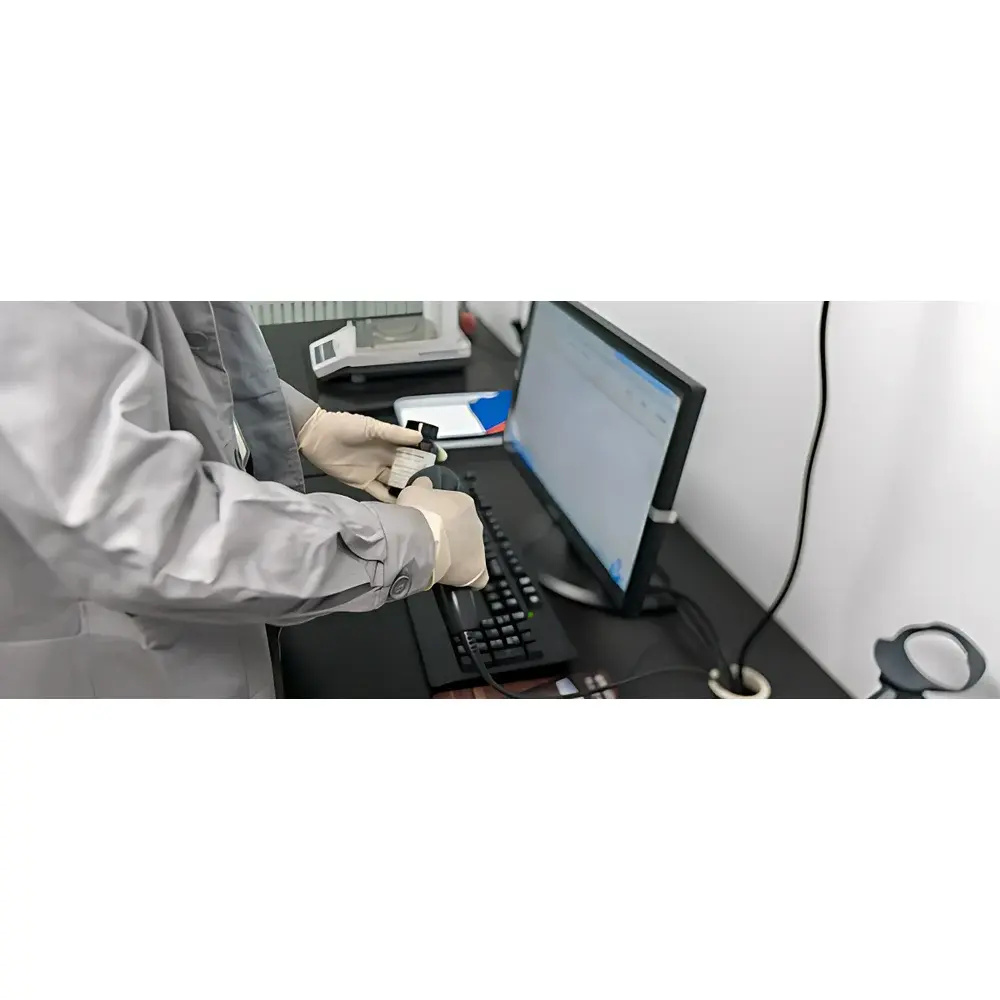
SDEW100 Weighing Management System by Sundy
| Brand | Sundy |
|---|---|
| Origin | Hunan, China |
| Manufacturer Type | Authorized Distributor |
| Origin Category | Domestic |
| Model | SDEW100 |
| Pricing | Upon Request |
Overview
The SDEW100 Weighing Management System by Sundy is a laboratory-grade, PC-based digital weighing integration platform engineered for coal quality laboratories and thermal power plant testing centers. It operates on the principle of automated mass data acquisition, synchronization, and traceable calculation—leveraging RS232/USB-connected analytical balances as primary input devices to capture sample weights in real time. The system does not perform physical measurements itself; rather, it serves as a centralized data orchestration layer that interfaces with core coal analysis instruments—including muffle furnaces, drying ovens, calorimeters, sulfur analyzers, and CHN elemental analyzers—to unify sample identification, weight registration, and standardized calculation workflows per ASTM D3172, ISO 11722, ISO 1171, and GB/T 212–2008. By eliminating manual transcription of mass values and enforcing structured data entry protocols, the SDEW100 ensures full auditability of the weighing step—the critical first variable in proximate analysis, ultimate analysis, and combustion-related indices.
Key Features
- Integrated balance communication module supporting real-time weight acquisition from single or dual analytical balances (dual-scale management), with configurable auto-zero, stability threshold, and tare logic.
- Preloaded calculation engines for standard coal test methods: Proximate Analysis (Moisture, Ash, Volatile Matter, Fixed Carbon), Total Moisture (Method A/B/C), Unburned Carbon in Fly Ash, Coal-Water Slurry Analysis, Coal Fineness (R90/R200), Hardgrove Grindability Index (HGI), and Caking Index (G-value).
- Role-based access control with administrator-defined user accounts (name, employee ID, password), enforcing strict data isolation—individual analysts can only view or edit their own records unless granted elevated privileges.
- Multi-modal sample identification: barcode scanning (via integrated USB scanner support) or manual alphanumeric entry with built-in validation rules for sample ID format and batch consistency.
- Batch weighing mode enabling sequential processing of up to 24 samples per session, with automatic timestamping, weight logging, and status flagging (e.g., “pre-drying”, “post-ignition”, “cooling complete”).
- Local SQLite database with encrypted storage, supporting filtered historical query by date range, analyst ID, sample ID, or test type; all entries include metadata (operator, instrument ID, balance serial, software version).
- Configurable reporting engine generating PDF/CSV reports compliant with internal QA requirements—covering raw weights, intermediate calculations, final results, and measurement uncertainty flags where applicable.
Sample Compatibility & Compliance
The SDEW100 is validated for use with solid fossil fuel samples—primarily bituminous, sub-bituminous, lignite, anthracite, and biomass co-fuels—within particle size ranges typical for ASTM D3172 (≤0.2 mm) and ISO 11722 (≤0.5 mm). All data handling conforms to GLP principles: each weighing event is immutably logged with operator ID, UTC timestamp, balance model/serial, and environmental metadata (if external hygrometer/thermometer inputs are enabled). The system supports 21 CFR Part 11 readiness via optional electronic signature modules and audit trail export (CSV/XML), facilitating regulatory submissions for ISO/IEC 17025-accredited laboratories.
Software & Data Management
The application runs on Windows 10/11 (64-bit) and utilizes a client-server architecture when network-deployed. Local operation requires no internet connectivity; cloud sync is optional and TLS 1.2–encrypted. Data exchange with Sundy-brand calorimeters (e.g., SDACM series), sulfur analyzers (SDS series), and CHN analyzers (SDCHN series) occurs via TCP/IP or RS232 using proprietary but documented ASCII protocol frames—ensuring sample ID and net weight are transmitted prior to instrument start-up. Third-party instrument integration (e.g., LECO, PerkinElmer, Elementar) is supported through configurable ASCII/Modbus RTU mapping templates, subject to hardware-level COM port availability and vendor permission.
Applications
- Coal preparation plants performing daily quality control of feedstock and blend verification.
- Power generation labs conducting routine proximate/ultimate analysis for boiler efficiency modeling and emissions compliance (e.g., SO₂, NOₓ prediction).
- Third-party testing laboratories requiring ISO/IEC 17025-compliant data lineage from weighing through final report issuance.
- Research institutions studying coal rank correlations, combustion kinetics, or ash fusibility—where precise, repeatable mass input underpins thermogravimetric interpretation.
- Contract laboratories serving cement, steel, and waste-to-energy sectors needing cross-platform weight harmonization across heterogeneous instrument fleets.
FAQ
Does the SDEW100 require a dedicated server or can it run on a standard lab PC?
It operates as a standalone Windows application; minimum requirements are Intel Core i3, 4 GB RAM, 50 GB free disk space, and one available USB/RS232 port.
Is calibration certificate traceability supported for connected balances?
Yes—the system logs balance model, serial number, and last calibration date (manually entered or imported via CSV); users may attach scanned calibration certificates to individual balance profiles.
Can audit trails be exported for external review?
All audit events (login attempts, result edits, report generation, configuration changes) are stored in a tamper-evident log file and exportable as time-stamped CSV with SHA-256 hash integrity verification.
What happens if the balance loses connection during weighing?
The software detects timeout or CRC error, flags the session as incomplete, and retains buffered pre-failure data; reconnection triggers auto-resume with clear visual indication of gap duration and recovery status.
Is remote technical support available outside mainland China?
Sundy provides English-language remote diagnostics and firmware updates via secure TeamViewer sessions; SLA options include 4-hour response for critical path disruptions in contracted enterprise deployments.






