
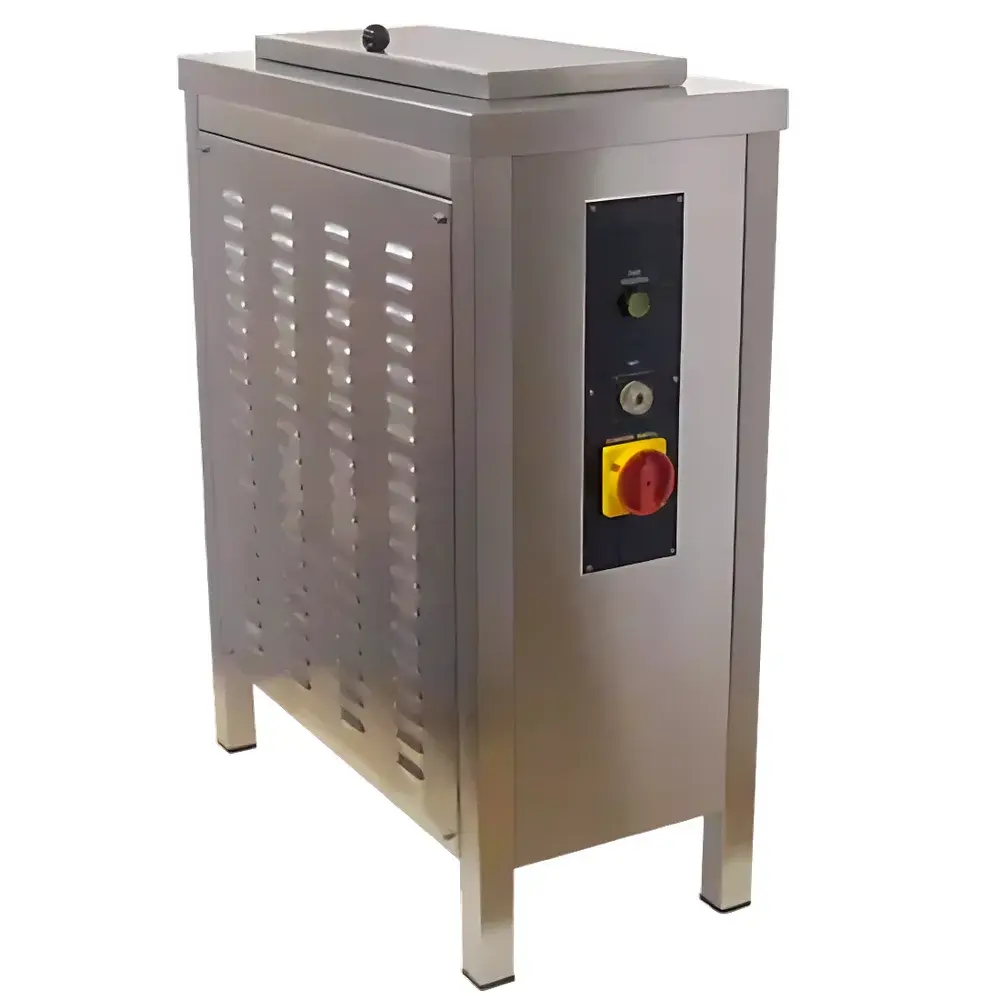
SDL Atlas D397C Forced-Convection Laboratory Dryer
| Brand | SDL Atlas |
|---|---|
| Origin | USA |
| Manufacturer Type | Direct Manufacturer |
| Origin Category | Imported |
| Model | D397C |
| Pricing | Available Upon Request |
Overview
The SDL Atlas D397C Forced-Convection Laboratory Dryer is a precision-engineered thermal drying system designed specifically for post-centrifugation sample conditioning in textile dyeing, printing, and colorfastness testing laboratories. It operates on the principle of controlled forced-air convection—where an internal axial fan actively circulates heated air across the sample surface at regulated velocity and temperature—to ensure uniform, reproducible moisture removal without thermal degradation. Unlike natural convection ovens or ambient air-drying racks, the D397C delivers consistent thermal energy transfer via dual-action airflow (fan-driven + heater-assisted), enabling precise control over drying kinetics critical for standardized test methods such as AATCC Test Method 20A (Fiber Analysis) and ISO 105-X12 (Colorfastness to Rubbing). Its maximum operating temperature of +70°C aligns with low-thermal-stress protocols required for heat-sensitive dyed fabrics, reactive dyes, and functional finishes.
Key Features
- Forced-convection architecture with adjustable-speed axial fan and independent thermostatic heating element—ensuring stable airflow velocity and temperature uniformity across the drying chamber.
- Stainless steel construction (304-grade) for corrosion resistance, long-term durability, and compliance with laboratory hygiene standards.
- Integrated digital timer (0–99 minutes, 1-minute increments) with audible end-of-cycle alert—supporting repeatable, unattended drying sequences.
- Adjustable ventilation volume control via rear-mounted damper, allowing fine-tuning of air exchange rate to match substrate porosity and moisture load.
- Dedicated 20 × 50 cm stainless steel sample grid with evenly spaced retention slots—optimized for simultaneous drying of multiple textile specimens (e.g., AATCC 16-size swatches, ISO 105 multi-fiber strips).
- Leveling feet with threaded adjustment mechanism—enabling precise horizontal alignment on uneven lab benches, essential for consistent sample exposure and avoiding pooling or skewing during drying.
Sample Compatibility & Compliance
The D397C accommodates a broad range of textile substrates—including woven, knitted, nonwoven, and filament-based fabrics—as well as paper-based color standards and coated test cards used in dyeing quality control. Its design conforms to mechanical and thermal safety requirements outlined in IEC 61010-1 (Safety Requirements for Electrical Equipment for Measurement, Control, and Laboratory Use). While not a Class I medical device, its operational parameters support GLP-aligned workflows: temperature stability ±2°C, no recorded thermal overshoot above setpoint, and absence of radiant heating elements that could induce localized scorching. The unit is routinely referenced in method validation documentation for ASTM D5034 (Tensile Strength of Textiles), AATCC TM61 (Colorfastness to Laundering), and ISO 139 (Standard Atmosphere for Conditioning and Testing Textiles), where controlled post-wash drying is a defined procedural step.
Software & Data Management
The D397C is a standalone electromechanical instrument with no embedded microprocessor or data logging capability—intentionally engineered for simplicity, reliability, and regulatory transparency in GMP-adjacent textile QC environments. All operational parameters (timer setting, fan speed position, temperature selection) are manually set and visually verified via analog dials and mechanical indicators. This architecture eliminates software validation burdens associated with FDA 21 CFR Part 11 compliance while maintaining full auditability: each drying cycle is traceable through lab notebook entries referencing batch ID, specimen code, start/end time, and observed chamber conditions. Optional external USB thermocouple loggers (e.g., Omega OM-CP-HITEMP140) may be deployed for temperature profile verification during IQ/OQ qualification.
Applications
- Post-centrifugation drying of dyed fabric specimens prior to colorimetric evaluation (e.g., spectrophotometric reflectance measurement per ISO 105-J01).
- Conditioning of printed textile samples before rub fastness testing (AATCC TM8 / ISO 105-X12) to eliminate residual solvent or moisture interference.
- Drying of multi-fiber adjacent fabrics used in crocking and perspiration tests—ensuring dimensional stability and interfacial contact integrity.
- Routine moisture equilibration of reference standards (e.g., Grey Scales, Blue Wool Standards) under controlled thermal conditions.
- Pre-test drying of yarn skeins and fiber bundles in fiber identification workflows per AATCC TM20A.
FAQ
What is the maximum allowable operating temperature?
The D397C is calibrated to maintain a maximum chamber temperature of +70°C, with factory-set thermal cutoff protection to prevent exceedance.
Can the dryer accommodate non-textile samples such as polymer films or filter papers?
Yes—provided samples are thermally stable below +70°C and do not emit volatile organic compounds (VOCs) under forced airflow; however, textile-specific validation data does not extend to non-fibrous substrates.
Is the sample grid removable for cleaning or replacement?
Yes—the 20 × 50 cm stainless steel grid is secured with captive thumbscrews and can be fully detached without tools.
Does the unit require external exhaust ducting?
No—ventilation is recirculated within the chamber; optional passive venting via rear damper opening is sufficient for standard lab environments.
How is calibration verified during routine use?
Users perform daily verification using a NIST-traceable handheld thermometer placed at three locations on the grid surface (center, left, right); documented results constitute part of the equipment’s maintenance log.



