
SDL Atlas M231/PR1 Perspiration Color Fastness Tester
| Brand | SDL Atlas |
|---|---|
| Origin | Guangdong, China |
| Manufacturer Type | Manufacturer |
| Origin Category | Domestic |
| Model | M231/PR1 |
| Price Range | USD 7,000 – 14,000 |
| Sample Capacity | 20 specimens (10 cm × 4 cm each) |
| Specimen Separation | Acrylonitrile spacers |
| Load Mass Options | 3.36 kg (8 lbs) for AATCC & ISO |
| Temperature Control | Requires external programmable恒温箱 (not included |
Overview
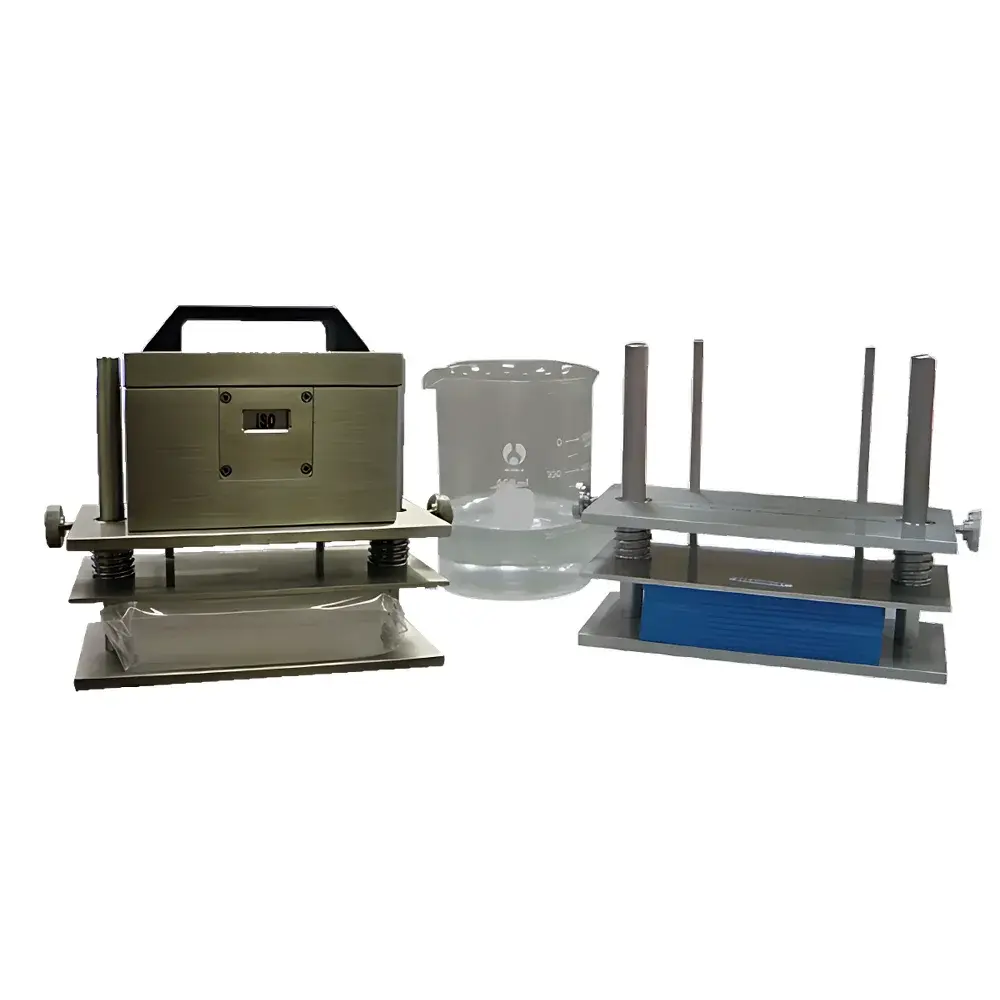
The SDL Atlas M231/PR1 Perspiration Color Fastness Tester is an engineered benchtop instrument designed to evaluate the resistance of textile dyes and finishes to acidic and alkaline perspiration under controlled thermal and mechanical stress conditions. It operates on the principle of standardized pressure application combined with regulated temperature and humidity exposure—mimicking physiological sweat composition and contact dynamics encountered during wear. The device conforms to internationally recognized test protocols including AATCC Test Method 15 (Colorfastness to Perspiration), ISO 105-E04 (Textiles — Tests for Color Fastness — Part E04: Color Fastness to Perspiration), and GB/T 3922 (Chinese national standard equivalent). Its robust stainless-steel frame accommodates 20 individual specimens simultaneously, each precisely isolated by acrylonitrile spacers to prevent cross-contamination and ensure independent evaluation of color migration, staining, and hue change.
Key Features
- Stainless-steel structural frame with corrosion-resistant surface finish for long-term laboratory durability and compliance with ISO 17025 environmental stability requirements.
- Modular load configuration supporting both AATCC and ISO dual-load specifications: primary 3.36 kg (8 lbs) mass for standard evaluation, plus optional 0.47 kg (1 lb) auxiliary mass to meet ISO 105-E04’s requirement for simultaneous acidic and alkaline testing under differential pressure.
- Specimen geometry control: accommodates twenty 10 cm × 4 cm fabric swatches arranged in a fixed grid pattern, ensuring uniform compression distribution and reproducible interfacial contact area.
- Interchangeable spacer system using chemically inert acrylonitrile strips—resistant to hydrolysis and pH degradation across the full range of test solutions (pH 4.3 for acidic perspiration, pH 8.0 for alkaline perspiration).
- Designed for integration with externally controlled environmental chambers (e.g., programmable incubators or climate cabinets) capable of maintaining ±0.5 °C temperature stability at 37 °C—aligned with human skin surface temperature per ASTM D1776 and ISO 139 conditioning guidelines.
Sample Compatibility & Compliance
The M231/PR1 supports woven, knitted, nonwoven, and coated textiles—including dyed, printed, and pigment-finished substrates—as well as leather and synthetic laminates used in apparel, sportswear, and technical textiles. All test assemblies comply with specimen preparation requirements defined in ISO 139 (standard atmospheric conditioning), AATCC TM20A (fabric conditioning), and ISO 105-A02 (gray scale assessment methodology). The instrument itself does not include temperature regulation hardware; users must pair it with a validated external chamber meeting IEC 61000-4-3 electromagnetic compatibility standards and equipped with traceable NIST-calibrated temperature sensors. Full audit readiness is supported through documented calibration records for applied masses (certified to ±0.25% tolerance) and spacer dimensional verification reports.
Software & Data Management
While the M231/PR1 is a manually operated mechanical tester without embedded microprocessor control, its operation integrates seamlessly into digital quality management systems. Test parameters—including lot numbers, specimen IDs, solution pH values, exposure duration (typically 4–6 hours), and post-test evaluation timestamps—are recorded via LIMS-compatible templates aligned with ISO/IEC 17025 clause 7.5 (technical records). Optional digital documentation kits include QR-coded specimen labels, electronic gray scale matching tools compliant with ISO 105-A02:2013 Annex B, and PDF report generators supporting FDA 21 CFR Part 11–compliant electronic signatures when deployed within validated QMS environments.
Applications
This instrument is routinely deployed in textile R&D laboratories, third-party testing facilities (e.g., SGS, Bureau Veritas, Intertek), and brand-owned QC departments to validate compliance with retailer-specific sustainability programs (e.g., ZDHC MRSL Level 3, Higg Index Material Sustainability Index). Typical use cases include pre-production dye selection for activewear fabrics exposed to high-sweat conditions, post-finishing evaluation of reactive dye fixation efficiency, and regulatory submission support for OEKO-TEX Standard 100 Class II (products with direct skin contact). It also serves as a reference method in interlaboratory comparison studies coordinated under ILAC MRA signatory frameworks.
FAQ
Is the temperature-controlled chamber included with the M231/PR1?
No—the instrument requires an externally sourced, programmable incubator or climate cabinet capable of stable 37 °C operation. SDL Atlas offers compatible chamber models as optional accessories with factory calibration certificates.
Does the M231/PR1 support both acidic and alkaline perspiration testing in a single run?
Yes—when configured with the optional 0.47 kg auxiliary mass, the unit enables simultaneous acidic (pH 4.3) and alkaline (pH 8.0) evaluations per ISO 105-E04 Section 7.2, using separate specimen sets and solution baths.
Are calibration certificates provided for the applied masses?
Each supplied mass set includes a traceable calibration certificate issued by an ISO/IEC 17025-accredited laboratory, valid for 12 months from date of shipment.
Can the M231/PR1 be used for non-textile materials such as coated polymers or elastomeric films?
Yes—provided specimens meet dimensional and compressibility criteria outlined in ISO 105-E04 Annex A, and are evaluated using appropriate multi-fiber adjacent fabrics (e.g., DW or Multifibre 10) for staining assessment.
What maintenance intervals are recommended for long-term accuracy?
Acrylonitrile spacers should be replaced after 50 test cycles or upon visible swelling/discoloration; stainless-steel frame surfaces require weekly ethanol wipe-down; annual verification of mass tolerance and spacer thickness is advised per ISO/IEC 17025 clause 6.4.6.





