
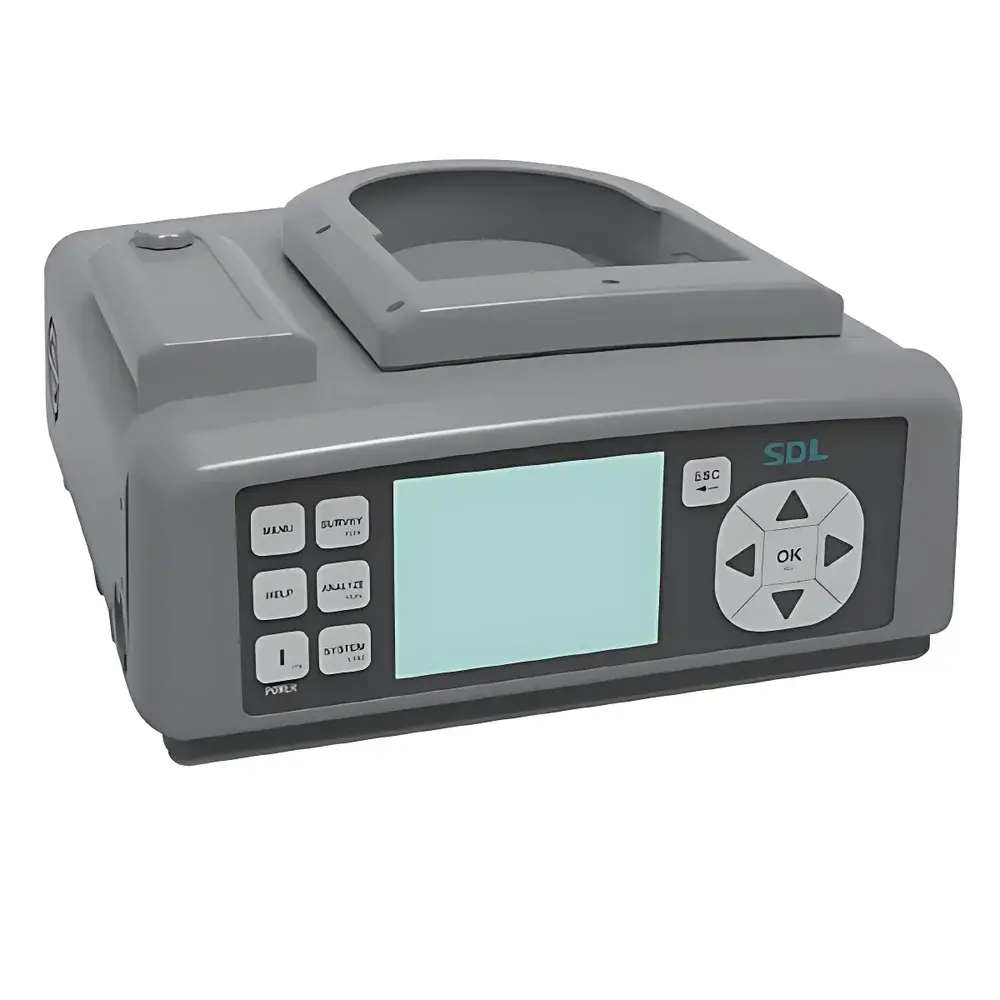
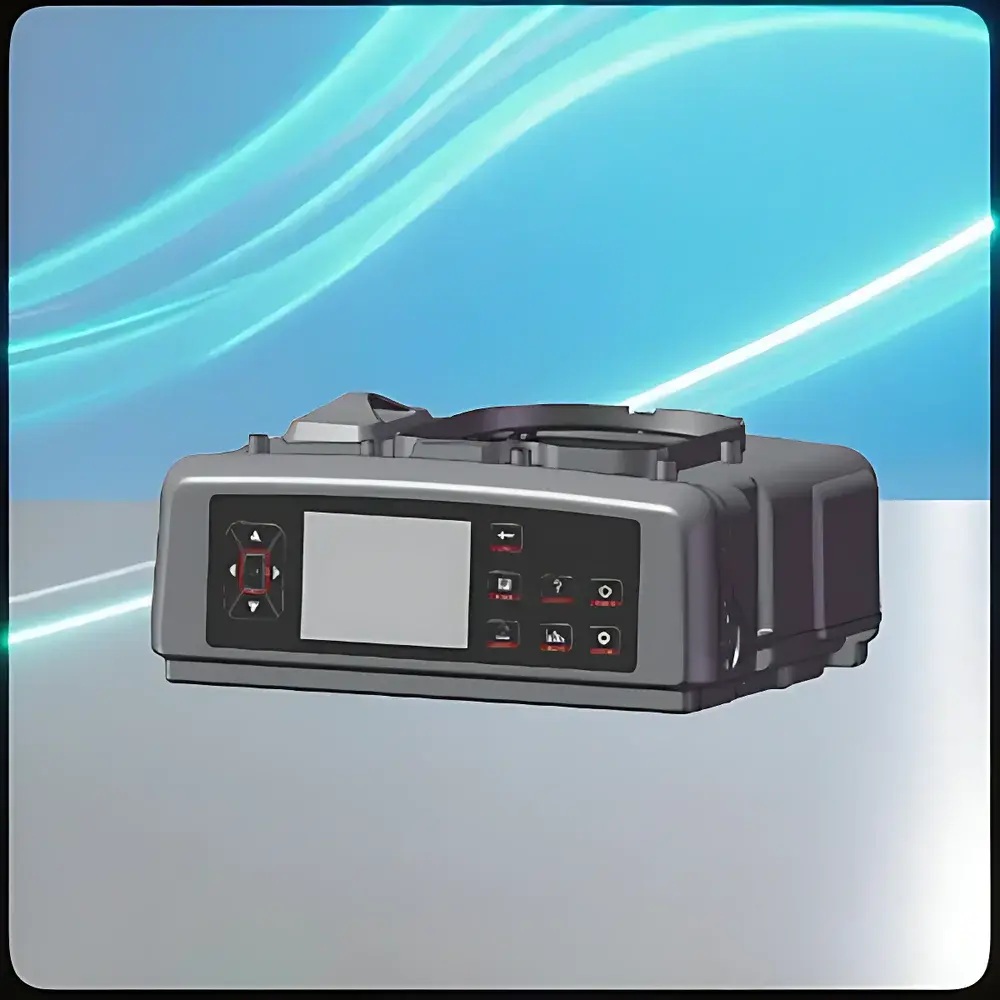
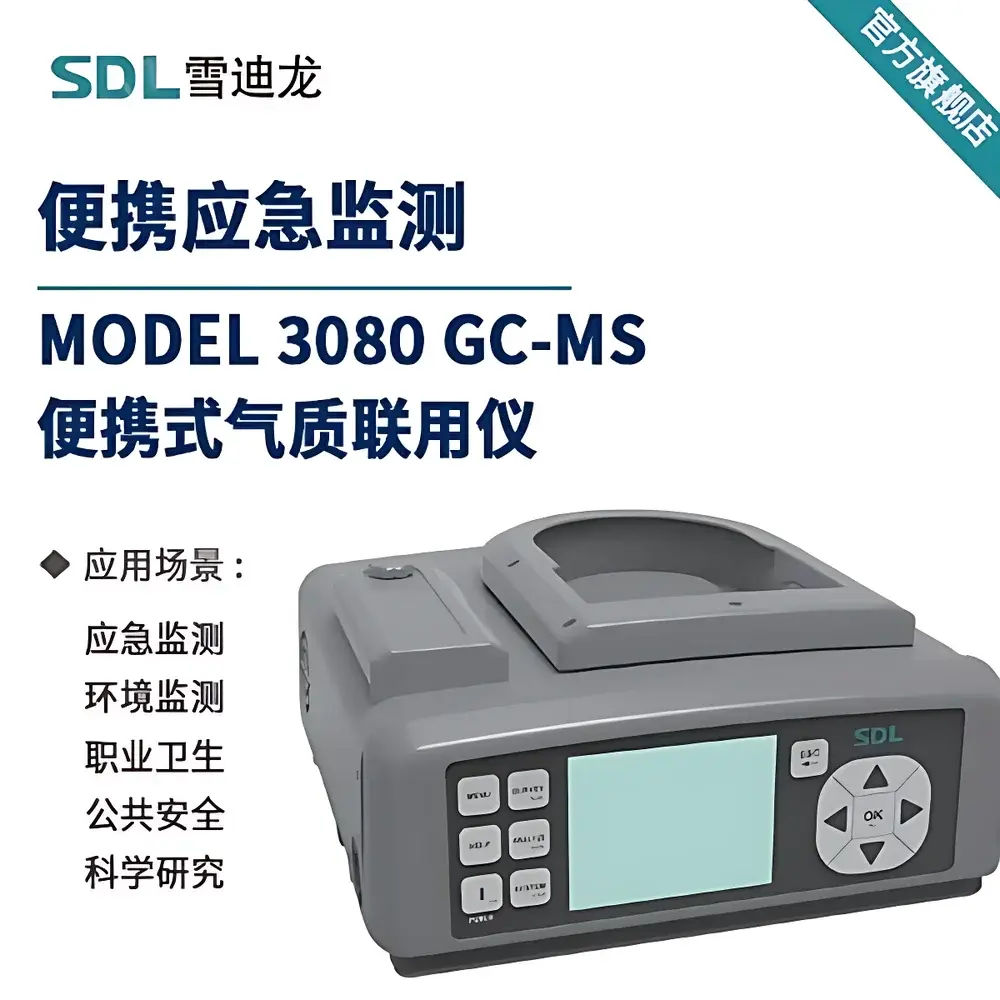
SDL MODEL 3080GC-MS Portable Gas Chromatography Triple Quadrupole Mass Spectrometer
| Brand | SDL |
|---|---|
| Origin | Beijing, China |
| Manufacturer Type | Original Equipment Manufacturer (OEM) |
| Instrument Category | Domestic |
| Model | MODEL 3080GC-MS |
| Instrument Type | Triple Quadrupole Mass Spectrometer |
| GC Configuration | Conventional Gas Chromatograph |
| Mass Range | 41–300 AMU |
| Scan Speed | 1000 AMU/s |
| Detector | Quadrupole Mass Analyzer |
| Pressure Control Accuracy | Not Specified |
| Resolution | Not Specified |
| Sensitivity | Not Specified |
| Mass Accuracy | Not Specified |
| Oven Ramp Rate | Not Specified |
Overview
The SDL MODEL 3080GC-MS is a field-deployable, integrated gas chromatography triple quadrupole mass spectrometry (GC-MS/MS) system engineered for real-time identification and quantification of volatile and semi-volatile organic compounds in uncontrolled outdoor or incident environments. Unlike benchtop GC-MS systems requiring climate-stabilized laboratories, the MODEL 3080GC-MS employs a compact, ruggedized architecture combining a thermally stabilized capillary GC column oven with a vacuum-integrated triple quadrupole mass analyzer. Its operational principle relies on sequential separation via temperature-programmed gas chromatography followed by selective ionization (electron impact, EI), precursor ion selection in Q1, collision-induced dissociation (CID) in Q2, and product ion detection in Q3—enabling high-specificity multiple reaction monitoring (MRM) for trace-level analytes. Designed for regulatory-grade field analysis, it delivers laboratory-comparable data integrity under dynamic environmental conditions, supporting rapid decision-making in time-critical scenarios without sample transport delays.
Key Features
- Ruggedized portable form factor (≤18 kg) with integrated battery power supply enabling >4 hours continuous operation without external AC input
- IP65-rated enclosure providing dust-tight and water-resistant protection; shock-mounted internal optics and electronics compliant with MIL-STD-810G for vibration and drop resistance
- Universal sample introduction module supporting direct air sampling, thermal desorption tubes, liquid micro-injection (1–10 µL), and solid-phase microextraction (SPME) fiber analysis
- 10.1-inch capacitive touchscreen interface with dual-language (English/Chinese) firmware and one-touch method execution
- Onboard GPS module synchronized with spectral acquisition timestamps to geotag every chromatogram and MRM transition
- Wi-Fi 6 and Bluetooth 5.2 connectivity for remote instrument control, real-time spectral streaming, and secure data export to centralized LIMS or cloud-based analytical platforms
- Visual alarm system using RGB status indicators aligned with IEC 60079-0 for hazardous area awareness (e.g., red flash for CWA detection, amber pulse for VOC exceedance)
Sample Compatibility & Compliance
The MODEL 3080GC-MS is validated for analysis of target compound classes defined in EPA Method TO-15 (VOCs), ASTM D7622 (TICs), NATO AEP-88 Annex B (CWAs), and ISO 16000-6 (indoor SVOCs). It accommodates gaseous matrices (ambient air, stack emissions), liquid extracts (water, solvent rinses), and solid sorbents (Tenax TA, Carbopack B) without hardware modification. All firmware and data handling modules comply with GLP documentation requirements, including full audit trail logging per FDA 21 CFR Part 11 for electronic records and signatures. Raw spectral data are stored in open-format .mzML files, ensuring interoperability with third-party processing tools such as OpenMS and Skyline.
Software & Data Management
The embedded acquisition and analysis software supports method development, automated calibration (internal standard bracketing), peak integration using Savitzky-Golay smoothing, and quantitative reporting with uncertainty propagation per GUM (Guide to the Expression of Uncertainty in Measurement). All processed results—including chromatograms, mass spectra, MRM transition tables, and calibration curves—are exportable in PDF/A-2b (ISO 19005-2) and CSV formats. Data encryption at rest (AES-256) and in transit (TLS 1.3) ensure compliance with ISO/IEC 27001 information security standards. Remote firmware updates are delivered via signed OTA packages verified through ECDSA-256 digital signatures.
Applications
- Emergency response: Real-time detection of chemical warfare agents (e.g., sarin, VX), toxic industrial chemicals (e.g., phosgene, hydrogen cyanide), and improvised explosive precursors during hazmat incidents
- Environmental field screening: On-site quantification of BTEX, chlorinated solvents, PAHs, and PCB congeners in soil vapor, groundwater headspace, and ambient air
- Occupational hygiene: Personal exposure assessment for OSHA-permissible exposure limits (PELs) and ACGIH TLVs® using NIOSH-calibrated sampling protocols
- Public safety: Mobile deployment at border checkpoints, transportation hubs, and critical infrastructure for illicit drug and precursor detection
- Academic and method development labs: Rapid validation of novel derivatization techniques, column chemistries, and MRM transitions prior to transfer to high-resolution HRAM platforms
FAQ
What types of compounds can the MODEL 3080GC-MS detect and quantify?
It is optimized for volatile organic compounds (VOCs), toxic industrial chemicals (TICs), chemical warfare agents (CWAs), and selected semi-volatile organic compounds (SVOCs) within the 41–300 AMU mass range.
Does the system meet international regulatory requirements for field-deployed analytical instrumentation?
Yes—it supports audit-trail-enabled data acquisition compliant with FDA 21 CFR Part 11, ISO/IEC 17025 documentation practices, and NATO STANAG 4680 for tactical chemical detection systems.
Can raw data be reprocessed using third-party software?
Yes—all acquired spectra and chromatograms are saved in vendor-neutral .mzML format, fully compatible with open-source and commercial data analysis platforms.
Is method transfer from laboratory GC-MS/MS systems possible?
MRM transitions, retention times, and calibration curves developed on benchtop triple quadrupole systems (e.g., Agilent 7010B, Thermo TSQ Altis) can be directly imported and executed with minor optimization.
What maintenance is required during extended field deployment?
Routine maintenance includes weekly carrier gas filter replacement, monthly ion source cleaning per ASTM E2912, and biannual vacuum pump oil change—documented in the onboard maintenance log with automated reminders.




