
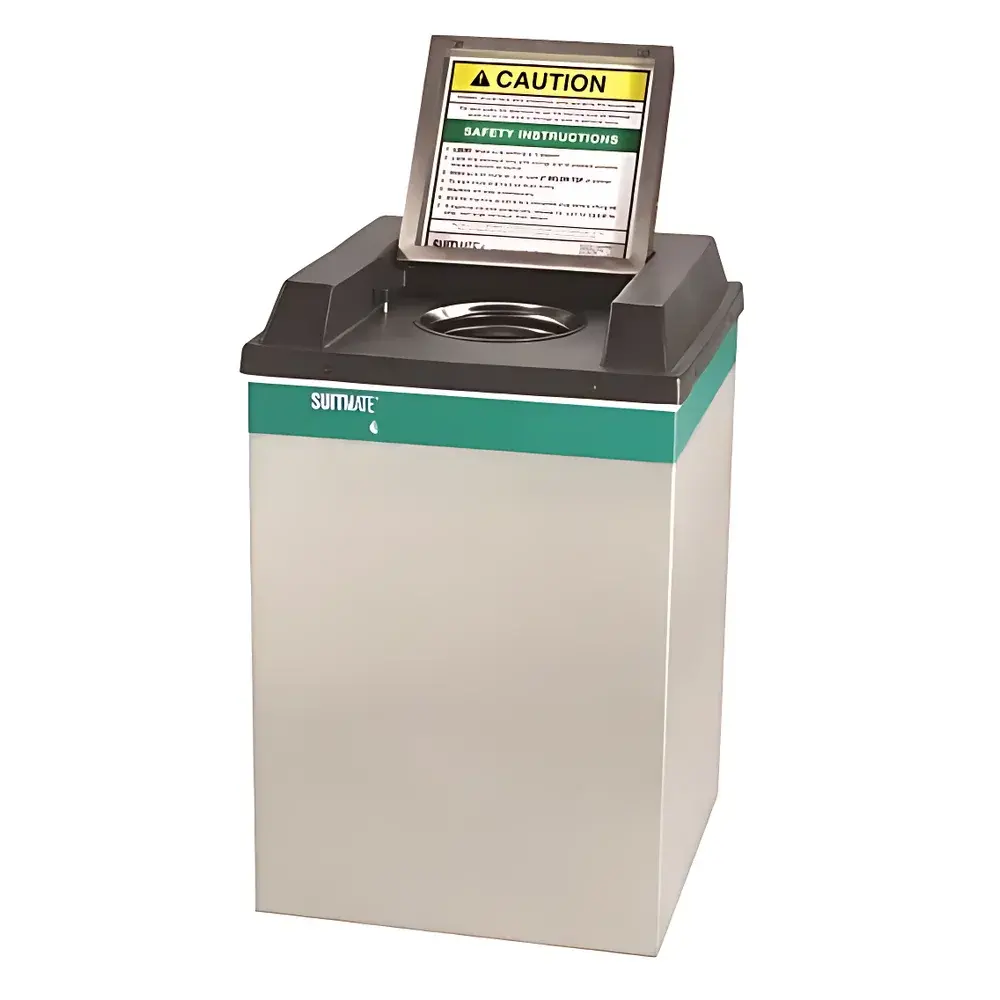
SDLATLAS D397A1 Laboratory Centrifugal Extractor for Textile Dyeing and Printing Applications
| Brand | SDLATLAS |
|---|---|
| Origin | USA |
| Manufacturer Type | Direct Manufacturer |
| Origin Category | Imported |
| Model | D397A1 |
| Pricing | Available Upon Request |
| Capacity | 2000 g (4.4 lbs) |
| Rotational Speed | 2850 rpm |
| Water Removal Efficiency | ≥90% in 10–20 s |
Overview
The SDLATLAS D397A1 Laboratory Centrifugal Extractor is a purpose-engineered instrument designed specifically for textile laboratories engaged in dyeing, printing, and colorfastness evaluation workflows. It operates on the principle of centrifugal force-induced phase separation—accelerating aqueous phase ejection from fabric specimens through controlled high-speed rotation. Unlike general-purpose centrifuges, the D397A1 integrates textile-specific mechanical constraints—including optimized basket geometry, low-inertia rotor dynamics, and fabric-safe acceleration profiles—to ensure reproducible moisture extraction without fiber distortion or sample slippage. Its primary functional role is to standardize specimen conditioning prior to thermal drying (e.g., hot-air oven treatment per ISO 105-X12 or AATCC Test Method 20A) or air-drying protocols, thereby minimizing variability in subsequent colorimetric analysis (e.g., spectrophotometric measurement per ISO 105-J03 or ASTM D2244). The device conforms to core mechanical safety standards for laboratory centrifuges (IEC 61010-2-020) and is validated for use within GLP-compliant textile testing environments.
Key Features
- Textile-optimized rotor basket with non-slip, perforated stainless-steel construction (316-grade), engineered to retain fabric swatches up to 2000 g while maintaining uniform radial load distribution
- Precision-controlled brushless DC motor delivering stable 2850 rpm operation with ±15 rpm speed tolerance across full load range
- Programmable timed extraction cycle (10–20 s), factory-calibrated to achieve ≥90% gravimetric water removal efficiency as verified against AATCC TM20A reference procedures
- Compact footprint (W320 × D380 × H340 mm) enabling integration into space-constrained QC labs or mobile testing units
- Interlocked safety lid with dual mechanical/electronic cut-off circuitry compliant with EN 61010-1 requirements
- Low-noise operation (<65 dB(A) at 1 m), suitable for shared laboratory environments without acoustic isolation
Sample Compatibility & Compliance
The D397A1 accommodates standard textile test specimens defined in ISO 105-F series, AATCC Test Methods 61, 8, and 16, including knitted, woven, and nonwoven fabrics cut to 100 × 100 mm or rolled cylinder formats (max. diameter 120 mm). It supports both single-layer and multi-layer assemblies used in crocking, perspiration, and washing fastness tests. All wet-extraction protocols align with moisture preconditioning steps specified in ISO 105-X12 (colour fastness to rubbing), ISO 105-C06 (colour fastness to domestic and commercial laundering), and GB/T 3921 (Chinese national standard equivalent). Device documentation includes traceable calibration records for rotational speed and timer accuracy, supporting audit readiness under ISO/IEC 17025:2017 Clause 6.4.10.
Software & Data Management
The D397A1 is a standalone electromechanical system with no embedded firmware or digital interface. Operational parameters are set via tactile rotary dial and LED display; all settings are manually recorded in laboratory notebooks or LIMS-integrated spreadsheets. While it does not generate electronic audit trails, its mechanical simplicity ensures compliance with FDA 21 CFR Part 11 when used in conjunction with paper-based or validated electronic record systems meeting ALCOA+ principles (Attributable, Legible, Contemporaneous, Original, Accurate, Complete, Consistent, Enduring, Available). Maintenance logs—including bearing service intervals, rotor inspection dates, and speed verification reports—are recommended per SDLATLAS Technical Bulletin TB-D397A1-REV4.
Applications
- Pre-drying conditioning of dyed fabric samples prior to spectrophotometric color measurement (e.g., Minolta CM-700d or X-Rite Ci7600), reducing inter-lab variation in ΔE* values caused by residual moisture gradients
- Rapid water removal from printed textile substrates before steaming or fixation processes in reactive dye development trials
- Standardized moisture reduction in wash-fastness test specimens to ensure consistent detergent penetration and mechanical action during AATCC TM61 cycles
- Accelerated specimen preparation for multi-condition fastness assessments (e.g., light + perspiration combinations per ISO 105-B02)
- Supporting ISO 105-X16 (colour fastness to rubbing) by eliminating surface water film that otherwise interferes with dry/crocking rub head contact pressure
FAQ
Is the D397A1 compatible with ISO 105-C06 washing fastness test protocols?
Yes—the device is routinely deployed in accredited labs to condition specimens post-wash and pre-dry per Clause 8.3 of ISO 105-C06:2023.
What maintenance schedule is recommended for long-term rotor integrity?
SDLATLAS specifies biannual visual inspection of rotor basket welds and annual dynamic balancing verification using certified calibration equipment (per TB-D397A1-REV4).
Can the D397A1 process delicate fabrics such as silk or lace without damage?
Yes—its programmable low-inertia acceleration profile (0–2850 rpm in ≥8 s) minimizes shear stress; however, specimens must be placed flat and centered to prevent edge fraying.
Does the unit require external exhaust or ventilation?
No—no volatile emissions or heat dissipation beyond ambient lab conditions; no dedicated ducting required.
Is rotor certification provided with each unit shipment?
Each D397A1 ships with a factory-issued Certificate of Conformance (CoC) listing serial-numbered rotor balance data and speed calibration verification against NIST-traceable tachometer standards.






