
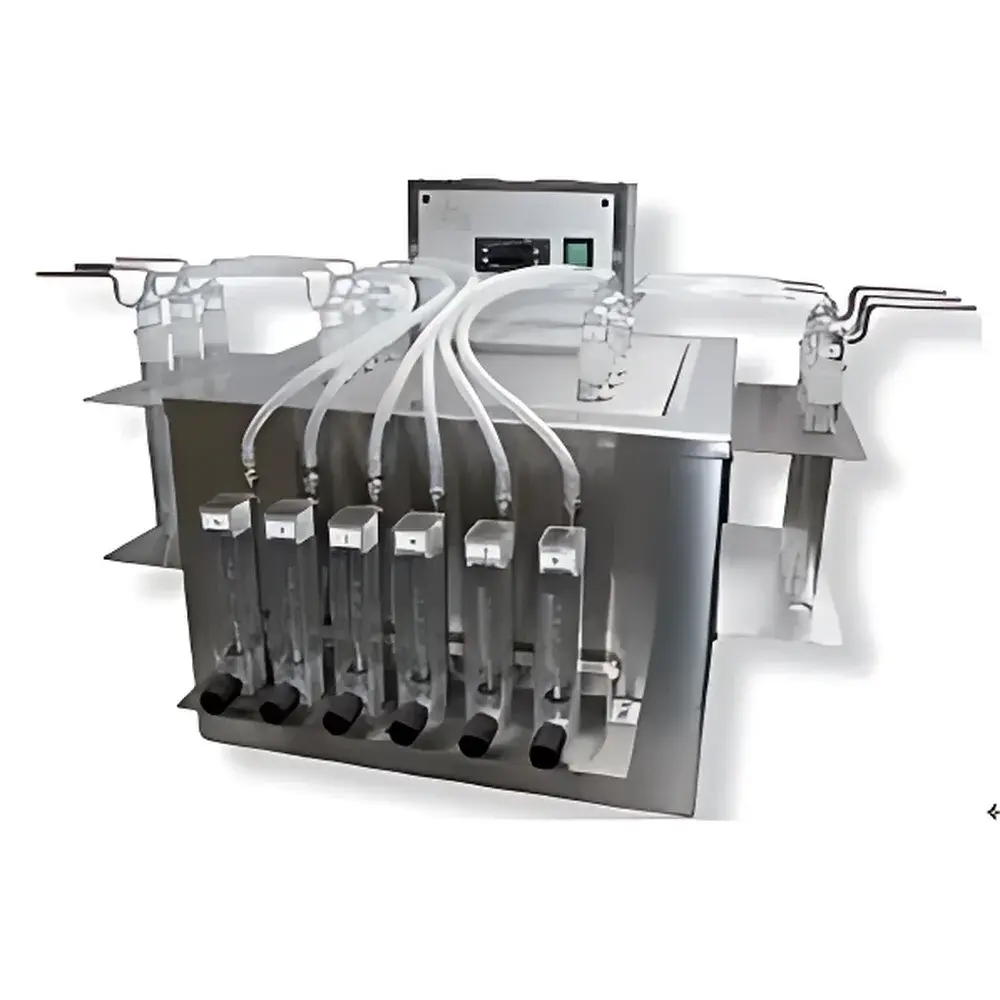
SDM 2440 ASTM D2440 Oxidation Stability Analyzer
| Brand | SDM |
|---|---|
| Origin | Italy |
| Model | 2440 |
| Temperature Range | Ambient to 210 °C (±0.1 °C stability) |
| Compliance | ASTM D2440, IP 307, ISO 7624, IP 48, IP 280, IP 306, IP 335, EN 61125-A/B/C |
| Construction | Double-walled stainless steel housing with thermal insulation |
| Temperature Control | PID controller with PT100A sensor and over-temperature alarm |
| Heating System | Stainless steel immersion heater |
| Agitation | Motor-driven magnetic stirrer |
| Safety Features | Low-level liquid sensor with visual alarm, drain cock, ventilated lid with ports for flowmeter and absorption tube |
| Power Supply | 220 V, 50/60 Hz |
Overview
The SDM 2440 ASTM D2440 Oxidation Stability Analyzer is a precision-engineered benchtop instrument designed for the accelerated oxidative stability assessment of edible oils, frying fats, biodiesel, and other unsaturated lipid-based materials. It operates on the principle of the active oxygen method (AOM), in which a controlled stream of purified air or oxygen is passed through a heated oil sample under standardized temperature and flow conditions. The onset of oxidation is detected by monitoring the time required for the formation of volatile oxidation products—primarily aldehydes and ketones—that are absorbed in an alkaline solution (e.g., potassium iodide/starch or sodium sulfite). The induction period (IP), expressed in hours, serves as a quantitative metric of oxidative resistance and correlates strongly with shelf-life performance under real-world storage and thermal stress conditions. This methodology is codified in ASTM D2440 and harmonized across multiple international standards including ISO 7624 and the IP series (IP 307, IP 48, etc.), ensuring global comparability of results in quality control, R&D, and regulatory submissions.
Key Features
- Double-walled stainless steel chamber with high-efficiency thermal insulation, minimizing ambient heat loss and improving temperature uniformity across the sample bath
- PID-controlled heating system with Class A PT100 platinum resistance thermometer, delivering ±0.1 °C temperature stability from ambient up to 210 °C
- Integrated motor-driven magnetic stirrer ensuring consistent sample homogenization and reproducible oxygen mass transfer kinetics
- Ventilated reaction lid with precisely machined ports for secure mounting of flowmeters and gas absorption tubes—compatible with standard ASTM-compliant glassware
- Redundant safety architecture: independent low-level liquid sensor with illuminated warning indicator, manual drain cock for rapid bath emptying, and hardware-based over-temperature cutoff
- Robust 220 V, 50/60 Hz power interface with internal line filtering to suppress electromagnetic interference during extended operation
Sample Compatibility & Compliance
The SDM 2440 accommodates standard 500 mL glass oxidation vessels (ASTM D2440 specification) and supports both virgin and thermally stressed oils—including soybean, sunflower, palm, canola, olive, and fish oils—as well as refined animal tallow and hydrogenated vegetable shortenings. It is validated for use with biodiesel (B100) and blended fuels per EN 14112 and ASTM D7462 methodologies when adapted with appropriate flow calibration. All operational parameters—including airflow rate (typically 10–15 L/h), bath temperature (100–130 °C for edible oils; up to 210 °C for industrial lubricants), and absorption solution composition—are fully configurable to meet the requirements of ASTM D2440, IP 307, ISO 7624, and the full EN 61125 suite (Parts A, B, and C). Instrument design conforms to IEC 61010-1 for electrical safety in laboratory environments and supports GLP-compliant documentation workflows.
Software & Data Management
While the SDM 2440 operates as a standalone analog-controlled system, its modular architecture allows integration with external data acquisition systems via 0–10 V analog output for temperature and optional digital I/O for alarm status. Users may log time-stamped temperature profiles, alarm events, and manual endpoint recordings using third-party software compliant with FDA 21 CFR Part 11 (when paired with validated electronic lab notebooks or LIMS platforms). Calibration records, maintenance logs, and test run metadata can be maintained in accordance with ISO/IEC 17025 and AOAC guidelines. No proprietary firmware or cloud dependency is introduced—ensuring long-term operational continuity and audit readiness.
Applications
- Quality assurance laboratories evaluating oxidative shelf life of refined cooking oils prior to bottling
- R&D departments screening antioxidant efficacy (e.g., TBHQ, BHA, rosemary extract) in formulation development
- Biodiesel producers verifying compliance with EN 14214 oxidative stability requirements
- Contract testing facilities performing accredited ASTM D2440 analyses for food ingredient suppliers
- Academic research on lipid peroxidation kinetics under controlled thermal-oxygen stress
- Regulatory reference labs supporting national food safety authorities in monitoring rancidity thresholds
FAQ
What standards does the SDM 2440 explicitly support?
ASTM D2440, IP 307, ISO 7624, IP 48, IP 280, IP 306, IP 335, and EN 61125-A/B/C.
Is the instrument suitable for biodiesel testing?
Yes—when configured with calibrated airflow and appropriate absorption chemistry, it meets EN 14112 requirements for Rancimat-style testing.
Does it include automated endpoint detection?
No—the SDM 2440 is a manually monitored system per ASTM D2440; visual or titrimetric endpoint determination is performed externally.
Can the unit be operated at temperatures above 130 °C?
Yes—maximum setpoint is 210 °C, intended for high-stability industrial oils and synthetic lubricants.
What maintenance is required for long-term reliability?
Quarterly verification of PT100 sensor accuracy, biannual inspection of stirrer coupling integrity, and routine cleaning of the double-wall cavity and drain path.






