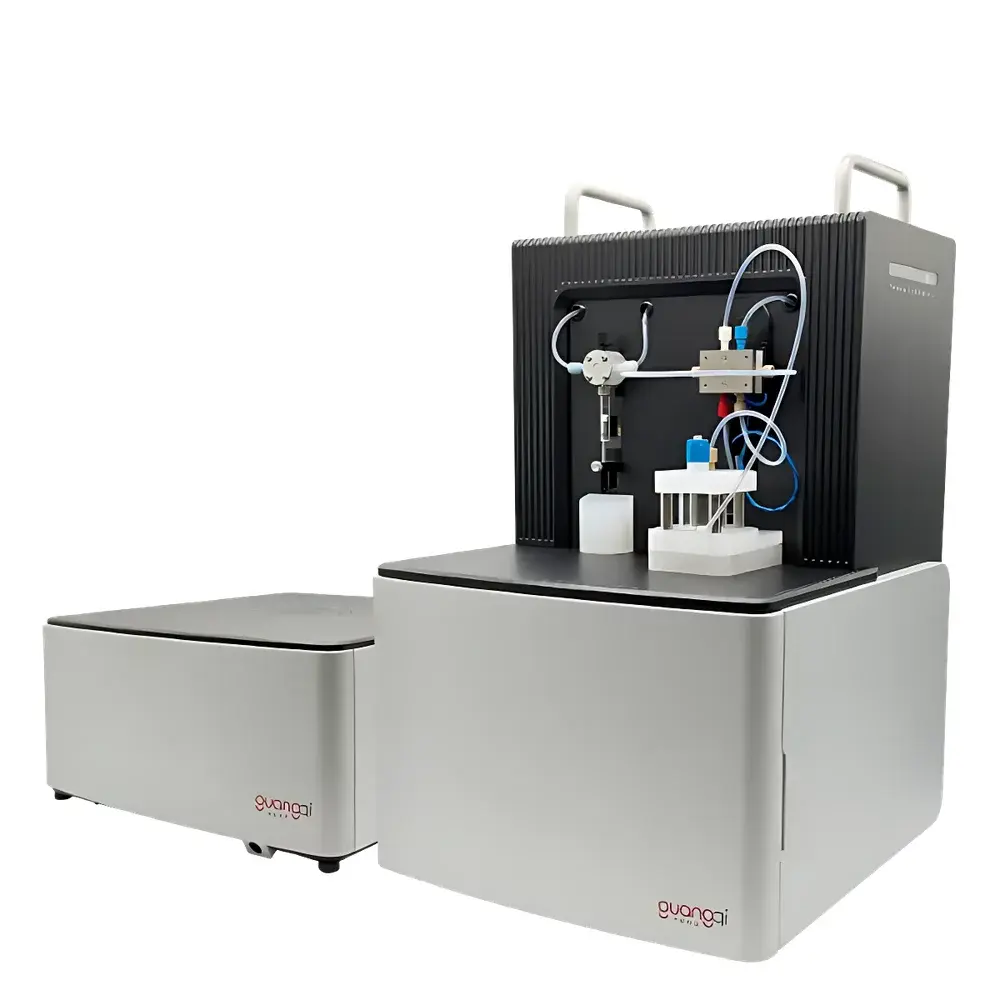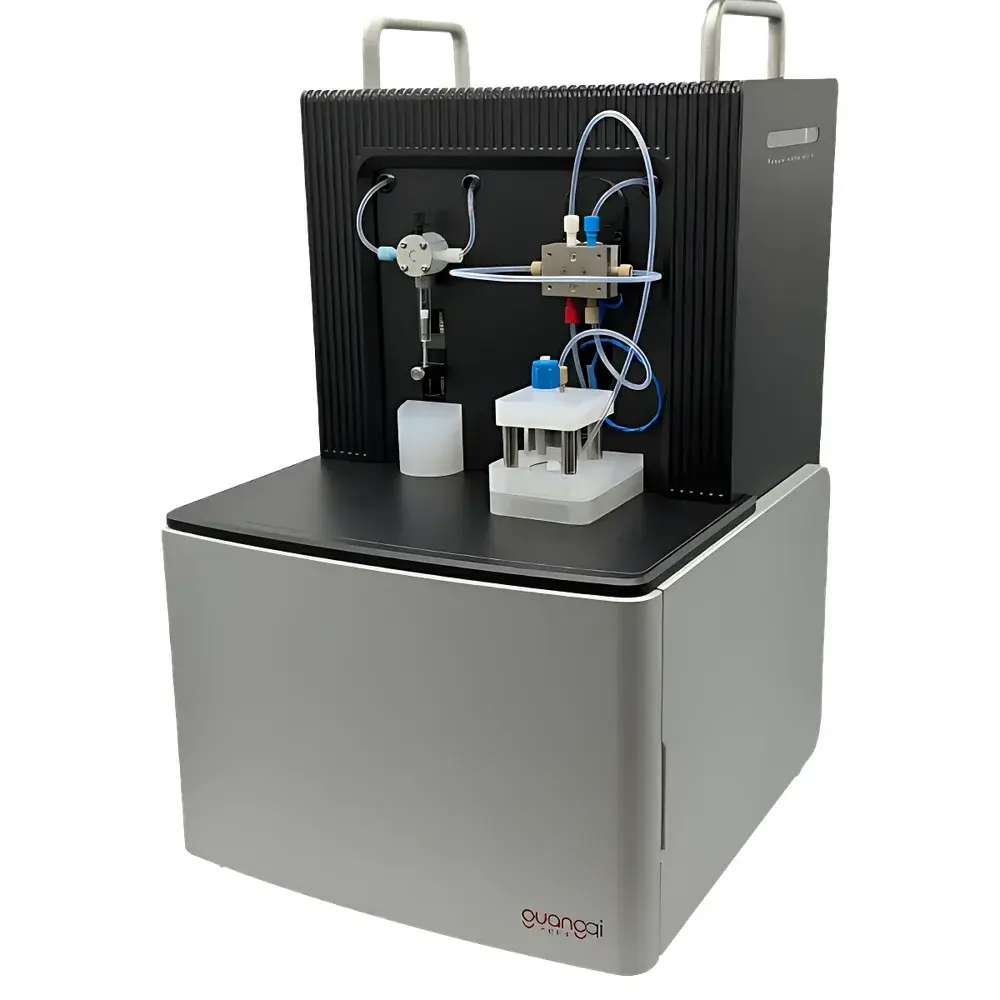
Semetrol DLTS System – High-Resolution Deep Level Transient Spectroscopy Instrument
| Brand | Semetrol |
|---|---|
| Origin | USA |
| Model | Semetrol DLTS |
| Temperature Range | 25 K – 700 K |
| Cooling | Closed-Cycle Liquid Helium Refrigerator |
| Capacitance Measurement Frequency | 1 MHz |
| Capacitance Sensitivity | 1 fF |
| Voltage Range | ±100 V (Boonton), ±10 V (DAQ) |
| Voltage Resolution | 0.3 mV (DAQ, <20 V), 1 mV (<20 V), 10 mV (>20 V) |
| Pulse Width Range | 5 μs – >0.1 s (DAQ), 15 ms – >0.1 s (Boonton) |
| Pulse Amplitude | up to 200 V (Boonton), up to 20 V (DAQ) |
| Slew Rate | <20 V/ms (Boonton), 20 V/μs (DAQ) |
| Current Limit | 5 mA |
| Sampling Rate | down to 1 μs |
| Record Length | >10,000 points |
| Time Resolution | 50 ns |
| Capacitance Resolution | <50 aF |
| Automatic Zeroing | Yes |
| Auto-Ranging | Yes |
| Response Time | ~25 μs |
| Compensation Range | 256 pF |
| Test Signal Levels | 15, 30, 50, 100 mV |
| Filtering | Auto-detection and sinusoidal noise suppression |
Overview
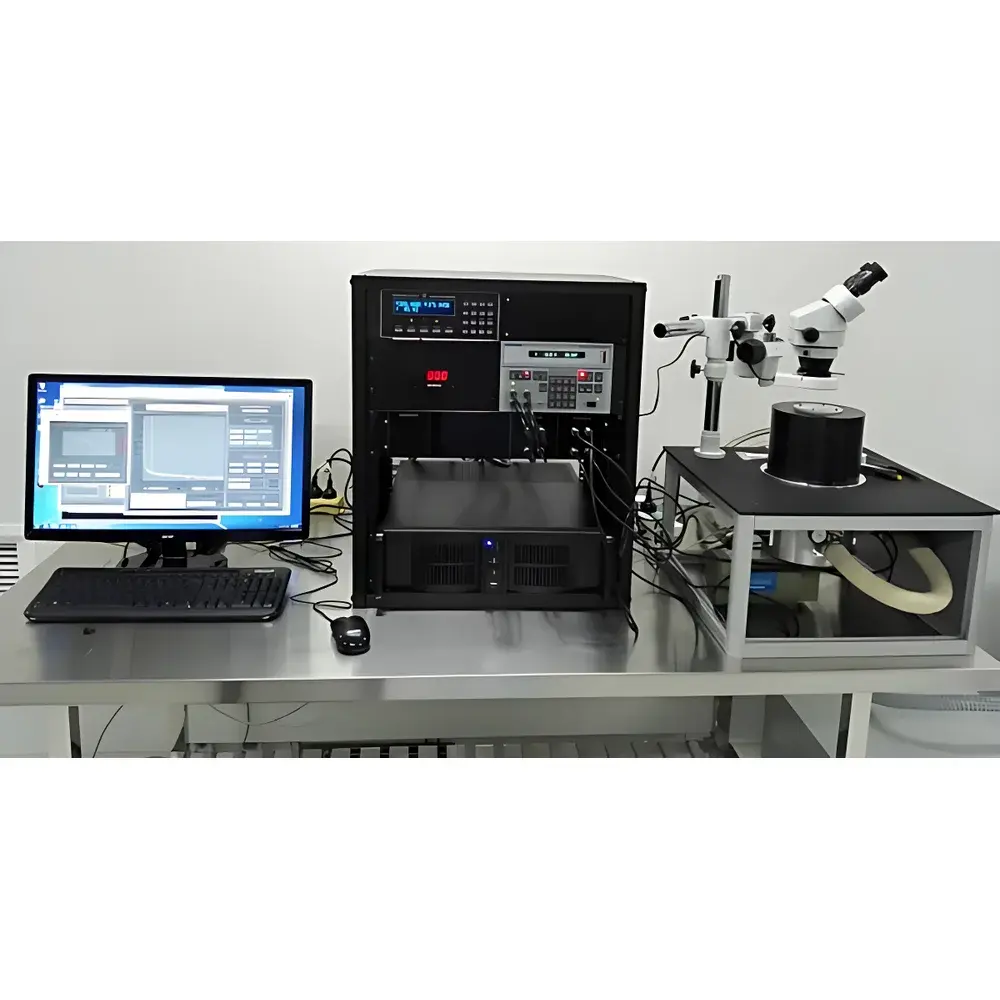
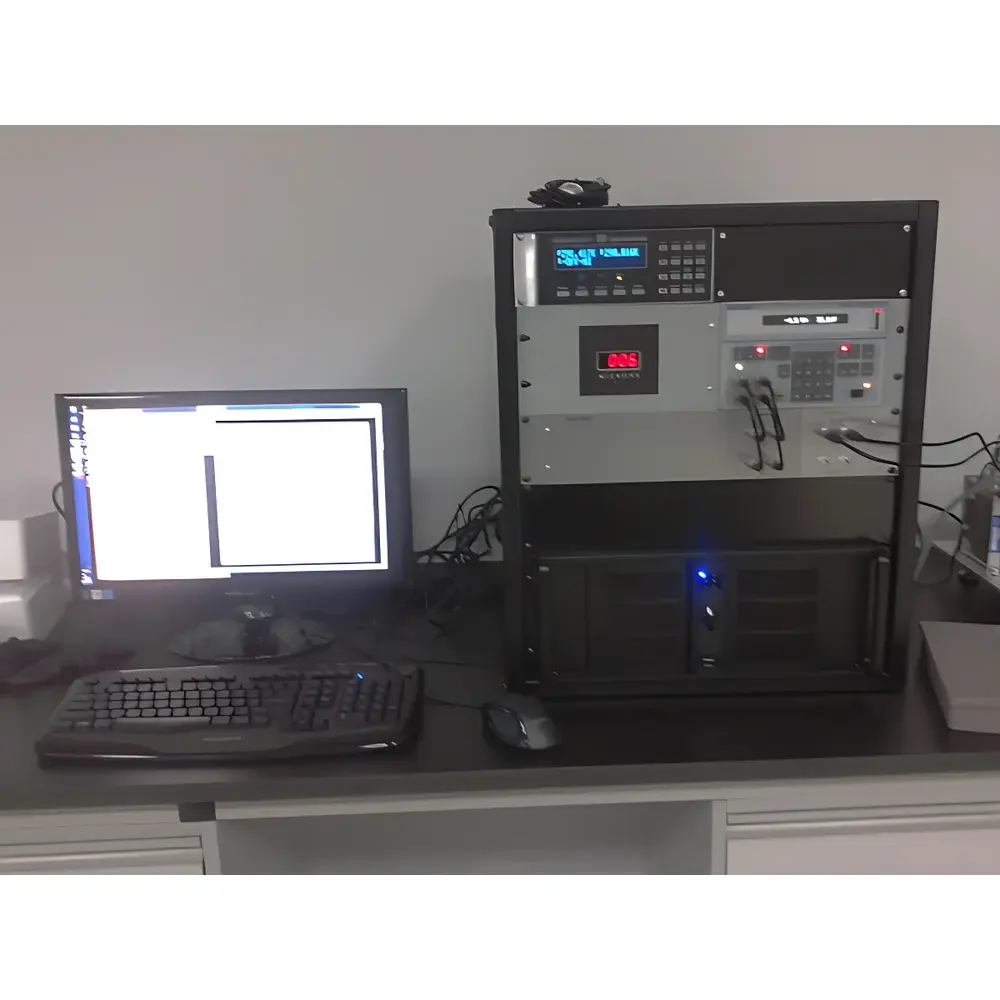
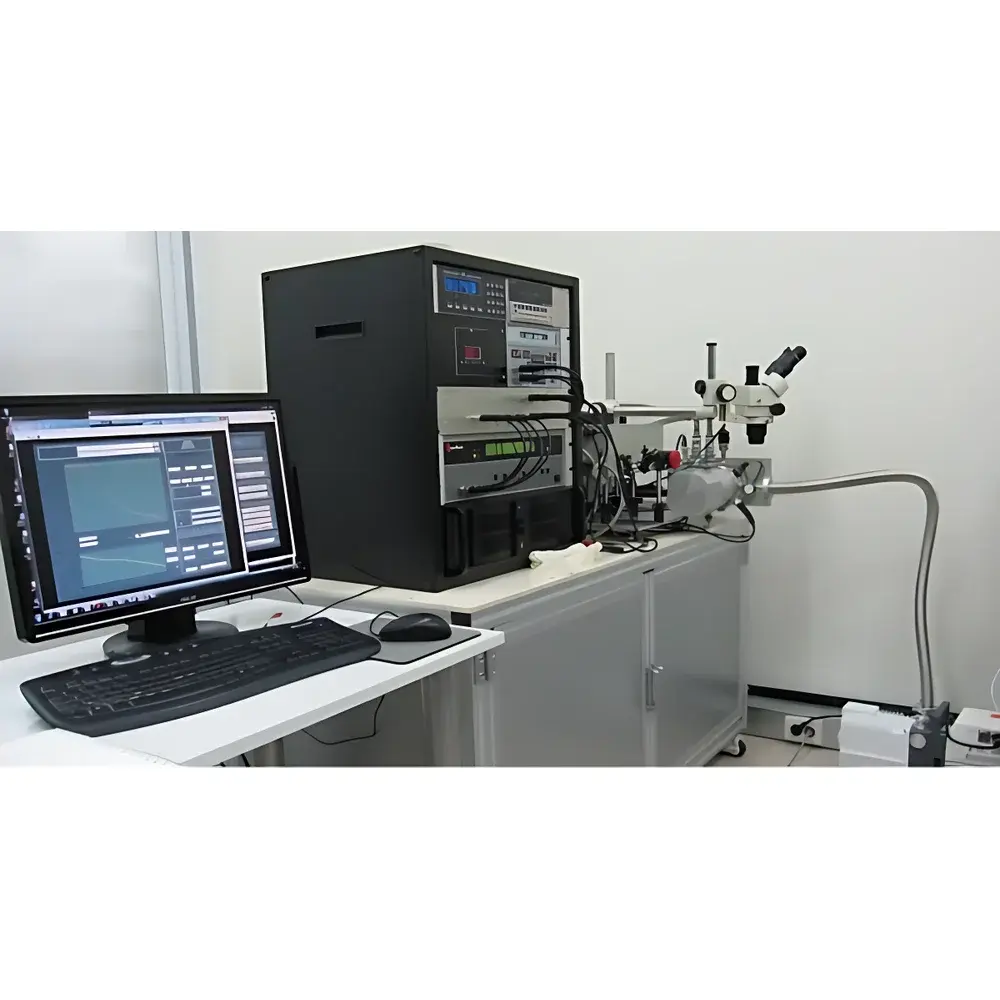
The Semetrol DLTS System is a high-resolution, cryogenically cooled deep level transient spectroscopy instrument engineered for quantitative defect characterization in semiconductor materials and devices. Based on the fundamental principle of capacitance transients in reverse-biased p–n junctions or Schottky barriers, the system measures thermally stimulated emission rates of charge carriers from electrically active deep-level traps. By applying controlled temperature sweeps (25 K – 700 K) under fixed or variable emission rate windows, it reconstructs energy-resolved trap spectra—revealing trap activation energy (ET), capture cross-section (σ), concentration (NT), and spatial distribution. Unlike conventional thermal cycling methods requiring repeated cool-down/warm-up cycles per frequency window, Semetrol’s closed-cycle liquid helium refrigeration enables full multi-frequency DLTS acquisition within a single thermal ramp—significantly improving measurement reproducibility, throughput, and thermal stability. The system supports both conventional DLTS and advanced variants including Laplace DLTS (LDLTS), optical DLTS (ODLTS), double-correlation DLTS (DDLTS), and thermally stimulated capacitance (TSCAP), making it suitable for R&D laboratories focused on compound semiconductors (SiC, GaN, GaAs), photovoltaic absorbers (CIGS, perovskites), and advanced logic/memory device qualification.
Key Features
- Closed-cycle liquid helium cryostat enabling continuous, stable operation from 25 K to 700 K without refilling or manual intervention
- Integrated high-speed capacitance test unit (1 MHz, ±100 V bias, 1 fF resolution) with automatic zeroing, auto-ranging, and real-time compensation (256 pF range)
- Dual-pulse excitation architecture: Boonton-based high-voltage pulsing (up to 200 V, slew rate <20 V/ms) and DAQ-controlled fast pulsing (up to 20 V, 20 V/μs)
- Ultra-fast data acquisition: 1 μs sampling resolution, 50 ns timing precision, >10,000-point transient records, and sub-50 aF capacitance resolution
- Comprehensive transient analysis suite supporting DLTS, ODLTS, DDLTS, TSC/TSCAP, photon-induced transient spectroscopy (PITS), and deep-level optical spectroscopy (DLOS)
- Fully automated measurement sequencing—including isothermal scans, multi-frequency emission rate profiling, and trap depth profiling via C(V)/C(T) and I(V)/I(V,T) routines
- Hardware-integrated GPIB and USB interfaces; compliant with IEEE 488.2 and SCPI command sets for lab automation and integration into semiconductor metrology workflows
Sample Compatibility & Compliance
The Semetrol DLTS System accommodates standard semiconductor diode structures—including Si, Ge, SiC, GaN, GaAs, InP, CdTe, and perovskite-based p–n, Schottky, and MOS capacitors—using configurable probe stations with adjustable micropositioners (2×). It supports both front-side and back-side illumination for optically assisted measurements. All hardware and software modules are designed to meet essential requirements for GLP-compliant environments: audit-trail-enabled data logging, user-access controls, electronic signature support (via optional FDA 21 CFR Part 11 add-on), and traceable calibration protocols aligned with ASTM F1722 (Standard Guide for DLTS Measurements) and ISO/IEC 17025 principles. Raw transient data, processed spectra, and metadata are stored in vendor-neutral HDF5 format, ensuring long-term archival integrity and third-party analysis compatibility.
Software & Data Management
The system ships with Semetrol’s native DLTS Analysis Suite—comprising three core modules: DLTS (conventional rate-window analysis), ODLTS (optical excitation mode), and DDLTS (double-correlation noise reduction). Each module provides real-time visualization, multi-peak deconvolution using constrained non-linear least-squares fitting, Arrhenius extraction, and cross-section calculation via the Poole–Frenkel or Miller–Abrahams formalisms. Data export supports CSV, MATLAB (.mat), and Python-compatible NumPy arrays. The software implements automated baseline correction, adaptive filtering (including real-time sinusoidal interference rejection), and statistical uncertainty propagation for all derived parameters. All measurement sessions are timestamped, user-logged, and version-controlled. Optional extensions enable integration with LabVIEW, Python APIs (PyDLTS), and enterprise LIMS via RESTful webhooks.
Applications
- Quantitative identification and energy-level mapping of intrinsic and extrinsic deep-level defects in power electronics substrates (e.g., carbon- and transition-metal-related traps in 4H-SiC)
- Correlating minority-carrier lifetime degradation in solar cells with specific impurity species (Fe, Cu, Ni) and their lattice configurations (interstitial vs. substitutional)
- Interface trap density (Dit) profiling at SiO2/SiC and Al2O3/GaN interfaces under gate stress conditions
- Trap-assisted tunneling analysis in scaled FinFET and GAA transistor structures
- Validation of gettering efficiency during wafer cleaning and annealing processes
- Defect engineering feedback for MBE and MOCVD growth optimization of III–V heterostructures
FAQ
What temperature range does the Semetrol DLTS system support, and how is thermal stability ensured?
The system operates from 25 K to 700 K using a closed-cycle liquid helium refrigerator. Temperature stability is maintained within ±10 mK over 1-hour intervals via PID-controlled feedback to the cold head and integrated radiation shielding—critical for high signal-to-noise ratio transient detection.
Can the system perform optical excitation measurements?
Yes—integrated fiber-coupled ports support ODLTS and PITS modes using external lasers (UV–NIR) or LEDs, enabling trap characterization independent of thermal emission constraints.
Is the software compliant with regulatory data integrity standards?
The base software includes audit trail logging and user authentication. With the optional 21 CFR Part 11 package, it supports electronic signatures, role-based access control, and immutable record archiving for FDA-regulated labs.
How does the dual-pulse architecture improve measurement fidelity?
Separate high-voltage (Boonton) and high-speed (DAQ) pulse generators allow independent optimization: one for stable DC bias conditioning, the other for nanosecond-precision transient triggering—minimizing overshoot and improving time-domain resolution.
What sample geometries and contact types are supported?
Standard configurations include circular mesa diodes (100–500 µm diameter), planar Schottky contacts, and MOSCAP structures. Custom probe fixtures accommodate wafer-level probing (up to 200 mm) and packaged device testing with spring-loaded Kelvin probes.
Related Products