
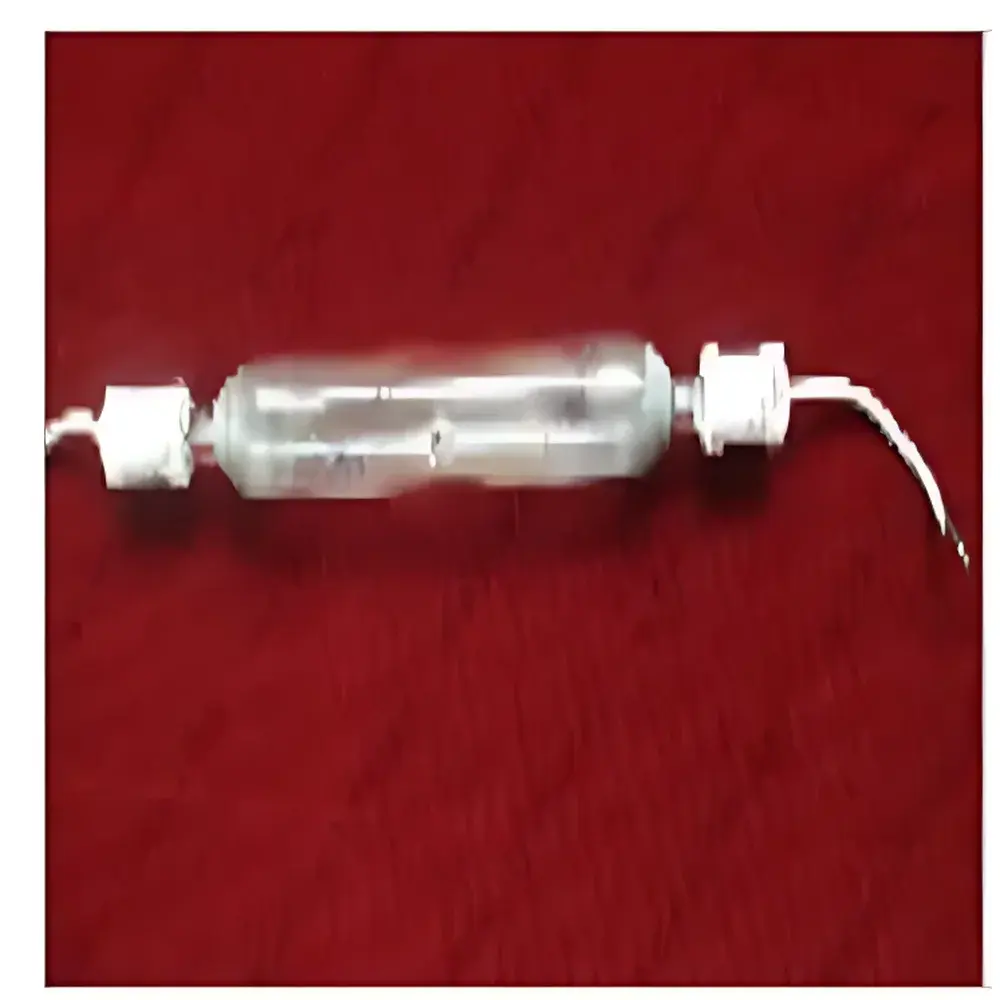
SEN UV Curing Lamp HL100G, HL400DL, HL1000DL, SE-1500
| Brand | SEN (Japan) |
|---|---|
| Origin | Japan |
| Model Range | HL100G, HL400DL, HL1000DL, SE-1500 |
| Power Output | 100 W to 2000 W |
| Lamp Life | ≥2000 h |
| Total Length / Emission Length | 170 mm / 30 mm (HL100G) to 400 mm / 250 mm (HL2000DL-1) |
| Automation Level | Fully Automatic |
| Compliance | Designed for ISO 13485-aligned cleanroom and electronics manufacturing environments |
| Regulatory Context | Compatible with IPC-A-610, JIS C 5012, and JEDEC J-STD-020 process validation frameworks |
Overview
The SEN UV Curing Lamp series (HL100G, HL400DL, HL1000DL, SE-1500) is a family of high-intensity, mercury-vapor-based ultraviolet irradiation systems engineered for precision photopolymerization in microelectronics and optoelectronics manufacturing. These lamps emit broadband UV radiation (primarily UVA: 320–400 nm, with secondary peaks at 365 nm and 405 nm), optimized for rapid crosslinking of acrylate, epoxy-acrylate, and cationic UV-curable formulations. Unlike generic UV sources, SEN’s lamp architecture integrates thermally stabilized quartz envelopes, precise arc-gap control, and reflective parabolic housings to ensure spatial uniformity (>90% irradiance homogeneity across the emission zone) and spectral stability over rated lamp life. The system operates as a standalone irradiation module or integrates into inline conveyor-based curing lines used in PCB solder mask curing, LCD spacer dot formation, optical lens bonding, and HDD head gimbal assembly—applications demanding repeatable dose delivery (mJ/cm²) under controlled ambient conditions.
Key Features
- Modular lamp head design with standardized mounting interfaces (M6 threaded holes, DIN 43650 electrical connectors) for seamless integration into OEM equipment or benchtop workstations.
- Thermal management system featuring forced-air cooling with dual-stage temperature monitoring (sensor feedback loop maintains envelope surface <120 °C during continuous operation).
- Electronic ballast with soft-start ignition and current regulation to extend electrode life and minimize spectral drift over time.
- UV output calibrated per IEC 62471:2006 (Photobiological Safety of Lamps) — all models classified as Risk Group 2 (RG2), requiring interlocked enclosures in industrial settings.
- Interchangeable reflector options (elliptical for focused spot curing; parabolic for collimated line-source illumination) configurable per application geometry.
- EMC-compliant power supply meeting EN 61000-6-3 (Emissions) and EN 61000-6-2 (Immunity) standards for use in Class A industrial environments.
Sample Compatibility & Compliance
These lamps are validated for use with substrates including FR-4 PCBs, fused silica lenses, sapphire-coated optical sensors, and polyimide-flex circuits. Curing performance has been verified against IPC-TM-650 Test Method 2.4.43 (UV Cure Adhesion Testing) and JIS K 5600-5-4 (Film Hardness by Pencil Test). Each lamp model supports process qualification under ISO 9001 and ISO 14001 quality management systems. For regulated medical device manufacturing, the HL-series lamp heads may be incorporated into equipment validated per FDA 21 CFR Part 820 and ISO 13485, provided full traceability of lamp batch numbers, calibration certificates (NIST-traceable radiometer reports), and preventive maintenance logs are maintained.
Software & Data Management
While the base lamp units operate in open-loop mode, optional digital controllers (e.g., SEN-DCU-2000) provide RS-485 Modbus RTU communication for integration into SCADA or MES platforms. Controller firmware records cumulative operating hours, number of ignition cycles, and thermal event flags—data exportable via CSV for GLP/GMP audit trails. Radiometric calibration data (irradiance vs. distance curves, spectral power distribution files) is supplied with each unit in XML format compliant with ASTM E2917-21 (Standard Practice for Calibration of UV Radiometers).
Applications
- PCB fabrication: Solder mask, legend ink, and conformal coating curing with <±3% dose variation across 200 × 300 mm panels.
- Optoelectronic assembly: Bonding of VCSEL arrays, fiber pigtails, and micro-lens arrays using low-shrinkage cationic adhesives.
- Display manufacturing: Pixel-defining black matrix curing on TFT-LCD and OLED backplanes.
- Hard disk drive production: Actuator arm adhesive fixation and suspension assembly under Class 100 cleanroom conditions.
- R&D laboratories: Accelerated aging studies of UV-stabilized polymers per ISO 4892-3 (Weathering – Fluorescent UV Lamps).
FAQ
What UV wavelength range do these lamps emit?
All models emit broadband UV radiation centered at 365 nm, with significant output between 320 nm and 405 nm. Spectral distribution data is provided in calibration reports per lamp batch.
Can the HL1000DL be integrated into an existing conveyor system?
Yes—mechanical dimensions, mounting patterns, and electrical interface specifications comply with SEMI E10 and E19 standards for semiconductor tool integration.
Is lamp replacement a field-serviceable procedure?
Lamp exchange requires alignment verification using SEN’s proprietary collimation jig (part no. ALG-JIG-HL); recommended to be performed by certified technicians to maintain irradiance uniformity.
Do these lamps support variable intensity control?
Intensity modulation is available only when paired with the optional SEN-DCU-2000 controller, enabling 10–100% power ramping via analog 0–10 V input or Modbus register write.
How is irradiance uniformity measured and documented?
Uniformity is measured using a NIST-traceable UV radiometer (Ophir PD300-UV) scanned across the working plane at 10 mm intervals; results are included in the Certificate of Conformance shipped with each unit.



