
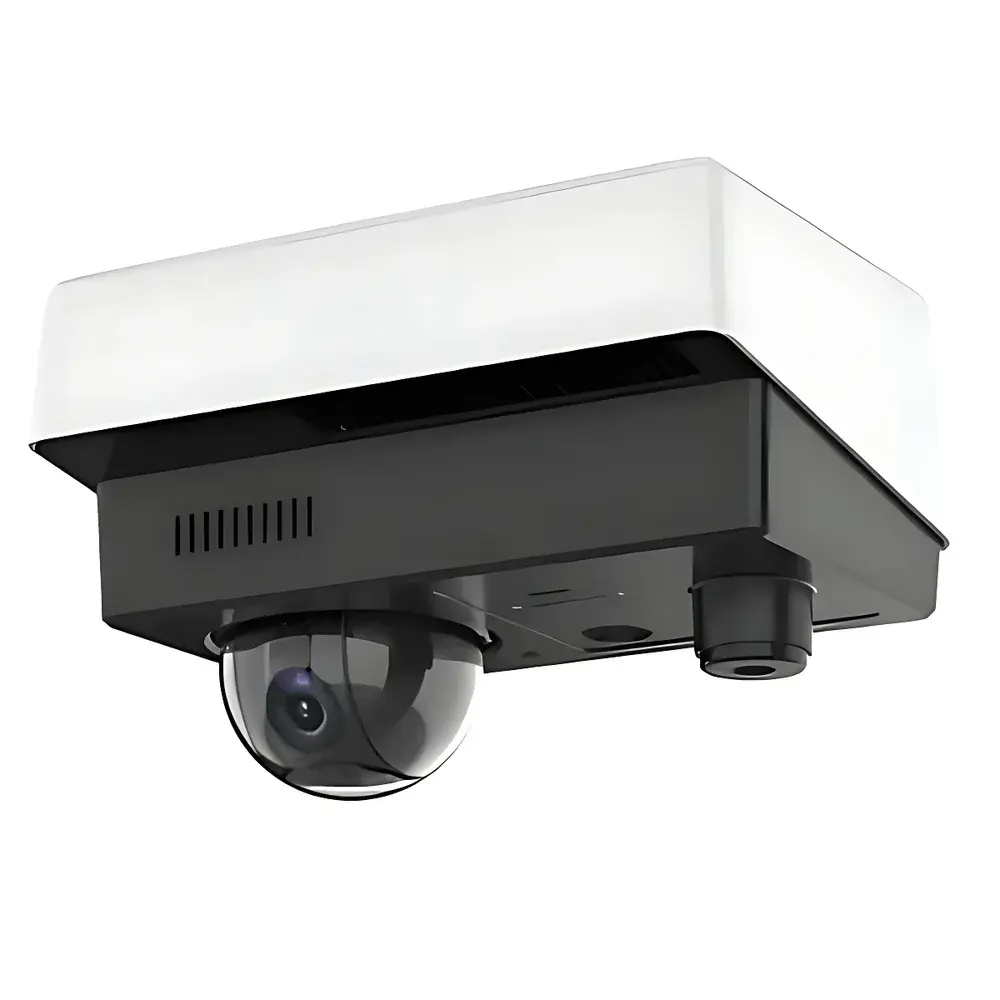
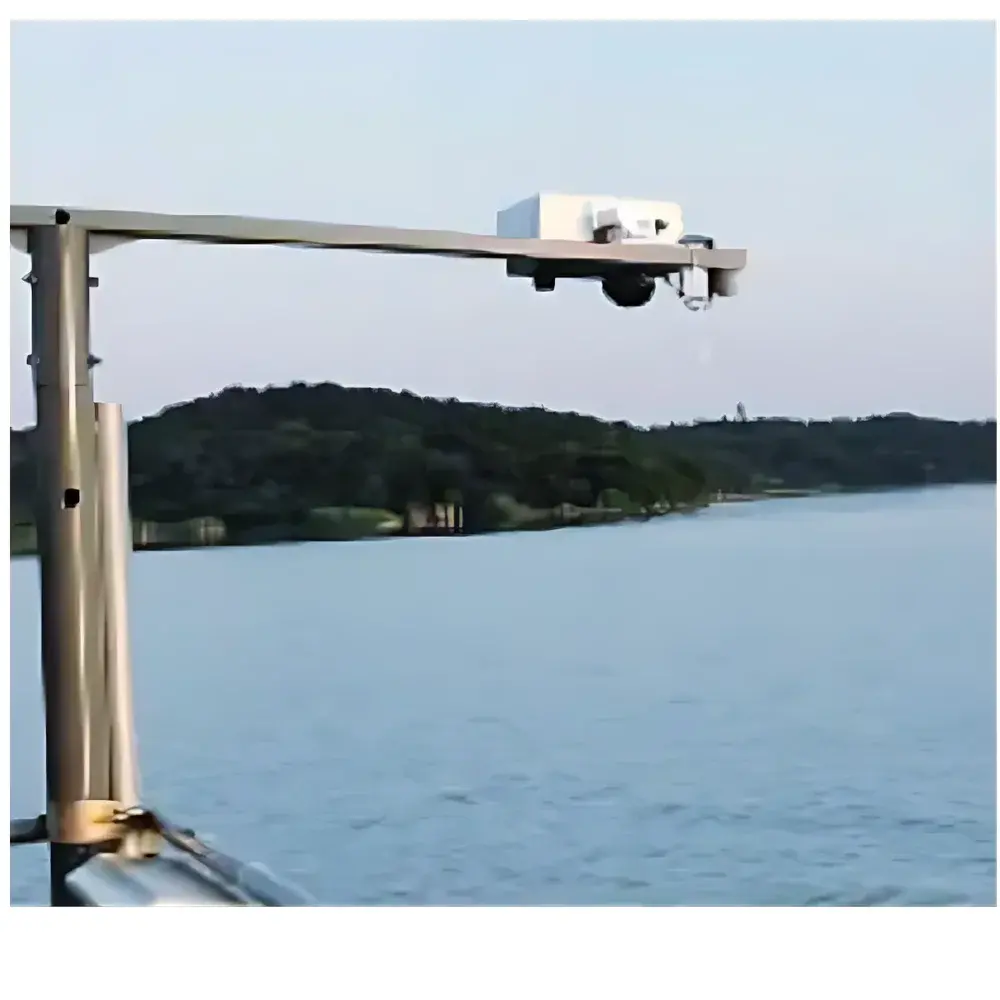
Senbe SAI008 High-Spectral Resolution In-Situ Water Quality Monitor
| Brand | Senbe |
|---|---|
| Origin | Jiangsu, China |
| Manufacturer Type | Manufacturer |
| Country of Origin | China |
| Model | SAI008 |
| Pricing | Upon Request |
| Measurement Principle | Hyperspectral Reflectance Analysis (400–1000 nm, 1 nm spectral resolution) |
| Measurable Parameters | COD, Ammonia-Nitrogen (NH₃-N), Total Phosphorus (TP), Total Nitrogen (TN), Chlorophyll-a, Turbidity, Secchi Depth, CODMn, Suspended Solids (SS), CDOM (optional), Attenuation Coefficient (optional) |
| Sampling Interval | Configurable down to 1 second |
Overview
The Senbe SAI008 High-Spectral Resolution In-Situ Water Quality Monitor is an engineered solution for continuous, non-invasive, and reagent-free assessment of inland water bodies—including rivers, lakes, and reservoirs—using hyperspectral reflectance analysis in the visible to near-infrared range (400–1000 nm). Unlike conventional grab sampling or wet-chemistry analyzers, the SAI008 operates on the physical principle of spectral inversion: it captures high-resolution (1 nm) water surface reflectance signatures and applies domain-adapted machine learning models to quantitatively infer key water quality parameters. This approach eliminates sample extraction artifacts, avoids chemical consumption, and enables true in-situ monitoring without hydraulic disturbance. The system integrates three synchronized sensing modalities: a calibrated hyperspectral imager, a high-definition visible-light PTZ camera with AI-enabled video analytics, and an 80 GHz millimeter-wave radar for precise water level tracking—enabling multi-dimensional, time-synchronized environmental observation.
Key Features
- Non-contact, in-situ measurement architecture—no pumping, no tubing, no reagents, zero secondary pollution
- Hyperspectral engine with 1 nm spectral resolution across 400–1000 nm band, enabling robust discrimination of optically active constituents (e.g., chlorophyll-a, CDOM, suspended solids)
- Multi-parameter output including COD, NH₃-N, TP, TN, turbidity, Secchi depth, CODMn, SS, and optional CDOM/attenuation coefficient
- Configurable measurement interval down to 1-second resolution for high-temporal-resolution event detection
- Embedded visible-light imaging subsystem: 2560 × 1440 @ 30 fps, H.265 compression, 4× optical + 16× digital zoom, integrated IR array (50 m range)
- 80 GHz millimeter-wave radar level sensor with ±5 mm accuracy—immune to fog, rain, snow, dust, and temperature extremes
- Adaptive AI calibration framework trained per-waterbody and seasonally updated via over-the-air model deployment
- HEOP (Heterogeneous Embedded Open Platform)-compliant hardware interface supporting third-party algorithm integration and custom spectral processing pipelines
Sample Compatibility & Compliance
The SAI008 is designed for open-water surface deployment in natural and semi-controlled aquatic environments. It does not require water intake, filtration, or conditioning—therefore exhibiting broad compatibility with turbid, colored, or algae-bloom-affected waters where traditional absorption-based sensors suffer from scattering interference. While the instrument itself is not certified to ISO/IEC 17025 as a reference method, its output parameters are traceable to field-validation protocols aligned with ASTM D5257 (turbidity), ASTM D1253 (residual chlorine—used as proxy for oxidation state correlation), and EPA Method 450.1 (COD estimation via spectral surrogates). Data integrity meets GLP-aligned logging standards, with full audit trail support for timestamps, firmware versions, calibration history, and model inference metadata—facilitating compliance readiness for environmental reporting under national water quality monitoring frameworks.
Software & Data Management
The SAI008 runs on a Linux-based embedded OS with dual-channel data acquisition synchronization (hyperspectral + video + radar). Raw spectra are processed onboard using lightweight convolutional neural networks (CNNs) optimized for edge inference. All quantitative outputs are timestamped, geotagged (via optional GNSS module), and published via MQTT/HTTP(S) to cloud or on-premise SCADA systems. The accompanying web-based platform provides real-time dashboards with overlay visualization—superimposing parameter heatmaps onto live video feeds. Historical datasets support batch reprocessing with updated calibration models. Audit logs comply with ISO/IEC 27001-aligned access control policies; raw spectral archives are stored in HDF5 format for reproducible scientific analysis. Remote firmware and AI model updates are signed and verified to ensure integrity during OTA deployment.
Applications
- Real-time early warning of algal blooms, organic loading events, and nutrient pulses in urban rivers and drinking water source reservoirs
- Supporting watershed-scale load estimation by correlating spectral-derived concentrations with concurrent radar-derived flow velocity and stage data
- Long-term trend analysis for regulatory reporting (e.g., China’s “Blue Sky & Clear Water” Action Plan, EU WFD Article 8 monitoring requirements)
- Validation and ground-truthing of satellite-derived water quality products (e.g., Sentinel-2, GaoFen-6) at sub-field scale
- Intelligent surveillance of anthropogenic interference: vessel intrusion, illegal discharge, floating debris detection via fused video-spectral analytics
- Dynamic calibration transfer between sites using federated learning—reducing need for site-specific lab validation campaigns
FAQ
Does the SAI008 require periodic recalibration with lab-measured samples?
Yes—though significantly less frequently than wet-chemistry analyzers. Initial site-specific model training requires 30–60 days of co-located grab sampling. After deployment, quarterly validation against certified reference methods is recommended for regulatory-grade use.
Can the system operate under low-light or nighttime conditions?
The hyperspectral sensor requires ambient daylight illumination; however, the integrated IR-illuminated visible camera remains fully operational at night for surveillance and contextual monitoring.
Is spectral data export supported for independent analysis?
Yes—raw radiance spectra (in HDF5), reflectance-corrected cubes, and inference confidence metrics are accessible via secure API or local USB export.
How is model drift addressed across seasonal changes?
The adaptive AI engine supports incremental learning: users may upload new labeled field data to trigger automated retraining and version-controlled model rollout without interrupting live operations.
What cybersecurity measures are implemented?
The device enforces TLS 1.2+ for all remote communications, supports role-based access control (RBAC), disables unused services by default, and undergoes annual third-party penetration testing per IEC 62443-3-3 guidelines.







