
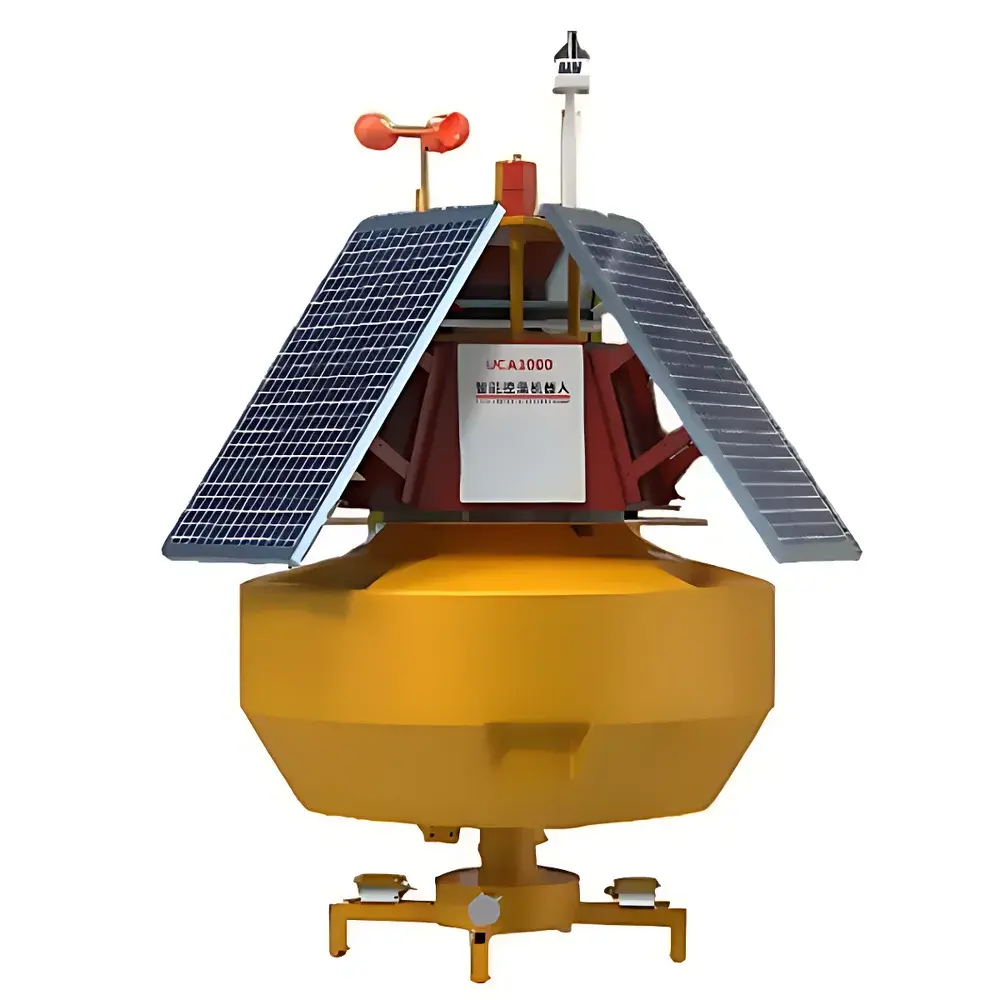
Senbe UCA1000 Intelligent Algal Control Robot
| Brand | Senbe |
|---|---|
| Origin | Jiangsu, China |
| Manufacturer Type | Manufacturer |
| Country of Origin | China |
| Model | UCA1000 |
| Instrument Type | Algal Monitoring and Control System |
| Compliance | HJ 915-2017, GB 3838-2002, GB/T 12519-2010 |
Overview
The Senbe UCA1000 Intelligent Algal Control Robot is an integrated environmental monitoring and physical intervention system engineered for sustainable management of cyanobacterial blooms in freshwater ecosystems. Unlike chemical or biological treatment methods, the UCA1000 employs low-intensity, frequency-tuned ultrasonic waves as a non-invasive physical control modality—operating on well-established biophysical principles including cavitation, free radical generation, and thixotropic disruption. These mechanisms collectively impair algal buoyancy regulation (via gas vesicle destabilization), suppress photosynthetic efficiency (through reactive oxygen species interference), and induce sublethal cellular stress that inhibits mitotic activity and colony expansion. Designed for continuous deployment in lakes, reservoirs, and slow-flowing rivers, the UCA1000 functions as both a real-time water quality sentinel and a proactive bloom mitigation unit—maintaining ecological integrity while complying with national surface water monitoring standards (HJ 915–2017) and ambient water quality criteria (GB 3838–2002). Its autonomous operation, GPS-referenced positioning, and dual-band satellite-IoT communication architecture enable persistent spatial coverage without requiring manual intervention or chemical dosing.
Key Features
- Multi-parameter in-situ sensing: Simultaneous real-time measurement of chlorophyll-a, dissolved oxygen, temperature, phycocyanin, pH, turbidity, and precipitation status via calibrated optical and electrochemical probes.
- Ultrasonic biocontrol module: Programmable emission of low-power, narrow-band ultrasonic frequencies (20–100 kHz range) optimized for selective disruption of cyanobacterial buoyancy without affecting zooplankton, macrophytes, or benthic communities.
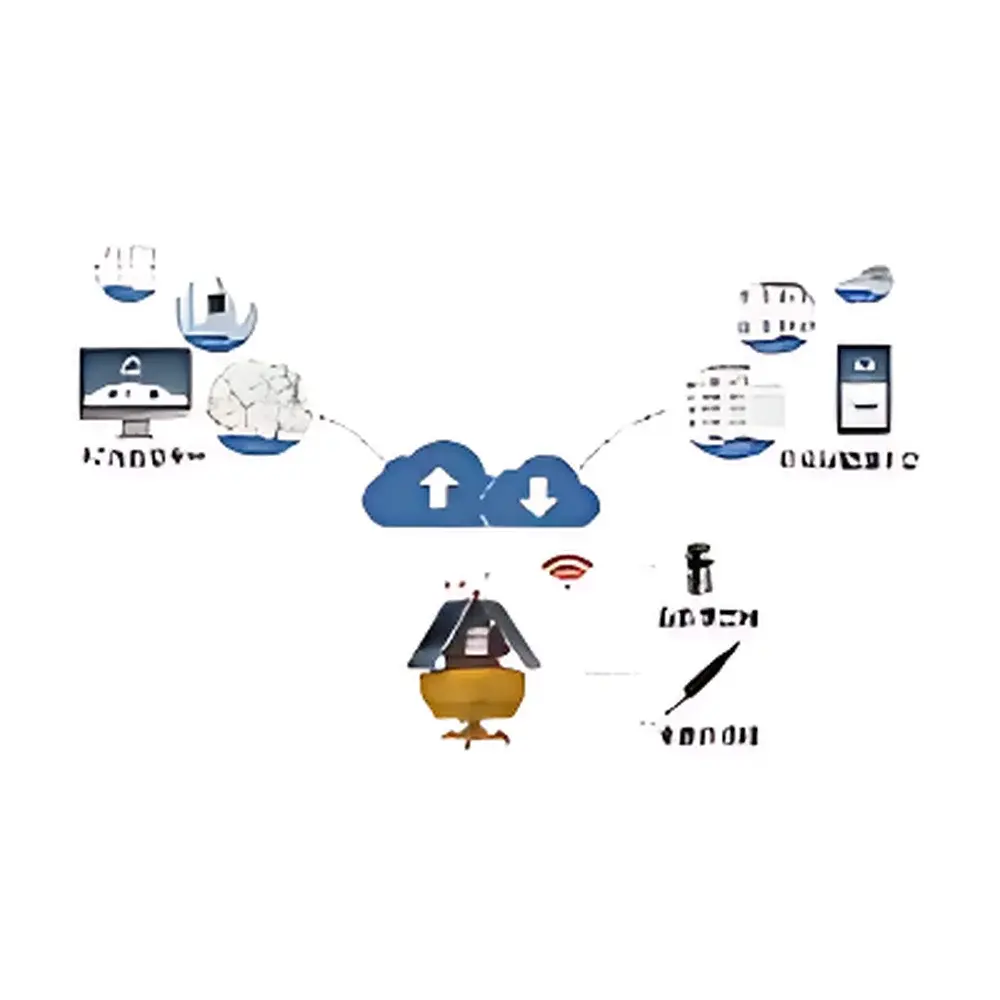
- Dual-channel data access: Web-based dashboard and mobile application interface supporting live telemetry streaming, historical trend analysis, alarm threshold configuration, and remote firmware updates.
- Georeferenced deployment: Integrated BeiDou GNSS module ensures precise location tagging and spatial correlation of sensor readings across distributed monitoring networks.
- Cloud-native AI analytics: Edge-to-cloud architecture leveraging time-series modeling and multivariate anomaly detection to generate early-warning alerts for bloom initiation—trained on region-specific hydrodynamic and meteorological inputs.
- Modular hardware design: IP68-rated enclosure with corrosion-resistant marine-grade stainless steel and UV-stabilized polymer components; compatible with solar-battery hybrid power systems for off-grid operation.
Sample Compatibility & Compliance
The UCA1000 is validated for use in natural and semi-natural freshwater bodies—including eutrophic lakes, drinking water reservoirs, aquaculture ponds, and urban景观 water features—with primary efficacy demonstrated against Microcystis aeruginosa, Anabaena spp., and Aphanizomenon flos-aquae. It meets the functional requirements outlined in HJ 915–2017 for automated surface water monitoring stations, conforms to general performance specifications for analytical instrumentation per GB/T 12519–2010, and aligns with classification criteria under GB 3838–2002 for Class III–IV surface waters. All onboard sensors undergo factory calibration traceable to NIM (National Institute of Metrology, China) reference standards. The system supports audit-ready data logging compliant with GLP-aligned operational protocols, including timestamped metadata, sensor health diagnostics, and tamper-evident storage.
Software & Data Management
The embedded firmware communicates via MQTT over LTE/BeiDou dual-mode uplink to the Senbe Smart Water Platform—a secure, role-based cloud environment supporting ISO/IEC 27001-aligned data handling practices. Raw sensor outputs are ingested into a time-series database with automatic QC flagging (e.g., drift compensation, outlier rejection). Users access interactive dashboards featuring geospatial heatmaps, multi-parameter correlation matrices, and dynamic forecasting visualizations derived from coupled hydrodynamic–ecological models. Data export supports CSV, NetCDF, and SDMX formats; API endpoints enable integration with third-party SCADA systems or regional environmental information platforms. Audit trails record all user-initiated actions—including parameter adjustments, firmware deployments, and alert acknowledgments—in accordance with traceability requirements for regulatory reporting.
Applications
- Early-stage cyanobacterial bloom suppression in municipal drinking water source protection zones.
- Long-term trophic state assessment in lake restoration projects requiring non-chemical intervention strategies.
- Operational support for water utility intake management through predictive algae concentration forecasting.
- Research-grade validation of algal growth inhibition kinetics under controlled field conditions.
- Integration into smart city water infrastructure frameworks for automated ecological risk mitigation.
FAQ
Does the UCA1000 release any chemicals or biocides into the water?
No. The system relies exclusively on physical ultrasonic energy and does not introduce exogenous substances.
Can it operate autonomously during extended power outages?
Yes—when configured with optional solar-charged lithium-iron-phosphate battery packs, it maintains full functionality for ≥14 days without grid power.
Is remote firmware update capability supported?
Yes. Over-the-air (OTA) updates are delivered securely via TLS-encrypted channels and require signed authentication keys.
How frequently are ultrasonic pulses emitted during active control mode?
Pulse intervals are dynamically adjusted based on real-time chlorophyll-a concentration and weather forecasts—ranging from continuous low-dose exposure to intermittent high-efficiency bursts.
What data security measures are implemented in the cloud platform?
All data transmissions use AES-256 encryption; stored datasets are encrypted at rest; platform access enforces MFA and RBAC policies aligned with ISO 27001 Annex A controls.







