
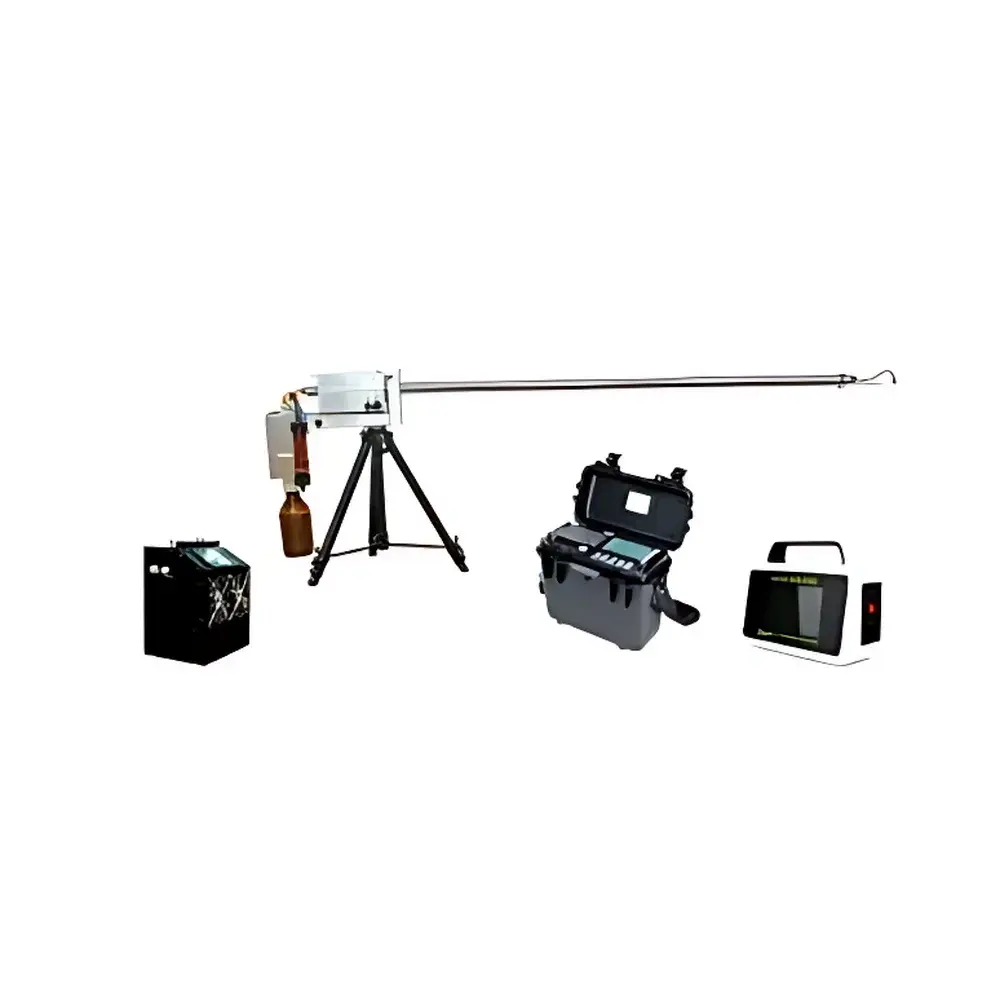
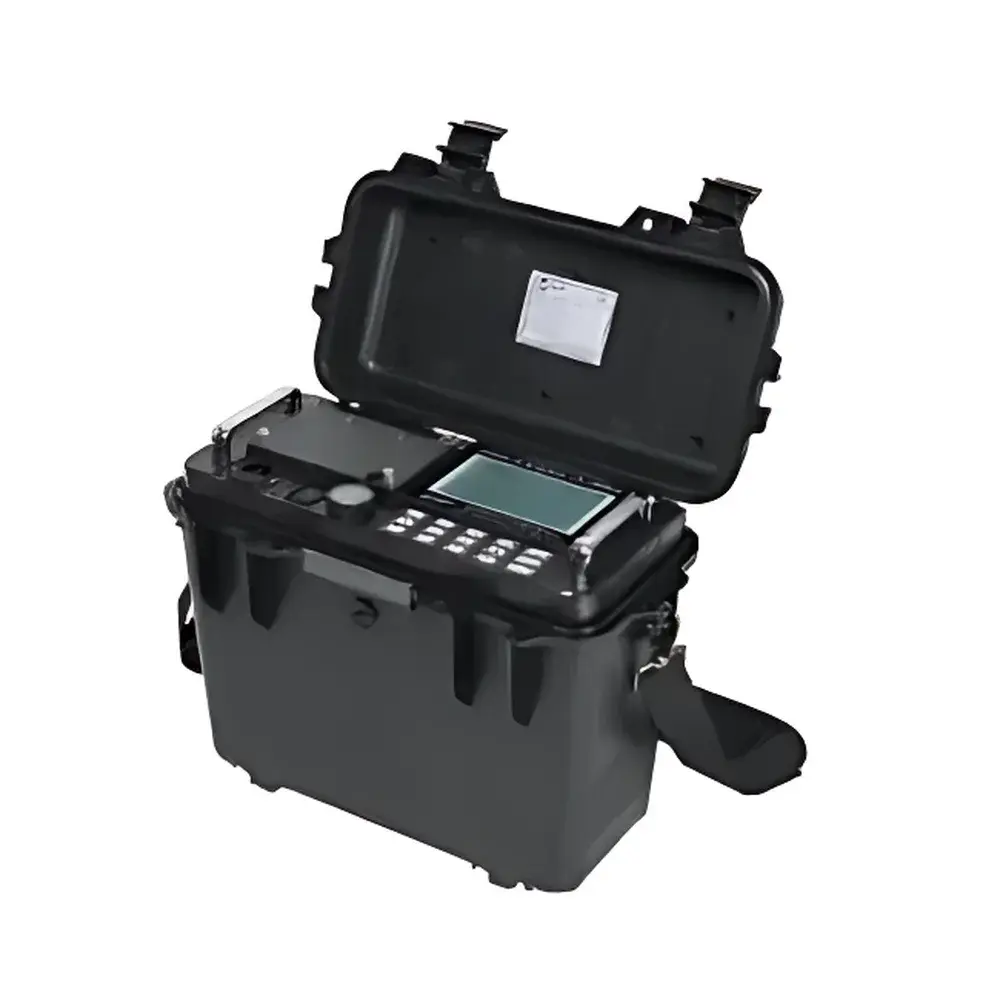
Senbe YQ3000-E Dioxin Sampling System for Flue Gas
| Brand | Senbe |
|---|---|
| Origin | Jiangsu, China |
| Manufacturer Type | Direct Manufacturer |
| Product Origin | Domestic (China) |
| Model | YQ3000-E |
| Instrument Type | Flue Gas Dioxin Sampler |
| Sample Medium | Flue Gas |
| Flow Accuracy | ±5% |
| Sampling Flow Rate | 1.5 L/min |
| Flue Gas Velocity Range | Up to 4 m/s |
| Moisture Content Tolerance | Up to 60% (v/v) |
Overview
The Senbe YQ3000-E Dioxin Sampling System is a purpose-engineered flue gas sampling instrument designed for the quantitative collection of dioxin and furan congeners (PCDD/Fs) from high-temperature, high-moisture industrial exhaust streams. It operates on the principle of isokinetic sampling combined with dual-phase capture—simultaneously retaining both vapor-phase and particulate-bound dioxins using a standardized glass fiber filter (GFF) followed by polyurethane foam (PUF) and XAD-2 resin traps, in strict accordance with EPA Method 23, EN 1948, and HJ 77.2–2008. The system integrates a titanium alloy sampling probe capable of withstanding prolonged exposure to corrosive flue gases up to 200 °C, a precision temperature-controlled condensation unit to manage moisture loading, and an actively cooled trap train maintained at ≤10 °C to prevent analyte loss or degradation. Its architecture supports continuous, unattended operation under variable stack conditions—including negative pressure environments typical of waste incineration facilities—ensuring representative, legally defensible sample integrity for subsequent HRGC-HRMS analysis.
Key Features
- Isokinetic flow control with real-time velocity feedback, maintaining sampling accuracy within ±5% across flue gas velocities up to 4 m/s
- Titanium alloy sampling probe with integrated thermocouple and heated filter housing (operating range: ambient to 200 °C), resistant to chloride-induced corrosion
- Integrated compact chiller unit (≤15 kg, air-cooled) delivering stable trap temperatures ≤10 °C with <±0.5 °C thermal stability over 8-hour runs
- High-capacity, oil-free diaphragm pump rated for ≥−25 kPa static suction pressure, enabling reliable sampling in deep-draft stacks
- Automatic anti-backflow protection with solenoid valve interlock and pressure-sensing logic to prevent sample contamination during power interruption
- Intelligent microprocessor controller with password-protected configuration, automatic power recovery after outage, and built-in data logging (6,000 sample records)
- Modular trap assembly with quick-release fittings, compliant with ISO/IEC 17025 traceability requirements for field calibration verification
- User-selectable print output including date/time stamp, flow rate, temperature, pressure differential, and operator ID
Sample Compatibility & Compliance
The YQ3000-E is validated for sampling from stationary emission sources characterized by high moisture content (up to 60% v/v), acidic gas concentrations (HCl, SO₂), and particulate loadings common in municipal solid waste (MSW), hazardous waste, and medical waste incinerators—as well as co-processing cement kilns. It meets the mechanical and metrological requirements of JJG 680–2007 (Particulate Sampler Verification), JJG 968–2002 (Flue Gas Analyzer Verification), GB/T 16157–1996, HJ/T 48–1999, and HJ/T 365–2007. For regulatory reporting, its sampling protocol aligns with the QA/QC framework specified in HJ 77.2–2008 and supports full audit trails required under GLP-compliant laboratories conducting dioxin monitoring for compliance with GB 18485–2014 and EU Directive 2000/76/EC.
Software & Data Management
The embedded firmware supports USB data export in CSV format, compatible with LIMS integration and automated report generation. All sampling events are timestamped and logged with metadata including ambient temperature, stack temperature, differential pressure across the filter, actual vs. setpoint flow rate, and trap temperature history. Audit logs record user login sessions, parameter modifications, and calibration events—supporting 21 CFR Part 11–aligned electronic record integrity when paired with laboratory-controlled access protocols. Firmware updates are performed via secure signed binary upload; no cloud connectivity or remote telemetry is implemented, preserving data sovereignty per ISO/IEC 27001-aligned operational policies.
Applications
- Regulatory dioxin emission monitoring at municipal solid waste incineration (MSWI) plants
- Compliance testing for hazardous and medical waste incinerators under national permitting frameworks
- Stack testing during commissioning, performance verification, and periodic environmental audits
- Source apportionment studies requiring speciated PCDD/F profiles from multiple combustion units
- Pre-compliance screening for cement kilns co-processing alternative fuels or residues
- Research-grade sampling in controlled pilot-scale thermal treatment experiments
FAQ
What standards does the YQ3000-E comply with for dioxin sampling?
It conforms to HJ 77.2–2008, HJ/T 365–2007, GB/T 16157–1996, and JJG 680–2007, and is method-compatible with EPA Method 23 and EN 1948–1/2/3.
Can the system handle high-moisture flue gas without ice formation in the trap train?
Yes—the integrated chiller maintains trap temperatures at 4–8 °C while the heated probe and filter housing prevent condensation upstream; moisture separation occurs via inertial impaction and chilled surface capture, minimizing water breakthrough.
Is isokinetic sampling automatically maintained across varying stack velocities?
Yes—velocity sensing via Pitot tube input enables real-time pump speed modulation to sustain isokinetic ratio within ±5%, verified via built-in flow calibration against NIST-traceable rotameters.
How is data integrity ensured during extended unattended operation?
All parameters are logged at 10-second intervals with non-volatile memory backup; power failure triggers immediate save-to-flash and auto-resume upon restoration, preserving continuity of sampling metadata.
What maintenance intervals are recommended for field deployment?
Filter and trap components require replacement per run; pump diaphragms and chiller refrigerant should be inspected every 500 operating hours, with full metrological recalibration recommended annually per JJG 680–2007.







