
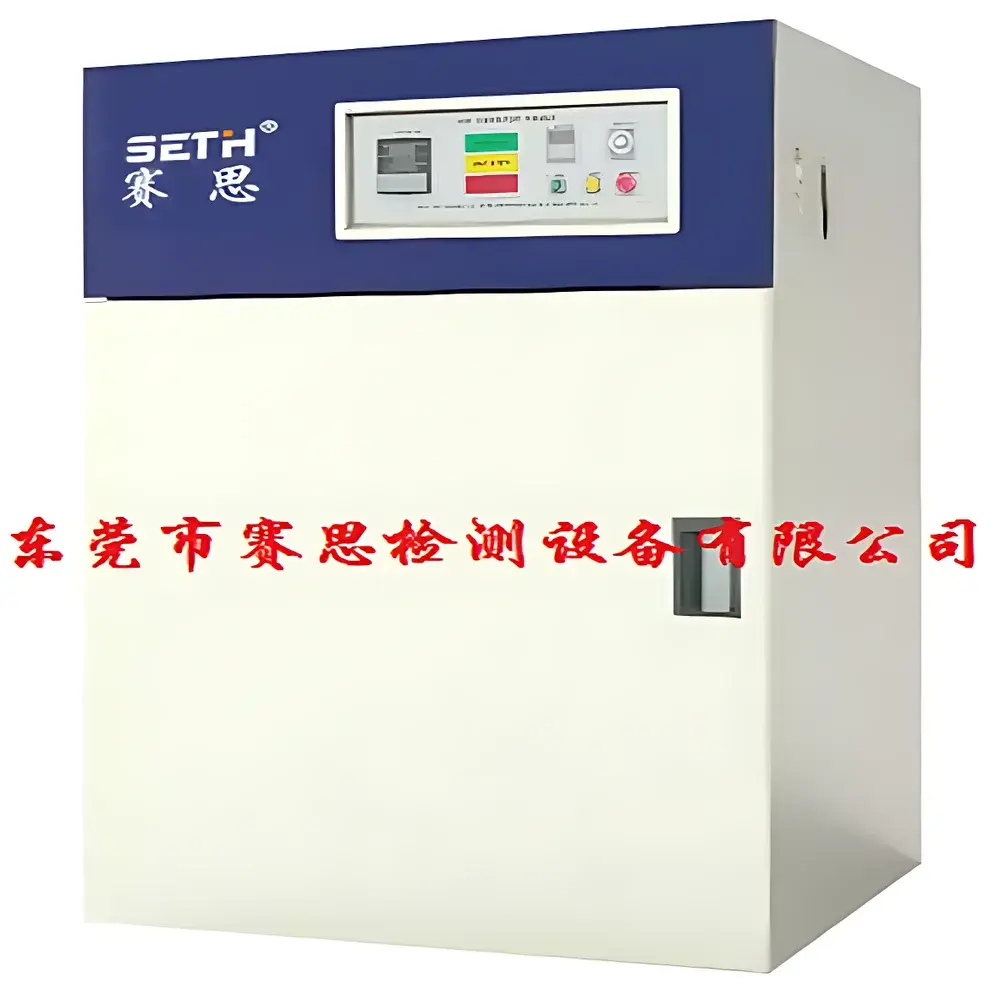
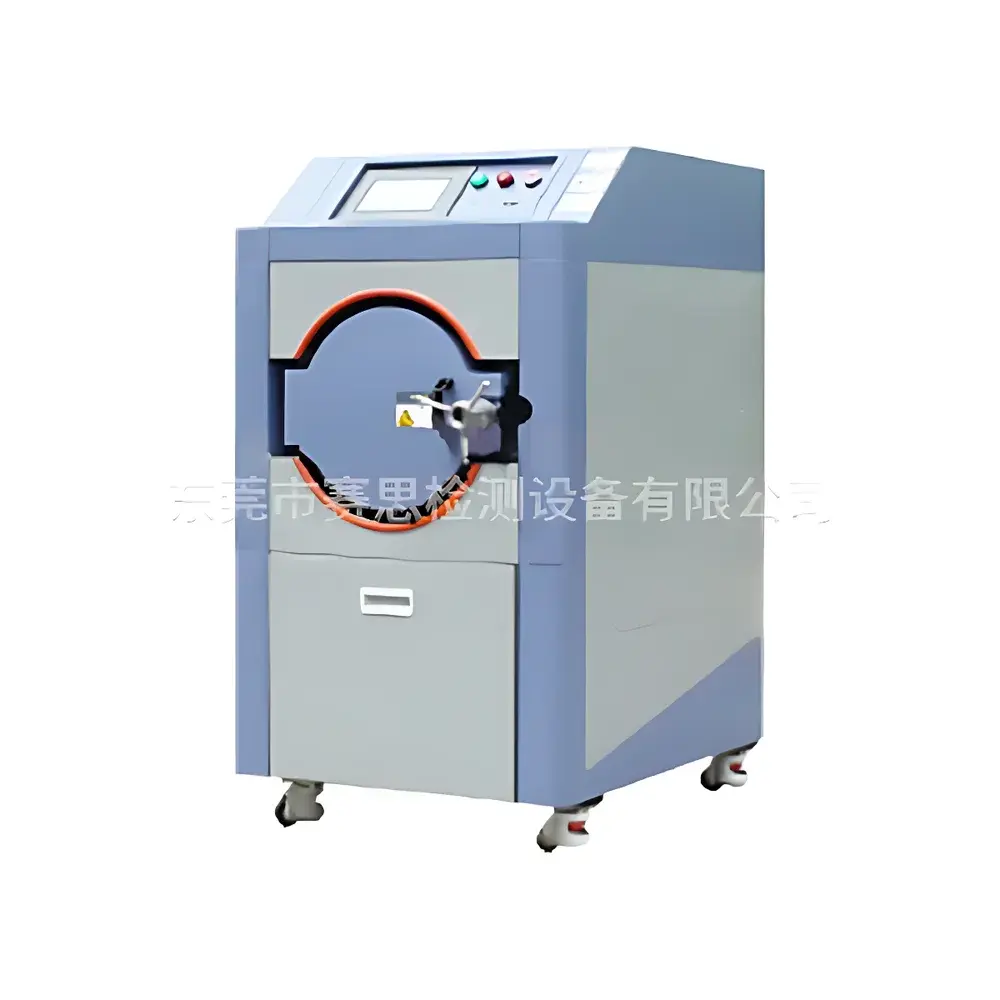
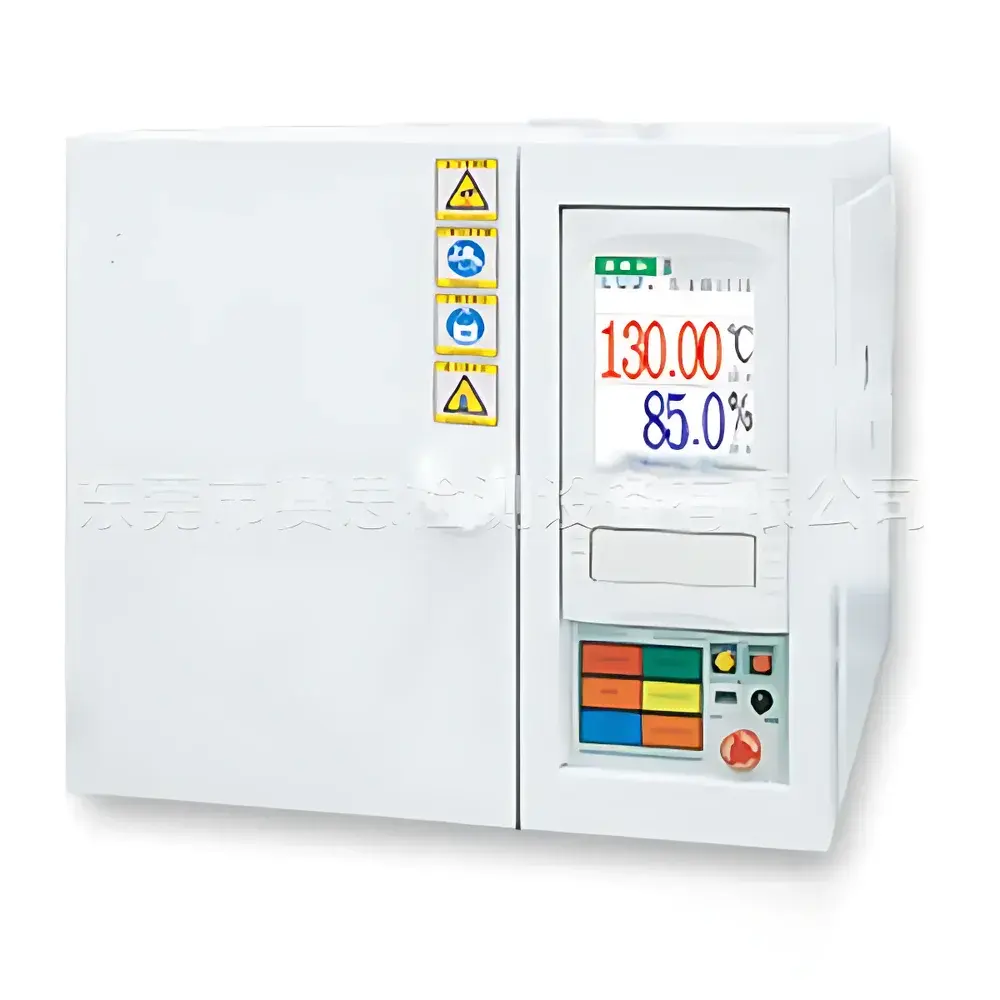
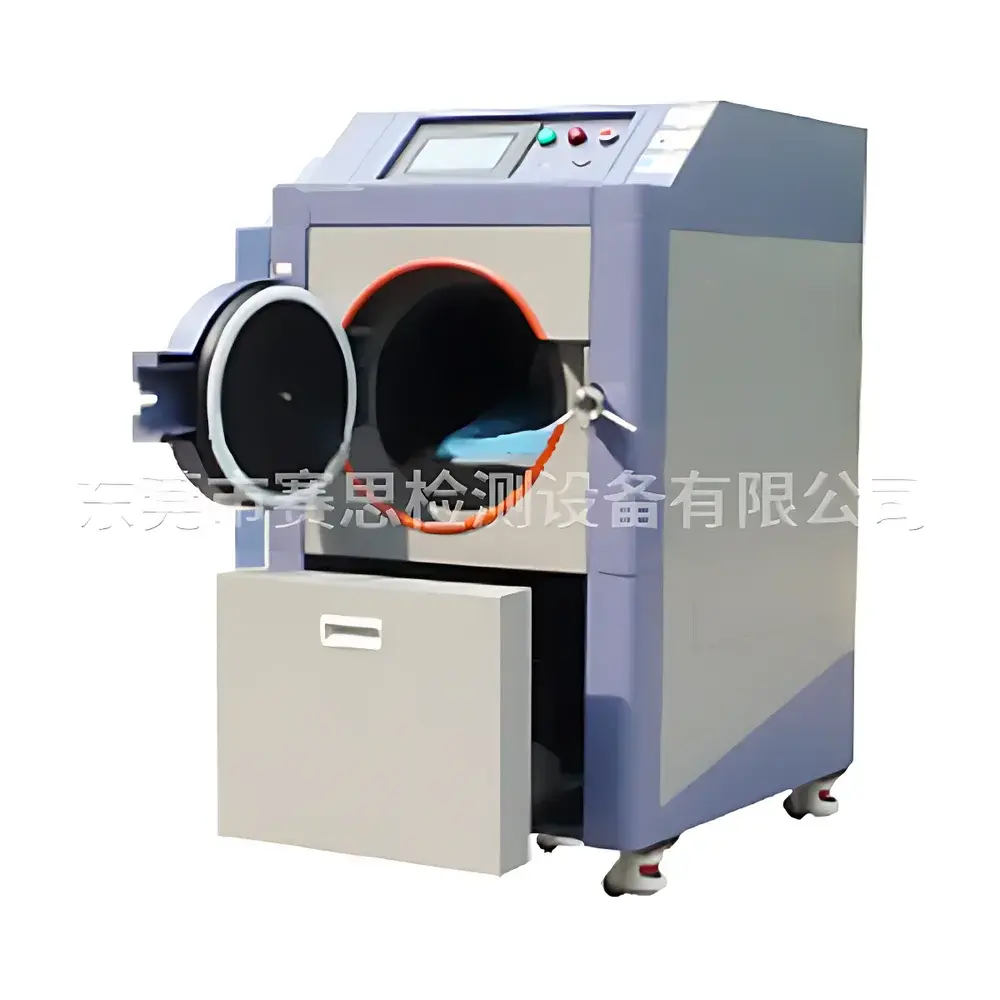
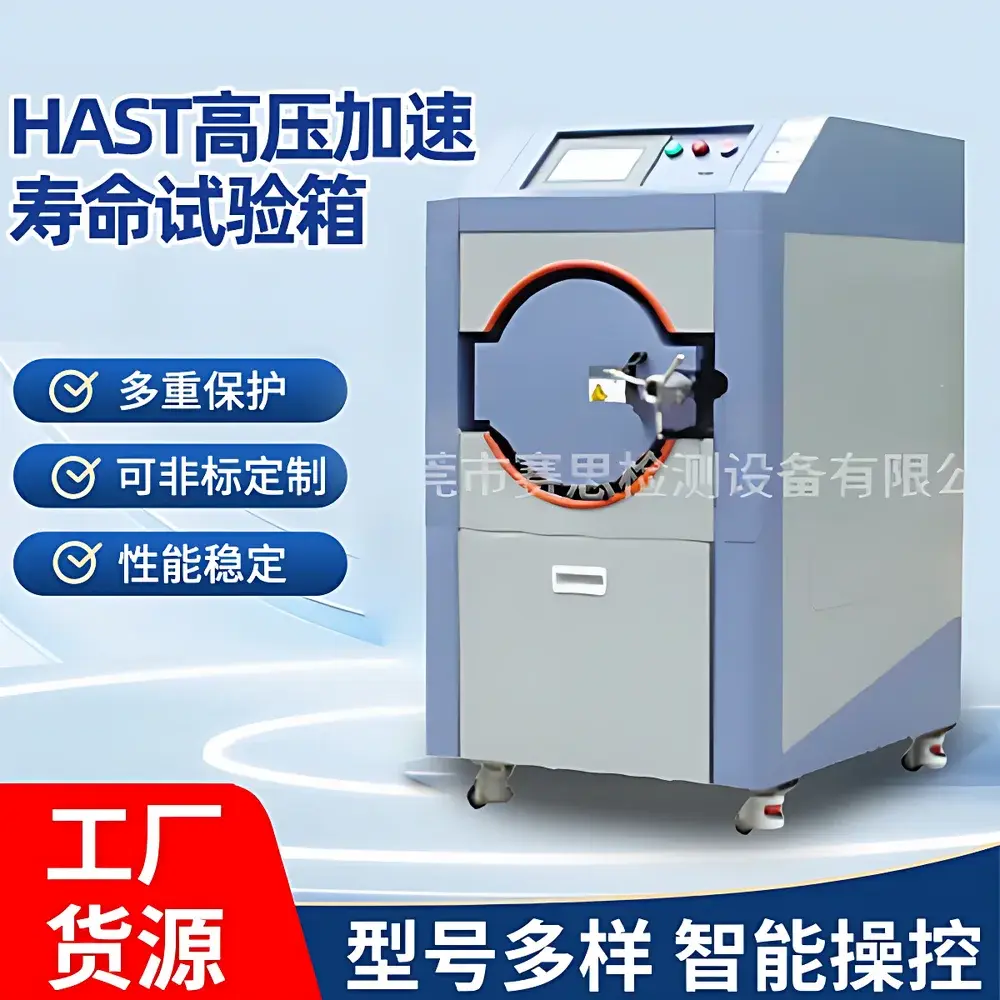
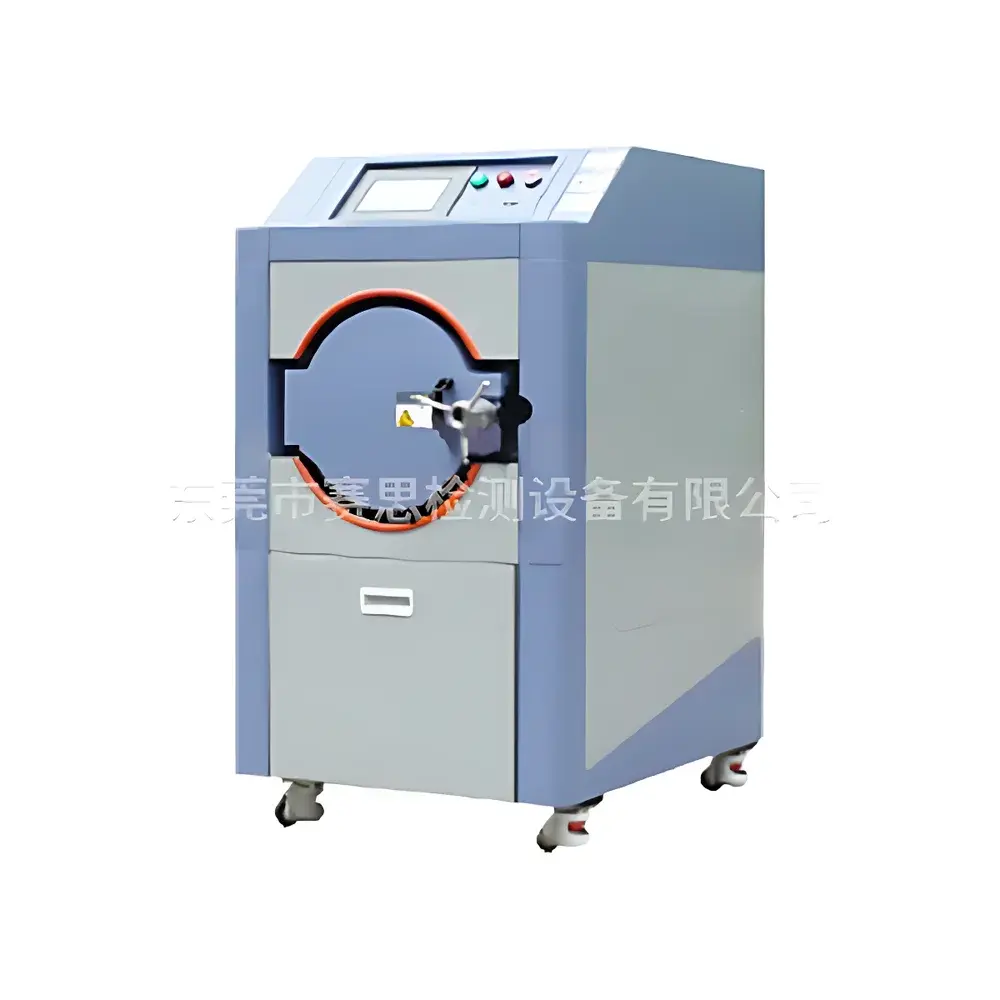
SETH SE-GW-100 High-Temperature Aging Test Chamber
| Brand | SETH |
|---|---|
| Origin | Guangdong, China |
| Manufacturer Type | Direct Manufacturer |
| Product Category | Domestic |
| Model | SE-GW-100 |
| Max Temperature | 150–200 °C |
| Type | Air Thermal Aging Chamber |
| Temperature Range | RT+10 °C to 200 °C |
| Temperature Uniformity | ±0.5 °C to ±2.0 °C |
| Temperature Fluctuation | ±0.5 °C to ±1.0 °C |
| Temperature Deviation | ±1.5 °C to ±3.0 °C |
| Heating Rate | ≤40 min (from ambient +20 °C to 200 °C) / ≤60 min (alternative specification) |
| Cooling Rate | 0.7–1.0 °C/min |
| Air Exchange Rate | configurable (cycles/hour) |
| Interior Dimensions (W×H×D) | 450×450×500 mm |
| Construction | Interior – SUS304 stainless steel |
| Heating System | PID + SSR controlled resistive heating |
| Air Circulation | Forced horizontal airflow via multi-blade turbine fan with SETH-optimized duct design |
| Sealing | High-temperature silicone gasket |
| Safety Protections | Over-temperature cut-off, over-current auto-shutdown |
| Controller | PID microprocessor-based digital controller with dual PV/SV display and built-in timer |
| Optional | Tempered glass observation window |
Overview
The SETH SE-GW-100 High-Temperature Aging Test Chamber is an engineered environmental test system designed for accelerated thermal aging evaluation of materials and components under controlled, sustained elevated temperatures. Based on the principle of air thermal oxidation acceleration, it subjects test specimens—including polymers, elastomers, electronic encapsulants, wiring harnesses, PCB substrates, and automotive interior materials—to defined thermal stress profiles per standardized aging protocols. Its operational envelope spans from ambient +10 °C up to 200 °C, enabling compliance-driven qualification testing across electronics, aerospace, defense, and automotive supply chains. The chamber’s architecture prioritizes thermal stability and repeatability—critical parameters for correlating laboratory aging results with real-world service life predictions.
Key Features
- Robust dual-layer construction: Interior chamber fabricated from corrosion-resistant SUS304 stainless steel; exterior housing made of SECC cold-rolled steel with high-temperature powder coating for long-term structural integrity and surface durability.
- Precision temperature regulation: PID + SSR (Solid-State Relay) heating control ensures stable setpoint maintenance with minimal overshoot and optimized energy efficiency.
- Uniform thermal distribution: Forced horizontal airflow generated by a high-efficiency, high-temperature-rated multi-blade turbine fan, integrated with SETH’s proprietary air duct geometry to minimize vertical and lateral thermal gradients.
- Intelligent microprocessor controller: Digital PID interface with simultaneous process value (PV) and set value (SV) display, programmable timer function, and intuitive parameter navigation—designed for operator consistency in routine qualification runs.
- Comprehensive safety architecture: Dual-redundant protection includes independent over-temperature limit switch and over-current detection circuitry, meeting IEC 61000-6-2 immunity and IEC 61000-6-4 emission requirements for industrial environments.
- Configurable ventilation: Adjustable air exchange rate supports standardized aging conditions per ASTM D573, ISO 188, and GB/T 2423.2—enabling precise simulation of oxidative degradation kinetics.
Sample Compatibility & Compliance
The SE-GW-100 accommodates a broad range of sample geometries within its 450 × 450 × 500 mm working volume, supporting rack-mounted fixtures, wire spools, molded parts, and flat-panel assemblies. It is validated for use in accordance with national and international standards including GB/T 2423.2–2001 (equivalent to IEC 60068-2-2), GB/T 10592–2008 (specifications for high-temperature test chambers), and military standards GJB 150.3A–2009 and GJB 150.4A–2009 (environmental engineering considerations for airborne equipment). Its thermal performance metrics—uniformity ±0.5–2.0 °C, fluctuation ±0.5–1.0 °C, and deviation ±1.5–3.0 °C—are verified per ISO 17025-accredited calibration procedures, ensuring traceability to NIM (National Institute of Metrology, China) reference standards.
Software & Data Management
While the base configuration features a stand-alone PID controller, optional RS485/Modbus RTU or Ethernet-enabled data logging modules are available for integration into centralized lab management systems. When configured with compliant firmware, the chamber supports audit-trail-capable data recording—including timestamped temperature profiles, cycle start/stop events, and alarm logs—aligned with GLP and GMP documentation requirements. Raw data export (CSV format) enables post-test statistical analysis using JMP, Minitab, or Python-based reliability modeling tools such as lifelines or reliability.
Applications
- Accelerated aging of rubber compounds and thermoplastic elastomers per ASTM D573 and ISO 188.
- Thermal endurance validation of conformal coatings, solder mask materials, and flexible printed circuits.
- Pre-conditioning of lithium-ion battery cell components prior to electrochemical cycling tests.
- Stability assessment of adhesives, potting compounds, and encapsulants used in automotive ECUs and avionics housings.
- Material screening for space-grade polymers under simulated low-earth-orbit thermal vacuum pre-bake protocols.
- Qualification of packaging materials for sterile medical device shelf-life studies (ISO 11607).
FAQ
What standards does the SE-GW-100 comply with for thermal aging testing?
It meets GB/T 2423.2–2001, GB/T 10592–2008, GJB 150.3A–2009, GJB 150.4A–2009, and is operationally compatible with ASTM D573, ISO 188, and IEC 60068-2-2.
Can the chamber be calibrated to ISO/IEC 17025 requirements?
Yes—SETH provides optional third-party calibration certificates traceable to national metrology institutes, including uncertainty budgets per ISO/IEC 17025:2017 Annex A.
Is remote monitoring supported out of the box?
Standard units include local PID control only; RS485 Modbus or Ethernet connectivity is available as a factory-installed option with configurable SCADA integration.
What is the typical lead time for delivery and commissioning?
Lead time is 6–8 weeks from order confirmation, inclusive of FAT (Factory Acceptance Test) documentation and on-site installation support upon request.
Does the unit support ramp-soak profiles for multi-step aging cycles?
The base controller supports single-setpoint hold; multi-segment ramp-soak functionality requires upgrade to the optional programmable controller module (SE-GW-PC1).



