
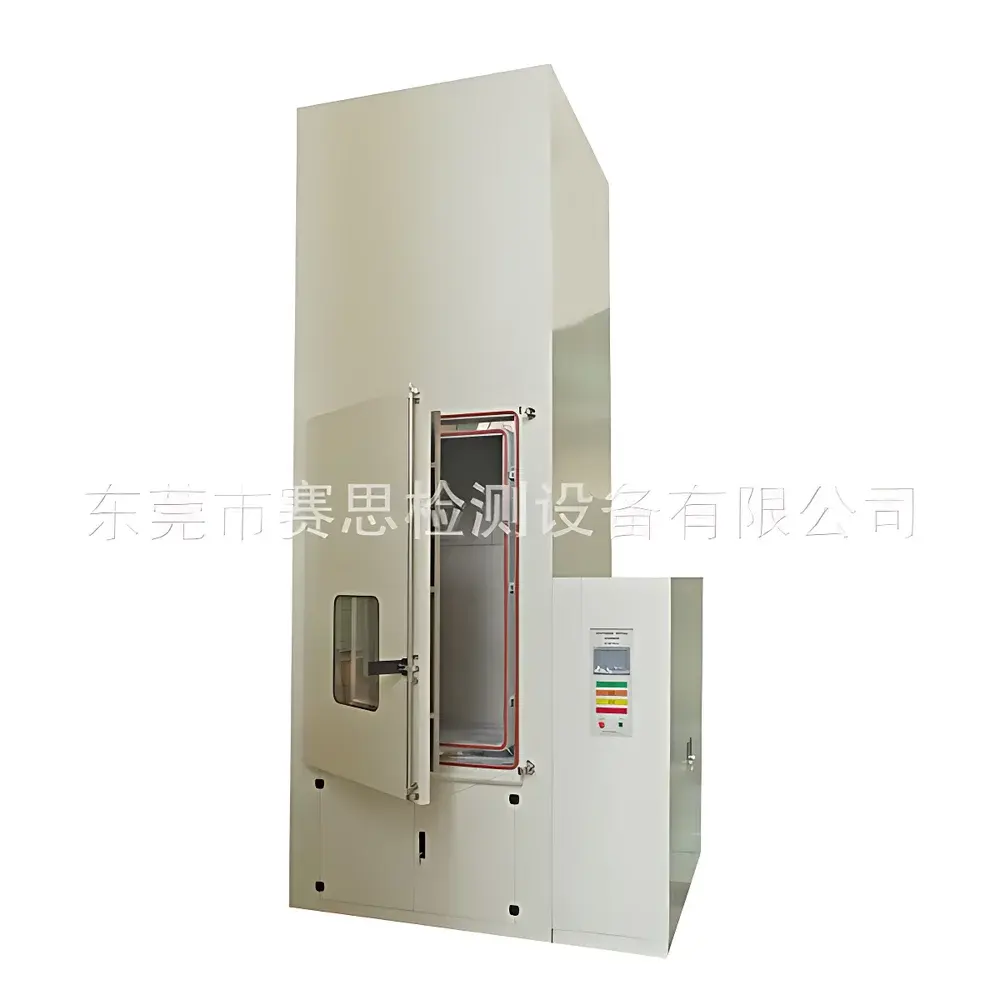
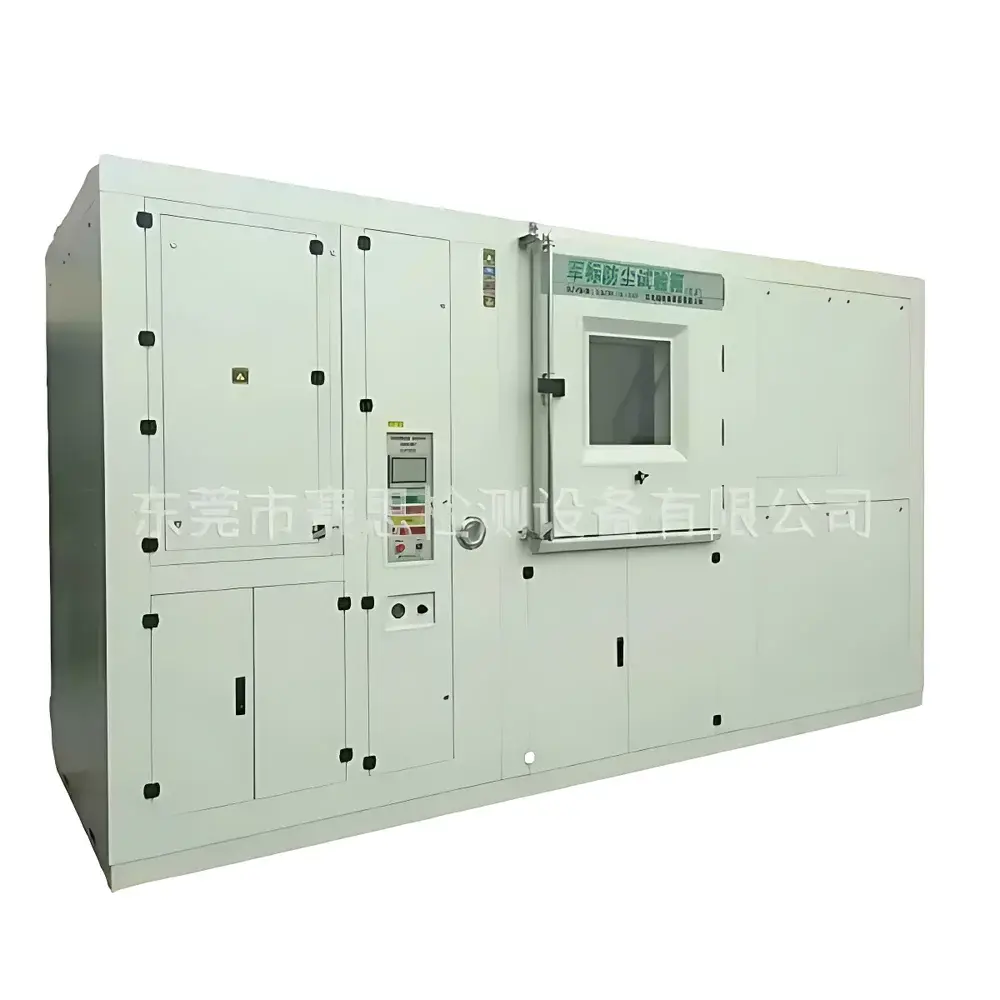
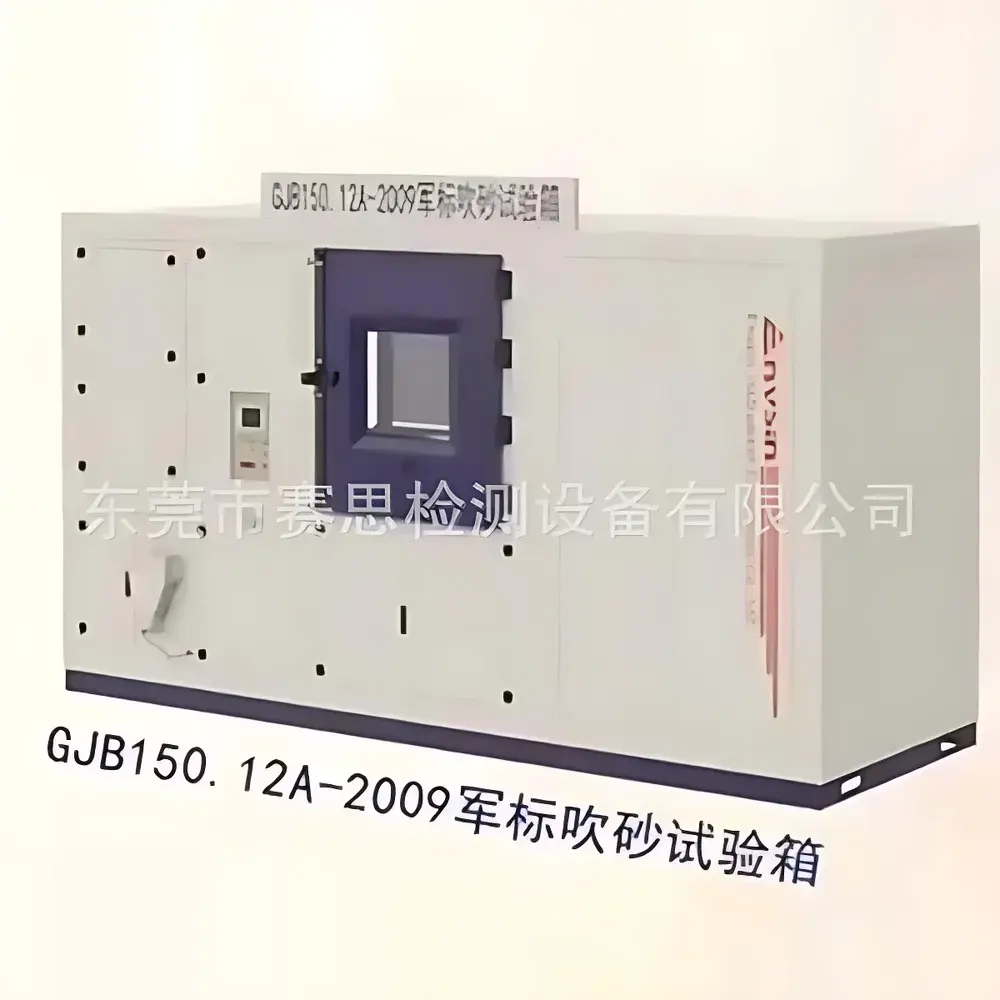
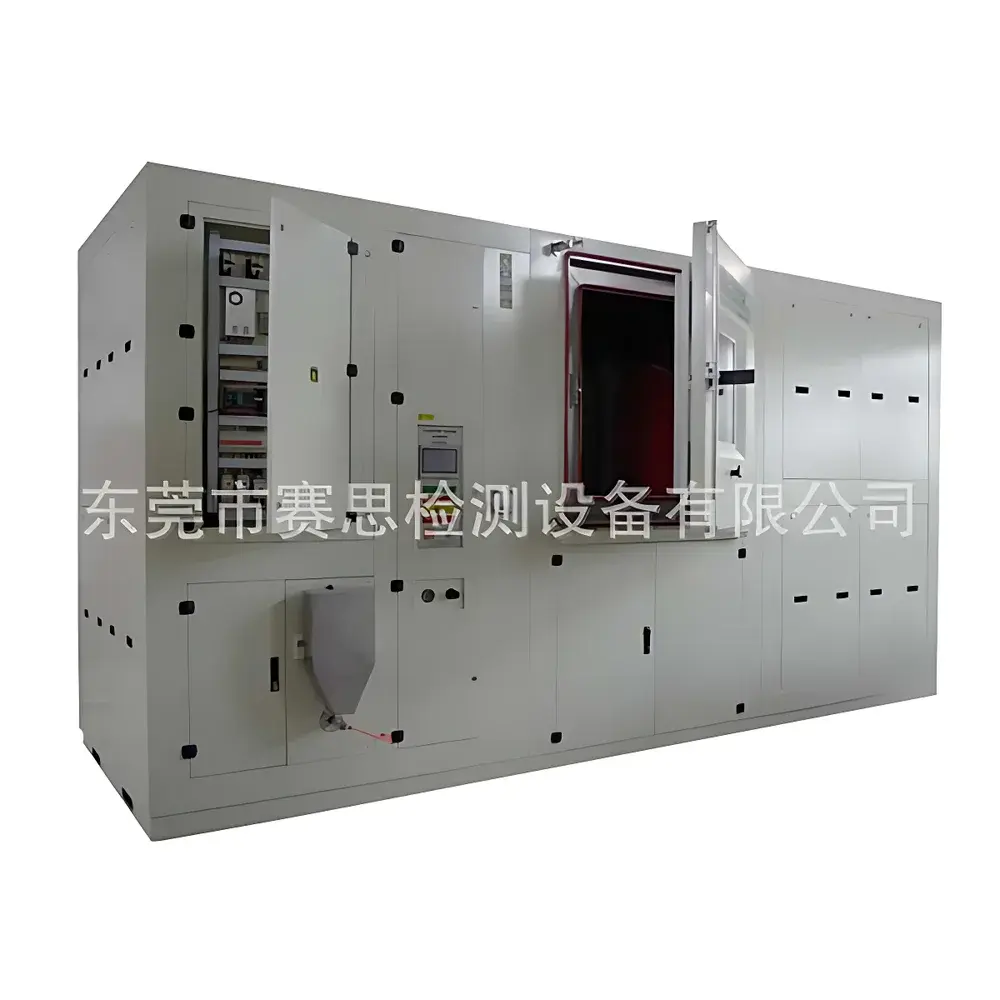
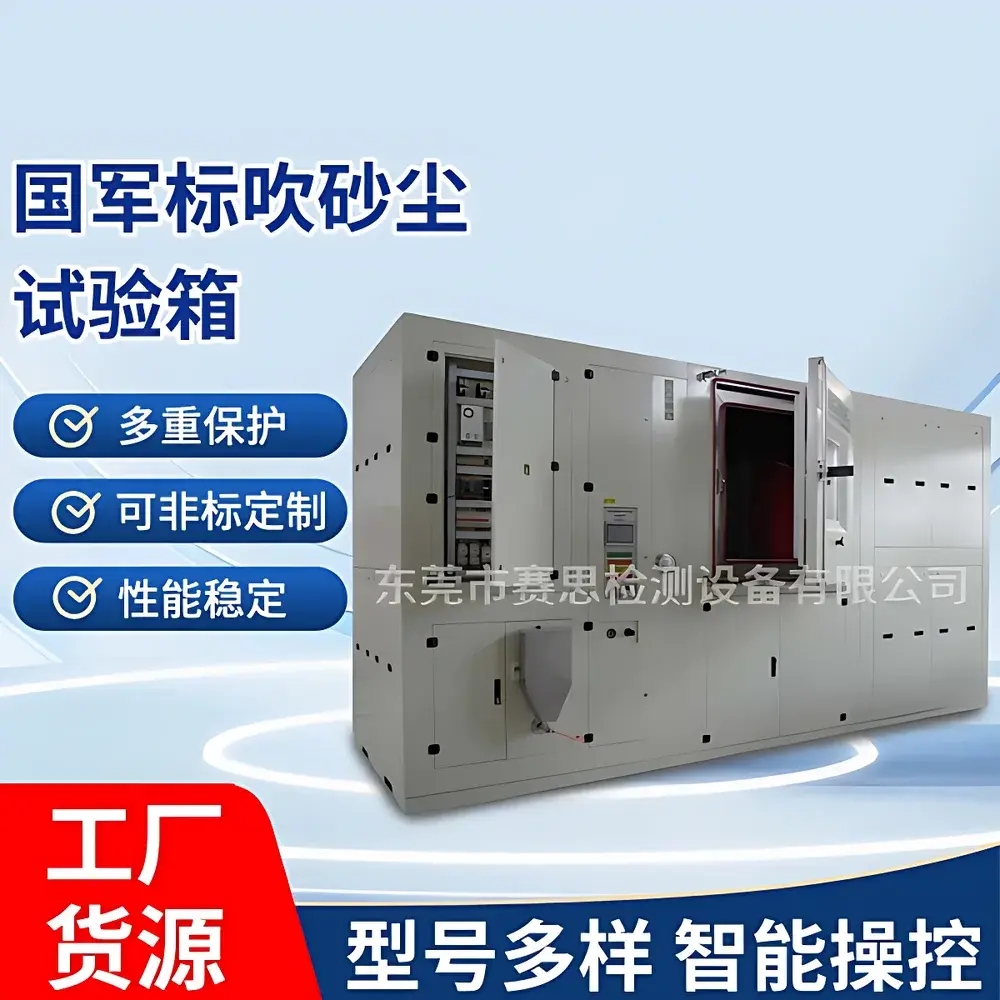
SETH SE-SCGJB500B Military Standard Sand and Dust Test Chamber
| Brand | SETH |
|---|---|
| Origin | Guangdong, China |
| Manufacturer Type | Direct Manufacturer |
| Product Origin | Domestic (China) |
| Model | SE-SCGJB500B |
| Sand Composition | 97–99% SiO₂ (quartz sand) |
| Sand Blasting Concentration | 1.1 g/m³ ±0.25 g/m³ to 2.2 g/m³ ±0.5 g/m³ |
| Sand Blasting Velocity | 0–29 m/s |
| Dust Blowing Concentration | 0.1–10.6 g/m³ ±7% |
| Dust Blowing Velocity | 8.9 m/s ±1.2 m/s |
| Temperature Range | 20–80 °C |
| Humidity Control | ≤30% RH |
| Sand Particle Size (blasting) | 150–850 µm |
| Dust Particle Size (blowing) | ≤149 µm |
| Airflow Regulation | Variable-frequency centrifugal fan |
| Test Standards | GJB 150.12A–2009, GJB 150.12–1986, GJB 360B–2009 Method 110 |
Overview
The SETH SE-SCGJB500B Military Standard Sand and Dust Test Chamber is an engineered environmental simulation system designed for rigorous evaluation of ingress protection (IP) performance, sealing integrity, abrasion resistance, and operational reliability under simulated desert and battlefield conditions. It operates on the principle of controlled airborne particulate impingement—using high-velocity, precisely metered airflows to transport standardized silica-based particles against test specimens in a closed-loop vertical circulation chamber. This methodology directly implements the physical stress mechanisms defined in GJB 150.12A–2009 (“Laboratory Environmental Test Methods for Military Equipment – Part 12: Sand and Dust Testing”), enabling quantitative assessment of dust exclusion (IP5X), dust-tightness (IP6X), and mechanical degradation of enclosures, gaskets, optical windows, connectors, and moving interfaces. The chamber integrates thermal conditioning (20–80 °C) and low-humidity control (≤30% RH) to replicate arid ambient profiles typical of Middle Eastern and Central Asian operational theaters.
Key Features
- Variable-frequency centrifugal blower system delivering adjustable airflow velocities from 0 to 29 m/s (sand mode) and 8.9 m/s ±1.2 m/s (dust mode), with real-time velocity monitoring at the outlet duct.
- Dual-mode particulate delivery: coarse sand blasting (150–850 µm quartz particles, ≥97% SiO₂) and fine dust blowing (≤149 µm talc or red porcelain clay), each with independent concentration regulation.
- Closed-loop vertical recirculation architecture featuring conical particle recovery, stainless-steel mesh filtration (ISO 565-compliant), and gravimetric concentration stabilization to ensure repeatability across test cycles.
- Integrated climate control subsystem maintaining temperature within 20–80 °C and relative humidity ≤30% RH—critical for replicating desiccated environmental stressors without condensation interference.
- Structural compliance with GJB 360B–2009 Method 110 for electronic component qualification, supporting both continuous and intermittent exposure protocols per MIL-STD-810H Section 510.7 (though not certified to that standard).
- Ruggedized chamber construction using corrosion-resistant stainless steel interior surfaces and reinforced observation windows rated for sustained particulate impact.
Sample Compatibility & Compliance
The SE-SCGJB500B accommodates test specimens up to 500 L internal volume (customizable chamber dimensions available upon request), including full-scale military vehicle electronics modules, avionics housings, weapon system actuators, UAV sensor pods, and industrial-grade solar inverters. All operational parameters—including airflow velocity, particulate mass concentration, temperature setpoint, and dwell time—are traceable and auditable to support GLP/GMP-aligned validation documentation. The system is configured to meet the procedural and reporting requirements of GJB 150.12A–2009 Annexes A–C, including mandatory pre-test calibration verification, in-chamber particle concentration homogeneity mapping (per ISO 20625 guidance), and post-test visual/functional inspection protocols. While not FDA 21 CFR Part 11-certified out-of-the-box, audit trails and parameter logging can be extended via third-party software integration for regulated quality systems.
Software & Data Management
The chamber is operated via a dedicated industrial HMI interface with embedded programmable logic controller (PLC) logic. All critical test parameters—including real-time air velocity (hot-wire anemometer), chamber temperature (PT100 sensors), relative humidity (capacitive hygrometer), and cumulative exposure duration—are logged at 1-second intervals and stored in CSV format on removable SD media. Optional Ethernet/IP or Modbus TCP connectivity enables integration into centralized laboratory information management systems (LIMS) or MES platforms. Data export supports ISO/IEC 17025-compliant reporting frameworks, including timestamped calibration certificates for all transducers and configurable pass/fail thresholds aligned with IP rating verification criteria (IEC 60529).
Applications
- Verification of IP5X (dust-protected) and IP6X (dust-tight) enclosure ratings per IEC 60529 and GJB 150.12A–2009.
- Accelerated wear testing of seals, gaskets, O-rings, and dynamic shaft interfaces exposed to abrasive particulates.
- Functional endurance evaluation of optical sensors, laser rangefinders, and infrared imaging systems under prolonged dust loading.
- Qualification of battery enclosures, power converters, and motor controllers for unmanned ground vehicles (UGVs) operating in arid environments.
- Material screening for erosion resistance—e.g., coating adhesion, surface hardness retention, and substrate pitting behavior under controlled sand impact energy.
- Supporting design validation for renewable energy infrastructure deployed in desert regions, including photovoltaic tracking systems and wind turbine pitch controls.
FAQ
Does the SE-SCGJB500B comply with international standards beyond GJB?
Yes—it is fully compatible with test execution per IEC 60529 (IP code verification), ISO 20625 (road vehicle dust ingress), and ASTM D5757 (standard practice for dust testing of filters), though formal certification requires third-party witnessed validation.
Can the chamber operate with non-silica test media?
Yes—provided the alternative particulate meets GJB 150.12A’s density, hardness, and particle size distribution specifications; user-supplied media must undergo pre-test characterization and approval.
What maintenance intervals are recommended for long-term reliability?
Blower belt tension and bearing lubrication every 500 operational hours; stainless-steel filter mesh cleaning after each test cycle; annual calibration of all environmental sensors per ISO/IEC 17025 guidelines.
Is remote monitoring supported?
Standard configuration includes local HMI only; optional RS485/Modbus or Ethernet-enabled remote supervision is available with SCADA-compatible protocol stack.
How is particle concentration verified during operation?
Gravimetric sampling using ISO 14644-1 compliant filter cassettes and analytical balance (±0.01 mg resolution) is performed at t0, tmid, and tend per GJB 150.12A Annex B, with results documented in the final test report.



